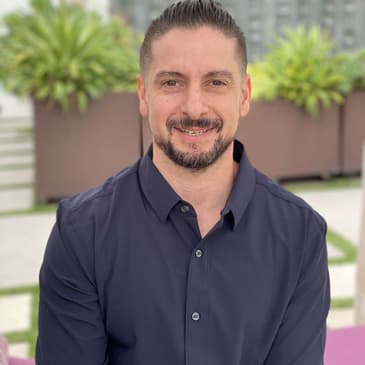
Today’s guest is Dr. Craig Thompson, a Doctor of Acupuncture and Traditional Chinese Medicine, with a background in kinesiology and more than two decades of experience in physiotherapy and rehabilitation. It’s hard to believe his journey into this specialty started with a good deed.
His work blends Orthopedic Acupuncture with Traditional Chinese Medicine, focusing on non-pharmacological approaches to pain, recovery, and long-term wellness. But what really stood out to me was his mission: helping people better understand their own bodies so they can advocate for themselves and build healthier lives from the inside out.
In this conversation, we talk about what acupuncture actually is, why so many people misunderstand it, how stress and pain are deeply connected, and how nurses can benefit from this one small change (you have to hear this).
I was really looking forward to this interview, especially since it had been a long time in the making. My journey with Dr. Thompson began eight months ago when I became his patient following a neurological insult. Having been disillusioned by traditional Western medicine, like many, I found myself turning to acupuncture as my last hope for healing. Throughout my treatments, I was often curious about how it all worked, and I was finally given the chance to learn more. I'm incredibly grateful to Dr. Thompson for generously sharing his time, knowledge, and expertise with us.
In the five-minute snippet: Don’t eat the sushi.
Reach Dr. Thompson here: accutomp78@gmail.com
Contact The Conversing Nurse podcast
Instagram: https://www.instagram.com/theconversingnursepodcast/
Website: https://theconversingnursepodcast.com
Your review is so important to this Indie podcaster! You can leave one here! https://theconversingnursepodcast.com/leave-me-a-review
Would you like to be a guest on my podcast? Pitch me! https://theconversingnursepodcast.com/intake-form
Check out my guests' book recommendations! https://bookshop.org/shop/theconversingnursepodcast
I've partnered with RNegade.pro! You can earn CE's just by listening to my podcast episodes! Check out my CE library here: https://rnegade.thinkific.com/collections/conversing-nurse-podcast
Thanks for listening!
[00:00] Michelle: Today's guest is Dr. Craig Thompson, a doctor of acupuncture and traditional Chinese medicine with a background in kinesiology and more than two decades of experience in physiotherapy and rehabilitation.
[00:14] And it's hard to believe his journey into this specialty started with a good deed.
[00:19] His work blends orthopedic acupuncture with traditional Chinese medicine,
[00:24] focusing on non pharmacological approaches to pain and recovery and long- term wellness.
[00:31] But what really stood out to me was his mission.
[00:34] Helping people better understand their own bodies so they can advocate for themselves and build healthier lives from the inside out.
[00:43] In this conversation, we talk about what acupuncture actually is,
[00:47] why so many people misunderstand it,
[00:50] how stress and pain are deeply connected,
[00:53] and how nurses can benefit from this one small change.
[00:57] You have to hear this.
[00:59] I was really looking forward to this interview,
[01:02] especially since it had been a long time in the making.
[01:06] My journey with Dr. Thompson began eight months ago when I became his patient following a neurological insult.
[01:13] Having been disillusioned by traditional Western medicine, like many,
[01:17] I found myself turning to acupuncture as my last hope for healing.
[01:22] Throughout my treatments, I was often curious about how it all worked,
[01:27] and I was finally given the chance to learn more.
[01:30] I'm incredibly grateful to Dr. Thompson for generously sharing his time,
[01:35] knowledge and expertise with us. In the five-minute snippet.
[01:41] Don't eat the sushi.
[01:59] Well, good evening, Craig. Welcome to the podcast.
[02:03] Craig: Thank you very much for the invitation.
[02:05] Michelle: You're welcome. It's my pleasure. So we met when I became your patient.
[02:11] Craig: That's correct.
[02:12] Michelle: In October of 2025. Is this 2026?
[02:17] Craig: It is.
[02:18] Michelle: Okay. And I became your patient because, like many people, you were my last resort.
[02:27] Craig: Yes. Which I hear quite often.
[02:30] Michelle: Yes. And I won't say that Western medicine had failed me,
[02:36] but I didn't feel like there was anything else that it could provide me.
[02:41] So I, of course, did my research.
[02:44] And what does a nurse do when she wants to see if a certain modality has been effective?
[02:52] Called my brother, who is the director of research at our local hospital. And I said, can you get me some scientific articles on the benefits of acupuncture?
[03:05] Craig: Right, correct.
[03:06] Michelle: And so he sent me some and I read them and I was like, well, I'm gonna try this.
[03:12] Craig: Right, and what's nice is that that's becoming less of a here or there as far as the patients coming in with suggestions of trying it.
[03:24] But over the past 10 years, there's been more money being appropriated to higher quality studies that the medical doctors are curious about.
[03:37] And it sways them because there are higher quality studies and they can see that and they're recommending that more and more as a modality for patients. I've seen a big uptick in recommendations over the past probably three to five years.
[03:56] Michelle: Okay, that's good to know that they are recognizing the benefit and then they're actually referring patients to acupuncturists.
[04:06] Cool. Okay.
[04:07] So that's how we met.
[04:10] Now as we've gone through all the treatments,
[04:14] I'm always like,
[04:15] how does this work?
[04:17] Yeah, I don't know. So that's why I was so curious and I asked you to be my guest. So thank you for saying yes.
[04:22] Craig: Of course.
[04:23] Michelle: We're going to talk about what first drew you to acupuncture and traditional Chinese medicine.
[04:32] Craig: Firstly,
[04:33] probably always because of family and because of their medical needs and just overall kind of your disillusionment with what they're going through as a patient.
[04:48] For me the hitting point was probably,
[04:52] going into my dad's room and in his room there's a small desk.
[04:58] And on top of this desk,
[05:01] I mean, there must have been 10 or 12 medications up on that desk. And I was just like, I can't believe he's taking so many medications. This is unbelievable.
[05:13] So I used to live down south in Huntington beach,
[05:16] and so when he would come and visit,
[05:19] he'd kind of take his stake in my house for a little bit and then eventually he'd always have to go to the bathroom and you know, dish out seven, eight, nine different pill bottles.
[05:32] And I just couldn't believe he was taking that many drugs.
[05:37] Craig: And I could see just over the years, probably about 10 years being on these medications,
[05:43] you know, just his whole firstly, you know, his countenance just changes over time. You see it, you know, they become a little bit more brittle, a little bit more frail.
[05:54] And so that's kind of what seeing that led me to think, God, there's gotta be a better way to create healthfulness in oneself without having to take all these drugs.
[06:06] And you know, I'm not anti-drug,
[06:08] but I think that that tends to be the bottom line solution when it comes to the western half of the medical story.
[06:19] And so that's why I kind of pursued a more holistic aspect of medicine. In that way.
[06:28] Michelle: That must have been hard, seeing somebody that you love and care about so much to see them relying on a pill for all of these different things. And like you, I'm not anti-medication, but my belief is that the least amount of medication is the best.
[06:47] Craig: Yeah, yeah. It's like sunshine, you know, it feels great and it makes you feel good. You know, when you're out there a little too long, boy, the next day you're like, oh, man, I got burned.
[06:58] And I keep seeing a lot of patients getting burned as far as the quantity and the dosage, the medications. And there doesn't seem to be any kind of titering off or, hey, you're doing pretty good on your labs here.
[07:12] You know, let's kind of try and maybe back off that, that quantity. I see that they'll never revisit it once they're on it
[07:17] Michelle: unless the patient says, yeah, I want to get off of this. What can I do?
[07:24] Craig: Yeah.
[07:24] Michelle: And your parents are probably from the generation.
[07:28] I know my mom is older than your parents,
[07:32] but that generation,
[07:34] they seem to really relish the medication almost being like magic.
[07:41] There's a pill for that, right? You can just take a medication for that.
[07:45] Craig: Yeah there's in their mind's eye. Yeah. This is the silver bullet.
[07:49] Michelle: Yes.
[07:50] Craig: Not addressing, hey, if you made this little tweak to your lifestyle or if you cut out this or that, you know,
[07:57] they never want to do that. They want to continue status quo lifestyle, but not change any habit that might lend itself to being more helpful without the drugs.
[08:09] Michelle: Yeah, exactly.
[08:10] Okay, so you were motivated to do this for your dad and to seek a different way.
[08:17] And so now you're in school.
[08:20] I imagine the school was long and intense. Talk about that experience.
[08:26] Craig: Okay. So I dipped my toe in acupuncture. I only heard about it or seen it like in some movies, you know,
[08:35] just kind of casually.
[08:37] And I worked with a sports chiropractor down south.
[08:41] And I think I had told you this story before where I had a massage therapist who worked really, really hard.
[08:48] So they're always needing work. And so I was kind of, you know, trading services with a massage therapist.
[08:54] And so one day she had my foot and she was kind of rubbing this point on my foot.
[09:00] And she was like, oh, you know, this is beneficial for your liver.
[09:05] And I was like, okay, that's kind of a kooky thing to say.
[09:09] How so?
[09:10] Michelle: Is that like reflexology?
[09:13] Craig: Yes and no. There's some crossover as far as probably, and I don't know a lot about reflexology. I'm sure there's crossover points.
[09:21] But she told me this story where she was in a horrible car accident. Like the classical 405 car flipped over the median of the highway.
[09:33] She had like, a fractured humerus or something like this as well.
[09:37] But after that, she had a lot of anxiety and post traumatic stress.
[09:43] I don't think she drove on her own accord probably for about four or five years. Because she just didn't want to do it.
[09:52] And so she was like, I'm seeing an acupuncturist for my
[09:56] anxiety and my stress. You know, she was getting nightmares,
[10:01] insomnia, palpitations, anxiety.
[10:04] I was like, wow, okay, that's pretty cool. Is it working? And she goes, yeah, it is working.
[10:10] It's working really well.
[10:12] And so she was kind of inspired. Hey,
[10:15] I think I'm gonna do acupuncture school.
[10:18] So do you mind? Since I'm not driving, you know, driving me over to this open house at this university called South Baylor University, which was in Anaheim.
[10:29] So I was like, oh, all right. We're not getting out of work until like, 6:30. I think we can make it to your open house in Anaheim in 40 minutes.
[10:37] So I kind of sat in on the open house as she was kind of like, oh, wow, this is so amazing.
[10:44] So they had a whole slew of doctors there,
[10:47] and they all kind of specialized in different aspects of acupuncture. There was some acupuncture that was for women's health. There was some acupuncturists that were in kind of like internists.
[11:00] There's others that were orthopedic.
[11:03] And as soon as they said, like, orthopedic, I was like, oh, wow, this is great. I didn't know about that. I didn't even know you could specialize in orthopedics because I had such a big sports medicine background with my undergraduate degree.
[11:20] And so it kind of stuck in my mind, like, oh, that might be something I could do.
[11:25] So that's kind of how I dipped my toe in the water and even found out about acupuncture was from a massage therapist friend that she wanted a ride.
[11:34] Michelle: You were giving her a ride.
[11:35] Craig: Yeah, I was just giving her a ride. It was just giving her a ride.
[11:38] Michelle: It's crazy how things happen like that.
[11:40] Craig: Yeah.
[11:42] Michelle: Okay, so how long did you have to go to school?
[11:45] Craig: Gosh. So the master's program was four years.
[11:48] I'm sure I could have done it a little bit quicker, but I was also working full time.
[11:53] So it was four years and it was a slog. It was, it was tough. It was two days a week being at school from nine in the morning until ten o' clock at night.
[12:06] Michelle: Wow.
[12:06] Craig: So it was full days. But it was really fun the number of different colleagues that you get to work with.
[12:16] I had colleagues who were Taiwanese,
[12:20] who were Russian,
[12:22] who were Chinese, who were Japanese, who were Persian.
[12:28] So it was just a big cocktail of different personalities and it was, it was really fun.
[12:34] Michelle: That's cool.
[12:34] Craig: Because you're all in battle together.
[12:36] Michelle: Exactly. I'm glad it was more fun than angst and
[12:40] Craig: No, it wasn't angst.
[12:44] It was, it was really,
[12:46] you're all driven to one purpose, you know, and you're trying to help each other out as much as you can and you're all in it together, you know, so that was what was the camaraderie ship was really fun.
[12:57] Michelle: Well, was there a moment when you thought like this works and everything shifted for you?
[13:05] Craig: Yes.
[13:06] And it's always the clinical aspect of it too, because when you're studying just the theory of it and there,
[13:13] there's some western, there's a lot of western medicine in it.
[13:18] I mean, it's a full on master's program. So you have to know your western medicine from an evidence based perspective as well as the whole theory of Chinese medicine and meridian theory,
[13:33] you know.
[13:34] So in the beginning you think, wow, this is amazing. I'm going to be able to treat so many different things. But you know, reality does set in where you're just like, yeah, that's not possible.
[13:46] Even though the book says it's possible, it's not possible.
[13:49] But the first taste of success kind of undergirded me. And that was a simple knee pain protocol that we did,
[14:00] you know, in clinicals. I think my first patient came in for knee pain and we did a little bit of electroacupuncture on that knee.
[14:08] Saw that patient probably five or six times and he was feeling a lot better. So I was like, wow, this is a modality that I could work with.
[14:17] Michelle: Yeah. Did you combine that treatment with traditional Chinese medicine or was it solely acupuncture in the beginning?
[14:27] Craig: You know,
[14:28] when you're in clinicals you have to get everything signed off.
[14:32] So in the beginning, the first part of that treatment was just basic, classical, what they call local points or usher points.
[14:40] Painful Points. So you're basically just choosing some classical acupuncture points that just happen to land on top of like, usher points, which are just painful points.
[14:50] Michelle: Okay.
[14:51] Craig: It wasn't until,
[14:53] you know, I'd always worked with electricity, being a athletic trainer and working with a sports chiropractor, we always used interferential cord for pain modulation.
[15:04] And the same thing is done with the electroacupuncture as well. So I kind of bent my
[15:12] The doctor who was overseeing the patient, hey, can we try this? Cuz I'm curious. And he's like, well, sure, he didn't care. You know, he cared but he was like, yeah, sure, if you want to try it, go ahead.
[15:22] And I think I had probably a little bit more marked improvement using the electroacupuncture than just the basic Chinese medicine points.
[15:32] And so I was like, wow, that really worked quite well.
[15:36] Michelle: Well, and you already had the confidence from using it like in your sports medicine.
[15:40] Craig: Right.
[15:41] Michelle: So it wasn't so scary, I guess.
[15:44] Craig: No, no. And because I had so much experience with patient interaction at my undergraduate level, and even after that in the workplace,
[15:55] working with the sports chiropractor, I mean, I was kind of just left to my own devices and the doctor kind of just kind of trusted me,
[16:03] you know, as far as evaluation and treatment protocols and rehab
[16:10] Michelle: How did your training shape the way you see the human body differently from Western medicine?
[16:16] Craig: I would say it's the other way around almost.
[16:18] Michelle: Okay.
[16:19] Craig: It's my Western training that really kind of dictates my needles.
[16:24] Michelle: Oh.
[16:25] Craig: So if somebody comes in with neck pain,
[16:28] you know, perhaps there's some acupuncturists that will use distal points,
[16:33] which is a theory-based a little bit differently. They use points that are away from your centralized chief complaint.
[16:42] And they don't do a great, in my opinion, they don't do a great orthopedic evaluation.
[16:51] So I'm always steeped in evaluation and making sure that you're not guessing.
[16:59] So I would say my evaluation dictates my needle.
[17:04] Michelle: Okay.
[17:05] Craig: And I'm confident in my needle.
[17:08] So that's why I get pretty good results. It's all about evaluation.
[17:12] When you're talking about orthopedics,
[17:14] I find that a lot of clinicians are quite lazy when it comes to their evaluation skills.
[17:22] Um, they might just go straight to palpation and go, oh, you hurt here? Well, of course, you know, if somebody's already inflamed and they put a thumb in somebody's neck, of course, you know, it's gonna be painful
[17:35] Michelle: Gonna be painful.
[17:36] Craig: Yeah.
[17:37] Michelle: Okay. So for clinicians trained in Western medicine, traditional Chinese medicine can kind of feel abstract.
[17:46] Craig: Yes.
[17:46] Michelle: Is there a way to explain it that makes sense scientifically?
[17:51] Craig: Yes.
[17:53] So if you follow the meridian system,
[17:59] the people who interpreted all that were English speaking clinicians or people who were curious about the meridian system,
[18:10] and, you know, they kind of tried to do their best to explain what a meridian was.
[18:16] But if you look at it and there's a lot of great acupuncturists out there,
[18:22] you know, some of the heavyweights would be like Dr. Pony Chang or Anthony Lombardi or Josh Margulis. These are all like,
[18:34] you know, Josh Margulis is a osteopath. You know, Pony Chang is a
[18:40] Basically, he's almost like a neurologist.
[18:43] And he does specifically a lot of cadaver work,
[18:49] picking apart kind of the meridian system,
[18:53] but then validating it through the nervous system, the neurogenic tissue,
[19:00] almost to a T of perfection. He is superimposing the nervous system
[19:08] In espousing it to the meridian system.
[19:12] Michelle: Wow.
[19:12] Craig: The people who kind of translated it in its infancy when it was being kind of packed up and taken here to the United States, they just kind of did their best to explain that pathway.
[19:27] And the word that came out was meridian.
[19:32] But some of the people that I mentioned today, they're unpacking all that again and then validating it through the nervous system. And basically, that's your meridian system.
[19:44] It is blood vessels, it is neurovascular bundles, and it's neurogenic tissue.
[19:50] Michelle: Okay, well, that leads us to our next question. So how do concepts like qi and meridians and balance translate into something measurable or observable in patient outcomes?
[20:07] Craig: That one is tough because qi is in Chinese medicine.
[20:12] It's kind of like their foundation,
[20:15] if you wanted to make it measurable.
[20:18] Today's acupuncturist, depending on how they're swayed to talk to another clinician,
[20:27] they are espousing qi to basically ATP activity.
[20:33] So in qi,
[20:34] it is energy.
[20:35] Michelle: Energy, yes.
[20:36] Craig: And in Western sense, energy is movement. In order to get movement, you need energy, you need ATP. Okay, so that's a measurable.
[20:47] Michelle: Where do you see the biggest misunderstandings or skepticism from medical professionals?
[20:55] Because I will say,
[20:57] when I came to you, even though I'd heard about acupuncture forever, it's not anything new.
[21:05] I always was kind of like, oh, yeah, you know, that's a lot of woo. And maybe it's nothing that I would ever partake of. And then,
[21:14] you know, when I was really sick and when I was like, you were my last resort.
[21:20] Craig: Yeah.
[21:21] Michelle: Even though I was still skeptical, I was like, I need to, you know, and I read some scientific articles on it, that there were benefits.
[21:30] Craig: Yeah.
[21:30] Michelle: But I still was very skeptical. And I'm a medical professional.
[21:35] Craig: Right.
[21:35] Michelle: But I've been trained in that western medicine system.
[21:40] And we had discussed a little bit of this,
[21:43] that some of your patients come to you and say,
[21:47] yeah, my doctor said, why are you getting acupuncture? Like that's not gonna help you.
[21:53] So just talk about some of the biggest misunderstandings of why would a medical professional say that to a patient?
[22:00] Craig: That it's kind of marginalized, like kind
[22:03] Michelle: of quackery or kind of dissuade them from seeing that.
[22:07] Craig: Right.
[22:08] Today's medical doctor is just a little bit different than some of the older practitioners that are pretty set in their ways.
[22:19] The newer generation of medical doctors, I think they're a little bit more open to prescribing it as long as they are undergirded with confidence, backed by, again,
[22:31] some of the higher quality studies.
[22:33] They can see that. Oh, yeah, I can see why somebody might have a benefit with insomnia because they've done higher quality studies where when you put a needle in somebody,
[22:46] whether it's pain, anxiety. The needle is actually secreting hormones and they can measure that. And the doctors like to see that.
[22:58] They can see that. Wow, okay. You put a needle in somebody and you're secreting endogenic hormones, which are pain relieving hormones,
[23:07] hormones that make you feel better as far as pain,
[23:11] hormones that can calm you down a little bit. So it helps with some anxieties or in some insomnias.
[23:19] Some patients come in just kind of feeling a little lost or a little low,
[23:24] and they go, okay, wow. It's actually secreting, you know, some hormones that actually uplift a person.
[23:31] You know, just like eating a good high quality piece of chocolate might uplift somebody.
[23:37] It's actually secreting those hormones that actually make you feel better. Better like that. And the doctors like that because a lot of the newer doctors,
[23:46] again, they,
[23:48] they understand that, wow, I'm putting a lot of medication into my patient and if I can just advocate for them in a way where I'm not bombarding them with a bunch of pharmacological interventions,
[24:02] how is that not good for my patient? Yeah, you know, so I find that a lot of the older doctors again.
[24:09] And it's not entirely their fault.
[24:12] They're just so busy. They don't have time and they don't have time to be curious to read some of these articles and some of these studies.
[24:22] So they're on a big time crunch too. So sometimes you'll see that with doctors talking to other doctors and yeah, you know what? I went and recommended this modality and patient did pretty good.
[24:34] Michelle: Word of mouth, right? Yeah, word of mouth. And if I go to my doctor and I have established a relationship with that person and I trust them and they say,
[24:46] you know, I think you would benefit from acupuncture or traditional Chinese medicine.
[24:52] Craig: Yeah.
[24:53] Michelle: Is there something to it where the patient is like, if I think it's going to help me, it's going to help me?
[25:02] Craig: Of course, yeah.
[25:03] Michelle: Right.
[25:04] Craig: There's nothing wrong. There's nothing wrong with the placebo effect.
[25:10] Michelle: Yes.
[25:10] Craig: I mean, there's high quality studies on just how effective placebo is.
[25:16] Because if you change somebody's mindset and gives up and given a positive,
[25:21] even though they're going to eventually encounter a negative somewhere in their health pathway,
[25:28] it's going to help them.
[25:30] Michelle: Yeah.
[25:31] I think there's so much power in that,
[25:33] in that the person deciding, like, I believe or I'm hopeful that this is going to help me and then they do get some benefits.
[25:43] Craig: Right. There's just always going to be haters when it comes to that word placebo.
[25:48] Michelle: Yeah.
[25:48] Craig: You know, it is a hated word in medicine.
[25:52] Michelle: Yes.
[25:53] Craig: But gosh, it works.
[25:55] Michelle: Yes, gosh, it works. I think we use it all the time in our daily lives.
[26:00] Craig: Yeah. Outside of the health arena.
[26:03] Michelle: Right.
[26:04] Craig: It works in many aspects of life.
[26:07] Michelle: Yeah, it sure does.
[26:08] Okay, well, let's talk about what actually happens in the room. So walk us through a first acupuncture visit. I will say that my first visit I was terrified.
[26:22] Craig: Right.
[26:23] Michelle: I had been having a lot of anxiety already. A few weeks before, I had had a nerve conduction study.
[26:31] Craig: Okay.
[26:32] Michelle: Which was very much to me like being tortured.
[26:36] It is because the neurologist had to insert certain needles and basically shock me to see what the response would be.
[26:46] Craig: Right.
[26:47] Michelle: And that was very traumatizing for me. So when I calmed down from that and I decided to come see you that first visit,
[26:56] I was super, super nervous and had a lot of anxiety. So what would surprise someone who has never experienced acupuncture before?
[27:07] Kind of just take us through that whole first Visit.
[27:12] Craig: From a clinician's standpoint, you're just doing as much observation as you.
[27:19] You're looking at the patient's posture before you even ask a question.
[27:23] You're looking at their eyes. You're looking at the way they carry themselves,
[27:27] the color of their face.
[27:29] Basically, you're just going over the old school auscultations skill set that a lot of doctors don't really do anymore. You know, their eyes are just kind of buried in their iPad or they're charting.
[27:41] They're not actually looking at their patient or kind of gathering what this patient's constitution is.
[27:49] So that's kind of immediately what I'm doing.
[27:53] Michelle: And I will say that that first visit, you spent a lot of time just talking to me.
[27:59] You were super calm and chill,
[28:02] just like you are now. I think that now that I've known you for a while,
[28:06] that's probably your basic personality.
[28:08] Craig: Yeah.
[28:09] Michelle: And you made a lot of eye contact.
[28:13] Craig: Yeah.
[28:13] Michelle: Which is very unusual when you go to a medical professional.
[28:20] Like you said, the time is really quick. They gotta get in and get out.
[28:26] They're looking at their notes, they're not looking at you, they're not making those observations.
[28:31] Craig: Yeah. That's a big skill set. It's just not employed by a lot of clinicians now.
[28:41] Michelle: So the things that you're looking at,
[28:43] you're looking at their posture, you're looking at their color, like, what are those things telling you in terms of how you're going to plan,
[28:53] where are you going to put the needles and all of that?
[28:56] Craig: Right. So sometimes it just depends on what their chief complaint is.
[29:01] Michelle: Okay.
[29:01] Craig: I can have somebody that is red in the face,
[29:05] you know, speaking,
[29:07] you know, kind of rapidly with a lot of emotion, you know,
[29:12] and, you know, again, maybe their chief complaint is insomnia or anxiety or something in your list. Like, okay, this is a classic case of,
[29:22] you know, let's try and calm this patient down. And we're just going to sedate. We're just going to sedate this patient. And in the beginning,
[29:32] it's not so much about the number of needles or theory you're going to or, you know, differential diagnosis you're going to put into this patient. All that is there kind of in the background.
[29:47] But you're saying to yourself, how can I just make this patient feel just a little bit better today? Because they probably haven't felt a little bit better in a long time,
[29:58] you know, so I'm not thinking, oh, gosh, yeah. You know, this point right here, you know, it's pretty exotic, you know, but I think it, it does, you know, fit this patient's pattern.
[30:09] I'm just going to do the basics, you know, a few points just to sedate the patient.
[30:15] That's fine.
[30:17] That's fine.
[30:19] If you went over to China and you watch the way they operate,
[30:25] it's almost these same points for every single patient.
[30:31] The classical points,
[30:33] spleen six, spleen nine. Liverpool. No matter what the chief complaint is, almost always. Almost always. They maybe use 12 points in the Chinese hospitals.
[30:46] Michelle: Okay.
[30:47] Craig: They don't get down with a bunch of exotic theory or anything.
[30:52] They're very efficient and their evidence shows them.
[30:58] These classical points, these 8 to 12 points,
[31:01] that's where you're gonna get the most appreciable result.
[31:04] Yeah.
[31:06] Michelle: So when you get ready to do the actual.
[31:09] Because I think what you were talking about in the beginning of, like,
[31:12] you know, you have a new patient and you're trying to make them feel at ease.
[31:17] Craig: Sure.
[31:17] Michelle: And so you're using all those soft skills. Right.
[31:21] Craig: Communication, of course, you're always acting as well.
[31:25] Michelle: Yes.
[31:26] Craig: There's, it doesn't matter. What part of it doesn't matter. If you're a crew member at McDonald's, which was my first job,
[31:35] there's always still a performative aspect to it.
[31:39] So, yes, you can nuance it by, you know,
[31:43] bringing out a little, a little bit of your own personality in that first intake and trying to maybe disarm a patient because they've basically been burned by maybe another clinician.
[31:56] So,
[31:58] you know, I'm not saying.
[32:00] Michelle: You're establishing a rapport.
[32:01] Craig: Right. I'm not selling.
[32:03] I'm not selling. Like you said,
[32:06] the first thing you're doing is observing and you're trying to give this patient assurance that, hey, I'm not gonna hurt you. I'm not trying to sell you.
[32:15] If I do have a prescription for you,
[32:19] it's going to be modest and, you know, let the patient make the decision.
[32:25] Michelle: And I know our first visit, I had divulged that I had taken this supplement and it had sent me, you know, into this neurological problem and everything.
[32:36] Craig: Yeah.
[32:37] Michelle: And I thought it was funny. At the end of our visit, you said,
[32:40] I, for right now, I don't think I'm going to prescribe you any traditional Chinese medicine.
[32:46] Craig: Yeah.
[32:46] Michelle: I was like, okay, I approve of that because I was so leery of ever taking anything Again,
[32:54] Yeah. Any kind of supplement or anything.
[32:58] So when you're getting right down to it, like, how do you decide where to place the needles?
[33:04] What are you reading in the patient?
[33:07] Craig: There's the traditional Chinese point locations and, you know, everybody's body is just a little bit different. So,
[33:19] I worked with doctors when I was in my clinical internship, and they're like,
[33:23] just like anything else. Be good,
[33:26] don't be perfect.
[33:27] You know, you just have to get along that meridian or neurogenic pathway to get a good result.
[33:35] You know, like heart seven. God. Right in the transverse crease.
[33:40] Right in the transverse crease.
[33:42] Quit worrying about that. Just get close,
[33:45] to the neurogenic or meridian pathway and you're going to be fine.
[33:50] Michelle: Okay. You just pointed to your wrist.
[33:55] Craig: Right.
[33:57] Michelle: So let's say you have a patient that is missing their arm from the elbow down.
[34:05] Craig: Yeah.
[34:06] Michelle: What does that affect, if anything? Can you go anywhere else along that meridian?
[34:14] Craig: Well, it depends. I guess it depends on what you're treating.
[34:17] Michelle: Okay.
[34:17] Craig: And what the chief complaint is.
[34:21] You know, if somebody was, you know, missing an elbow to hand,
[34:24] you know, you're like, okay,
[34:26] I gotta deduce that this person probably has to articulate, you know,
[34:30] a proximal joint a lot differently.
[34:34] So I'm sure that person has a lot of neck pain from trying to articulate that shoulder if they're coming in for something orthopedic or pain related.
[34:43] Michelle: Okay. But placing the needles, like, I know you always place a needle in my left hand.
[34:49] Craig: Yes.
[34:49] Michelle: Let's say my left hand was missing.
[34:51] Craig: Yeah.
[34:52] Michelle: What, what are you going to change anything? You know what I mean?
[34:56] Craig: If you're looking at the central point of pain, you would just then choose a point that's proximal to the one that's missing but still along that neuro neural pathway.
[35:08] Yep.
[35:08] Michelle: Okay.
[35:09] Craig: Or you could choose a completely different system, which would be like a balance method or a Dr. Tan's method or a mirroring image.
[35:21] Michelle: Okay.
[35:21] Craig: There's different strategies that you can employ depending on the needs of the patient.
[35:29] It could just be, hey, you know what? This person's neck is so incredibly tight,
[35:34] so incredibly inflamed and really nervous about having somebody put a needle in their neck.
[35:41] I'm going to choose a different system,
[35:44] a completely different system that's completely away from their point of pain,
[35:50] but still bring that patient's pain level down.
[35:54] Michelle: Okay.
[35:55] Craig: So you're just going to employ a different system.
[35:58] Michelle: Okay,
[35:59] well, about three weeks, I think it was three weeks or four weeks into seeing you,
[36:04] that's when, and I have a whole episode on getting off of benzos, but that's when I decided to just abruptly stop benzos.
[36:13] Craig: Yeah.
[36:13] Michelle: And I remember that day coming in and telling you that I just went cold turkey off of benzos. Yes. And I remember you just kind of looking at me like,
[36:24] oh, wow.
[36:25] Craig: Yeah.
[36:26] Michelle: And I was saying, yeah, I have, like, a lot of, like,
[36:29] shoulder heaviness and tightness
[36:33] And I could imagine what was going on in your head. Like, no shit.
[36:40] You know?
[36:40] But you were very kind and very calming, and I think that was the first time you put needles in my shoulder. Yeah, Yeah.
[36:49] Craig: I just did a little local point right in there for you, you know, but the one that I did in your hand.
[36:56] Michelle: Yeah.
[36:56] Craig: That was also for neck pain.
[36:59] Michelle: Okay. Yeah. Okay.
[37:01] Craig: So I did it very superficially here. Yes, very superficially. And you can get beautiful results with very superficial needling.
[37:11] Michelle: I feel like, honestly,
[37:14] like, that was pretty much hell for me coming off benzos, just cold turkey. It was like one of the most brave and stupid things that I've done in my life.
[37:24] Craig: Yeah.
[37:24] Michelle: But I was so desperate to get off of them.
[37:28] Craig: Yeah.
[37:28] Michelle: And you know what was strange about that was the first week that I got off of them,
[37:34] I had the best sleep of my life.
[37:38] And then the problem started with the muscle rigidity and.
[37:43] all of that. But, yeah. Stupid and brave.
[37:48] Craig: Yes.
[37:50] Michelle: Okay, let's talk about what conditions you most commonly treat and which ones tend to respond the fastest.
[37:59] Craig: Majority of the patients are low back, neck pain, shoulder pain, knee pain.
[38:06] Michelle: So all the joints. Okay.
[38:09] Craig: Yes. A majority of my patient load is all orthopedic.
[38:16] Michelle: Wow, Okay.
[38:16] Craig: A lot of it.
[38:18] Michelle: Now, you had mentioned to me a couple of times that you have seen some fertility patients.
[38:24] And we had talked about this, that those were difficult to treat patients just for the main fact that they are high risk OB patients already and they're seeing a perinatologist, and you might see something of benefit that
[38:40] could benefit them either in a treatment or with traditional Chinese medicine.
[38:46] And their perinatologist is going, no,
[38:51] yeah, don't do that.
[38:52] Craig: Yeah.
[38:52] Michelle: And so the patient's caught in the middle.
[38:55] Craig: Right.
[38:55] Michelle: So how do you navigate that whole relationship?
[38:59] Craig: I don't try and repair any of the relationship. I just try and do my best with the points that I know from. And you just try to work around what. Yeah, if they're saying if you think an herb would help this person, but their doctor's saying that, yeah, then I've gone down that road before,
[39:19] working with their, OB or whatever, their fertility specialist down south.
[39:25] And I just consigned that, hey, I'm not going to step on the toes,
[39:31] you know. But the sad thing is that, yeah, they are,
[39:34] cutting off about half of the strategy that acupuncturists employ for that.
[39:42] So being in here in the Central Valley, there's a big Hispanic population.
[39:47] Right. I must have had at least three or four Hispanic or Mexican fertility patients.
[39:54] And they go and they receive their treatment, their IVF stuff.
[39:57] Michelle: Okay.
[39:59] Craig: In Mexico.
[40:00] Michelle: Oh, okay.
[40:01] Craig: And you know what the doctors in Mexico say? They say, go for it.
[40:05] Michelle: Wow.
[40:06] Craig: Not a problem.
[40:08] Michelle: So different.
[40:09] Craig: Completely different.
[40:10] Michelle: Wow. Sounds like we can learn a lot.
[40:13] Craig: Yeah.
[40:14] Michelle: Okay, so let's talk about effectiveness and evidence because we have talked about scientific studies.
[40:20] What does the research say about acupuncture right now and where is it still catching up?
[40:27] Craig: There's a whole class in evidence based research and all of it is great.
[40:33] Sometimes you can get caught up in it and you can change this, you can change and manipulate the evidence that you're,
[40:43] you're looking at to fit the narrative you want as far as outcomes go.
[40:48] So you gotta be choosy with what studies you're going to employ or try and sway somebody with. So the evidence is there,
[41:01] the quality isn't as profuse as with every,
[41:07] with what? It seems like every study nowadays is bent and kind of a little bit broken for ideology's sake, I think sometimes.
[41:20] So you just gotta be choosy.
[41:22] Like for instance, okay,
[41:24] stomach 36 is a very famous acupuncture point and there's high quality studies that show, hey, if you put a needle in stomach 36 and you know, the classical immune response is great,
[41:41] you get a huge proliferation of white blood cells just from doing stomach 36.
[41:48] Michelle: Wow. Is that actually like in your stomach
[41:50] Craig: region along the stomach meridian. So it's actually just below your knee.
[41:56] Michelle: Below your knee. That's fascinating.
[41:59] Craig: Yeah.
[42:00] Michelle: Okay, so there are studies that have said that there's benefit right there.
[42:05] Craig: Yeah, absolutely.
[42:06] Michelle: Very cool.
[42:07] What do you think? What if you were a researcher,
[42:12] what would you want to research in the field of traditional Chinese medicine?
[42:19] What do you think needs more a deeper look at?
[42:24] Craig: There's a subset of acupuncture that gets into more of the Taoism of acupuncture,
[42:32] the psychology of acupuncture.
[42:35] And sometimes I feel like some colleagues are standing on dangerous ground as far as evidence goes, because there is no evidence,
[42:47] because it's not our scope.
[42:50] If they want to claim certain things,
[42:53] some colleagues, then, you know, they should put in the time in the research to actually feel confident that they're going to be able to help a patient.
[43:03] So I would ask them that. They probably need to stay in their lane a little bit.
[43:08] Michelle: Okay.
[43:09] Craig: Yeah. So that's my, that's a critique. That's more of a critique than a research.
[43:17] Michelle: Do you think there needs to be more research in that area?
[43:20] Craig: No. No.
[43:22] Michelle: Okay, just stay out of that lane
[43:24] Craig: Stay out of that lane. Yeah, stay out of that.
[43:27] Michelle: You know, are there specific conditions where acupuncture clearly outperforms conventional treatment or works best alongside it?
[43:38] Craig: I get that from patients that just happen to be seeing other providers.
[43:45] Like, for, instance, I had a guy, like, I always joke, he came walking in in two zip codes because of low back pain. You know, I treated him one time last week, and then I saw him again yesterday.
[43:58] So, I mean, that's a weekend.
[44:01] And he had already seen another provider.
[44:04] So then the lines get blurred. Because I'm asking, well, how are you doing? He's like, man, look at me. I'm working pretty good. I'm moving a lot better.
[44:12] But, you know, Saturday, you know, I went to this naturopathic doctor and she gave me all these herbs and everything like that. So to say one is better than the other, I'd like to think that,
[44:23] yeah, it was probably my needle.
[44:26] Michelle: It's probably my ego, right? Yeah.
[44:29] Craig: Yeah.
[44:29] But it does work really, really well.
[44:33] You can get immediate results.
[44:35] You can get immediate results.
[44:39] So to say if one modality is superior,
[44:44] I'm always going to say that the acupuncture needle is superior because you're affecting not only the physical, but you're also helping with pain via the brain.
[44:57] And that's pretty powerful.
[44:59] That's pretty powerful.
[45:02] Michelle: Okay. What would you say, and we talked about this earlier, what would you say to someone who thinks acupuncture is just a placebo?
[45:11] Craig: I would say that's not right at all.
[45:16] Whenever you're putting a needle into somebody, you're actually accelerating the inflammatory response resolution.
[45:24] You know, you're actually getting the brain to recognize, hey,
[45:28] that's a little bit of trauma that I didn't recognize before.
[45:32] We need to expedite the healing process to that area.
[45:36] You know, that's not a placebo. That's physiology.
[45:41] Michelle: Right.
[45:41] And you know, we talked about the placebo in terms of if like the power of the mind is so strong that if you believe something is going to help you,
[45:53] it's probably going to help you.
[45:55] Craig: It's like prayer.
[45:56] Michelle: Yes.
[45:57] Craig: Some people poo poo prayer all the time. You know, they marginalize it.
[46:02] Michelle: Western medicine. Right, right.
[46:05] I remember the first time I met a surgeon that the night before his patients were having surgery, he would make rounds and he would pray with them.
[46:13] Craig: Yes.
[46:14] Michelle: And I thought,
[46:15] what? That's so crazy.
[46:18] Why does he need to pray? He has all these skills.
[46:22] But there is power in that. And the same is true if you say to yourself,
[46:28] this isn't going to help me, nothing can help me.
[46:31] It's probably going to be a self fulfilling prophecy.
[46:34] Craig: Right, of course.
[46:35] Michelle: Yeah, of course. Well, let's talk about nursing because most of my audience are nurses and other healthcare providers.
[46:43] Craig: A lot of my patients are nurses.
[46:45] Michelle: Oh, no. Okay. Nurses experience a lot of chronic pain, stress, burnout. How could acupuncture support nurses and others in healthcare?
[47:00] Craig: Some of the main reasons why,
[47:02] why nurses do come and see acupuncturists because they see a gap in, in some aspects of western medicine. I mean, I've known some nurses that,
[47:18] you know, I would never see that clinician.
[47:22] Michelle: Yeah.
[47:22] Craig: And there's a reason behind it.
[47:24] Michelle: Exactly. You know, because they've worked with that person and they've taken care of their patients and they see a lack of integrity or, you know, whatever.
[47:34] Craig: Yeah. I mean,
[47:35] nurses are put under an incredible amount of stress. My mom's a nurse or she retired as a nurse. She worked in cardiology for 30 years and there was, you know, some nights where I can remember her just being just completely fatigued.
[47:54] And the joke is that, you know, nurses and doctors make the worst patients. And there's something to be said about that because I'm not a great patient either.
[48:04] Because I don't like being a patient.
[48:06] Michelle: Exactly. I'll be in control.
[48:08] Craig: But I'm learning that self care is pretty important when you're giving so much to so many others and it doesn't even register.
[48:21] Michelle: Yep. It's that old axiom that you can't pour from an empty cup.
[48:26] And I've talked to so many nurses now through this platform that have told me that exact thing, that they're suffering from burnout and they had to stop and say this isn't working,
[48:40] do something different. They had to leave nursing completely or they pivoted. Out of bedside and they innovated. They became innovators and entrepreneurs.
[48:51] Craig: Exactly.
[48:52] Michelle: Yeah. They, like, created products, you know, medical products or whatever, and they had to get away from that because of the constant giving and just.
[49:04] Just being totally depleted.
[49:06] Craig: Right?
[49:07] Michelle: Yeah.
[49:07] Craig: Yeah. Some of the happiest nurses that I know now, they said, I just don't want to be a part of that novel anymore.
[49:15] Michelle: Yeah.
[49:16] Craig: So they're out there doing aesthetic nursing. It's huge right now. You know why? Because the patients are happy.
[49:24] Michelle: Yeah.
[49:24] Craig: They're doing something for themselves, and they're seeing a nurse practitioner or a nurse to have that done, and they're happy. And that makes the nurse extremely happy. Yeah.
[49:36] Michelle: You feel like you're really affecting someone's life in a positive way.
[49:40] Craig: Yeah.
[49:41] Michelle: Is there a simple traditional Chinese medicine principle that nurses could apply immediately in their own lives or practice that would help them?
[49:55] Craig: Something as simple as eating slowly.
[49:58] Michelle: That's huge. That's not. And it's not. It's hard to do.
[50:02] Craig: It's hard to do. And I'm guilty of it, too,
[50:05] because the American way of life is so fast.
[50:09] I had a traditional Chinese medicine doctor told me,
[50:14] and I, I think he was right in his principle that we should take time,
[50:20] sit down,
[50:21] and eat slowly.
[50:23] And he said, you understand that America is the one country that has a diabetes epidemic.
[50:31] And he posited that we eat so fast that we're just stressing our pancreas out. Stressing our pancreas out. And so of course, there's gonna be a huge uptick in diabetes, which is an epidemic here in, in the states.
[50:52] Michelle: Yeah. And in our valley.
[50:54] Craig: Yes.
[50:55] Michelle: Yeah.
[50:56] Craig: So something as simple as just sit down, eat slowly, have a cup of tea. He thought it would just make a market improvement.
[51:09] Michelle: It really is life changing. And,
[51:12] you know, from a practical standpoint, there, there are things that we can do. Being a nurse for 36 years and,
[51:19] you know, being a charge nurse and carrying that phone and having it ring nonstop and being called to a C-section during your lunch. You know, you get 30 minutes for lunch,
[51:30] but you're really, you are eating as fast as you can because you don't know when your next meal is going to be. You don't know when you're going to get a stat call to go down to a delivery or a pediatric code or whatever it is.
[51:45] And this is happening on a wide scale to nurses every day.
[51:50] But there are things that we can do to be more mindful about eating and,
[51:56] And also to stand up for ourselves. And if you need to give the phone away during your lunch, here, I'm on lunch, you're going to hold the phone and you're going to do whatever the person on the end tells you to do.
[52:08] Craig: And you know, I'm a generation X baby.
[52:12] Michelle: Ah, okay.
[52:13] Craig: You know, so it goes against my nature to do any kind of self care.
[52:20] It was always bootstrap,
[52:24] don't complain. Grind. Yeah, that's the way.
[52:29] So it's hard for me to unprogram that from, you know, hearing that as a kid.
[52:37] It's a measuring stick.
[52:39] Michelle: I've had to do that. And I will say that eating slowly is life changing on so many levels.
[52:47] When I was going through this neurological thing, I had gastroparesis and so I was forced to slow down and I would sit down to my meal and I would set a timer on my watch for 30 minutes.
[53:04] Craig: Yeah.
[53:04] Michelle: And I would take seriously like one bite of a vegetable and put my fork down and it, and I would make it last through the whole 30 minutes.
[53:16] And that really helped me with my digestion and everything.
[53:20] But the other thing it really, really helped me with was focus and practicing patience when you are hungry.
[53:30] And from all this conditioning of being a nurse all these years.
[53:35] Craig: Yeah.
[53:35] Michelle: And not knowing when am I going to get a meal and just shoveling the food in and also some other things. You know, growing up,
[53:43] life around our dinner table was very chaotic.
[53:47] And I learned to just shove the food in as fast as I could so that I could be excused from the table.
[53:53] Craig: Right.
[53:54] Michelle: And I'm not alone in that. I know many people came from that environment and have a different relationship with food. So for me was life changing to slow down, focus,
[54:06] be patient.
[54:07] And it really was a form of self care.
[54:10] It's like you're nourishing yourself nutritionally, yes. But you're also nourishing your soul by doing this practice. It was almost like a meditation.
[54:20] Craig: Yes.
[54:21] Michelle: It's really, really
[54:23] life changing.
[54:24] Okay, we're nearing the end here,
[54:26] so let's talk about balance. Cause you see a lot of people that come to you and they have the effects of stress because of our modern high stress lives. Yeah, but what does balance mean in that context of our high stress lives?
[54:43] How can we incorporate that?
[54:46] Craig: Hmm. Gosh, I don't know if I have a specific answer. If I did, it'd be a book that I could sell.
[54:56] Michelle: There's your next project.
[54:58] Craig: I'm not in the vein of doing so. Balance is,
[55:03] you know, balance is in Chinese medicine, of course,
[55:09] there's a lot of what they call yin and yang.
[55:14] And for me it's just the highs and the lows.
[55:17] You know, there's highs and lows when it comes to Chinese medicine as far as practicing it,
[55:22] as far as trying to glean it from a patient, if this person is too high or this patient is too low.
[55:31] If you just, I always tell people, if you just do a few little habits every single day,
[55:37] you're going to get to that balance.
[55:39] Life is always going to go left and right.
[55:42] You're always going to go through valleys and you're going to have to climb through, you know, peaks as well.
[55:50] It doesn't matter what, what part of the aspect you're traveling. It's,
[55:55] all beneficial when you come back to think about it. Because if you're, if you're really low,
[56:02] you know,
[56:03] that's a learning opportunity.
[56:05] You know, if you're really high, treasure it because you're going to come back down low.
[56:11] Michelle: That is some good advice.
[56:12] Craig: That's also a learning opportunity.
[56:14] Michelle: Yeah, we want to, we always want to be high. Right. And we resist the low.
[56:20] Craig: But you don't,
[56:22] you don't appreciate,
[56:24] you know, you don't treasure what you learned in those lows.
[56:29] You know,
[56:30] it just makes you more humble.
[56:32] And, you know, one of the biggest things about being balanced is being, you know, being grateful.
[56:39] Michelle: Gratitude is huge.
[56:40] Craig: Yeah.
[56:42] Michelle: If you could change one thing about how healthcare approaches healing, what would it be?
[56:49] Craig: One aspect of it,
[56:53] you know, healing is,
[56:56] healing is different than outcomes.
[56:59] You know, some people can, you know, go through healing and still have a negative outcome,
[57:06] but they've learned something.
[57:08] They are able to share something with another person that might be like minded or who has the same affliction and you're able to, you know,
[57:19] give that person a comfort or an idea that might have worked for you. And that's very healing.
[57:25] And that's very differentiated between an outcome,
[57:30] you know, outcome is always kind of like, you know,
[57:33] immeasurable.
[57:35] So sometimes you're gonna have to be healed even though the outcome is poor.
[57:43] And you're gonna have to be comfortable with that.
[57:47] Michelle: Wow.
[57:48] Craig: And that's a part of, you know, kind of staying balanced in a sense.
[57:53] You know, if you're hyper fixated on an outcome that was negative, you're never gonna heal from that.
[58:01] You know,
[58:03] there's a beauty of acceptance.
[58:06] You know, this is.
[58:07] This is it.
[58:08] And I have to learn to be happy with that. That's healing.
[58:12] Michelle: Yeah. So I feel like you and I have read the same book. Maybe you have. I'm reading a book right now by psychiatrist Dr. David Hawkins called the Map of Consciousness.
[58:26] And you just,
[58:29] pretty much verbatim, talked about that.
[58:31] Craig: Yeah. Why? Didn't steal it.
[58:33] Michelle: No, I know, but the healing is more emotional or psychological.
[58:40] Craig: It's consummate.
[58:41] Michelle: Yes. Where the outcome is more like physical. People that have risen in their level of consciousness have significant healing, but maybe they still have the pain.
[58:52] Craig: Yeah.
[58:53] Michelle: Right.
[58:53] Craig: It's like a scar.
[58:55] Michelle: Yes.
[58:56] So I love that. I love. I love that approach.
[58:59] Okay, last question.
[59:02] If someone is considering acupuncture and they're curious but hesitant,
[59:07] what would you say to them?
[59:10] Craig: No one's ever died from an acupuncture needle.
[59:13] Michelle: That would sell me. Okay. Because I thought I was going to die the first time I saw you.
[59:18] Craig: No. Like, I always tease. Like, most of my patients, they fall asleep on me.
[59:23] Michelle: I did. Yeah.
[59:24] Craig: They fall asleep on me.
[59:26] Michelle: And I said, you had said you might fall asleep. And I thought, this guy's crazy. I am so anxious right now. I will never fall asleep.
[59:36] Craig: Yeah.
[59:36] Michelle: And then I ended up falling asleep.
[59:39] Craig: Yeah. You know,
[59:40] like, a dirty secret is that I get a lot of patients that they. They ask me, why don't you play a lot of music?
[59:48] And, you know. You know, meditation music.
[59:51] Michelle: Yeah.
[59:53] Craig: Sometimes I consider it your own wrong modality, but is because I want you just to, you know, relax, just be right. We're stimulated so much.
[01:00:05] Michelle: Thank you.
[01:00:06] Craig: We're stimulated so much.
[01:00:09] Michelle: but we are so uncomfortable in the quiet.
[01:00:12] Craig: Yeah.
[01:00:12] Michelle: Right.
[01:00:13] Craig: Must have white noise.
[01:00:15] Michelle: God, we're so uncomfortable in the quiet because I guess we can hear our own thoughts and they scare us but there is something to practicing that that's so beneficial.
[01:00:26] Craig: Yeah.
[01:00:27] Michelle: Yeah.
[01:00:28] Craig: Yeah, I love it.
[01:00:29] Michelle: Great. Great. Yeah.
[01:00:30] Craig: I've never, like, I always joke. I've never lost the patient. I've never had a patient jump off the table and say, I can't handle this.
[01:00:38] Michelle: Okay.
[01:00:39] Craig: You know, so it's just associated with the hypodermic needle. Yeah. You know, they swear it's gonna feel the same.
[01:00:48] Michelle: No, it doesn't feel the same. I can attest.
[01:00:51] Craig: Yeah.
[01:00:51] Michelle: It's like some of them, I couldn't even tell that you had put it in. Yeah,
[01:00:56] some of them I did, but it was not even uncomfortable at all.
[01:01:02] Just a very good experience. And again, I know that my healing has been accelerated because of your craft.
[01:01:13] Yeah.
[01:01:14] Craig: Well, thank you.
[01:01:15] Michelle: And man, this has been fun. I have wanted to know the answers to these questions for months now.
[01:01:21] Craig: Yeah.
[01:01:22] Michelle: And so I'm glad that we sat down and had this talk today.
[01:01:26] Craig: Yeah, me too. Thank you.
[01:01:27] Michelle: Yeah. Okay, well, I know people are going to have questions. So where can we find you?
[01:01:33] Craig: You can find me at, you know, summitacupunctureandwellness.com. that's where I'm at in Visalia, California.
[01:01:40] Michelle: Okay.
[01:01:41] Craig: I am not a social media person.
[01:01:46] Michelle: It's okay.
[01:01:46] Craig: So people, they want to call me and make an appointment.
[01:01:49] Michelle: Do you have an email?
[01:01:51] Craig: Of course. Yeah, it's, it's accutomp78@gmail.com or they can always just call the office,
[01:02:00] you know, 559-372-7320.
[01:02:04] And it's just me,
[01:02:06] so leave a message. I will call you back if you leave a message.
[01:02:11] But yeah, it's true.
[01:02:12] Michelle: I can vouch for you.
[01:02:13] Craig: Yeah, I don't do a lot of social media posts.
[01:02:17] Michelle: It's not for everybody.
[01:02:18] Craig: No.
[01:02:19] Michelle: More and more I'm like, is it for me? I don't know. I'm more off of it than I am on it.
[01:02:24] Craig: Yeah. So mostly it's referrals. That's how.
[01:02:27] Michelle: Well, I will put all those in the show notes.
[01:02:30] So, as promised, we've reached the end. The last five minutes. The last five minutes is the most fun that we're going to have.
[01:02:37] Craig: All right.
[01:02:38] Michelle: It's the five-minute snippet. So are you ready to play?
[01:02:41] Craig: Yes.
[01:02:41] Michelle: Okay. This is just a chance for our audience to see the off duty side of Dr. Craig Thompson when he's not being a, an acupuncturist, a traditional Chinese medicine doctor. He's just a regular guy.
[01:02:58] Craig: Yeah. Okay.
[01:03:38] If you had to eat one food for the rest of your life.
[01:03:42] But it had to be a gas station item.
[01:03:46] What would you choose?
[01:03:50] Craig: Oh, man.
[01:03:51] Michelle: I know, right?
[01:03:52] Craig: It would not be the cliche sushi, that's for sure. I don't know. Probably like the granola bar.
[01:04:01] Michelle: Okay.
[01:04:01] Craig: Nature Made. Even though they're pretty much garbage
[01:04:05] Michelle: and pretty much sugar.
[01:04:07] Craig: Hey, at least it would make me feel good.
[01:04:10] Michelle: You wouldn't get, you know, diarrhea from it.
[01:04:13] Craig: No. No.
[01:04:14] Michelle: Okay. Best purchase under $100.
[01:04:20] Craig: Dang. Best purchase under $100.
[01:04:23] Michelle: There's not many things these days that you can find under a hundred dollars.
[01:04:28] Craig: No, you know what? I bought a, I bought a janky guitar down south, and I think it was like a 1970s Japanese guitar.
[01:04:41] Michelle: Okay.
[01:04:41] Craig: And it, it booms. It's amazing.
[01:04:44] Michelle: Wow. Okay.
[01:04:45] Craig: Yeah, I just, I got it set up.
[01:04:48] I bought the guitar for under a hundred, but I probably put another hundred dollars into it to set it up.
[01:04:54] Michelle: Okay. That's okay.
[01:04:55] Craig: Yeah.
[01:04:56] Michelle: Okay. If your personality were a weather pattern, what would it be?
[01:05:02] Craig: Oh, gosh. Probably dry and cold.
[01:05:06] Michelle: That is so good.
[01:05:08] I mean,
[01:05:10] I kind of agree with that statement.
[01:05:13] I see more of your personality now, but when I met you. Yeah, yeah. Just very, kind of just even toned. I wouldn't say dry, just very even toned.
[01:05:23] Craig: Yeah.
[01:05:23] Michelle: Your hands are definitely cold.
[01:05:25] Craig: Oh, yeah.
[01:05:26] Michelle: Have your patients told you that?
[01:05:27] Craig: Absolutely.
[01:05:28] Michelle: Okay. I was like, wow, these hands are so cold.
[01:05:32] Craig: I know.
[01:05:33] Michelle: Okay. What's a food that everyone seems to love but you just don't get it?
[01:05:39] Craig: Takis.
[01:05:41] Michelle: Oh, God. Thank you. I hate Takis, too.
[01:05:43] Craig: I've never had one.
[01:05:45] Michelle: Okay. But they're all artificial.
[01:05:47] Craig: They're ridiculous.
[01:05:48] Michelle: I told you there's nothing real in them.
[01:05:50] Craig: Right. I've seen the video of the woman who puts the Takis in a salad spinner and turns it. And then there's, there's nothing.
[01:05:58] Michelle: It's just all dye.
[01:05:59] Craig: It's, it's all powdered. Yeah, whatever. Amazing.
[01:06:03] Michelle: Yeah. But people love them, right?
[01:06:05] Craig: Yeah.
[01:06:05] Michelle: Yeah. Okay. If you had to swap lives with a fictional character, who would it be? Fictional character.
[01:06:14] Craig: Hmm. A fictional character. I'd have to say Jerry Seinfeld.
[01:06:21] Michelle: Really?
[01:06:22] Craig: Yeah.
[01:06:23] Michelle: There's an alter ego in there somewhere. Yeah. You want to be a stand up comedian?
[01:06:28] Craig: I just want to kind of like be his,
[01:06:31] I, for some reason I love that show so much.
[01:06:35] He just encounters so many bizarre things and play. He's got, you know, these little nemesis characters. He's got these best friends who are just crazy.
[01:06:47] Michelle: That's so funny that you're saying that now. I'm kind of see some of your personality and similarities.
[01:06:52] Craig: Yeah.
[01:06:53] Michelle: That's funny. Wow. Okay. What's something small that instantly makes your day better?
[01:07:01] Craig: Hmm.
[01:07:03] Allowing for a little bit of grace at the end of the day and knowing that you tried to do your best.
[01:07:10] It's a small thing that you do repetitively, but it's huge in the scope of my lives.
[01:07:16] And not always,
[01:07:19] but trying to do
[01:07:22] a nightly prayer where I'm dedicated at least seven minutes, five minutes of just being prayerful and realizing what I have,
[01:07:36] what I get to do,
[01:07:38] and knowing that I couldn't do any of this without the grace of God.
[01:07:44] Michelle: Wow. Yeah. Just gratitude.
[01:07:46] Craig: Yeah, Just being thankful. Just being thankful.
[01:07:50] Michelle: Love it. Okay, last question. Now there's a billboard on the side of a major highway and it has your picture on it.
[01:08:00] Craig: Yeah.
[01:08:01] Michelle: What is the message?
[01:08:03] Craig: Oh, God, please don't throw anything at me.
[01:08:09] Michelle: Wow. Okay. I love it.
[01:08:11] Craig: Probably because in my youth I would have totally smeared that. Yeah. I would have thrown something at me, but, like, who's that guy? Yeah.
[01:08:18] Michelle: No rotten tomatoes.
[01:08:20] Craig: Yeah.
[01:08:21] Michelle: I love it. You did great in the five minute snippet, which, as I said before, it's kind of hard for the type A personalities because they like to know what's coming.
[01:08:29] And this just really is so all over the place that there's no way you could know what's coming.
[01:08:35] Craig: Right.
[01:08:36] Michelle: But you did fantastic.
[01:08:37] Craig: Yeah. Well, thank you.
[01:08:39] Michelle: Yeah. The goal was to laugh, and that's what we did.
[01:08:41] Craig: Yeah.
[01:08:42] Michelle: And thank you, Craig, for bringing all of your expertise and your experience, your knowledge, your wisdom to our audience today. I appreciate you sharing yourself.
[01:08:56] Craig: Yeah. That's one of the things that I have a penchant for not doing in the past. So, I mean, it's not a skill set that I was born with.
[01:09:05] Always been really shy,
[01:09:08] and I still get that today.
[01:09:10] Michelle: I kind of saw that about you, but you. You shined, so.
[01:09:13] Craig: Yeah. Well, thank you.
[01:09:15] Michelle: Yeah. You pushed through the fear, right?
[01:09:17] Craig: Yeah.
[01:09:18] Michelle: Thank you.
[01:09:19] Craig: Of course.
[01:09:19] Michelle: Have a good rest of your evening.
[01:09:21] Craig: Thank you.