**CAUTION** This episode discussed suicide, suicidal ideation, drug dependency. PROCEED WITH CAUTION.
This is a chronology of my serious health scare in 2025 and my subsequent dependency on Xanax.
During this time I suffered suicidal ideation. I was aware of the resources available to me and I didn't reach out. Please don't make the same mistake and suffer needlessly.
Here are some trusted mental health resources:
National Suicide Hotline: Dial 988
National Alliance on Mental Health
Substance Abuse and Mental Health Services
Also in this episode is my 2026 line-up of guests!
Contact The Conversing Nurse podcast
Instagram: https://www.instagram.com/theconversingnursepodcast/
Website: https://theconversingnursepodcast.com
Your review is so important to this Indie podcaster! You can leave one here! https://theconversingnursepodcast.com/leave-me-a-review
Would you like to be a guest on my podcast? Pitch me! https://theconversingnursepodcast.com/intake-form
Check out my guests' book recommendations! https://bookshop.org/shop/theconversingnursepodcast
I've partnered with RNegade.pro! You can earn CE's just by listening to my podcast episodes! Check out my CE library here: https://rnegade.thinkific.com/collections/conversing-nurse-podcast
Thanks for listening!
Well, hello. Welcome to 2026.
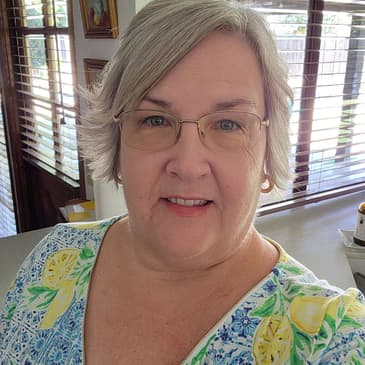
I'm Michelle, and it's been a minute since I've done a solo episode, so if I sound a little bit rusty, it's because I am.
But I wanted to share with you my health scare that I had in 2025, and it is extending into 2026, although I would say I'm about 90 to 95% better than I was eight months ago.
And I think there's a lot of lessons to be learned.
I certainly have learned a lot of lessons, and I'll talk about those,
but I'm just going to jump right in and chronologically go through what happened.
So this is April 2025. Late April 2025, I saw a vascular surgeon because I had a varicosity in my leg that was giving me some trouble.
And he was talking about surgery.
And I have to say that I'm not a big fan of surgery.
So I got a little bit scared and I did a little bit of research,
(aka, quick Google search)
on any supplements that could help improve the integrity of my blood vessels.
And the first thing that came up was a supplement called Quercetin.
Now, Quercetin is something that is plant derived. It is found in foods such as apples.
So I immediately thought,
how bad could it be?
Well, that was my first mistake.
So I started taking that in May,
and the dose was 500 milligrams a day. And it's this nasty,
yellow, thick fluid that you mix with water and it tastes disgusting. But I faithfully took it every day.
And after about three weeks,
I started having my first symptoms.
I was with my friend,
and we were celebrating my late birthday lunch at a very nice restaurant here in town, the Vintage Press.
And about halfway through our lunch, I started having some tingling in my legs, like my legs were asleep.
And I shifted around in my chair. The chair was very comfortable.
I was like, why am I having these feelings that my legs are asleep?
And then I started getting a little panicky after that because it just started progressing and my legs were kind of buzzing.
And I thought, gosh, when I stand up, am I gonna fall down? What's gonna happen?
Stood up fine, went out to the car, we said our goodbyes, everything was fine,
got home, and within the next few hours, it proceeded to travel to my arms.
So now I was having tingling and buzzing in my arms and my legs. And this is known as paresthesia.
So what did I do? I said, well,
I'm going to see how it goes,
and if it's still here tomorrow, I'm going to look into it a little bit more.
So the next day,
Friday,
I was still having it,
and I went onto an app that I highly recommend. It's called Epocrates and it's free.
I was first introduced to Epocrates when I became a volunteer shortly after I retired at our only free clinic here in the county in which I live.
As nurses who volunteer there, we dispense medications. So it's really beneficial for us to know what the medications do and what interactions they might have. And so Epocrates is great at that.
I looked up Quercetin and it did talk about some side effects,
in particular paresthesia and gastroparesis.
So I thought, okay, well, I better call my nurse practitioner and get in to see her.
Made the call.
She's out of town for two weeks.
Would you like to see another nurse practitioner?
No,
I'll just stick with mine.
Well, that was my second mistake because I know the nurse practitioners in that office.
I trust them. I could have seen someone and there could have been some intervention earlier,
but I'm really stubborn to a fault, and I said, I'll just wait.
So in the span of two weeks,
I started having some symptoms of gastroparesis.
Now,
as you know, gastroparesis is defined as the slowing or stopping movement of food,
delayed gastric emptying, and it's usually due to a damaged vagus nerve.
We'll talk about the vagus nerve in a moment because I didn't know that that's what was causing it.
But finally, when I did see my nurse practitioner, she seemed a little bit alarmed as I was.
And by now I was having a little bit more anxiety just because I was having these strange symptoms and didn't know what they were attributed to.
So she ordered a whole slew of imaging,
an MRI of the brain,
of the spine,
CT of the abdomen, the kidneys, a nerve conduction study,
a whole boatload of lab work. And the cortisol level came back elevated
and this was most likely the reason for my heightened anxiety. Now,
I'm going to go back and I'm going to say that I've always had anxiety.
I remember it from a young age,
school age,
so anxiety is not new to me. But this was like anxiety on steroids. It was really profound.
I first started taking Xanax when I went on my honeymoon in 2001 because I was flying for the first time, and I knew that it was probably going to make me anxious to fly.
So my provider at that time prescribed some Xanax for me and it worked beautifully.
I flew.
I was able to go on my honeymoon and enjoy myself,
and that was it.
So after seeing that cortisol level, we were talking about, what was she thinking? And she was ruling out MS,
a brain tumor, a spinal cord tumor, Cushing's, an adrenal tumor,
all of these things that made me really nervous.
So then she went ahead and put me on prednisone.
And her reasoning for that was because something inflammatory was going on, which I was certain of as well, and that this would help suppress it.
So I went on prednisone. And I was on prednisone for a total of 24 days.
And I am not,
I'm not being over dramatic here,
I feel like Prednisone almost killed me. I didn't have a normal reaction to it. I was on a high dose.
I was extremely shaky, which I know that is normal.
I could barely stand. At one point, I ordered a walker off of Amazon because I was just so afraid that I was gonna fall down.
I couldn't eat.
And that was due to the gastroparesis. You know, if you've been on steroids, you know that usually you get really hungry. I had no appetite.
I lost a bunch of weight really quickly.
Don't worry, I've gained most of it back,
but it was a really bad three weeks.
And so that was my kind of July and August, going to all these specialist appointments.
I saw my endocrinologist because I have Hashimoto's,
and we'll talk about that in a moment.
And I saw a rheumatologist because a lot of my rheumatoid factors were elevated,
which goes along with Hashimoto's.
So we're finishing up August off of the prednisone. September, I started turning a corner.
I started getting a little bit better.
The shakiness improved.
My gut was very, very slowly improving.
I learned lots of things to do to help my gut,
which foods to eat.
I ate very slow, very mindfully,
very small meals.
Yeah, I just learned what I could do to help myself and I did that,
and that was very helpful. My stamina improved. I honestly spent the whole summer in my recliner.
So I wasn't moving.
I was getting up and down to the bathroom,
and that was about it.
So I was very weak,
but my sleep was still really bad and my anxiety was still really bad.
So at this point,
my provider did another dexamethasone suppression test, and that came back normal.
And some of my other labs came back normal. So I started seeing a light,
at the end of a very long tunnel.
Now we're going to go back to my Hashimoto's.
One mistake that I made was not knowing,
not fully researching the supplement that I took, which was Quercetin.
Subsequently,
I took a deeper dive and you're not supposed to take this supplement if you have an autoimmune disease,
which I do. I have Hashimoto's.
So this was a big no-no for me.
And had I found that out first, this summer from hell would have all been avoided.
But I didn't.
So here we are.
So now we're into October and started having tinnitus.
Now, remember how I said that this caused damage to my vagus nerve?
Well, the tinnitus was a side effect of that, you could say,
as well as was the paresthesia and the gastroparesis.
And so in October, I found a really great acupuncturist.
And this guy is so chill. He's an acupuncturist and a Chinese medicine specialist.
And on our very first visit, he said,
I'm not going to prescribe any supplements for you.
We both laughed, but I said, that's probably a good idea.
But he did do some acupuncture treatments on me. I went every week for the month of October, and I feel like that made a huge improvement because what he was doing was vagal nerve stimulation.
And I'll have to say it was a little bit scary to be hooked up to these needles and this machine but he was very reassuring and it was actually a very pleasant experience, because if you know anything about the vagus nerve, when it's stimulated,
you feel very calm and chill and serene. And so I quickly lost all nervousness and actually fell asleep on the table a few times.
So it was very helpful. And the treatments lasted for a while.
So now we're into November and we're approaching the holidays.
I'm still not sleeping and I'm still having a good amount of anxiety,
a lot of overstimulation.
Again, these things are all due to a faulty or damaged vagus nerve.
So I'm increasing the use of my Xanax.
Now I'm going to talk about the Xanax creep for a minute, because as I said prior in 2001 was my first experience using Xanax, and it was for flying only.
And as I continued to fly over the years, I would use it and then I wouldn't use it anymore.
And then, you know, life happens and things happen, and my husband passed away and just, you know, I had breast cancer.
So I found myself having more anxiety through these experiences, and I started using Xanax more.
Now, when I talk about the dose that I was using,
the dose that I was prescribed was 0.5mg TID PRN for anxiety.
I never used it three times a day. It was very episodic. It was when I was flying. I didn't fly three times a day. I flew once there, and then maybe a week later, I flew home and I used it again.
But as I said, with life happening,
and let's go back, I never used 0.5 milligrams. I found out what dose worked for me,
and you're gonna laugh, but it was 0.125 milligrams, which is a quarter of a 0.5 milligram tablet.
Very, very small amount, right?
But that's what worked for me. Because when I did try 0.25mg,
it was very sedating and I would have to lay down and take a nap as soon as I got to my destination.
So I stuck with the 0.125 milligrams. That was enough for me.
But as I said,
as life kept happening and I kept having opportunities for anxiety,
I started using the Xanax more frequently.
I started using it for sleep.
Occasionally I would have trouble sleeping,
so I would use it for sleep.
Not until this event happened over the summer of 2025 did I begin using Xanax daily.
Okay,
so having a lot of anxiety,
having a lot of overstimulation,
not sleeping.
Here's what I was doing.
I was having anxiety about not sleeping. Am I going to sleep tonight? How long am I going to sleep tonight?
How long am I going to be awake? All of those things. I'm sure a lot of you can relate.
And so I would take the Xanax to go to sleep,
but I was only sleeping two to three hours.
And then I would wake up.
If I didn't take the Xanax again, I wouldn't go back to sleep. So I would be awake the rest of the night.
After a few weeks of doing this and being severely sleep deprived,
I started taking Xanax when I woke up.
So I took it to sleep.
I would sleep two to three hours, I would wake up, I would take it again. So I would go back to sleep.
But as you know, one of the side effects of Xanax is rebound anxiety.
I was waking up and I was very, very anxious. And then I would take it again,
sleep for a couple hours,
wake up, be very anxious again.
And if I didn't want to take it again,
I would just be anxious and sleepless. And just the next day I would feel absolutely horrible. So then I was taking it for naps, and I was just taking it a lot.
Even though I was taking a small amount. I was developing a dependency on Xanax.
The last two weeks that I took Xanax was probably the scariest two weeks of my life because I began having suicidal ideation almost constantly.
And that's not like me.
I wasn't sleeping. I was having severe anxiety.
I was overstimulated.
I was just not doing well at all.
And for anybody that has done research on chronic sleep deprivation,
it can lead to suicidal ideation and it can actually lead to suicide.
And knowing this, it scared the crap out of me.
So at this point, I made mistake number four.
I think I've lost track, but I think it is number four and I just stopped the Xanax cold turkey. Would not recommend.
I'm a nurse. I knew that,
but I mistakenly thought that because I was on such a low dose that I wouldn't have much of a problem, if any,
and this was not true.
The next three days were pretty much hell.
A lot of muscle rigidity,
insomnia, still not sleeping, severe anxiety.
Xanax had served me well in the past for episodic things like flying,
being in the car long distances,
those kinds of things.
But it was not serving me anymore.
It was hurting me,
and I knew I had to get off of it.
Every day that I was off of it,
I got a little bit better than the day before.
Looking back, it was really stupid. And I feel really blessed that I didn't suffer any horrible consequences of stopping a benzodiazepine cold turkey because there are so many bad things associated with doing something like that.
I don't know if that was divine intervention.
I would love to believe that it was, that somebody was looking out for me,
because I certainly was not in the frame of mind to look out for myself.
But I made it past the three days, and then the next week,
I had the best sleep of my life. Every single night. I was sleeping so good.
And I know that week of sleeping well and feeling rested and renewed really helped in my recovery.
So that's when I made sleep like the number one priority.
Everything else is going to revolve around my sleep.
And it worked.
The next week, I had increased energy.
I was more active,
and I was less overstimulated,
or I might have just gotten better at recognizing when I was overstimulated.
And when I say overstimulated, I mean things like children,
like my grandkids, the TV, the radio, going to a restaurant. I couldn't go to restaurants for months; it was way too overstimulating.
All the noise. A lot of restaurants play music in the background, a lot of activity.
So, yeah, I didn't go to restaurants for quite a while.
But I got really good at figuring out when I was overstimulated. And I would just turn off the TV and go outside.
Nature is a beautiful healer.
I would go outside, sit on my porch, look at the beautiful trees, feel the wind on my face,
feel the sun on my body,
and just be quiet.
And it was very, very helpful.
Highly recommend.
So now where are we? We made it past Thanksgiving,
and we're into December. And, man, December, what a month, right?
But I've just been improving on all counts,
really getting to know myself better and advocating for myself,
doing things like watercoloring,
just activities that I always enjoyed but I had kind of put away for a while,
definitely for this summer, because it was just too much.
But started reading again,
listening to music,
things like that, and those things are very helpful.
And now we're into January.
Do you believe it? It's 2026. And I'm continuing to improve.
I'm continuing the acupuncture,
and my anxiety is greatly reduced.
So I'm back to walking a couple miles a day now, which I really enjoy.
So all of these things are very healing and leading me to kind of getting back to my normal,
but in a new way.
All the specialists that I saw during this time, the neurologist, the neurosurgeon,
the rheumatologist, the endocrinologist,
all of these specialists said that this process will take 18 to 24 months to completely heal.
It's already been eight months, and I feel like I'm so much better,
so hopefully it won't take that long, but if it takes that long, it does. I just, I have to be open to it,
and I want to do it right,
and I want to heal completely,
that's my goal.
So what are the takeaways?
Because I made a lot of mistakes. I definitely made more than four mistakes in there.
Those are the big ones. But I made a lot of little ones, too. You know, I've always been one of those people that when something happens to me, I say, what is the lesson?
Like, what am I supposed to learn from this?
Is there a lesson? What is it?
And the takeaways that I learned are to reach out,
especially with the suicidal ideation.
I didn't tell anybody.
I didn't tell anybody until after it was gone.
And that was because I was ashamed.
You know, I knew that it was due to the sleep deprivation and the medication, the Benzo, but
I was just ashamed. I was embarrassed to say that I was feeling this way.
And it would have been such a shame for me to kill myself.
Yeah,
Just would have been a shame.
So reach out.
Reach out, because there's people that love you,
that need you in their lives, that value you,
and you have hopes and dreams and things that you want to do, too.
And so don't cut it short by being stubborn.
Reach out.
Tell some family and friends they could help you get help.
I know that my provider would have helped me if I would have told her. Haven't told her.
So that's a real good lesson. And be persistent. And I say that because I live in a pretty rural area, although it's growing, and we don't have a lot of mental health services here, although that is improving as well.
But during this time that I was suffering, I did reach out. I did reach out to some therapists in my area,
and I called three therapists. I got three answering machines. I left three messages,
and I got zero calls back. There were some things that I could have done. I could have called again.
I could have called my insurance and said,
these are the providers that you cover and they're not calling me back.
They could have helped me intervene.
Yeah, I could have been more persistent.
Again,
I'm going to forgive myself because I was not in the right headspace. I was in a really dark headspace. And if you're a provider out there, if you're a therapist and somebody calls you and leaves a message where you can tell that they are in a dark space,
call them back please.
Another takeaway from this is the shame.
There's no shame in having depression or anxiety or suicidal ideation.
Those are things that happen to good people and not so good people all the time.
There's no shame in it. There are circumstances where these things happen.
You know, I almost feel silly for feeling embarrassed now when I look back.
But again, I'm thinking I shouldn't feel this way.
I'm a professional. I'm a nurse. I'm a nurse, damn it. I shouldn't feel like this.
Really, Michelle?
Yeah, you're a nurse.
How many nurses and doctors and other medical professionals kill themselves every day?
You're not immune.
Research everything,
especially if you have an autoimmune disease or any other disease,
make sure what you're taking is okay to take.
Seems so simple, but man, I went way off and I regret it, so research everything.
Don't think that supplements are harmless because supplements are not regulated by the Food and Drug Administration.
They can make any claim they want and they don't have anything to back it up.
There can be varied doses in their supplements.
It might say you're taking 500 milligrams, but you might be taking 750 milligrams.
So don't think that supplements are harmless, especially if you have anything where your body could interact with the supplements or the medications.
That's my story and I'm sticking to it.
If you're still here, I appreciate you listening.
You know, I'd love to hear from you. What would you do? What would you do?
Did you have a similar experience?
Do you have any gems that you would like to give to me?
You can always reach me on my Instagram at @theConversingNursepodcast.
You can reach me on my website, the conversingnursepodcast.com. If you have any comments, I would love to hear them.
Okay,
that's all for 2025, and I did put in all my Christmas cards this year that I am done with 2025 and I'm looking forward to 2026 and what's coming up in 2026.
Well, I already have some fantastic guests coming up.
So first we have a nurse practitioner who has her own clinic,
her own mental health clinic. She's a schizophrenia expert and I'm really excited to talk to her because I don't know much about schizophrenia.
We have a clinical product leader coming up and she's in product development IT, but she develops products for healthcare professionals.
We use them every day.
Some of them work, some of them don't work.
So it'll be great to get her spin on it.
Then I have an author of historical fiction novels involving nurses.
I've read one and it's fantastic. I want to read them all now.
So excited to talk with her.
You guys might remember Nicole Cromwell in episode 46.
She is a former ICU nurse from Stanford. She's an artist and she now does art full time.
She also provides continuing education credits for nurses that are art related and it's so cool. I took her CE courses and I highly recommend them.
So we're going to hear from Nicole again because she's doing some fantastic things, so we'll get some updates from her.
I'm speaking with a former reconnaissance Marine who is now a legal nurse consultant,
which again I think is so cool.
You guys have heard several of my interviews with military personnel.
Love talking to the military,
so I'm excited to talk to him.
And then we have a physician who founded her own clinic specializing in non- surgical spinal care.
I think this is a growing field because people are looking for non surgical options.
I certainly am a fan of non-surgical options.
So yeah, looking forward to talking to her too.
And then we're talking with a New York City nurse who is the co-founder of a company called Nurse Connect and this company allows nurses and patients to connect directly with private-pay, in-home health care.
Again, I think this is an up-and-coming field and really excited to hear what's coming down the pike from her.
And then I have this amazing nurse,
an ICU nurse and a nurse practitioner student who has the most awesome Instagram @thehumblenurse.
He provides education and resources through his Instagram but he's doing great things and excited to talk with him as well.
So that's what's coming up in 2026 and that's only half of the year. I haven't even done the other half of the year because I'm not going to look that far forward.
I'm just going to try to take one interview at a time,
one day at a time.
That's another great takeaway. Don't live in the future.
Nobody knows what the future holds.
Live in the present.
That means today, that means now.
And it's great talking with you guys again.
Be well, be safe,
take care.