
There’s a certain kind of pain a lot of people learn to live with.
It starts as something small—a twinge, a tightness, a bad shift at work. And then, slowly, it becomes part of your normal. You stretch it out, push through it, tell yourself it’s just part of the job… part of getting older… part of life.
And if you work in healthcare, you probably know this story all too well.
You spend your days lifting, turning, reaching, carrying—taking care of everyone else—while your own body keeps asking for attention you don’t have time to give.
So what happens when the pain doesn’t go away?
When the usual answers stop working?
When you start to wonder if this is just how it’s going to be?
Today’s guest has spent over 30 years asking those exact questions—and refusing to accept the idea that chronic back pain is something people just have to live with.
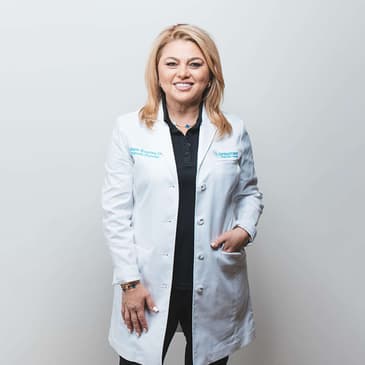
Dr. Brigitte Rozenberg is a Doctor of Chiropractic and the founder of Spinatomy Spine & Disc Centers and the creator of Advanced Spinal Restoration Therapy. Her work has helped thousands of people find relief from chronic pain—without surgery, without medication, and without giving up on their lives.
We talk about where traditional care gets it right, where it falls short, and why so many people—especially caregivers—end up carrying pain in silence for far too long.
If you’ve been pushing through, powering on, or quietly wondering if things could feel different… this one is for you.
In the five-minute snippet: Aye, Chihuahua! For Dr. Rozenberg's bio, visit my website (link below).
Caring for Others While Caring for Your Spine
Contact The Conversing Nurse podcast
Instagram: https://www.instagram.com/theconversingnursepodcast/
Website: https://theconversingnursepodcast.com
Your review is so important to this Indie podcaster! You can leave one here! https://theconversingnursepodcast.com/leave-me-a-review
Would you like to be a guest on my podcast? Pitch me! https://theconversingnursepodcast.com/intake-form
Check out my guests' book recommendations! https://bookshop.org/shop/theconversingnursepodcast
I've partnered with RNegade.pro! You can earn CE's just by listening to my podcast episodes! Check out my CE library here: https://rnegade.thinkific.com/collections/conversing-nurse-podcast
Thanks for listening!
[00:00] Michelle: There's a certain kind of pain a lot of people learn to live with.
[00:04] It starts as something small,
[00:06] a twinge, a tightness, a bad shift at work.
[00:10] And then slowly it becomes part of your normal.
[00:14] You stretch it out, push through it, tell yourself it's just part of the job,
[00:19] part of getting older,
[00:20] part of life.
[00:22] And if you work in healthcare,
[00:24] you probably know this story all too well.
[00:27] You spend your days lifting, turning, reaching, carrying,
[00:31] taking care of everyone else while your own body keeps asking for attention you don't have time to give.
[00:39] So what happens when the pain doesn't go away?
[00:42] When the usual answers stop working?
[00:45] When you start to wonder if this is just how it's going to be?
[00:49] Today's guest has spent over 30 years asking those exact questions and refusing to accept the idea that chronic back pain is something people just have to live with.
[01:00] Dr. Brigitte Rozenberg is a Doctor of Chiropractic and the founder of Spinatomy Spine and Disc Centers and the creator of Advanced Spinal Restoration Therapy.
[01:12] Her work has helped thousands of people find relief from chronic pain without surgery, without medication,
[01:20] and without giving up on their lives.
[01:23] We talk about where traditional care gets it right,
[01:26] where it falls short, and why so many people,
[01:29] especially caregivers,
[01:31] end up carrying pain in silence for far too long.
[01:35] If you've been pushing through, powering on, or quietly wondering if things could feel different,
[01:42] this one is for you. In the five minute snippet:
[01:46] Aye, Chihuahua!
[02:05] Well, good morning, Dr. Rozenberg. Welcome to the podcast.
[02:09] Brigitte: Thank you. Good morning. Thank you for having me.
[02:12] Michelle: Well, it's my pleasure. I'm really excited to talk to you today because I just have so many questions about what you do and especially what you do for nurses and other healthcare providers.
[02:25] So let's just get into it. Take me back. What first drew you into chiropractic care?
[02:32] Brigitte: So it's very interesting because my mother was a doctor,
[02:36] and I'm saying was, because unfortunately, I lost her years ago.
[02:40] And so, you know, I always grew up around medicine and healthcare,
[02:45] but it was very interesting cause as I was growing up, her unique approach to how she handled her patients and how she was with,
[02:54] you know, in her kind of practice,
[02:57] it was, it always had like a holistic feel to it. Like she always, like, if you don't need to take this, you know, antibiotics, let's try to avoid doing that.
[03:06] If you don't need to take that, let's try to avoid doing that. I mean, at that time it was like that.
[03:10] And so it always drew me into the holistic approach. It was something innately probably the way I was around medicine.
[03:19] But more than anything, it was her relationship with her patients and the compassion and kind of getting them through almost like the system.
[03:29] Because, you know, when you are a patient and you need tests or you need referrals or you need this, you need that, and sometimes you get so stuck
[03:39] in that system, kind of like you don't know where to go, what to do and who's going to give you the answers. And I always felt like throughout my whole life, the way she handled those kind of relationship, the way she's like, don't worry, I'll get you in.
[03:53] Don't worry, I'll try to figure it out for you. Like, her whole approach was extremely holistic. And so when I, I always knew that I want to do anything, something in medicine because I love it.
[04:01] My grandma was a nurse and again, it's just this feeling of how they treated patients, how the patient almost became part of their life. Their stories, they're like, it's not, wasn't just going to work for another, you know, workday.
[04:15] And so when I personally had an encounter with chiropractic because I myself was involved in an accident and I had some pain, you know, it just felt like this is what I destined to do.
[04:27] You know, at that time when I started, I couldn't really interpret it like that, like the way I'm interpreting it right now.
[04:33] But it just felt like it, it just something innately felt like this is what I need to do.
[04:39] And fast forward 30 years in,
[04:41] I really feel like this is the best thing that I could have done. Because what I am,
[04:45] you know,
[04:47] the treatments that I'm offering now,
[04:49] the success in practicing today and, and the whole approach,
[04:55] it's probably something I was destined, but that was my.
[04:59] When you become a little older, you start reflecting of how it was when you grew up.
[05:03] And those were my experiences. And you know, when I think about it, I had a mentor one time told me,
[05:09] the profession chooses you, you don't choose the profession.
[05:13] And I really, I couldn't understand it. Like, okay, I mean, like, I always knew I want to do something in medicine or healthcare, but I really didn't know exactly to what extent.
[05:22] But now,
[05:23] you know, fast forward, I can really feel that this is what I'm destined to do, because there's so much more than I can do, and there's so many unique things that I offer now in my practice.
[05:34] That just the way I think and the way I put. I don't know, it. Sometimes it comes from within.
[05:40] And so that's my story with chiropractic and how I chose this particular profession.
[05:45] Michelle: Wow. I love it. I thank you for sharing your story.
[05:49] My listeners know that I am a real nerd when it comes to sharing stories about how people get into the professions that they're in. And that's so fascinating.
[05:59] I love that. Your mother sounded like the type of,
[06:03] Well, you just described her as just such a compassionate caregiver to her patients. And I think that sometimes in medicine,
[06:15] we're missing that today.
[06:16] I think that because of
[06:19] And I don't think it's by any fault of the practitioner. I think that the system is really, really.
[06:25] Brigitte: I was just going to say, the system.
[06:28] Michelle: The system is just really messed up, and it's not set up so that practitioners can spend time with their patients. And I feel like the only way that you can really know your patients is to spend time with them.
[06:44] And your mom definitely had that.
[06:49] and it sounds like you have it, too. You obviously learned from her.
[06:53] And I love that you said the profession picks you. Like, you don't pick the profession. I think so many nurses and physicians and other healthcare providers could really, that would really resonate with them because a lot of people get into it because it calls them.
[07:12] Right. It's a calling.
[07:14] Very cool. Thank you so much.
[07:16] Brigitte, was there a moment early on where you thought, like, this is what I'm meant to do?
[07:22] Brigitte: Yeah. I mean, I remember my first day. Again, this was 30 years ago.
[07:27] And, you know, in 30 years, we grow and evolve and develop and learn and become more mature emotionally, physically, emotionally. But, you know, mindset, like, things change.
[07:39] And I remember. I literally remember the first day of chiropractic school,
[07:46] and I was in a university,
[07:48] it's called Cleveland University here in the LA area.
[07:51] Wasn't too big, but it was not small, and they had a big campus in the Midwest.
[07:56] And I remember that first day where I was just, wow, I.
[08:01] Something in me cannot tell you why and how.
[08:05] Felt like maybe I can do great things here,
[08:09] maybe. I think it feels like it.
[08:12] It really felt like it. I actually.
[08:14] I actually resonated on that feeling.
[08:17] I want to say within the last six months to a year when I really took my practice to another direction and I felt, wow, I remember that moment. I'm like, why would I feel that way?
[08:28] Almost feel, you know, when you go to school and you think like, you're going to be like this student body president or like, in a leadership role in your class.
[08:39] I don't know. I never thought that this is what I was gonna do because this was, you know, it was already graduate school. It wasn't a college.
[08:47] But something in me felt that way.
[08:50] And I didn't even know how to explain it at that moment. It just felt like it's small enough,
[08:58] friendly enough, and family-like enough where they will allow,
[09:03] you know, and I'm not super confident in someone that's gonna go and kind of like, you know, become a leader in something. You know, maybe I have it in me, but it's.
[09:12] I don't. That's not my, like, that's not. I'm not pushing myself to do that. But something in me, when I started that school, that first day,
[09:20] felt like that.
[09:21] And now when I kind of think about it kind of planted a seed because
[09:26] And we're going to talk about what I do. And I think that the unique,
[09:30] like I almost feel today that I'm trying to trailblaze something that doesn't,
[09:34] It exists, but maybe not to that extent in my profession.
[09:38] And it just, it's fascinating how, how life takes you to all these different journeys. Sometimes you don't even know how.
[09:44] Michelle: That is so true. And it's so great to hear you talk about it. You know,
[09:50] with 30 years experience behind you now,
[09:53] to go back to that beginning and feel those feelings of like,
[09:59] I can make a change,
[10:00] I can change things in the world with my talent,
[10:05] one person at a time.
[10:08] And that is really powerful. And we do feel that first, I think like you said,
[10:13] going back to high school, when you are getting involved in student body and maybe in politics or efforts to change the world, and you do feel like,
[10:24] you know, I can do this. You feel empowered. And that's so cool that you brought that with you through the 30 years in your practice.
[10:34] and you are, you are changing the world.
[10:37] Brigitte: I'm trying. It's not easy,
[10:39] but, you know, there's just a lot. There's a lot to give and there's a lot to learn, and there are a lot of people that need help.
[10:48] And if you can be in a position where you can help someone,
[10:52] there's nothing more gratifying than this, in my opinion.
[10:56] Michelle: Absolutely true. Well, Dr. Rozenberg, most of my audience works in traditional healthcare. And when they hear chiropractic, reactions can range from curiosity to skepticism.
[11:10] Brigitte: Right.
[11:11] Michelle: What do you wish they understood better?
[11:14] Brigitte: So I am by trade a chiropractor and that's what I went to school for.
[11:19] But my practice is not traditional chiropractic practice. Of course we do the traditional chiropractic work.
[11:26] But people,
[11:28] I think in today's world more than ever understand the differences in healthcare.
[11:34] And there is room for traditional healthcare and the regular medicine and everything,
[11:40] but there has to be room to understanding the holistic approach. And when I'm saying holistic, I'm not talking about crystals and all those things.
[11:49] I'm talking about understanding that our body has the ability to heal itself if you provided the right environment.
[11:56] And I'm talking about the fact that there are things in healthcare in today's world that you can offer patients and they can get better in a certain way, better than what traditional medicine can offer.
[12:08] I'm not against traditional medicine. I think it saves people's lives every single day. And we're grateful that we are in a era of medicine and healthcare that literally allows people to live a lot longer with medication and all of that stuff.
[12:24] It's not a black and white. There's always an in between the treatments, the patients that I see in my practice and the treatments that I offer,
[12:32] it's the advanced conservative care. Just like everything else in the world,
[12:38] medicine is evolving. Healthcare is evolving.
[12:41] Traditional healthcare versus technology based healthcare. These things are evolving too. I mean, look at our phones.
[12:47] Everybody has a smartphone today. Ten years ago,
[12:52] we had a flip phone or whatever. However many years nobody thought we're going to have a computer in our fingertips 24/7, right? That wasn't even a thing. I mean,
[13:02] I am not considering myself ancient, but I didn't have a computer when I went to college. I didn't even have a laptop.
[13:10] So things are evolving really fast, especially today.
[13:14] And there are a lot of advancements in medical technology.
[13:19] That's what makes me so untraditional is because it's not only about adjusting or cracking the bones or doing all these different things. It's about understanding the human body and knowing that for this particular condition, these are the options that are available.
[13:34] And I always say,
[13:35] you don't go to the cardiologist when you have a skin issue. You go to the dermatologist, you don't go to the,
[13:42] you know, cardiologist, when you have a brain issue, go to the neurologist. So you have to understand that every specialty, even in nursing, I'm sure you know that too. Like, you focus on something very specific and you master that skill.
[13:56] You need to have the general understanding of all of it because you're in healthcare.
[14:01] But you focus and you master one particular area and that's your specialty. So you choose to go to a specialist based on a particular issue that you're dealing with as a patient.
[14:12] And so in chiropractic, it's the same thing. There are some that are just traditional. That's all they do, they just adjust. There are some that are specializing only in nutrition, and that's their focus in their holistic way.
[14:23] There are some that focus on sports and rehab and things like that. I chose to focus on the spine and the disc,
[14:30] and I am the alternative to back surgeries.
[14:34] Not that you don't need it, if a patient needs it, they should have it done. But in the conservative care world, there are new things that people just don't know.
[14:43] I'm the alternative that you didn't know existed and you wish someone would tell you, can I at least try it? Because just like you send patients for physical therapy or chiropractic or acupuncture or whatever that is,
[14:55] there are new things out there that can help a patient go from point A to point B before they decide to go into those radical,
[15:04] invasive,
[15:05] serious procedures, that there is no way back. And I think that in today's world, people deserve to have an option, as they do in many different things,
[15:15] you know, versus just going one way. And that's my practice in chiropractic. So I know that people may think, oh, it's just chiropractic, they'll crack your bones. And some people are like, oh my God, they can crack your neck.
[15:28] And that's too dangerous. It's not dangerous. It's understanding. You can go to a regular doctor and he'll give you the wrong medication because he doesn't pay attention. That can be also very dangerous.
[15:38] So you have to go to people that know what they're doing, that have the reputation, education, and you vet them out like anything else you do. And, and I think it's, that's kind of like where my focus is to educate and to explain what it is that I do.
[15:55] You know, every consultation in my practice is free. Come on in, let's talk. Maybe I cannot even help you, but if I can at least I'll give you an option and you make the decision.
[16:05] So that's my approach.
[16:07] Michelle: I think more and more people are seeking out non surgical therapies.
[16:15] I myself am not a fan of surgery and if there's something I can do to help myself non surgically, I want to do that.
[16:25] I talked about skepticism a moment ago and I was definitely skeptic that chiropractic could help me. I had never seen a chiropractor until actually the pandemic.
[16:39] And at that time I was in CrossFit and I injured my IT band.
[16:46] This was right at the time when the pandemic started. And of course there was a lot of strife about that. And working in healthcare during that time, it was just absolutely crazy.
[16:57] And I was going into work every day with a lot of fear and just a lot of dread.
[17:06] And as many healthcare providers were, definitely.
[17:10] And after months of this and kind of hobbling around with this IT band that was really messed up and having a lot of pain, having a lot of tightness in my hip and pain in my knee,
[17:22] you know, I even went through physical therapy. I had like three months of physical therapy.
[17:28] Didn't get better. I thought, you know what, I'm gonna try chiropractic. And sent the message out to my friends,
[17:35] does anybody know a good chiropractor in town? Right? Because that's how we do it. Word of mouth. We ask those people that we love and trust.
[17:45] And so somebody referred me to this gentleman here in town and he also practiced traditional Chinese medicine,
[17:53] of which I knew nothing about as well,
[17:56] but went to him and I thought, you know, he was just going to be treating my hip, right?
[18:03] And at first that's what he did. The first few sessions, you know, he did some things that helped kind of loosen it up.
[18:10] One of the things I noticed about him is he didn't talk during the sessions at all.
[18:16] He just gave like commands, like,
[18:19] turn this way. There was absolutely no small,
[18:22] like small talk, there was no chatting,
[18:26] nothing like that.
[18:27] He was very serious.
[18:30] And about halfway through the treatment, I thought, I don't know about this guy.
[18:34] I don't know if I want to see him again.
[18:36] He's kind of strange, but my hip is feeling better,
[18:40] you know, so I'm going to keep going.
[18:43] And about, I think maybe five sessions in,
[18:48] he said to me, after one treatment, he said,
[18:51] you have a lot of tension in your body.
[18:55] And I was like,
[18:57] yeah,
[18:58] I know, my hip is like so tight.
[19:01] He's like, no,
[19:03] no,
[19:03] understand me.
[19:05] You have a lot of tension in your body,
[19:09] in your mind. Like I can feel it.
[19:13] Like I can feel when you come in, I can feel the tension, I can feel the fear. I can feel the,
[19:21] the,
[19:21] you know, the sadness.
[19:24] And that's exactly what I was experiencing.
[19:27] So tell me about the mind, body connection. Like, do people get that when they come see you? Do they just want you to treat their back or their hip? Or do they, do they need something else?
[19:41] Talk about that.
[19:42] Brigitte: You know, it's interesting you're mentioning that because I treat a lot of patients with chronic pain.
[19:48] That's my thing. Chronic pain from herniated, bulging disc, sciatica. I treat patients that need surgery that don't want to have it done.
[19:58] Tried surgery, it didn't work.
[20:01] Had fusion and they're in chronic pain.
[20:04] Did epidurals. Like, that's my world.
[20:07] But there are some patients that, you know that you get them in their stages of their condition that you've done everything that there is to do to get them better,
[20:18] and they've done everything outside of what you've done to get them better, and they're still not better.
[20:27] And when you start digging deeper,
[20:30] you know, because we treat and talk about the physical pain, but when you start digging deeper into their condition and you start understanding the almost, I'm not gonna call it weirdness,
[20:44] but the different,
[20:47] the different pain patterns that they experience,
[20:52] you understand that that pain pattern has nothing to do with what your physical condition shows or your MRIs or your exams or anything. It's like almost two different things. And so you're starting to,
[21:04] when you start to understand human physiology and anatomy and,
[21:08] you know, all of those, you understand that there is something. And we already know epigenetics, we know that this is science.
[21:15] The way that, you know, the neuroplasticity, the way we,
[21:18] interpret things, the way our body takes in traumatic events and how it manifests itself physically.
[21:26] There is a huge connection between the mind and the body. And it's proven with science and research and all of that today that many people that, that experience a traumatic event,
[21:38] it manifests itself in some kind of capacity energetically in their body,
[21:43] whether they, and they need to deal with it almost in a,
[21:47] They need to fix it physically because they need to fix physically the, like you needed to fix the hip pain and the area that of the discomfort and problem.
[21:58] But they have to work on their mindset to get rid of that remaining 20, 10, 15, depending on where you are in your health, in your journey. Percent of pain that you just internally keep.
[22:13] And you know, again,
[22:15] years ago, and I've heard that many years ago,
[22:18] that it could be something that your body just energetically has from probably even generations ago. We already know epigenetic. We know you can carry those things with you,
[22:29] Even though I will say the uneducated person. But it's not that they're uneducated. The uneducated in this field person.
[22:37] It's hard to understand, and it sounds a little like voodoo, but it's really not.
[22:41] And there is a huge connection between the mind and the body. I had a patient the other day who was in his early 40s.
[22:48] He had two back surgeries.
[22:51] He has four kids, little kids. He had a laminectomy, which is a relatively minimally invasive. And then he had a fusion eight years ago. So he had it when he was really young.
[23:02] The guy is in so much pain that at one point when I was with him in the treatment room and we had a conversation, he broke down.
[23:12] He said, I am in so much pain 24/7 that it takes me to dark places. And I am scared because I have four little kids.
[23:21] And that I almost feel like that's why I do what I do, because I'm able to have a con, I'm not a psychologist, nor am I a therapist, but as a,
[23:30] In healthcare, you always become a little bit of that, even without the formal education, because you really want to be there to comfort your patients.
[23:37] And I, you know, when I had this discussion, I'm like, okay, I'm going to help you. You're going to listen to me now. We're going to do this. You know, sometimes you have to have this intervention, right?
[23:46] Going to listen to me. We're going to do this. You're going to come here two times a week, three times a week. You're going to call me if you have a problem.
[23:51] We're going to go through it.
[23:53] And so we did. And we did this and that, and all these different things we did in terms of like the therapies and the different modalities we used on him.
[24:02] But I told him, like, look, you. You have little kids. We need to work on that. Maybe a little therapy, maybe meditation, maybe something. I don't know, we'll figure out.
[24:11] But I think that he went home and he said to me, cause I saw him the other day and he said, I feel better. I said, okay, good. Oh my God, thank God.
[24:20] I'm so excited. What changed?
[24:22] And except the fact that we added certain elements in the treatment that we didn't do before he said that.
[24:28] But what really changed is I started to listening to podcasts about chronic pain and I started to understand that I need to control my psychology and I need to control my mindset because I got to the point where
[24:43] I realized that I'm either going to go this way or I'm going to have to go this way because I can't live in this middle.
[24:49] But once I realized that and I started to listen and they started to work on my psychology,
[24:55] just listening to this podcast or listening to this book, whatever, but he said podcast,
[25:00] then I started to feel better.
[25:02] And that is a validation.
[25:05] You know, we all know it. I see it. I'm sure you as a healthcare provider, you know, we know things, we evolve.
[25:11] It's not always a textbook case.
[25:13] The pain,
[25:14] because I'm dealing with pain,
[25:16] lives in the mind in addition to the fact that it lives in the body.
[25:21] And we need to make this connection and try to break the pattern. We need to work on the physical and we need to work on the emotional.
[25:29] And if we don't,
[25:31] there something is going to be missing. You're never going to solve this chain that you are constantly in.
[25:37] And this is a very clear example for me how someone that's not so into all of that didn't really know what it's all about, you know,
[25:45] but once he started to work on it and, you know, we talked about that,
[25:49] then all of a sudden feels better. We know that pain kind of gets stuck in your, you know, brain here,
[25:56] whatever that in the hypothalamus or the, whatever that that area is that it gets stuck in.
[26:02] You gotta break that pattern. And if you work on yourself, you can deal with situations in a lot easier way.
[26:08] And that's why it's not voodooism,
[26:12] it's intelligence and education to understand that there is a huge connection between the body and the mind, no matter in what area and what problem you're dealing with. And you have to almost work on both simultaneously if you want to get results.
[26:28] Michelle: You know, I think the other thing that you offered him that may have decreased his pain is hope.
[26:34] Brigitte: Yes, right.
[26:36] Michelle: Chronic pain.
[26:38] You, I've experienced chronic pain for decades. And you get to the point where you just feel hopeless, right? Like there is no way out of it.
[26:47] And I could see how it could take people to dark places for sure. And just you,
[26:52] you know, getting in his face and saying, look, we're going to work together,
[26:57] we're going to attack this, you know,
[26:59] in many different ways.
[27:02] And probably for the first time in a long time,
[27:04] he felt hopeful that this was going to change.
[27:09] And that's the power that we have, I think, in healthcare is we can give people hope when they're feeling so hopeless.
[27:20] Brigitte: Correct.
[27:22] Michelle: Brigitte, what kind of patients were you seeing that made you realize something wasn't working in the traditional model?
[27:30] Brigitte: I was seeing primarily patients that suffer from herniated and bulging disc, sciatica, pinched nerve,
[27:36] all these different spinal conditions that, you know, they feel better with chiropractic care, but they never fully recover from it.
[27:44] And there is always a limit of how much you can go. And I always needed something else to offer them to feel better because, you know, you can do certain things with just traditional chiropractic care,
[27:57] but a person, a person that comes to you with a large herniated disc that causes pain shooting down the leg, you can't necessarily adjust them and twist their back,
[28:05] they're not gonna help them. So there's other things you need to do.
[28:08] And so those are the patient that. Then I realized, you know what we need, we need to offer them something else.
[28:14] this is not going anywhere. So specifically for those ones. So again, it just drew me into doing, into treating patients that have severe pain and serious condition. Not just traditional kind of wellness, which is fine and it's all good and I can do that too, of course,
[28:31] but that's kind of like what drew me.
[28:33] And so then I, about seven years ago, implemented technology into my practice. And, you know, technology is evolving. I always had good technology in my practice, but what was good 20 years ago, 10 years ago and five years ago is different.
[28:46] Completely different. Right. Things evolve and change.
[28:49] And so now I offer a treatment for those conditions utilizing advanced technology like non surgical spinal decompression, laser therapy, red light therapy, softwave,
[29:02] different nerve stimulators which are not invasive, and all these different non invasive modalities that are all FDA cleared, they were all registered, they're all proven. There is a lot of research,
[29:14] but new things, just new innovations, you always have to innovate.
[29:18] And we achieved great results utilizing those technologies for those patients with the severe conditions that they presented.
[29:26] And we were able to get them through without needing any invasive procedure, but really getting results.
[29:32] So it's the most advanced way in conservative care. There's always,
[29:39] no matter who you go to, any doctor will tell you, try conservative care approach,
[29:44] especially in my field,
[29:46] herniated, bulging disc sciatica. When you go to an orthopedic surgeon, a neurosurgeon, they'll always tell you, try physical therapy, try the injection, try this, try that. If it doesn't work, we'll do surgery.
[29:56] Unless it's a life, in that situation,
[29:58] there is a major nerve impingement, something that will really alter your life and will would be become,
[30:03] you know, dangerous, so to speak, for you that there's no questions about that, or some kind of a pathology that you need to solve or resolve. But, if you're not in that category and you're in between,
[30:18] there are approaches and there is a treatment in conservative care that can help you get from point A to point B without resorting into the invasive, dangerous, irreversible procedures that we all know,
[30:32] unfortunately don't always have good results.
[30:37] They just don't. And it doesn't have anything to do with the fact you can go to the best doctors and they can do the best procedure, and the procedure can be extremely successful and the outcome can be favorable from a physiological and anatomical perspective,
[30:52] but it does not mean that the patient is responding well to these procedures,
[30:58] if you understand what I'm saying.
[31:00] Michelle: Well, I want to talk about your signature work. You developed Advanced Spinal Restoration Therapy, in plain terms, what is it?
[31:09] Brigitte: So Advanced Spinal Restoration Therapy, in plain terms, is basically a treatment protocol that combines multiple technologies in a very specific formalized pattern.
[31:22] So we use certain things at a certain time to resolve those conditions, like a herniate and a bulging disc, without needing to go under the knife.
[31:32] So it's a protocol that's based on three pillars. Repair, restore, and rebuild.
[31:38] First off, so if you want to resolve the issue and really get complete symptom resolution, where you're back to normal,
[31:46] we have to take those, we have to look at the MRI, we have to evaluate you,
[31:52] we have to see if you're first of all a candidate or not. And if you are,
[31:55] then we go through this pattern of treatment called repair, restore and reveal where we first have to repair the disc,
[32:02] repair the problem that's existing, getting deep into the area with non surgical spinal decompression, resolve the inflammation using laser therapy, all these different machines I was talking about,
[32:13] then restore the function back.
[32:15] Because what happens when, when you have those kind of problems? You cannot walk,
[32:21] you have pain radiating down your leg, you don't feel your feet, you don't feel your toes. Like you have all these different symptoms. Right. You run to the bathroom cause it's pressing on the bladder.
[32:29] Like whatever that problem that you have,
[32:33] the way it presents itself, and then you restore the function and then you rebuild everything back up because you need to. It's a cycle. You can't just do one without the other.
[32:43] Michelle: Again, a holistic approach. Right?
[32:46] Brigitte: Holistic approach. Allowing body to do what it needs to do to heal, but providing the right environment to do so. Does that make sense?
[32:56] Michelle: Absolutely. Yes. Thank you for the explanation of that too.
[33:00] Brigitte: Sure.
[33:01] Michelle: So you kind of already shared a story of one of your patients that had some success.
[33:10] What's the kind of case that makes you think like, this is why I do this work?
[33:16] Brigitte: This is a fascinating story. I had a patient. He is,
[33:21] when he first came to me, he was 59 years old.
[33:24] So I'll give you timelines because it's important. So he came in October and he had sciatica. He had pain.
[33:32] Someone told him to come see us. He did.
[33:34] And he's like, well, you know, I don't know if I can,
[33:38] you know, afford it. I don't know if I want to do that. Yeah, it's interesting. But, okay, let me see what else I can do.
[33:44] He had back pain and sciatica. It was pretty bad, but, you know,
[33:48] and so he didn't, he didn't start treatment at that time.
[33:52] And apparently between that month, October to after, when he came to see us, which was March. Okay. So a few months, five months, he went to the hospital multiple times.
[34:04] And he got to the point where he couldn't walk.
[34:07] And so,
[34:08] you know, he couldn't walk. And when he went to the hospital, they told, I don't know if it was a nurse or a doctor someone told him, he said, look, he ended up being in a wheelchair.
[34:16] The pain was so severe, they gave him some medication.
[34:19] But someone told him, if you don't fix this, however, you will probably they told him, maybe do surgery or whatever. If you don't fix it, you're going to end up being in a wheelchair for the rest of your life.
[34:29] The guy is about 59, 60 years old,
[34:32] pretty fit.
[34:34] I'm not sure what kind of work he,
[34:36] he did at that time. Probably a little bit more laborious,
[34:39] maybe like gardening or something like that.
[34:41] And so in March, he actually called us back and he said, look, I was there in October.
[34:48] I wasn't sure about everything. You offered it sounded like I need to commit myself to come here three times a week. I wasn't sure if I can do that.
[34:55] I don't know, whatever.
[34:57] I want to come and see you guys again.
[34:59] And so he did. At that time, he was in a wheelchair. He couldn't walk,
[35:03] and it wasn't paralyzing. He just had so much pain and the nerve was so, and his legs became so weak. Just couldn't hold himself.
[35:11] And so I said, I mean,
[35:14] when you were here five months ago, at least you stood on your feet. You maybe used a little cane just for support.
[35:20] Now you're in a wheelchair. I mean, it's so weak.
[35:23] I couldn't even do a full physical exam because you couldn't get off the wheelchair. It was so bad.
[35:28] So I said, then he developed neuropathy and different kind of, you know, numbness, tingling, all these burning sensations on the feet. It was awful and in a lot of pain, totally depressed.
[35:38] It was just not a good situation.
[35:41] And so I said, look, I mean, we'll do everything that we can. Now it's even harder because you cannot even get off the wheelchair. Like, how am I going to move you?
[35:49] I'm an outpatient facility. How am I going to transfer you from the wheelchair to the table to the bed to even start a treatment? So we have to figure something out.
[35:59] And I can tell you that the first few sessions he came in, he almost fell off the wheelchair on my girls, my assistants, and one of them, the other doctor that was in that room with him, because he just didn't have strength in his legs.
[36:12] But I implemented and I brought into my practice few months before that a new device called the Emsculpt Neo. And the Emsculpt Neo is a device that was just recently FDA approved for back pain, functional wellness, muscle strength and stability.
[36:31] It is a radio frequency and high,
[36:34] high fem, high intensity pulse electromagnetic stimulation. So that's the device. It's been used in the United States for years and all over the world for aesthetic purposes if you want to build muscle.
[36:45] Cause it's the only device in the market that helps you build muscle. So 30 minutes of this device is doing 20,000 muscle contractions. So there's, you know, you can't that in any other way.
[36:56] So I said, okay. I said, look, the muscles are so weak and there's so much pain.
[37:02] And I said, look, I don't know, let's start with this before we even go into treating you with decompression and all the treatment that we want to do. Let I have this, this machine here.
[37:12] Let's start with it. We're going to put it on the different muscle group to strengthen the muscle a little bit so you can at least become more transferred so you can at least transfer from one, you know, from one place to another.
[37:24] And we started doing that and we did it like I want to say 10, 12 times and we put it on the calves, the hamstrings, the glutes, just to get him a little bit more mobile.
[37:35] And then he slowly, slowly, slowly started to be able to get off the wheelchair into the bed with assistance.
[37:42] And then we did because he had severe herniated and bulging disc and degeneration. Then we did the whole protocol, decompression therapy with all the, you know,
[37:52] advanced spinal restoration,
[37:54] going through the motion. He's been treating with us for about. Well now it's going to be a year. But I can tell you that at that time it was probably within five months.
[38:06] Within four months he was off the wheelchair.
[38:08] Within five months he was able to with a walker. He needed assistance. But I can tell you that now and it's been a year he is jogging.
[38:21] So I'm not a miracle worker.
[38:24] I don't have a magic wand.
[38:26] I don't do any like blessings. I am just implementing the techniques I learned and the techniques I developed with all the advanced modalities that I have in my disposal that I invested in my practice because I believed in what they can do synergistically together.
[38:44] And I was able to get this guy off,
[38:47] excuse my French, the frickin wheelchair,
[38:51] I couldn't believe myself that impossible because you can do certain things because you know what you can achieve,
[39:00] but you just don't know how far it is. You know, we all know that nerves are the hardest tissue in the body to regenerate and come back once they're damaged.
[39:08] It takes a long time, if at all because it's just the way it is. You can break a bone and tear a muscle and it's going to heal faster than a damaged nerve.
[39:15] So you really don't know the severity of this, you know, nerve damage. But he said one thing, he said, I don't care what it is,
[39:21] if no matter what, I am not having surgery because I know that I will,
[39:26] I will be in a wheelchair for the rest of my life and I don't want to do that.
[39:30] So I said, okay, well all we can do is we can try and you're going to have to invest the time and the resources to do that.
[39:36] And so we did. And for someone like that to actually. And we have him on video,
[39:41] we have testimonies for someone like that to be where he is, where he's going. And actually the reason why he didn't start trading with us is because it was a work related injury and he was hoping that the work where he got injured is going to take care of him.
[39:55] So now I remember.
[39:57] And they didn't.
[39:59] And we know that they're not doing it not because they're bad people. The system is just allowing them to only do what the system allowing them to do.
[40:06] And we realized there's no other way. And this was the moment that I said,
[40:13] we can really achieve great results if we understand and implement everything that's in our disposal today.
[40:22] For a lot of those patients that are suffering so tirelessly and they don't really know what to do, where to go,
[40:28] everybody wants to help them, but they don't know how to help them. It's a true story. I have them in a video and pictures. It's incredible. It's incredible.
[40:37] Michelle: That is incredible. That must be so satisfying for you and your team to be able to see such a success story like that.
[40:46] Yeah, that's amazing.
[40:49] All right, I want to switch gears a little bit here because I want to talk about nursing.
[40:55] And you were featured in Nursing Times with an article titled Caring for Your Back While Caring for Others.
[41:03] And that really struck me because nurses are notorious for putting themselves last.
[41:09] What were you seeing in healthcare workers and nurses that made you want to write that piece?
[41:16] Brigitte: Well, I can tell you that in my journey with the advanced spinal restoration and developing these treatment plans and protocols,
[41:26] I attracted a lot of nurses as patients.
[41:30] And I didn't think that, you know,
[41:33] because nurses are, you know, they have access to good health care. And I mean, you know, at least they're in an environment that they know doctors, they know someone that knows someone they can get.
[41:43] You know, I never thought that I would attract so many frontline workers, specifically nurses.
[41:51] And all of them are just overworked,
[41:55] they are exhausted,
[41:57] their body is completely overworked. You know, I'm not going to say used and abused, but overworked. They're just spending many hours on their feet,
[42:08] long hours depending on where they work.
[42:12] And many times it's very physical because you need to bend over all the time to do certain things or when you're in your early stages of your career have. You have to help a patient move.
[42:21] You have to help maneuver.
[42:23] It's physical, it's heavy. Those people are not moving.
[42:26] I mean, it's just a physical job. And so they are, their body,
[42:33] So not only you have to deal with the emotional aspect of dealing with the sick people all the time and their families,
[42:39] now you have to deal with your body breaking down slowly.
[42:43] And when they came to me and they started to come, so many people started to come to me and I started to talk to them. Then I realized that they're like, no,
[42:54] I don't want to do surgery. I don't want to have the injection. I see too many people after,
[42:59] and I see what they're going through. I'm not going to do it. There's no way. I want something else.
[43:04] I, first of all, want to fix myself, and second of all, I want to continue working,
[43:08] and I don't want to be dependent on these medications because I see these patients are dependent on medication that I'm administering to them. So. No.
[43:16] And so that's what kind of led me to understand,
[43:20] by me speaking to so many of them,
[43:22] that they really,
[43:24] you know,
[43:25] they lose themselves in the process of becoming, of being a nurse. Because it takes a lot. I don't have to tell you, you probably know very well a lot out of you,
[43:34] especially during this Covid time.
[43:37] Brigitte: This was. I think the world changed. I think Covid was this period that we know, it changed because of COVID and because of us being, you know, I never thought in a million years we're going to be, like,
[43:47] told we cannot leave the house for a while. But nurses worked.
[43:51] Healthcare workers worked. I mean, never.
[43:54] I was in the office all the time.
[43:56] I think that put such a big attack life before and life after,
[44:00] you know what I mean?
[44:01] And those people, what they saw and experienced and just,
[44:06] it's again,
[44:08] mind and body and they really need to take care of themselves because they realize if they don't, nobody will. And then they're not going to be,
[44:17] you know, they're not. Not only they're not going to be able to perform their work, they're not going to be able to even,
[44:22] you know, function as a normal human being in their own personal environment.
[44:28] And I saw that a lot in nurses, a lot.
[44:31] And they were like, everyone I saw, they had neck pain and shoulder pain and arm pain and headaches and everything was so sore. The whole body, the upper body, from just moving and doing and twisting, and it's like, I.
[44:43] I Just need some help. Like, I can't function like this anymore.
[44:46] And then slowly and slowly and slowly with the treatments, and I guess, you know, it kind of like they refer each other or they're like, no, don't do that. I'm gonna send you to this place, try to do this kind of treatment.
[44:58 that's what kind of, you know, started this whole not movement but thinking process that this group of people need so much help and we need to help them and at least give them an option so at least they know what's out there.
[45:13] Yeah, that's what kind of sent me to write this article and, you know, talk about.
[45:17] You need to.
[45:18] How it's like almost, you know, when you're in an airplane, they tell you you need to put the mask on yourself first before you do it on your kids.
[45:26] Kind of the same thing.
[45:28] Michelle: That's incredible that so many nurses were seeking you out. And it's not incredible that they were suffering from all those ailments because,
[45:38] you know, working with so many nurses for so many years. Yes, absolutely.
[45:43] And I interviewed a nurse, a flight nurse, ICU nurse, DD Finder.
[45:49] And what he told me is a lot of nurses are deconditioned. Right.
[45:54] Even though we've run around all day, we do, you know, we do all this. A lot of us don't have time outside of work to, you know, go to the gym and all of that stuff.
[46:03] And so he said, here's what's happening. You know,
[46:06] we're sitting in the ICU and our patient needs to be turned. And,
[46:10] you know, maybe we've been sitting for a while charting, and then we just get up and go into the room and our body is not warmed up. We're cold. And then we're moving this guy, that 250, 280 pounds, and we hurt our back or we hurt our shoulder.
[46:28] And this happens so frequently.
[46:32] And I do think that, you know, you had said that you, you weren't sure why in the beginning, why so many nurses were accessing you because they had all these resources at their disposal.
[46:42] But you quickly figured out that we see the patients and what they go through with the surgery,
[46:50] with the chronic pain,
[46:51] with the dependence on narcotics or other analgesics, and we don't want that.
[46:59] Brigitte: Exactly.
[47:00] Michelle: And so it's not a surprise that they sought you out.
[47:05] Because the other thing is, Brigitte,
[47:07] I think nurses think very holistically,
[47:12] so it would make sense that they seek out a holistic practitioner.
[47:18] So if you had a room full of nurses in front of you right now,
[47:22] what would you tell them to start doing differently right now?
[47:26] Brigitte: Well, I think that first of all,
[47:28] you need to listen to your body. So if your body's telling you something's wrong, don't ignore it. Cause ignoring it is what starts a vicious cycle of no return. You see?
[47:38] So that's number one. Number two,
[47:39] always try to stretch as much as you can stretch. Even the little things you can do at home. If you have any kind of aches and pains,
[47:47] ice it. Just ice it, because, you know the inflammation sets in. So just try to ice it. Because ice at least a little bit in the first 24 hours, 48 hours will reduce the inflammation.
[47:58] So do those little basic things work on your workstation?
[48:02] Get a little standup desk or, or a little stand. I even have this little stand that I put my laptop so you don't sit all day or make sure your ergonomics is correct.
[48:12] Like if you chart all day and you feel like your desk is a little bit and you. Makes you kind of like move your head forward too much and rounded shoulder, like, pay attention to those little things that those little changes can make a big change in the future.
[48:26] Don't just ignore things and go through the motions of the day. Because we tend to do that because we have to work and someone needs me in this department. I need to go here and there and this patient and this.
[48:38] And so don't just stop for a second and just listen and listen to your body. That's the most important thing. Because we as healthcare, even, like me, right? Like, I have a little pain here and I have a.
[48:48] It's normal. I mean, we're just moving, right? We do things. We, you know, we lift, we carry, we. We sleep the wrong way, whatever.
[48:56] And sometimes, like, okay, I'll get to it tomorrow. It's not a big deal.
[48:59] No, get to it today.
[49:01] Try to stretch,
[49:02] try to, you know, ice it. Try to change your little basic ergonomic. I mean, like,
[49:09] look at your sleep pattern or sleep when you're off.
[49:13] Like, really, like that basic thing that we don't even talk about sleeping. It's basic. Everybody needs it. Like, you can't survive. Like, you can't survive without water. Can't survive without sleep.
[49:22] We already know now that sleep has a lot to do with how your body will heal in general.
[49:27] So those just don't ignore it and really take action early on so it does not become worse.
[49:37] Michelle: That's great. Advice. And you know, for those listening, I'd say really take it, like heed that advice,
[49:46] take care of yourself, notice what's going on in your body,
[49:49] get help right away.
[49:51] I think as nurses, we tend certainly for,
[49:55] for our loved ones, we tend to kind of, there's jokes in nursing that we don't take things seriously. Our kids and our spouses,
[50:07] our family members. You know, it's like if you're not bleeding to death, then it's not an emergency. Right,
[50:14] but we do that with ourselves too. That's right, we do, yeah. And we don't often intervene until it's really, really late and until we've done a lot of suffering. So.
[50:28] Great message today.
[50:30] Well, in closing,
[50:32] after 30 years of doing this work, what still surprises you?
[50:37] Brigitte: You know, I think that the most thing that surprises me after 30 years of doing this work is that people are a little bit, especially in healthcare, they're ignorant.
[50:48] They're ignorant. They just, they still don't want to believe that there's other things that can help certain things and certain conditions,
[50:56] you know, and I'll give you an example. I had a patient the other day that's been coming to see me for cervical radiculopathy and degenerative disc disease for probably two,
[51:10] two years already,
[51:11] on and off.
[51:12] So he goes to his orthopedic surgeon and he has severe spasm and arthritis. He's in his late 70s. He's not even a candidate for surgery. I don't think he, I don't think any normal surgeon would even do it because it's just stiffness, muscle spasm, degeneration,
[51:28] multi level. I mean what are you going to fuse his neck? I mean it's going to be even more,
[51:33] it's not going to help him because it's not a life threatening. He functions, he walks, but it's just bothering him and he give, it gives him a lot of headache.
[51:41] So he goes to the orthopedic surgeon in a prominent hospital here in LA and it's a young orthopedic surgeon. And the guy told him,
[51:49] I wouldn't suggest you do that, I wouldn't suggest you get this kind of treatment, decompression, all of that. Cause you can get paralyzed.
[51:56] That's what the doctor tells this patient.
[51:59] And I'm thinking to myself,
[52:02] how about you research first what kind of treatment this patient is receiving to, to tell him that he's going to get paralyzed if he continues coming to see me because you clearly don't understand,
[52:17] nor do you know what it is that we're doing.
[52:20] Now if you want to tell him, don't get your neck manipulated because it's dangerous. That's one thing.
[52:26] But if you would maybe know that we're not even manipulating on his neck because what we're doing is not manipulation,
[52:34] then you wouldn't freak this guy out.
[52:36] Or he's freaked out, coming to my office. He's like, I'm so scared now. The guy told me I can get paralyzed. I'm like, from what he said, I don't know.
[52:44] He told me if I continue getting this treatment, get paralyzed from what? From using laser therapy? Like, he doesn't even know what the hell we're doing.
[52:52] Why would he even say that? So after 30 years and being in the healthcare space for so many years,
[52:58] it's just people are still kind of stuck in their old textbook knowledge.
[53:03] Instead of opening their mind up and thinking,
[53:07] how about I find out what they're doing before I freak this guy out and, and make him like, he doesn't sleep at night thinking that this is going to paralyze him.
[53:16] Like, what? The decompression laser therapy and some machines that were stimulating to reduce muscle spasm. That's what's going to paralyze you. I said if it would paralyze you, it would already.
[53:27] You've been here two years already.
[53:28] So to me, 30 years in, I'm like, are we still that ignorant?
[53:35] Can we open our mind and educate ourselves on the things we don't know?
[53:41] Because even in orthopedic and neurosurgery, and I'm referring to that because that's the world I live in, there are so many innovations.
[53:49] There is a disc, artificial disc replacement. This was not available 20 years ago.
[53:54] It's a new technology, new techniques, new everything. Robotic surgeries.
[53:58] This was not available years ago.
[54:00] How about we open our eyes and our mind and educate ourself and know that what happens today in our world,
[54:09] especially in healthcare, is so different than what it used to be. So maybe if they.
[54:15] Someone taught you something in textbook and you think one way, maybe you'll educate yourself and just broaden your horizons. So to me,
[54:23] that's kind of like a shock to still see this 30 years in and, and people are still thinking,
[54:32] you know, they're still. And kind of like antiquated, like not innovative.
[54:38] Michelle: Yeah, that is really sad. That's a sad part of,
[54:42] I guess,
[54:43] not being in traditional medicine, you know,
[54:47] I think,
[54:48] do you feel like you're just swimming upstream, like, a lot of the time?
[54:53] I recently started getting acupuncture for a neurological condition and I've talked to him about that, my acupuncturist, and he is running into the same thing.
[55:06] He has patients that are getting relief from whatever he's treating them from.
[55:13] And then they're going back to their regular doctors and the doctor's saying, you know, why are you doing that? There's no benefit.
[55:22] And it's just an ignorance or just an inability to see or admit that there are innovative things going on in the world that offer lots of other options for patients who don't want to go the traditional route.
[55:42] And it's okay, it's okay. It doesn't mean that what you're doing has no value.
[55:47] It just means that there's the old axiom, there's more than one way to skin a cat. Right?
[55:54] Yeah, it's, that's so frustrating. But what, what a great message for practitioners out there to really just expand your knowledge about what other options are
[56:05] Brigitte: out there and also understand I am not saying you, it, it's very important to, to take things in the right context.
[56:14] I will never,
[56:15] nor do I ever say surgery is bad,
[56:19] surgeons are bad. Don't try this, don't do that. All I'm saying is conservative care, that's the world I live in, has evolved.
[56:28] And in the conservative care world, there are new techniques, new technologies and new innovations that can help a patient.
[56:35] So in that world, when you send them to say, try the conservative care approach first,
[56:41] this is the option that you didn't even know existed. So try it. If it doesn't work, then you always do that.
[56:49] And I think that that's where we have to understand and not just, it doesn't work. Don't waste your time. You don't know what's going to work for whom. You can give someone penicillin and they're allergic and it's not going to work.
[56:59] And for the other person, it will work.
[57:01] So don't waste your time. Don't take that.
[57:03] This is, it's just logic. And people just don't act on logic. They just act on what, you know, what they were told. Like sometimes very robotic and not, not just not thinking outside the box.
[57:15] Just, it's not even, just be open minded,
[57:18] give people an option. And I always, when I have a patient in front of me, I always say, I,
[57:24] my job is to educate you, you are the patient. You're going to make a decision. If you want to go this way or that way,
[57:30] I'm going to give you the option. But ultimately it's your body. Nobody's going to tell you what to do unless it's life and death and you're in someone else's hands.
[57:37] And that's fine. But you are going to make a decision.
[57:40] If you want to take, if you want to go this route or that route at least I'm going to educate you of what's available for you and to you.
[57:47] And don't just accept doctors,
[57:49] nurses, healthcare providers. We're not God. We're educated people that will guide you based on the knowledge we attained and what we know.
[57:58] But doctors are not God. Just because one doctor told you to do one thing, it doesn't mean you need to listen. You always need to get a second opinion. We already know that.
[58:06] And so I think that in a, in a nice professional way,
[58:10] you know, we all need to learn to work together.
[58:13] And it's not a one way only.
[58:15] Like acupuncturists have a lot to offer and Chinese medicine and Eastern medicine that help people for millions of years to get better where conventional medicine did not.
[58:26] So you have to understand it's not a one size fits all. It what are we dealing with? And for this problem like you're going to acupuncture for a particular issue, maybe this is the best approach versus just living on some kind of drug or medication that's going to give you side effects like dementia.
[58:42] Most of my patients, almost every single one is on Gabapentin today.
[58:47] Everyone.
[58:48] There are studies that have been published that it's. And they're all with side effects. Yeah, maybe some of them, it helps some but the 90% of them want to get off the Gabapentin because of the side effects.
[59:00] But that's drug of choice because nobody's going to give you opioids today because of the opioid epidemic we're facing. So how about we're more open minded and understand that there are options.
[59:10] You know, you can eat food from a health food store and you can buy it from another store. You can go to the farm and get it all organic. You make the choice of what you want to do.
[59:20] And I think that we lose that. We're so robotic.
[59:23] We have to like not. But I feel,
[59:27] and I think you do too,
[59:29] that there is a huge shift and the average consumer and patient is looking for alternatives.
[59:39] Want to get another opinion and don't just want to be part of a system.
[59:44] And I really feel that this is where our conversations are more, you know, that's why I really love it. And with nurses specifically, because, you know, they're educated and they also.
[59:55] They see what's happening.
[59:58] They're on the ground with those patients day in and day out, seeing how they respond and what's the side effect or the outcome of this procedure versus that procedure.
[01:00:09] And I feel like with them,
[01:00:11] they're just like, you know, I have a nurse told me they're not gonna tell me the side effects of this. I see it every day.
[01:00:18] They're sitting behind a desk writing a prescription, but they're not gonna tell me. Cause I'm in the trenches every day with these patients, seeing how they suffer from X, Y and Z.
[01:00:28] And I think that's so. To me, that's why I love talking to nurses, because we're like, we speak the same language. Right? Like, we understand.
[01:00:36] Michelle: Exactly.
[01:00:37] Wow, great messages today, Dr. Rozenberg. I really appreciate you coming on. I love that you educate your patients because that's truly informed consent, right?
[01:00:48] Yeah. Let them know all the options. Let them decide.
[01:00:52] Love it. Well, where can we find you?
[01:00:54] Brigitte: Well, you can find me on the website. On my website called spinatomycenters.com we have three locations in the LA area,
[01:01:04] Van Nuys, which is in the San Fernando Valley,
[01:01:07] Culver City, which is near the ocean,
[01:01:10] and one in Ontario, which is more an Inland Empire.
[01:01:13] We have offices we're affiliated with to do similar work to ours across the country.
[01:01:19] And my goal is to really develop this into a national brand because I think so many people need this help. So spinatomycenters.com and I can leave my email for your listeners.
[01:01:30] I'm actually going to drop it in the chat here.
[01:01:32] It's DrRozenberg@spinatomycenters.com and I'll be happy to have a conversation and help and kind of guide you. Even if you're not in my area, maybe I know somebody somewhere, wherever you are, that you need help.
[01:01:47] Michelle: Perfect. I will put all those in the show notes. Thank you so much.
[01:01:51] And thank you for coming on and just sharing your expertise, sharing your humanity, your compassion for people and your. Your drive to help them in their lives, in whatever they need.
[01:02:06] I really appreciate it.
[01:02:07] Brigitte: Thank you for having me. I appreciate being here.
[01:02:10] Michelle: Yeah, it's been such a fun conversation.
[01:02:12] Brigitte: Yeah, for sure.
[01:02:14] Michelle: Okay, well, we're at the end. And so at the end we do the five minute snippet and this is just five minutes of fun. It's just kind of off topic questions to just see the off duty side of Dr.
[01:02:27] Rozenberg when she's not in the clinic, innovating new technologies and helping patients. So are you ready to play?
[01:02:36] Brigitte: Yeah, let's do it.
[01:02:39] Michelle: It's fun, I promise. Okay.
[01:03:20] If animals could talk,
[01:03:22] which one do you think would be the rudest?
[01:03:25] Brigitte: I. This is funny. I don't know.
[01:03:28] I think a chihuahua. Because they're just rude. You know, they're a little small, but they're barking all the time and they have this rude rudeness about them.
[01:03:39] Michelle: They have an attitude, right?
[01:03:40] Brigitte: They do, they do. They have an attitude. That's right.
[01:03:43] Michelle: Okay. Do you have a completely irrational fear that it makes no sense but it still gets to you?
[01:03:52] Brigitte: You know, lately I've been thinking that in the future we will have robots cleaning our houses.
[01:03:59] And I was even telling my husband, I'm like, can you imagine? We're going to have like robots running around and oh my God. I mean like, maybe we can even hire a robot to be like a housekeeper one day.
[01:04:09] But we have to be careful. They're not going to kill us because you cannot even legally sue them or like put them in jail because they're robots. Like they can do things and then you can't control it.
[01:04:19] It's like, oh my God, this is scary. It's a scary thought.
[01:04:22] Michelle: That is a scary thought. That's great. Okay, if you had to survive in a reality TV show, which one would you choose?
[01:04:33] Brigitte: I, I don't know if I'd had to survive.
[01:04:38] I don't, I think like,
[01:04:39] I think like. Well, I, I'm not, I don't like the, the, the shows that you go to the wilderness and kind of try to survive in those environments. That's not me.
[01:04:48] Yeah, I would not do that. But I would do like a reality show with like maybe lifestyle or cooking or you know, things,
[01:04:57] things of that nature. Maybe I would do something like that?
[01:05:00] Michelle: Oh, yeah, I love that. Okay, let's see. What's a food combination that you love but other people think is questionable?
[01:05:09] Brigitte: Uh, I don't have any crazy food fetishes, but I really like, like,
[01:05:14] cheeses and crackers. Like, I can eat crackers and cheese almost every day. And just, like, things like that. More savory. I'm more savory than sweet.
[01:05:25] Michelle: Like charcuterie.
[01:05:26] Brigitte: Yeah, charcuterie. I love that.
[01:05:28] Michelle: Oh, yeah, right. Charcuterie and a glass of wine.
[01:05:32] Brigitte: Yeah. Simple.
[01:05:34] Michelle: Okay, let's see. If you had a theme song that played every time you walked into a room, what would it be?
[01:05:43] Brigitte: I really like, you know, I like oldies.
[01:05:46] So for me, Frank Sinatra, it kind of, like, sets a tone. It's a really. Just good energy and vibe.
[01:05:54] You know, one of his kind of, like, songs. I can't think of the name, but either him or Dean Martin or one of those kind of, like, fun,
[01:06:03] Michelle: like the Rat Pack.
[01:06:04] Brigitte: Yeah, yeah.
[01:06:08] Michelle: Okay, let's see. Last question. If you had to swap lives with a fictional character for a week, who would you pick?
[01:06:19] Brigitte: Hmm. I don't even know.
[01:06:21] I like Minnie Mouse character.
[01:06:25] So I always like that character,
[01:06:28] you know, even as an adult, when I went with my kids to Disneyland, like, let's go see Minnie Mouse.
[01:06:34] Even have her on my little keychain. But I don't know if I would. I would switch,
[01:06:39] but I just like that fictional character.
[01:06:42] Michelle: That's very cool. Maybe you could work as Minnie Mouse at Disneyland for a week.
[01:06:48] Oh, God, that would be fun. That would be fun. Yeah. Oh, see, you did it. You did great. Brigitte in the five minute snippet. Very fun. Very fun.
[01:06:57] Brigitte: Awesome.
[01:06:58] Michelle: Thank you again for spending time with us today. Really, really appreciate you.
[01:07:03] Brigitte: I enjoyed it. It was a great conversation.
[01:07:06] Michelle: You take care. You too.
[01:07:08] Brigitte: Bye.