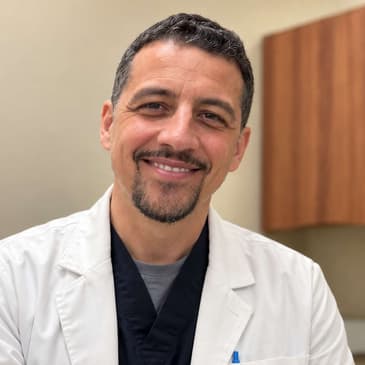

There are moments in healthcare when a few words from your doctor can completely change the way you feel.
“Your test was abnormal.”
“We found something.”
“We need to do more testing.”
“We're not sure what this means yet.”
And suddenly, fear takes over. We want answers immediately. We want to know what to do. And sometimes, in that fear, we make decisions before we’ve had a chance to fully understand what we’re dealing with.
My guest today believes there is another way.
Dr. Christian Borberg is a board-certified OB/GYN and Fellow of the American College of Obstetricians and Gynecologists. Throughout his career, he has cared for women through pregnancy, gynecologic concerns, surgery, and some of the most uncertain and vulnerable moments in healthcare.
But today, his work goes beyond the exam room. He is developing an educational mission to help women navigate medical uncertainty without allowing fear to make the decisions for them.
His guiding philosophy is beautifully simple:
“Don’t React. Reflect. Then Respond.”
Today we're going to talk about what that actually looks like when you're the patient—when you're frightened, when you don't understand a diagnosis, when you're given several options, or when your doctor says, “We don't know yet.”
How do we slow down without ignoring something important? How do we ask better questions? And how do we become active participants in our healthcare without feeling like we have to become our own doctor? Dr. Borberg answers these questions and more in this important conversation.
In the five minute snippet: What he said! For Dr. Borberg's bio, visit my website (link below).
Contact The Conversing Nurse podcast
Instagram: https://www.instagram.com/theconversingnursepodcast/
Website: https://theconversingnursepodcast.com
Your review is so important to this Indie podcaster! You can leave one here! https://theconversingnursepodcast.com/leave-me-a-review
Would you like to be a guest on my podcast? Pitch me! https://theconversingnursepodcast.com/intake-form
Check out my guests' book recommendations! https://bookshop.org/shop/theconversingnursepodcast
I've partnered with RNegade.pro! You can earn CE's just by listening to my podcast episodes! Check out my CE library here: https://rnegade.thinkific.com/collections/conversing-nurse-podcast
Thanks for listening!
[00:01] Michelle: There are moments in healthcare when a few words from your doctor can completely change the way you feel.
[00:08] "Your test was abnormal."
[00:10] "We found something."
[00:12] "We need to do more testing."
[00:14] "We're not sure what this means yet."
[00:17] And suddenly fear takes over.
[00:19] We want answers immediately.
[00:22] We want to know what to do.
[00:24] And sometimes in that fear,
[00:26] we make decisions before we've had a chance to fully understand what we're dealing with.
[00:31] My guest today believes there is another way.
[00:35] Dr. Christian Borberg is a board certified OB/GYN and Fellow of the American College of Obstetricians and Gynecologists.
[00:44] Throughout his career, he has cared for women through pregnancy,
[00:48] gynecologic concerns,
[00:50] surgery,
[00:51] and some of the most uncertain and vulnerable moments in healthcare.
[00:56] But today, his work goes beyond the exam room.
[00:59] He is developing an educational mission to help women navigate medical uncertainty without allowing fear to make the decisions for them.
[01:08] His guiding philosophy is beautiful: don't react,
[01:13] reflect,
[01:15] then respond.
[01:17] Today we're going to talk about what that actually looks like when you're the patient,
[01:22] when you're frightened, when you don't understand a diagnosis,
[01:25] when you're given several options, or when your doctor says,
[01:29] we don't know yet.
[01:31] How do we slow down without ignoring something important?
[01:35] How do we ask better questions?
[01:37] And how do we become active participants in our own healthcare without feeling like we have to become our own doctor?
[01:46] Dr. Borberg answers these questions and more in this important conversation.
[01:52] In the five minute snippet,
[01:54] what he said.
[02:13] Well, hi, Dr. Borberg. Welcome to the podcast.
[02:18] Christian: Hi, Michelle. Thank you for having me. It's a pleasure for me to be here.
[02:23] Michelle: Well, thank you so much for being here. My daughter Jessica works with you and she approached you and said, I think you would be a good fit for my mom's podcast.
[02:35] And you so graciously accepted and I really appreciate it. So thanks again.
[02:41] Christian: No, thank you. And thanks. Yeah, thank Jessica for that. It's my pleasure to be here. I love working with her. She's great.
[02:48] Michelle: She says the same about you.
[02:51] Okay, well, we're just going to jump right in. So I always want to know how people chose their profession.
[02:59] I'm a big nerd about that. I don't know why it's so fascinating to me. But take us into who is Christian Borberg? What initially drew you into medicine?
[03:14] Christian: I'm originally From Caracas, Venezuela. And I grew up there.
[03:20] And my father is a well known obstetrician and gynecologist there.
[03:26] Ever since I can remember, women's health was kind of a conversation that was,
[03:31] That we had. I would ask him questions about what he did, and I remember him taking me to the hospital and while he would make rounds, I would be with the nurses drawing or,
[03:42] or talking. And I would get spoiled by everybody.
[03:45] And I really liked the environment and also going out and about with the family.
[03:51] Some random strangers would approach my father and compliment him in his, you know, for his care for them and things like that. And so also Venezuela is in South America.
[04:04] It's at the very top with access to the Caribbean sea and over 90% of the population are poor.
[04:13] And I think one of the superpowers I have is that I'm a very sensible person.
[04:18] And you know, being around all this poverty and everything, I wanted to do something to help people.
[04:25] So having said that,
[04:28] I went to school, I went to med school. And then through that, I always.
[04:32] I noticed I had other interests. I liked psychiatry, for example,
[04:37] and I liked the medical part, for example. And again, being sensitive,
[04:42] I also noticed that it would affect me, it would affect my moods and,
[04:47] and I would feel other people's pain. So I felt like I wanted to do something where it would be mostly a happy specialty.
[04:56] And so I chose obstetrics and gynecology.
[04:59] I always wanted to work with my father and I had the opportunity to work alongside him for a couple,
[05:06] assisting him in surgeries and at the office seeing patients.
[05:11] And then I fell in love and my wife came to the United States and I did my training here and I stayed.
[05:19] I'm currently in California, in Visalia, and I work for a federally qualified health center because I want to help people that maybe don't have the same access as somebody with a higher socioeconomic status.
[05:37] And I love it here. It's been 10 years already.
[05:41] I did my training in Pittsburgh, Pennsylvania, and over there I worked, counting the training for about eight years.
[05:48] And so I've been doing this since, well, I graduated very young. I was 24 when I graduated.
[05:54] So I've been doing this for over 20 years.
[05:58] Michelle: It doesn't seem real.
[06:00] I remember when you came to Kaweah Health and the thing that we all said in the NICU, because we got to see you, we attended C sections and deliveries, is every single person said, have you met Dr.
[06:18] Borberg yet? He is so nice.
[06:22] And we all agreed that you're just so nice,
[06:27] And not just to us, which, of course, as nurses, that's very important.
[06:32] But your patients just absolutely love you, your families.
[06:37] You can tell when people are in it for the right reasons. And you are certainly in it for the right reasons. And I love your story. Thank you so much for sharing that.
[06:49] I've talked with many healthcare professionals now that followed in the footsteps of a parent or a sibling or, you know, another mentor.
[07:00] And I think it's so important what you're doing,
[07:03] working with people that may not have all the resources that other people have.
[07:13] And I think it's very important.
[07:15] So thank you so much for telling your story.
[07:19] Christian: Thank you.
[07:20] Michelle: Okay, let's see. So you have spent your career caring for women during some very vulnerable moments. What has that experience taught you about people?
[07:33] Christian: That we're all the same, I guess. We all have very similar feelings and fears.
[07:41] And it has taught me to keep my seat grounded and my head over my shoulders. And when I see somebody, I remind myself, well, I say it every morning when I go.
[07:53] When I go and I'm in the parking lot, well, this could be me one day, or that could be my mom or my sister.
[08:01] And I am a religious person, not necessarily fanatic, but I do say a little prayer telling God, like, let me see you in every person I interact with today.
[08:12] And I don't always live up to that, but I do my best. And so that's what I tell myself when I'm getting impatient or anxious about something else that's happening.
[08:23] And I think that's what fills me up, too,
[08:25] that interaction with the patient. I think in obstetrics, it's a good thing that if you start, at least during prenatal care,
[08:34] you get to know each other for a few months.
[08:38] And so you can tap into all these things and get to know them and then understand where people are coming from and what is tying their thinking and their decisions to a point, of course.
[08:50] Michelle: Yeah, absolutely. And I love your prayer,
[08:53] Dr. Borberg. I feel like that is how we see God,
[08:59] because obviously we can't see him in the flesh,
[09:04] but we see him through other people.
[09:08] And I think that is such a great message and just such a great prayer that you pray.
[09:17] Was there a particular patient or experience that changed the way you think about the practice of medicine?
[09:27] Christian: Oh, yeah,
[09:28] there's been many and almost on a daily basis.
[09:32] We are currently,
[09:33] for different reasons. We seem to be all running short on time.
[09:39] In healthcare,
[09:40] everything is timed.
[09:42] And some people,
[09:45] most people need that extra minute to talk to them and hear them out.
[09:49] And I've had a couple of patients that have told me later that they've appreciated having those conversations with me.
[09:58] In obstetrics and gynecology, we have to share call coverage. So nights and weekends and sometimes during the day as well.
[10:06] And I may see somebody that I don't know and they don't know me either.
[10:13] And they're making decisions.
[10:15] And I've seen myself thinking, well, if these conversations would have happened in the office, maybe they,
[10:24] the attitude,
[10:26] the perception of things would be different for them.
[10:29] Their decision making process would be different.
[10:32] Patients with lots of fears and making their decisions based on that.
[10:39] And maybe they're not the best decisions.
[10:42] And there's been a few instances where I think if they would have been a little bit more trusting,
[10:51] they wouldn't have complications that maybe could have been prevented.
[10:55] Michelle: Yeah, right. And how do you get that trust? You have to establish rapport with your physician. Right. And I could see that if they're not your patient and they don't know you and you don't know them,
[11:07] things could go awry really quickly.
[11:11] So let's get into that because you are on a mission to really educate women about their own health, about how to talk to their provider,
[11:22] about how to make medical decisions.
[11:26] So let's talk about medical uncertainty.
[11:30] When you talk about medical uncertainty,
[11:33] what exactly do you mean?
[11:35] Christian: Well,
[11:36] most of us want to know exactly what's going to happen,
[11:41] when it's going to happen,
[11:43] how it's going to happen,
[11:45] and there's absolutely no way.
[11:47] And an analogy that I use sometimes at the office is that,
[11:51] you know, you can plan your wedding down to the dessert and everything,
[11:57] but that day, it may rain, the priest may get food poisoning, there may be traffic on the freeway and people won't make it.
[12:05] So you have to relinquish control to a point of course,
[12:09] and in a responsible way.
[12:12] But it's with everything.
[12:15] People are, for example, declining medications because they don't want to harm their babies.
[12:20] And I'm not saying medications are absolutely necessary for some particular instances, but at the same time, they're drinking carbonated drinks with 20 ingredients that they can't even pronounce and God knows what else.
[12:36] And so I think another challenge that we faced over the last years and it has intensified is access to information.
[12:47] And information is everywhere.
[12:50] And everyone's an expert and everyone has their own biases, their own prejudices, beliefs,
[12:57] experiences.
[12:59] And I think
[13:01] It could be misleading to generalize someone's experience and then try to make the decision based on what somebody else says or does.
[13:13] Because what we need to do is look at that particular patient, their circumstances,
[13:21] and try to make decisions that are right for that specific person, for that specific situation.
[13:28] And not just one size fits all.
[13:31] Michelle: Yes, very individualized. And I don't need to tell you this, but with each woman and each pregnancy,
[13:40] they're all different,
[13:41] right?
[13:42] There are things in general,
[13:44] but each,
[13:45] each woman, even in subsequent pregnancies, her health could have changed, she could have developed diabetes.
[13:52] And so that pregnancy is not like her first pregnancy or her second.
[13:57] And then of course, each woman is different and the care really has to be individualized.
[14:04] And that's hard to do while also addressing medical uncertainty.
[14:10] Why do you think uncertainty is so uncomfortable for patients?
[14:17] Christian: I think not having a guaranteed outcome is what, what drives them crazy. And again, relinquishing control.
[14:28] They want us to tell them that everything's going to be okay, but we don't know if everything's going to be okay.
[14:35] So the best we can do is reassure them that they're on the right path, they're doing what they're supposed to do, and that,
[14:42] you know, with luck and providence,
[14:45] things will be okay. And if they're not, if they don't go as planned, we'll deal with it and we'll do our best to deal with it in a way that is the most beneficial for them.
[14:57] Michelle: Yeah, that control,
[14:59] man, I felt that like in my bones when you said that
[15:04] I am a
[15:06] self prescribed control freak. And I am learning at the ripe age of 62 that I don't have control over what really so much of my own life. And I need to kind of make peace with that.
[15:24] But that is so important.
[15:27] And when I think about a pregnant woman,
[15:30] it's not just about themselves, right. It's about they have this other person to worry about, I guess.
[15:39] And so that just like really complicates all the decision making process.
[15:45] So the phrase "we don't know yet" is that phrase sometimes actually the best medical answer?
[15:55] Christian: Yes. But I try to do it in a way that's between the lines that what they understand from what I'm saying.
[16:04] And so I try to reassure them of where the decisions they've made in the past. Okay, so this is what's been happening today. You're okay and everything's,
[16:15] going well, you're doing all the right things and we will continue to adjust as things continue to happen.
[16:25] So I try to reassure them that way, that we don't know yet without saying them, because I think those words, when they hear them, it's like everything else gets muted.
[16:36] That's all they heard.
[16:37] And so in my position, I think reassurance goes a long way for women to be mentally prepared when the time comes.
[16:47] You see in the movies women screaming and doing all these things. And yes, we see it too, but that's very rare. And
[16:56] my appraisal of those situations are that when that happens, I think a lot of fear is involved there and wanting to just shut it off and fast forward.
[17:11] And unfortunately it's something that every woman has to go through by themselves.
[17:17] I mean, with people around, but they're the only ones experiencing whatever it is they're experiencing.
[17:23] Michelle: Yeah, and that can be a very lonely and scary place. And we don't want women,
[17:30] we don't really want anyone making decisions that are fear based.
[17:34] You know, we want them to be informed. And that's where really education comes in.
[17:41] So you have a wonderful tagline.
[17:44] I love it. Don't react,
[17:46] reflect,
[17:47] then respond.
[17:49] Where did that come from?
[17:51] Christian: I think it's been over years of just trying to understand this aspect of why we make decisions and when we feel uncertain, when we're scared.
[18:07] And then on top of that, whatever life is throwing at us, lack of sleep, we're not feeling well,
[18:12] we're frustrated.
[18:14] We may just want to make the easiest decision or a very radical decision immediately so that things will go away and I'll feel better.
[18:23] And it's almost like a reflex. We're used to just clicking a button and getting a box from Amazon to your doorstep the next day,
[18:32] going to a fast food and just ordering something and getting it.
[18:36] And you can't necessarily do that with anxiety or with some medical decisions where time will tell. We have to see how you respond to certain things.
[18:47] So when facing uncertainty,
[18:51] I think it's important not to just jump and react,
[18:56] but just to pause for a second and try to understand what you're feeling and why.
[19:03] And if you can do that, then you can maybe ask the right questions or figure out the next steps.
[19:10] And you may be able to do that by yourself, or you may want to do that with somebody with a loved one, with a friend, with a spouse.
[19:19] And yeah, I think that's where it comes from.
[19:22] Michelle: Let's break it down into those three words at a time. So let's talk about don't react.
[19:28] Because I will say that being a 17 year breast cancer survivor, sitting in front of my doctor while he's telling me that I have cancer.
[19:42] Wow. Like,
[19:44] there's just an automatic response, and it's not a good one. It's a reaction.
[19:51] So what does don't react mean when you've just heard something really frightening from your doctor?
[19:59] Christian: Don't make any rash decisions if you don't have to make any rash decisions.
[20:04] So it would mean,
[20:07] well,
[20:08] whatever's going on, whatever I heard, do I need to do it right now?
[20:12] And then understanding that, yes, emotionally we do have to process things. And when we are doing that,
[20:18] I mean, and we all go through it when we have a problem,
[20:22] you think of a solution and maybe the next day you think of a better way to do it and the other. And then, or you start thinking of other factors
[20:31] that you may have to take into account when making that decision.
[20:35] So I don't mean, don't feel, you should. You're going to feel shock and maybe the stages of grief, fear, anger, denial,
[20:46] all those things. And they're very valid and it's one of the things that make us human.
[20:53] But you don't have to go and make a rash decision and decide on a medical treatment that can maybe wait a day or two until you understand what's going,
[21:07] what's happening,
[21:08] what are your options? What can I do about this?
[21:11] How urgent is this?
[21:13] And then maybe you'll make the same decision, but maybe you'll feel better prepared. When you're going through whatever you're going through,
[21:23] you decide something with a little bit more calm, in a better state,
[21:29] and maybe you're more comfortable with that decision as opposed to making a rash decision. And then things start popping up and that just increases your anxiety, your fear, and it can be very traumatic for lots of people.
[21:45] Michelle: Yeah, I love that you said that. It doesn't mean don't feel,
[21:51] because you do have all of those feelings of shock and grief and anger and all of that. But you're saying that's okay. Go ahead and feel all those feelings, but don't react and make a quick decision based on how you're feeling.
[22:11] Give it some time, give it some space,
[22:14] however much you need for yourself. Some people can take a few hours until they calm down and make a decision. Some people, they need a few days.
[22:25] Christian: Yeah.
[22:25] Yeah, for sure. And in an ideal situation,
[22:29] the best thing to do would be to have that conversation. And I do it. I did it today with a patient.
[22:36] You know what? I'm going to step out, I want you to think about what I said. Maybe talk to your spouse,
[22:41] and then I'll come back in a few minutes. And so I'm not trying to pressure you into doing A or B or C. I want you to make a decision that you're comfortable with.
[22:52] And if you have any questions, I'm here for you, and I'll exit the room and leave them there for a few minutes,
[22:57] or I'll have them come back in a couple of days and then resume that conversation.
[23:04] Michelle: That's really wise. That's one thing that I wish that would have happened when my husband and I were together in the room when we got the news is,
[23:14] you know, the surgeon didn't leave.
[23:18] He just stayed there. And I felt like, wow, if he would have given us some time,
[23:27] it just would have, I think it would have been a lot better to be together without somebody kind of looking over us and looking in on us.
[23:37] That's how I feel. I love that you do that.
[23:40] Okay, let's take the word reflect. What does reflect actually look like?
[23:46] Christian: Well, reflect means trying to define what you're feeling.
[23:52] And then if you can,
[23:54] why,
[23:55] you know, am I
[23:56] worried about myself or am I worried about my family?
[24:00] Am I worried about what other people are going to think, what my family is going to think?
[24:07] And then,
[24:08] yes,
[24:09] okay,
[24:10] then what do I need to understand?
[24:14] What questions do I need to ask?
[24:17] And then try to define that.
[24:19] So I personally, I like writing on a notepad my thoughts sometimes when I have a problem,
[24:29] because then I can better,
[24:31] I have more clarity when making my decision.
[24:35] And then that way, when you go to your appointment or you can just ask the right questions, you're prepared.
[24:43] You're not going into an appointment scared. What are they going to tell me today?
[24:49] Hear what they're going to tell you, go back and then go home. What did they tell you? I didn't understand the thing. Oh, and I forgot to ask A, B and C.
[24:57] I'm just going to Google it right now,
[24:59] or I'm going to ask my neighbor because she had a similar situation.
[25:04] And so, it's frustrating, I think, to everyone because
[25:09] we have appointments of 15 minutes, and I think most people do that in order for the medicine to survive.
[25:17] And in those 15 minutes, you're supposed to have some empathy with the patient,
[25:23] hear them out, answer all their questions, look at their labs,
[25:27] document everything, do an ultrasound and measure their baby and review their last records. It's just,
[25:36] It's ridiculous. And so you'll see lots of providers going in and out. And just very, very briefly to the point that other part, there's no room, there's no time for that.
[25:49] Because if they were to go ahead and do this other part where you're actually connecting with the person,
[25:54] then you have to spend four to six hours at home charting on a computer.
[25:59] Everything that you talked about, all the stuff that happened and we have families as well and,
[26:05] we need our breaks as well. So it's challenging.
[26:10] Michelle: Well, you're being very kind.
[26:13] I have worse words.
[26:16] It's insanity is what it is. The ask of healthcare providers in this day and age is really just insane.
[26:27] And you laid it all right out there. You know,
[26:31] 15 minutes, I've been on both sides. You know, I've been a patient, I've had physicians, nurse practitioners,
[26:38] other providers come in and actually looking at their watch as we're talking.
[26:45] And that doesn't feel good. That does not feel good. As a patient,
[26:51] you don't feel seen, you don't feel heard.
[26:54] And as a nurse myself, I get it, I get it.
[26:59] But again, it doesn't feel good. And the ask is just,
[27:06] it's too big.
[27:07] So let's move on to respond.
[27:09] What does respond mean?
[27:13] Christian: Well,
[27:14] once you've identified everything,
[27:16] I either wait for my next appointment and I ask all these questions that I have,
[27:21] or I call an ambulance because I think this is serious,
[27:25] or I'm going to call the office and see if they can see me sooner or I'm going to do nothing. Sometimes doing nothing is also doing something.
[27:35] But you're not just reacting.
[27:39] There's a thought process that goes along with it. And your impulses are not the ones making the decision.
[27:46] It's your rational part aligned with your beliefs and with your
[27:53] values, I guess.
[27:56] Michelle: Okay, yeah, that's a very different,
[27:58] you know, response.
[28:00] Responding in that manner is very different than just fear based, like you said. I'm going to call 91 1,
[28:08] I'm going to Google this, I'm going to run it through ChatGPT.
[28:12] Yeah, that. It's more thought out, it's more with the fear kind of removed from that.
[28:21] So then I'm going to ask you a counterpoint question.
[28:25] Are there situations where reacting quickly is exactly what a patient should do?
[28:32] Christian: Yes, but they're very
[28:35] limited. I mean, usually life or death situation, those are simple. You're in a car crash, you call 911, your water breaks, go to the hospital,
[28:45] you don't feel your baby,
[28:47] you know,
[28:48] you've waited a prudent time, you've done a few things. Maybe go to the hospital.
[28:54] For us as physicians, yes. Sometimes during surgery something unexpected might happen and then we just have to go ahead. And for nursing too, somebody pains or passes out or they're bleeding excessively and they have to hold a rapid response and everything.
[29:10] But they're very particular decisions. I feel like for most of the other decisions there is some time to at least sit down and let it simmer for a second and before you rashly jump into something where it may not be the best thing.
[29:26] Michelle: Okay, well, let's talk about fear because we've kind of been going down that rabbit hole.
[29:33] So with the advent of,
[29:35] we've had Google for a very long time, but with the advent of ChatGPT,
[29:41] many people are turning to that for their medical information and for their medical decision making.
[29:50] So does having more information necessarily make us less afraid?
[29:56] Christian: I think it's a two edged sword.
[29:59] If you have some background knowledge and you read some things, you may be reassured with the information that you're reading,
[30:06] but you can also get very scared. My 13 year old daughter had an ear infection last month.
[30:14] She felt a little nodule and she came crying because she had leukemia because she read it on the ChatGPT that she had leukemia. I saw a patient yesterday who is terrified that she had,
[30:26] She's barely starting her pregnancy and she's terrified that she has a condition that doesn't happen until they're like nine months pregnant and she's requesting all these blood tests and so you have to juggle a little bit and sometimes let them win.
[30:42] Like I ordered the blood tests that she wanted even though I knew they were all going to come back fine because I'm more interested in earning her trust and putting her at ease than just saying, hey, I'm the doctor and there's no way you can have this.
[30:58] So I'm not going to do what you're telling me to do.
[31:01] I don't have an ego in that respect.
[31:04] And of course the other things that we don't see when we look at information is the source life experience.
[31:10] What you mentioned Michelle, about that we're all different and that every pregnancy is different and that you cannot,
[31:17] I mean,
[31:19] get an opinion from your sister. It's the same as getting an opinion maybe from your neighbor or your,
[31:25] it may be different for all of us.
[31:27] So I think the information's good,
[31:31] but it can lead to fear. And I think that a healthy approach would be okay. Well, if I'm going to do research, as everyone calls it, and look all these things up,
[31:41] well, let me write down what types of things are worrying me. And then let me ask somebody that has some experience and some knowledge for guidance.
[31:52] Not necessarily to tell me what to do. The decision is mine,
[31:56] but for guidance.
[31:57] And again, as we talked, it's a little hard to do that when the time constraint just doesn't allow for that conversation to happen.
[32:07] Michelle: You know, when I was pregnant back 39 years ago,
[32:12] it wasn't the same as it is now.
[32:15] The doctors had more time to spend,
[32:19] And that was reassuring for me as a pregnant woman.
[32:24] And I just can't imagine now only having 15 minutes to spend.
[32:28] You're not asking questions that entire time. It's like you're kind of,
[32:34] I don't know, you're maybe talking about your feelings or you're talking about other things. And so it's not always just an education session when you're in there with your physician.
[32:47] So it's just so challenging because we go online so much.
[32:52] How should women evaluate what they find online?
[32:58] Christian: I think, again,
[33:00] maybe try to look up reputable sites. Some people don't trust the government. Some people do, but government has some resources.
[33:10] And then there's all the societies and academies for different specialties where people can get information. There's also renowned hospitals like Yale, Harvard, Johns Hopkins that have patient educational formats.
[33:24] And then I think we should all be educated a little bit more when we're in school about biases.
[33:32] There's the confirmation bias where you're looking for what you want to find and when you find it, this is exactly what I have. And I don't think that's a healthy approach.
[33:43] It would be more like, well, it could be A, B, C, D or E. Or in the.
[33:48] When we're talking about treatments, this is not the one I need.
[33:52] These are the different treatments for this particular thing. Let me discuss it with somebody and let me ask questions about them.
[34:01] And I think it's also useful to have the internet because,
[34:04] yes, there's no time to have these conversations, but maybe if you have some time to read and look things up, you may be able to ask better questions and understand things better than if maybe you didn't look anything up.
[34:19] I think another weakness that we have is communication.
[34:24] We go in a very short amount of time and we don't know if the patient is actually understanding what we're saying.
[34:32] Some doctors like to use very fancy words,
[34:35] and everybody's nodding because they want to feel like, yeah, I understand everything you're telling me, but maybe they're not.
[34:43] And so put things in a, putting complex things,
[34:48] complex information in a way that's understandable depending on everyone's level. And I think that's a skill that over time,
[34:57] You hone it and there's always room for improvement, but you try and make it, because otherwise you might as well be speaking Chinese
[35:05] Or a language that somebody else doesn't understand.
[35:09] Michelle: So true. And I am a hundred percent guilty of the fancy language,
[35:16] but that doesn't always help me bridge the gap in communication with my patients. For sure.
[35:23] I like that you brought up the confirmation bias. And I think that's what Google is so good at,
[35:30] because it's all how you ask the question,
[35:32] and Google will find exactly the answer that you're looking for,
[35:37] whether it's correct or not correct.
[35:40] Christian: That's right.
[35:42] Michelle: The dangers of Google.
[35:45] Christian: And you know what I mentioned,
[35:46] what I mentioned earlier about the prayer? I said, I think that also helps me with communication.
[35:52] Okay, so this could be my daughter. Let me talk to her like she's my daughter. And then this is not some stranger that I'm trying to show that I can dominate the medical jargon and all these things.
[36:05] That's not what's important here. The important thing is the message.
[36:09] Michelle: Yes, absolutely.
[36:11] Okay. I want to talk about how to become a better patient.
[36:16] And you developed a resource, which I accessed by email. It was very easy, and you can share the links for those at the end. But you talk about in the resource, one clear next step.
[36:30] And this reminded me,
[36:32] a few months ago, I interviewed nurse Gwenny, who is actually Gwenny Winkler. She's a flight nurse. She's an educator. She has a very large Instagram account, TikTok,
[36:44] all of that. And she's just awesome.
[36:46] And one of the things that Gwenny did at a time in her life where she was having a lot of transitions,
[36:55] was talking about not having to have it all figured out right now,
[37:00] but just doing the next right thing.
[37:03] So when I saw your one clear next step, it really reminded me of that and just how effective that is in kind of eliminating all that noise in the background, of having to have everything,
[37:20] just tied up with a bow. So let's talk about that resource and talk about the one clear next step.
[37:29] So if I'm sitting in your office tomorrow and you tell me something that scares me.
[37:36] What is the one clear next step that you want me to take?
[37:41] Christian: Well, it depends on the scary thing that I told you.
[37:46] But what I try to do after I give those types of news is,
[37:52] okay, well,
[37:53] I try to make that decision together.
[37:57] If this is a situation where we're at the office together,
[38:01] I saw somebody today early in the pregnancy.
[38:05] She's having concerns because she's afraid she may be scary.
[38:10] Okay? So I tell them this is what we're going to do and this is why we're going to do it.
[38:15] And then this is what I want. I give them homework, pretty much. I tell them, this is your homework. You're gonna maybe don't do this and don't do that. And I wanna see you again on Monday.
[38:27] In the meantime,
[38:29] if you have any problems, this is the number for my nurse.
[38:32] If this other particular problem arises, I want you to go to the emergency room.
[38:38] If you have any issues,
[38:39] contact in the office, I want you to call this particular nurse and she will get a hold of me and I will answer your message and I tell them, I don't want you to feel abandoned here.
[38:51] I'm here for you and we can do this together.
[38:55] Now, when we're talking about what's the next best step is when you're at home by yourself and something is happening and instead of just panicking and doing all these things.
[39:08] Yes, okay, take a pause, take a breathing, and then, okay, well, how bad this is, you know, for example,
[39:16] a young woman who's pregnant for the first time and she's on the last months of pregnancy and she starts to feel contractions.
[39:24] I educate them early on, like, listen, you're going to feel this every single day.
[39:29] When should you worry when A, B or C are happening?
[39:33] What should you do if this happens?
[39:35] You go to the hospital, you come see me, or you drink water and you lay on your side so that even little things like the bloody show, the mucus plugs, all these things, the hip discomfort that they feel.
[39:49] I tried to tell them before because they're very common complaints. So that when it happens,
[39:54] they don't just panic and then go on the Internet and they think they have bone cancer or their baby's dying or something.
[40:01] Michelle: I love that you give them homework.
[40:03] I think that's so effective in,
[40:06] helping them really focus.
[40:09] Right? Because your mind wants to go everywhere. And,
[40:14] you know, if Dr. Borberg is giving me homework, then this is what I'm going to do.
[40:20] And I just love the relationship that you have with your patients.
[40:25] It's like next generation kind of relationship.
[40:29] But then again, it also speaks of kind of things,
[40:33] How things used to be. Right.
[40:36] Christian: Yeah.
[40:37] Michelle: So how can a patient say, I need some time to think about this without feeling like they're challenging you as their doctor?
[40:47] Christian: Well,
[40:48] again,
[40:49] I don't have ego problems in that regard. And when I hear that, I don't take it personally. I know, like, everyone is their own best advocate.
[41:00] I think that they could say it,
[41:03] like,
[41:05] do I have to make a decision right now, or is this something that I can think about and come back at another time?
[41:13] Cause I also feel like when we pressure people into making decisions,
[41:18] they're not compliant.
[41:20] They don't feel invested in that decision because they didn't even process it. They're not sure if that's what they really want.
[41:27] They didn't even give me an option.
[41:30] I don't even know what I have to take this medication. You know,
[41:34] I've been a patient, too.
[41:36] I got a diagnosis of Crohn's disease,
[41:39] and I think I jumped from, like, doctor to doctor until I ended up with a big bowel resection.
[41:47] And I remember being in the office as a patient and thinking,
[41:53] when I practice, I'm not gonna be like, this person, or I'm not gonna do this, or I like how this other person communicates.
[42:01] And I think that has helped me also learn,
[42:05] like, okay, patients have a different outlook on things when you're on the other side.
[42:11] Michelle: No, absolutely. Thank you for sharing that. I think it just makes you more real as a person. Right. And we talk about patients all the time, but I think as healthcare providers, we can sometimes forget that patients are people.
[42:29] Right?
[42:29] Christian: Yes.
[42:30] Michelle: Yeah. And I think we need to really keep that in the forefront. Dr. Borberg, what's one question you wish your patients asked you more often?
[42:43] Christian: What do you recommend I do?
[42:45] I think there seems to be,
[42:48] or it feels that way, a distrust with healthcare in general.
[42:54] They just want my money. They just want to give me medication.
[42:58] They just want to do surgery on me.
[43:02] They want to do a C section because it's five o' clock and they probably need to go home. And that's why I'm getting a C section.
[43:09] And I think when patients ask the doctor's personal opinion,
[43:17] maybe those things are happening in some interactions, but the doctor then feels, okay. Well,
[43:23] I mean,
[43:24] most of us got into this field wanting to help people, and then they're more frank about it.
[43:32] I've gone into delivery rooms where there's a family member with a notepad writing down the time that I came in my name, what I'm saying,
[43:41] what medication I'm giving, at what dose.
[43:43] And it all feels like, you better not make one mistake because I have it all on paper. It's all documented.
[43:50] And so it's tricky. Or you're trying to communicate with the patient, and the patient looks at you, and they just look at
[43:59] Their sister to make the decision for them, and there's not that communication. Or you see doctors frustrated because the patient is not doing what they want and they just walk away.
[44:10] But I think if we both lower our guards,
[44:13] providers and patients, and we just talk frankly amongst each other, okay, what can I do? And sometimes we don't have all the answers. But I think this is what I would do,
[44:24] and this is why I would do it. And maybe the patient won't choose that, but I think that may guide them a little bit.
[44:32] Michelle: Well, you hit the nail on the head about the mistrust or the distrust that people have in healthcare, and there's a myriad of reasons for that.
[44:43] We're all paying more premiums for insurance with less coverage.
[44:50] Our physicians that we get attached to and bonded with and have developed a rapport,
[44:58] suddenly leave.
[45:00] You know, I will bring up that in our small town of 148,000 people, we had a very large OB/GYN group just tell their patients,
[45:13] we're leaving, we're shutting down.
[45:15] You have two weeks to find another provider.
[45:18] So it's really difficult for patients not to feel abandoned by their healthcare providers in many instances.
[45:27] You know, that being said, I think there are things that we can do to bridge that gap, to gain that trust back. And communication is certainly one of those things.
[45:38] And it sounds like you really have a grasp on that.
[45:43] Christian: Yeah.
[45:44] Also, our demands can be brutal.
[45:48] And some of them are by default, some of them are imposed, and some of them are of our own choosing.
[45:57] And you'll have doctors doing shifts of 72 hours straight,
[46:01] and then seeing patients and then doing surgery, and some because they want to, some because they have to.
[46:08] And when you're tired, sleep deprived,
[46:12] seeing a volume of patients that is ridiculously high for the amount of doctors,
[46:20] you get compassion fatigue,
[46:22] you get fatigue, you get sick, and you start resenting your work.
[46:28] And you see it. You see doctors that look bitter. Well, people in general,
[46:33] they can go through that stuff, and it's difficult.
[46:37] And you may have people that just lose the love for what they're doing because of those things. And Instead of correcting them, they'll just,
[46:47] maybe just, this is not my problem. Somebody else can take care of this.
[46:51] Michelle: Yeah, we really have to take a long, hard look at how we're treating physicians and other healthcare providers because we already have a huge shortage and that's not going to get better with the current state.
[47:07] And you know how I said patients are people? Well, physicians are people too.
[47:13] They have dreams, they have goals, they have families,
[47:18] they have activities that they like to do outside of practicing medicine.
[47:25] And you had said earlier in your introduction that as a physician,
[47:31] sometimes you absorb people's emotions or feelings.
[47:37] You can connect with them in, in that such a way.
[47:41] So how do you care for yourself while still caring for your patients?
[47:49] Christian: Well, that, that's an ongoing challenge.
[47:54] I try. I mean, I don't, I don't drink.
[47:56] I try to stay with my family. I try to keep some sort of spiritual anchoring.
[48:05] And I have a wonderful wife and children and it's a loving home. So my home in a way is like my refuge, but it is hard.
[48:16] And I mentioned that my dad was an OB/GYN. I don't have a lot of memories of him growing up because he would be working day, night, weekends.
[48:27] And so I also want to be present for my family.
[48:32] And I've had to make difficult decisions,
[48:35] setting boundaries in terms of amount spent at the hospital,
[48:39] how many patients I can see because I know people are in need, but it doesn't seem like anyone else is looking out for me.
[48:49] And I have a co-resident who passed away last week on Monday, 42 years old, healthy.
[48:56] I've had doctors where,
[48:59] well, heart attack, massive heart attack in her sleep. I've had doctors that they've walked themselves to the emergency room with a heart arrhythmia because they're doing all these difficult shifts.
[49:08] There's no time to exercise.
[49:11] Sometimes we don't even have time to eat or use the restroom and our sleep is all interrupted and then we have to go to work and see patients after a 24 hour shift because otherwise the office cannot sustain itself.
[49:26] So it is difficult.
[49:27] I'm still learning that. But I think what would be very sad is people trying to cope with those things with unhealthy ways, alcohol and drugs and God knows what.
[49:43] And eventually themselves and their families pay the price and their patients too.
[49:49] Michelle: People do use those things. And you know, you talked about all the different ways that people can get sick and die because of this workload and think about suicide.
[50:03] So many physicians.
[50:06] Yeah,
[50:07] and that's tragic. Because I'm sure many of them could not see that coming when they decided to be physicians.
[50:15] Christian: Yeah, Yeah. I think we've all gone through some degree of depression because of burnout.
[50:22] Yeah, it's tough.
[50:24] I don't know how that can be legal. You know, an airplane pilot is not allowed to fly a plane, but I can do a surgery sleep deprived and feeling like I'm drunk.
[50:36] Michelle: Yes,
[50:37] it is scary.
[50:39] It's very scary.
[50:40] And,
[50:41] yeah, we have to change that. I know that they've made some changes, like with residents and.
[50:49] And how many days they can be on and stuff like that, but we still have.
[50:53] We still have a long way to go.
[50:55] We still have a long way to go.
[50:57] Christian: Yeah, that's for sure.
[50:58] Michelle: Okay. Well, as we close, if you were king for a day, Dr. Borberg, what would you change in the way care is delivered to pregnant women?
[51:11] Christian: I would invest in education.
[51:15] I think education solves so many problems. We have so many hospital visits for random silly concerns that for somebody, they can be very important, but they're not necessarily have to be dealt with as an emergency in the hospital.
[51:31] That's just with prenatal care, I think.
[51:34] And then I would allow enough time for patient visits and for enough doctors so that we can be in our A game all the time with a smile on our faces.
[51:48] Michelle: Well, let's make you king and make these things happen.
[51:51] Christian: Yeah,
[51:54] Michelle: Right. We need that. We need that so desperately.
[51:57] Yeah.
[51:58] Wow.
[51:59] Get people back to doing what they love and doing it why they decided to do it in the first place.
[52:08] Christian: Yeah.
[52:09] Michelle: Okay. Well, where can we find you if people want to reach out and how can we access your resource?
[52:16] Christian: I'm developing a program to help pregnant women and women in general move through uncertainty with medical decisions.
[52:27] And I made a little guide that can maybe use as a resource for many patients.
[52:35] And I put it online.
[52:37] It's ChristianBorberg.com/clarity and it's a free guide. All you have to do is put your email
[52:47] And it goes through some points that we've talked about doing this chat.
[52:51] I am posting content on TikTok and on Instagram and Facebook and I have a YouTube channel that I'm expanding now that I've been able to have some more balance with my schedule.
[53:08] And I would love to help as many people as I can because it's hard. Especially most pregnant women are young women who've never had a health issue. And this is their first interaction with the healthcare system.
[53:22] And it's scary and they're going in blind.
[53:26] The light that they're shining on it is through Google or their neighbor or their friends or their TikTok person that they follow.
[53:34] And it doesn't have to be that way.
[53:36] Michelle: Well, I love what you're doing. I wish 39 years ago when I was pregnant that you had been my physician. I was just a mess. Dr. Borberg. I was 21 years old,
[53:50] unmarried,
[53:51] pregnant, Catholic.
[53:53] Just put all those things together and yeah, it was really tough.
[53:59] I think that would have been fantastic for you to have been around that long ago.
[54:06] Christian: Thank you. Thank you. That's a big compliment. I appreciate it.
[54:10] Michelle: Yeah.
[54:10] Christian: But you have a wonderful daughter and she's helping a lot of people too.
[54:15] Michelle: Thank you so much for that. I'm a big fan of hers.
[54:19] Okay, well,
[54:20] we've gotten to the last five minutes, Dr. Borberg, and the last five minutes are just the most fun.
[54:28] We do a lot of laughing.
[54:30] There's just silly questions.
[54:33] So are you ready to play the five minute snippet?
[54:37] Christian: I'm ready.
[54:39] Michelle: It makes people kind of nervous just because they don't know what's coming, but it's really a lot of fun.
[54:45] Okay.
[55:25] If you could have only one thing with you during a 24 hour shift.
[55:30] Either coffee, snacks, or your phone.
[55:34] Which one are you choosing?
[55:38] Christian: I'm choosing snacks.
[55:42] Michelle: Why did I think you were gonna say that?
[55:45] Christian: I don't know. I need brain food.
[55:49] Michelle: What kind of snacks are you into?
[55:52] Christian: I usually like salty, crunchy things.
[55:55] Michelle: Oh, wow.
[55:56] Christian: Chips and little things that you can chew. And they make noise. Yeah, they make noise.
[56:03] Michelle: I love it.
[56:05] Okay.
[56:06] Earlier you said, and you didn't even know this question was coming.
[56:11] What's your superpower? And I think you had said your superpower is, refresh my memory.
[56:18] Christian: I think I'm sensible. I have empathy towards others.
[56:23] I can easily almost feel what people are feeling or detect body language and those things. And I can see when I'm talking to somebody, they start act in a certain way.
[56:35] Maybe this is not the way to go and adapt.
[56:38] And it's good, but also,
[56:42] it also can be not so good when somebody's in front of you and you have that feeling that you're not liked or appreciated,
[56:51] but you can kind of respond to that. I'm very good at calming people also.
[56:56] Michelle: I'm sure of that. You are, you're such a calming presence. Yes. And that certainly is a superpower. I'd say you're an empath for sure.
[57:07] Christian: Yeah.
[57:08] Michelle: Okay. Your best purchase under $100.
[57:19] Christian: A Book. Or I love, like, LPs, like, the discs, the vinyls, but they're not, well, they're under $100. Yeah. Music and books. Yeah.
[57:31] Michelle: Awesome. I just started getting into vinyl again. You know, I was born in 64, so, you know, we ruled Vinyl ruled back then.
[57:43] Christian: That's right.
[57:44] Michelle: Yeah. And then it kind of went out of fashion, and now it's back, and I'm vindicated.
[57:51] Christian: That's right.
[57:53] Michelle: Okay. Do you have a pet peeve?
[57:56] Christian: What is that?
[57:56] Michelle: A pet peeve is something that just, like, really annoys you. Something that's just irritating or annoying.
[58:05] Christian: Yes. The sound of flip flops. People walking on flip flops. That annoys me. And chewing with your mouth open annoys me. Chewing gum.
[58:14] Michelle: Thank you.
[58:16] Thank you. If we could just get people to stop chewing with their mouth open.
[58:23] Okay. You're stranded on a deserted island, and you can have three things,
[58:29] but none of them can be medical supplies.
[58:33] What are you taking?
[58:35] Christian: I'm taking a hammock, book and a boogie board.
[58:40] Michelle: Oh, wow. Sounds like you might not want to get off the island.
[58:45] Christian: No.
[58:49] Michelle: Okay. If you weren't a doctor, what do you think you'd be doing?
[58:55] Christian: I'd be doing music or I'd be writing books.
[58:59] Michelle: Those things are still possible.
[59:02] Christian: Well, I'm learning. I'm learning the guitar. I take my son once a week, and I've been doing it for three years. I'm still at pre K level,
[59:13] then I like the arts, so writing. Yeah. Would be another one.
[59:18] Michelle: Should we throw podcasting in that, too?
[59:22] Christian: Maybe. Maybe. It's fun.
[59:26] Michelle: You have a great voice for podcasting.
[59:29] Christian: Thank you.
[59:30] Michelle: Yes. Okay, one last question. There's a billboard on the side of a major highway with your picture on it, Christian, what is the message?
[59:44] Christian: Pepsi kills.
[59:48] Michelle: That's the best. Oh, my gosh.
[59:50] Christian: Say no to soda and energy drinks.
[59:54] Michelle: Say no to sodas. Oh, my gosh. That's the best. I absolutely love it. Well, see, that was fun.
[01:00:03] Christian: That was fun.
[01:00:04] Michelle: You did really well.
[01:00:05] Christian: You weren't kidding.
[01:00:07] Michelle: Yes.
[01:00:08] You have a sense of humor.
[01:00:10] We knew that already.
[01:00:14] I love it. Thank you so much, Christian,
[01:00:16] for coming on and sharing all of your knowledge and expertise and education and care and concern that you have for your patients,
[01:00:27] for their families, for women, for babies.
[01:00:31] Thank you so much for what you're doing. I appreciate you.
[01:00:35] Christian: Likewise. Thank you so much for having me on. And thank you for what you're doing as well.
[01:00:39] I'm subscribing to your podcast. I listened to one about pediatric mental health, and it was wonderful.
[01:00:46] Michelle: Wasn't she great?
[01:00:47] Christian: I have something. Good news. She was. Yeah, yeah.
[01:00:51] Michelle: You have to listen to Dr. Borge's episode.
[01:00:55] Christian: Oh, that must be David Borge. That must be great. I love Dr. Borge. I'm going to look him up.
[01:01:00] Michelle: Yeah, me too. Wonderful guy. All right, well, you have a good rest of your day.