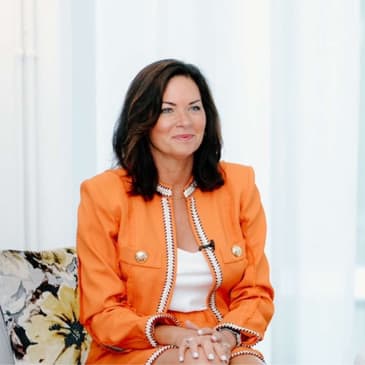

Today's guest has a rare combination of deep bedside credibility and forward-looking innovation, and is now helping shape the future of healthcare technology.
Amy Thourot is a nurse, entrepreneur, healthcare innovator, and the Founder and CEO of Realize-365. After 30-plus years of working in a wide array of specialties, from intensive care to transplant surgery, and from orthopedics to geriatrics, Amy saw firsthand how much time clinicians spend trying to piece together fragmented medical records. Rather than accepting that as "just the way things are," she set out to solve the problem.
Today, through Realize-365 and its platform Pulse Health, Amy is using artificial intelligence to help clinicians understand a patient's medical history in under a minute, reducing cognitive burden and helping healthcare teams focus on what matters most: the patient.
We talk about nursing, innovation, leadership, AI in healthcare, and why nurses may be uniquely qualified to build the future of healthcare technology.
In the five-minute snippet: Jeepers Creepers, where’d you get those peepers? For Amy's bio, visit my website (link below).
Contact The Conversing Nurse podcast
Instagram: https://www.instagram.com/theconversingnursepodcast/
Website: https://theconversingnursepodcast.com
Your review is so important to this Indie podcaster! You can leave one here! https://theconversingnursepodcast.com/leave-me-a-review
Would you like to be a guest on my podcast? Pitch me! https://theconversingnursepodcast.com/intake-form
Check out my guests' book recommendations! https://bookshop.org/shop/theconversingnursepodcast
I've partnered with RNegade.pro! You can earn CE's just by listening to my podcast episodes! Check out my CE library here: https://rnegade.thinkific.com/collections/conversing-nurse-podcast
Thanks for listening!
[00:01] Michelle: Today's guest has a rare combination of deep bedside credibility and forward-looking innovation and is now helping shape the future of healthcare technology.
[00:12] Amy Thoreau is a nurse entrepreneur, healthcare innovator and the founder and CEO of Realize-365.
[00:21] After 30-plus years of working in a wide array of specialties,
[00:26] from intensive care to transplant surgery, and from orthopedics to geriatrics,
[00:31] Amy saw firsthand how much time clinicians spend trying to piece together fragmented medical records.
[00:38] Rather than accepting that as "just the way things are",
[00:42] she set out to solve the problem.
[00:46] Today, through Realize-365 and its platform, Pulse Health,
[00:51] Amy is using artificial intelligence to help clinicians understand a patient's history in under a minute,
[00:58] reducing cognitive burden and helping healthcare teams focus on what matters most,
[01:04] the patient.
[01:06] We talk about nursing, innovation, leadership, AI in healthcare, and why nurses may be uniquely qualified to build the future of healthcare technology in the five minute snippet.
[01:20] In the five minute snippet: Jeepers creepers, where'd you get those peepers?
[01:39] Well, good morning, Amy. Welcome to the podcast.
[01:43] Amy: Good morning. Thank you, Michelle. Thanks for having me.
[01:47] Michelle: Oh my gosh, it's my pleasure. And thank you for taking the time. We just chatted a little bit off air and you are joining us from Amsterdam.
[01:56] You just flew in today and you're at the HLTH conference.
[02:02] So that's very cool.
[02:04] Amy: Yeah.
[02:04] Michelle: Well, thank you so much for taking the time. So we'll just get to it. I like to just jump into things.
[02:11] So, Amy, when you first became a nurse, if someone had told you that one day you'd be running an AI healthcare company,
[02:19] what would you have said?
[02:21] Amy: Not a chance.
[02:27] No, you know, I was, I knew I come from a family of nurses.
[02:32] I have a couple aunts,
[02:33] several aunts actually, that are nurses.
[02:36] And I,
[02:38] I knew in high school that I wanted to become a nurse. It was either that or anatomy teacher.
[02:44] And I went to work as a nursing assistant in a nursing home in my local town in Ohio.
[02:54] And I loved it.
[02:56] I didn't think from, you know, the early days that geriatrics was my, would be my focus,
[03:03] but I really enjoyed it. I actually enjoyed the staff, you know, as much as I enjoyed the patients and that,
[03:11] you know, because nursing is so focused and hands on and clinical and,
[03:17] you know, you're always assessing and evaluating and intervening as needed and you just don't think about what else is out there.
[03:28] And so it was a long time in my career before I thought, what else is out there?
[03:33] Michelle: Well, how cool that you did think that. And we were kind of twinning a little bit.
[03:38] My first job was a nurse's aide in a nursing home as well.
[03:42] And I, yeah, and I loved the, I loved the patients. They,
[03:47] I just loved hearing their stories and chatting with them.
[03:52] And one of the things that, that caused me to leave was that the nurses were so burnt out, Amy. They were so burnt out.
[04:00] They were always short staffed and,
[04:03] and they were just really crabby. And I thought, oh my gosh, do I really want to be a nurse if that's what I'm going to turn out to be?
[04:10] So I left the nursing home and I went into acute care setting and,
[04:14] and that was a lot better for me, but very cool. So have you always had like an entrepreneurial spirit?
[04:22] How did that come about where you said, I want to start my own company?
[04:27] Amy: No, no, not at all.
[04:29] I got married at a young age.
[04:32] I had children young.
[04:33] I loved my career. I was very passionate and very driven.
[04:38] You know, wanted to be a leader and you know, I always sought,
[04:44] you know, to be a preceptor for new nurses.
[04:48] Was very focused in just the clinical setting. And it was when I entered officially into nursing after I graduated, I went right into intensive care.
[04:59] Michelle: Oh, wow.
[05:00] Amy: And that's just me. I'm from a pretty,
[05:04] I don't know,
[05:05] not competitive but, you know, driven spirit. Played sports growing up and that and,
[05:12] and my dad always instilled on my sisters and myself to be very, be the very best at whatever you do.
[05:20] And because, you know, I loved what I was doing.
[05:23] I just wanted to be that person as well.
[05:27] So, you know, that was like I said, a long time into my career before I even thought about doing something different.
[05:36] So I would say it was about 20 years ago and I've been a nurse for 35.
[05:43] So maybe 15 years ago,
[05:46] after I left the ICU, I had some personal life changes that I was needing to get out of 12 hour night shifts and I went into management in the ICU.
[05:57] And, so I was more, working more day shifts, but then I went into more clinic setting after that to be full time day shift as a single mom, you know, divorce, of course, you know, kind of throws a wrench in things, but for, in my life it was,
[06:13] it was a good wrench.
[06:15] I would say that when I became a single mom and knew that I really had to take ownership and raise these kids on my own.
[06:28] I didn't have fear about it. I just thought how creative I can be in doing this.
[06:35] And one of the physicians I was working for
[06:40] really introduced me to the business of healthcare.
[06:43] You know, all the reps he relied on for surgical procedures,
[06:49] attorneys he relied on for workman's compensation.
[06:53] He had a foundation where I raised money for an educational foundation for orthopedic research.
[06:59] So he really taught me a bit about entrepreneurial spirit,
[07:04] and I think that's kind of what steered me in that direction.
[07:09] Michelle: So he was basically a mentor of sorts. And I think sometimes when we make big changes in our lives,
[07:19] people come into our lives at just that right intersection to show us kind of which direction or which path to take and to help us along that path. I believe that.
[07:33] Amy: Yeah. And just to even see what else is out there.
[07:36] So many years, you know, you're just really working hard. You know, your 12 hour shifts and overtime and really focusing on just your life and your patients and for so long, that was really good for me.
[07:52] But then there came a time where I actually had to focus a little bit more on myself and my family.
[07:58] And I was, like I said, I was exposed to different aspects of business.
[08:03] And I think that's truly what led me into that direction.
[08:07] And just like you said, you know, just to have that opportunity for someone else, like there were other people that just kind of introduce you to new ideas and new avenues that you could pursue.
[08:21] And, you know, I always say that I've done so much in my career now that I would love to just speak in nursing schools and,
[08:31] and just get people enthusiastic about.
[08:34] There's so much you can do with a BSN.
[08:39] I thought about going on for an advanced degree,
[08:41] but only because I wanted to maybe be a teacher in nursing someday, but I never did that.
[08:48] So many other things came up that I didn't need to, nor do I want to at this point. But there's just a world of opportunity for nurses, and I'm very passionate about sharing that.
[09:02] Michelle: Yeah, I see that. And you know, I like your idea of getting into the nursing schools because I think we have to start at the ground level with what kind of opportunities are out there for nurses.
[09:15] It's not just med-surg, you know,
[09:19] there are so many different specialties, There are so many different avenues.
[09:24] And to bring entrepreneurialship into the conversation that I feel like is crucial after talking to so many nurses now over the last four years,
[09:36] so many of them have been like yourself,
[09:39] innovators,
[09:40] entrepreneurs,
[09:42] and I think we need that in nursing.
[09:45] And I think your idea to get in at the ground level at the nursing schools is really, really a great idea.
[09:52] Amy: Thank you.
[09:53] AI isn't going away,
[09:56] it's here to stay.
[09:57] At this conference, the CEO of Mayo Clinic and another CEO of a big hospital in Germany were on the stage and they're just talking about how advantageous it is in earlier diagnosis.
[10:12] We know earlier diagnosis yields, earlier treatment yields best patient outcomes.
[10:18] The fact that AI is so controversial right now,
[10:23] a lot of clinicians, I think, feel threatened that they're thinking that, oh, my job's going to go away or someone's going to tell me how to do my job. Unfortunately,
[10:33] with my company,
[10:35] we're built by nurses for nurses, basically for all clinicians actually.
[10:41] And there are so many other companies out there that really are just bringing information to clinicians faster so that more educated and expedited diagnosis and treatment can occur.
[10:59] The only way that the young people coming out, whether it be nurses, physicians, physical therapists,
[11:06] occupational therapists, anybody into healthcare can embrace it is to learn it and learn it while it's new.
[11:15] That way that they have an upper hand when they come out of school.
[11:20] Some of our focus in my company right now is actually going into the university settings and talking more about it, about AI and enabling clinicians to make those decisions faster,
[11:34] to get at the ground level and let them know that it's not something that's going to,
[11:39] you know, jeopardize their career.
[11:42] It's only there to help them and do things faster and in a more informed manner. And really even to save time out of searching and digging for unstructured data in the medical record.
[11:55] It's all about,
[11:57] you know, like I said, enabling clinicians to do their jobs better and faster.
[12:02] Michelle: Well, we are always welcome to that. So tell us about Realize-365, what problem were you trying to solve when you started the company? Or were you?
[12:13] Amy: Yeah, actually I was reviewing medical records for attorneys in the United States while I was still clinically practicing.
[12:22] And it is a very tedious and time consuming. And this was back in the day of still paper records. Even the electronic medical record came to life. I think it was about my early 30s.
[12:38] I remember when it all started.
[12:41] But some patients records that I were reviewing were even before that time. So there it was a very tedious job.
[12:48] And even when the electronic medical records come around, it's still a lot of information,
[12:52] a lot of pages.
[12:55] And so there was a need to.
[12:57] I was leading a team of nurses that did this in a previous company.
[13:01] And in order for us to get our jobs done efficiently and meet the deadlines required, we were able to partner with another division in our company to help build the technology to navigate medical records faster.
[13:18] That's why this was originally developed.
[13:21] And then my partner David,
[13:24] he and I are the sole owners of this company and we saw the real huge benefit this could be as we take it into a hospital setting, almost as another layer of risk management to really dig through those records and find out what's gone wrong and learn from it.
[13:40] But then as we shifted into healthcare, here comes AI and we were fortunate enough to have work with a great development team when AI started,
[13:53] really shifted into the medical space just a year ago,
[13:58] just over a year ago.
[13:59] That has been so rewarding because like I said, you know, as a nurse, you know, we're out there for our patients, we're a patient advocate, we want the best outcomes.
[14:09] And when I was reviewing records over the years of things that might have gone wrong in medicine,
[14:14] you knew that, you know, that things do go wrong and there's nothing,
[14:19] you know, to hide about it.
[14:21] It's a fact. But what can we do to help prevent things from going wrong?
[14:26] Increase the communication amongst providers, bring information more clearly to the clinicians.
[14:33] Avoid gaps in the patient's overall history by bringing this unified, structured information to the clinicians.
[14:44] And so that is the impact globally has been amazing. It's just so rewarding to talk to physicians and nurses across the globe.
[14:55] There's the same problem. It's unstructured data that we can't find that gets missed in communications and delays treatment, diagnosis and treatment and loses money for the institution. Up to like four hours of a day a physician can spend in the EMR.
[15:18] Nurses sometimes spend nearly half their shift in an EMR and think of the amount of time that that takes away from their actual hands on patient care.
[15:27] So things need to shift. The EMR doesn't need to be a burden.
[15:31] We are here to kind of, like I said, be that clinician's best friend to help bring that unstructured information forward so that things don't get missed, so that errors don't happen and so that diagnosis and treatment can be done soon,
[15:47] making everybody a winner, really.
[15:50] Michelle: Yeah, it's definitely a win-win situation.
[15:52] And I went on your website to check out the case studies and those are really cool. Of course I clicked on the one, the maternal child health one, because that was the realm that I worked in for many, many years.
[16:06] And once I saw your case studies,
[16:11] it was evident that that would just clear up so much time and make things so much easier, clearer and to have all of those,
[16:22] you know, like you put in the ACOG recommendations for certain things and the AAP recommendations for certain things on the baby, like regarding jaundice. And it just was really cool.
[16:35] So who is this built for? Take us through a day in the life of using your program, who would use it and how would we use it?
[16:45] Amy: Yeah,
[16:46] so it's actually for inpatient and outpatient use for clinicians.
[16:50] But insurance companies are looking at our platform as well because they want to understand from their end,
[16:58] you know, the whole treatment,
[17:00] what needs to be evaluated for payment,
[17:03] what might be the, any red flags related to,
[17:07] you know, duplicate testing, for example,
[17:10] why did that happen,
[17:12] et cetera. So there's so many different avenues. But this was, like I said, built for nurses by nurses. But I make it a little bit more broadly. It's built by clinicians.
[17:23] We have physician consultants, multiple nurses and physical therapists that have contributed to the development,
[17:29] that work on alongside our tech team.
[17:32] So it's built for clinicians by clinicians.
[17:35] As a Microsoft partner, we do think that down the road we will think about how it rolls into the patient's hands as well.
[17:46] Right now we're not there,
[17:48] but it is something that keeps coming up because, you know, patients need to have ownership over their healthcare and this would give them more ownership if they could have their summary of their entire patient medical record.
[18:01] If they go from one provider to another. Think of the time savings and the opportunities there.
[18:08] But I'm just not ready to go into the layperson's hands yet.
[18:14] So do I think it's going there? Yeah, I think it will. I think it will maybe as soon as within the next year.
[18:20] Actually there's just a real big push for it because of the community health and the outreach and you know,
[18:29] bringing access to care is so important and how we can do this by empowering patients as well. But right now, like I said,
[18:37] built by clinicians for clinicians. So in the inpatient setting, imagine a 12 hour shift where you've taken care of six patients and the nurse needs now to give report to the next nurse.
[18:50] And we know whether it be on a voice recording or handwritten or verbal,
[18:58] a lot of it's by memory and the capacity to have print out your 12 hour summary of what happened in your shift. That way there's a concise summary of everything that brings it into, hones in on anything outstanding that needs to be carried over into the next shift,
[19:17] any changes,
[19:19] any critical values that need to be addressed,
[19:23] any new follow ups that were called that maybe haven't seen the patient yet, or new consultants that haven't seen the patients yet.
[19:30] So there's just so much that can get missed in communication. So it's, it would be a huge asset to use this in a nurse to nurse handoff. Or imagine a nurse preparing for morning rounds with the physicians.
[19:43] A physician that hasn't been on duty for the last three days is coming in.
[19:48] Patient's been in the hospital for weeks, he knows the patient.
[19:52] So what's happened in the last three days?
[19:54] And you can do a time search and bring out a summary or you can do it through the entire hospital stay.
[20:00] And with that, imagine the comprehensive discharge plan that can be brought forward for case managers to make the appropriate referrals in a timely fashion so that there's no gap in care after discharge.
[20:16] There's a great community, it's a great communication tool.
[20:19] It's a way to avoid, you know, missing away from preventing medical errors. If things aren't discussed or carried out properly, then an error occurs and it results in increased costs, in case problems, increased treatment.
[20:37] So in that aspect, from an inpatient setting it can also be, you know, the physical therapist pulls up the last physiatry notes to see what the recommendations are for today or the orthopedic notes to say,
[20:53] you know, to explain why no weight bearing on the certain extremity, et cetera. If they don't understand it, then we have the clinician then has the capacity to go into the medical record and interrogate it.
[21:08] Just ask questions like a chatgpt,
[21:10] just like there's a chat on
[21:13] our screen right here.
[21:15] And the answers will come within seconds about, you know, say you want to give me the last three PT notes and explain why the patient is non-weight bearing and it will do that for you.
[21:30] And then it'll also page reference so it goes right back to the medical record. You can click on a link right back to the medical record, the page or pages that show that information so you can validate it.
[21:43] Again, we're not a decision maker. We're bringing the information forward.
[21:48] So that's the inpatient setting and in an outpatient setting,
[21:53] imagine a primary care doctor who's gone to see 25 patients and the day before his staff can print up a summary of,
[22:05] say, his last, he hasn't been here in three months.
[22:08] Get me the medicals for the last three months and summarize them. And that can be done in a matter of minutes. You know, I've worked in clinic settings, and it takes a long time to pull out records from multiple providers and get them sent over to the office or faxed over or emailed or whatever.
[22:24] But once you have those in your hand,
[22:26] it can, in minutes, it will summarize.
[22:29] Our technology will summarize no matter what data source it's coming from. And it would make a chronological summary of all the treatment currently going on for that patient timeframe, searchable, like I said, which is key.
[22:44] Do you want it for all the medical records? Do you want it since the last visit three months ago, two weeks ago?
[22:50] So that really is useful in preparing for a clinic day and also increasing the number of patients that can be seen.
[23:00] You understand why the patient's coming in that day, and you can make a plan faster and more effective,
[23:08] saving both the stress of the patient's time and extensive doctor explanations because he's there informed by what's happening currently with his patient.
[23:20] Is that helpful?
[23:22] Michelle: Oh, my gosh, that's phenomenal. One question that came up is,
[23:26] is your program also designed for prescribers?
[23:31] So, you know, physicians, nurse practitioners, PAs,
[23:36] If they're seeing a patient and will it bring up, you know, the labs and,
[23:42] you know, like, this certain medication is.
[23:46] Amy: Yeah.
[23:46] Michelle: Okay.
[23:46] Amy: So for example, for, you know, if you want to, you can even chat into the pulse feature and say, give me a list of all the blood pressure medications over the last six months and the blood pressure readings available in the chart over the last six months.
[24:03] And that way you can analyze what's working and what's maybe not working and make faster decisions and more educated decisions.
[24:12] What's really nice about this is it's. It can be a research tool as well. Not only can your providers look at certain patients or what medications that certain patients are on, they can look across a population.
[24:28] Say, you know, you might have a new drug that's been released and you're treating, you know, a certain infection with it in the ICU,
[24:39] and you can look across the patient population to see, you know, how their kidney functions tolerated it, how their WBCs tolerated it. You know, what. What were the,
[24:50] you know, side effects, if any, or how did it compare to the previous medication that they were using in that environment.
[25:01] So it can, you know, like I said, it's very valuable to compare across populations as a research tool.
[25:08] Michelle: Yeah.
[25:08] Amy: Wow.
[25:08] Michelle: Again, just phenomenal. That's awesome.
[25:12] Okay. One of the phrases that jumped out at me on your website was "cognitive burden."
[25:18] And for nurses listening, what does cognitive burden actually look like during a shift?
[25:24] Amy: And isn't that pretty much subjective? Right?
[25:28] So you know, what. What you and I might, or what I might say is cognitive burden, and you might say it's cognitive burden. It might be two different things.
[25:37] But what we kind of focus on is really how do we make our clinicians work more effectively and work smarter, work faster.
[25:48] And in doing so,
[25:50] that means, you know,
[25:52] the four to six hours of a shift that a nurse is fishing through the EMR,
[25:58] being very frustrated with, not being able to find some of the information he or she is looking for.
[26:04] To me, that's cognitive burden. That's unnecessary time spent.
[26:09] It's stress, because you should be taking care of your patient and communicating with your patient rather than, you know, searching through a medical record. But you are ultimately responsible for everything that's in there.
[26:20] You know, while that patient's in your hands for your shift, you are responsible to know what's in there.
[26:26] So the burden is lifted by summarizing this information for the clinicians faster and again, time searchable. Do you want it just for a shift? Do you want it for 24 hours?
[26:38] Do you want it for the entire length of stay?
[26:41] To me, that's kind of why we talk about cognitive burden, because it not only decreases your capacity to function as a nurse,
[26:51] but it also,
[26:52] you know, impairs your job satisfaction. And so many nurses are leaving the profession.
[27:00] And why are they leaving? They're frustrated. They don't feel like they can,
[27:04] There's so much being thrown at them that they don't feel like they can trust themselves in such an overwhelming environment.
[27:10] And, you know, I've been away from the bedside for nearly 10 years now,
[27:14] but I've got a lot of friends that their children are nurses now. And it's really a different world. It's a different world than what we grew up. You know,
[27:24] I felt really supported in my career.
[27:27] I never really felt like I was in a dangerous spot.
[27:32] I just felt like we had resources.
[27:35] And what I'm hearing these days is, is it's harder to have that the burdens of different responsibilities,
[27:43] administrative, whatever it might be, are there.
[27:49] And then now we introduce them to this new technology.
[27:54] Well, that can be a burden, right? So we have to educate our new clinicians. Anybody going into medicine these days about AI and to explore it and not be afraid of it and to make their own judgment based on it.
[28:12] So it's just really something that the young clinicians need to embrace and need to be encouraged and need to be supported,
[28:23] to have the capacity to have their opinions voiced.
[28:28] And that's what really matters. Because if we can keep these,
[28:32] you know, talented people at the bedside and skilled and enable them to do things better and faster, well,
[28:40] to me that yields a higher job satisfaction.
[28:43] Michelle: Yeah, absolutely.
[28:44] We like things to work right. I've said that all my career that nurses are very much like,
[28:51] we like things to work right. And if they don't, we get frustrated and angry and,
[28:59] and we kind of lose interest.
[29:00] And you touched on this a second ago.
[29:03] Healthcare is often criticized for adopting technology that creates more work. Right?
[29:09] So how do you make sure the solutions you build actually fit clinical workflows?
[29:15] Amy: And that's really a good topic. So when we integrate with a system,
[29:20] you don't even know there's another layer you wouldn't even know that you're dealing with Realize-365,
[29:26] the features that you'll see are unique, but you're not accessing it through another pathway.
[29:32] We make it very simple, user friendly and, and you know, I work with a team of,
[29:39] clinicians, but I also work with a lot of people that are consultants and not clinicians.
[29:46] My chief strategy officer, Kent, he's my right hand and he,
[29:51] I tease him all the time that you're now in medical school,
[29:55] but he's, you know, he's really not. But because of the ease of using this,
[30:00] it's amazing the knowledge that he's learned just by watching it in action.
[30:06] So it is very user-friendly and, again, it wouldn't be like another click, if you will, as most people want less clicks, you know, not more clicks.
[30:19] Yeah, so that's how we built it again by clinicians for clinicians.
[30:25] We're built on the Microsoft Azure platform and we're partners with Microsoft, very secure system.
[30:33] We're built with a philosophy of zero trust,
[30:37] that you're built to be on the defense of a hack at every moment of every day.
[30:44] Michelle: Yep,
[30:45] that's real.
[30:46] Well,
[30:47] I like that. Yeah, I like that your program was built by nurses for nurses because nurses that have worked in the clinical space know how frustrating a bad EMR is to chart and to navigate through and nurses are great at workarounds and if something doesn't work right.
[31:09] We're going to create a workaround and it's not necessarily going to be the best thing for the patient.
[31:15] Those, we know that those can cause problems.
[31:18] That's why I think we really appreciate a program that works how we work.
[31:26] Amy: Right.
[31:26] Michelle: So you often talk about nurse-led innovation. Amy, why do you think nurses are uniquely positioned to create meaningful healthcare solutions?
[31:38] Amy: There was a quote I recently pulled up about, it's from Florence Nightingale,
[31:43] about the creativity and art of nursing.
[31:48] It really is. We're a building block,
[31:51] basically, right?
[31:53] We know what goes together and what doesn't.
[31:57] And to have that skill set, to be able to constantly assessing and reassessing and implementing is necessary.
[32:07] And the interventions, the planning and the interventions that go behind it, that's all creative thinking.
[32:15] You might be thinking that might be one side of your brain. You know, we hear those stories about one side of your brain and the other,
[32:21] and maybe that's true.
[32:23] But you all have, nurses all have the potential to be creative thinkers.
[32:29] And I think,
[32:31] you know, like I said, it took me years and years. I think I was 40 before I started thinking outside the box about what other pathways could I be helpful in this in nursing?
[32:44] And at first, like I said, the first thing that came to my mind was teaching.
[32:48] You know, I was fortunate to really admire and have some really good nursing professors when I went to school and preceptors afterwards, mentors in my profession.
[33:00] And so that was inspired to do that initially. But then,
[33:03] I don't know, I just kind of had a segue. I think I needed something a little bit more outside the box.
[33:10] I started thinking outside the box and really just kind of learning more about, like I said, the business of healthcare. Because there really is so many. There are really,
[33:21] so many needs and different aspects.
[33:25] Every different aspect of healthcare,
[33:27] every different clinician specialty,
[33:30] there are needs. I was just listening to,
[33:33] like I said, the CEO of Mayo Clinic talking about the AI advancements in radiology and diagnostics and how,
[33:43] you know, the Mayo Clinic is just implementing these algorithms and it's working.
[33:48] And it's so inspiring to know that there are so many inventors in science, because we are science, that recognize what's needed to help and enable people to do their jobs better and faster.
[34:06] And if we're doing our jobs better and faster, then our patients are having the better outcomes.
[34:13] Michelle: You said earlier that AI is here to stay.
[34:16] And AI is one of those topics that excites some nurses and terrifies others.
[34:23] So what are the biggest misconceptions healthcare professionals have about AI?
[34:29] Amy: Well, I think,
[34:30] and I'm newer to technology too. I didn't turn the technology dial till maybe six years ago into my life. Right.
[34:41] And so I'm pretty newish to it.
[34:43] And so I would think that it's a threat initially.
[34:48] I think a lot of people think that in some way, shape or form,
[34:53] the AI is supposed to be doing their job or telling them how to do their job.
[34:59] And that's not the case.
[35:01] That's not the AI, that's not the trust, that's not the ethical standard in healthcare.
[35:06] It's really just to enable people to do their jobs better.
[35:10] Michelle: Yeah. Just plain and simple. What's your response when someone says, I don't trust AI in health care?
[35:18] Amy: You know what? A lot of people still say that.
[35:21] It is very,
[35:22] very common.
[35:24] And the best thing I can say from my perspective is try it.
[35:31] I show people a live medical record if they want to share it,
[35:35] you know, in the contents of HIPAA and et cetera, even if it's redacted records,
[35:43] we have NDAs with our clients that we show them and we can get them logins to trial the technology to see that, to validate that it works accurately. And again,
[35:56] our security level is such that we don't even house the patient data.
[36:01] Every person has a secure login.
[36:03] We don't own any data and we don't see it unless they want us to. You know, we have partnerships where, you know,
[36:12] I got this, I want to see this. Can you help me build this a little bit better or get this outcome a little bit faster? And we do that.
[36:20] However,
[36:21] for company standard, we don't see the data,
[36:24] we don't house the data.
[36:26] Being a Microsoft partner, we are scrutinized all the time. Right. We're evaluated all the time.
[36:33] and I think that's a huge advantage for us. But not everybody can say that. Right.
[36:40] So, you know, I don't, you know, besides having people trial it themselves and validate it and see that everything that is bring it comes to their, the output that's delivered in front of them again is paged, reference, source, reference right back to the medical record or records.
[37:00] So then they can go and validate it, they can analyze it further,
[37:05] they can then interrogate and ask more questions of the medical record. And by trialing it and seeing, oh, this is helping me, this is helping me analyze, you know, all these blood pressure readings and, and the medication so much faster.
[37:20] And in doing so, I'm going to make this therapy, you know, the standard for These for this patient and,
[37:27] and that way the patient, you know, the whole goal is faster treatment, faster,
[37:32] faster diagnosis, faster treatment, better outcomes, earlier discharges, and preventing readmissions.
[37:39] So with the power of someone using this tool, they can actually accomplish all of that.
[37:44] Michelle: Yeah. Well, that's a good message to all the skeptics out there. You know,
[37:49] if you want, if you're skeptical about it, just try it, use it,
[37:53] see if it reduces your time, see if it improves communication, all of those things.
[37:58] My brother Chris has been a guest on this program several times now. Chris is a doctorally-prepared nurse and the Director of Research at our local institution.
[38:09] And he often says that he is an evangelist for AI.
[38:16] He loves it that much and he uses it constantly. He works with the resident physicians doing research and he says it has cut the time,
[38:28] you know,
[38:30] more than half in half for their projects and it has improved. How he describes it is when you Google something,
[38:39] you Google a topic and Google reads the book,
[38:44] and when you put it through AI, AI reads the entire library.
[38:49] And I thought, okay, that's a pretty concise way of helping people understand the enormity of,
[38:58] and the power of AI.
[39:02] Amy: Another indication is in risk management.
[39:04] A lot of people have brought up, if something goes wrong and you have an M and M meeting,
[39:09] you know, rather than five people trying to determine, going through the record independently,
[39:15] have this standardized output of everything that happened in the clinical setting so that they can all have informed,
[39:23] you know, document in front of them to analyze what, what, what do you think went wrong and how much faster and how much, you know, less time of people would manual chart review to determine this and, and the smarter decisions and faster decisions to even maybe change protocols.
[39:41] So it's just,
[39:43] it's really meant to be a clinician's best friend.
[39:47] And, as much as I can say that I know to new people experiencing,
[39:53] coming, treating healthcare,
[39:55] coming into the healthcare world and not knowing about AI, then it's just AI,
[40:02] it's a bit scary and, and they just, it's education,
[40:05] just like everything.
[40:06] You know, we were scared when we had to do our first venipuncture. Right? So it's just things need to be addressed,
[40:15] addressed appropriately and early. Right? And just enable and empower the clinicians and have them give back valuable feedback how things can even be better.
[40:28] It's just, it's fun. It really is a world where good things are happening in healthcare.
[40:35] And like you and I both know, it's not gonna go away.
[40:40] Everybody's just looking at new ways to,
[40:43] you know, make better clinical decisions,
[40:46] being empowered by,
[40:47] you know, having information in front of them faster.
[40:52] Michelle: Well, looking ahead five years, Amy, what healthcare problem do you think AI is most likely to help solve?
[41:01] Amy: That's a broadly general question. I'm really inspired by the physician advancements in radiology.
[41:12] I really think that what's happening there is advancing very fast. And what I think when it comes to utilizing technology with AI,
[41:26] I really, I think it's going to allow more time for clinicians to actually be innovators.
[41:33] Right? They're learning, they're innovating through using AI.
[41:38] Their time is going to be a bit less,
[41:42] you know, administrative in technology, use of technology,
[41:46] freeing up that time to think,
[41:50] to act and think,
[41:51] know more appropriately in the healthcare setting rather than be burdened by,
[41:56] I gotta find this, I can't find this.
[42:00] And so I really think that there's more innovation.
[42:03] It's gonna bring more innovators.
[42:06] And I think, you know, with people like you spreading the word about how good this, this AI can be,
[42:14] I think it will inspire more people to see what else is out there and what's going on in healthcare and interest them into even finding another channel where they can be innovative and bring more good things to healthcare.
[42:33] Because we know we've got a long way to fix it.
[42:37] Michelle: Yeah, I like that you said that.
[42:40] It frees up the clinician to think because many people think that AI is taking our ability to think away,
[42:51] but what it's actually taking away is all that time and that cognitive burden spent looking for things,
[42:59] and now you have it right before you, you have this summary of information right before you, and that frees you up to actually think about your plan,
[43:10] all of those other things.
[43:12] So I like that you touched on that.
[43:14] Amy: Yeah, thank you.
[43:16] And exactly that. There's so much time. I mean, I can throw so many stats out about,
[43:21] you know, 80% of the medical record is unstructured. It's hard to find the information that, you know, like I said, six,
[43:29] four to six hours a day of a physician in the medical record, sometimes up to a third to half of the nurse's shift is in the medical record, depending on the patient workload.
[43:39] If you have six patients and all that charting and all that digging up of information,
[43:44] just imagine all that time that's freed up if you have the information brought forward faster and again, source referenced. It's just what's in the medical record,
[43:54] it's just bringing that information forward and there are many other technologies out there that are just doing that.
[44:02] The AI and diagnostics algorithms are using in radiology are just fascinating how they're predicting even,
[44:11] you know, diagnoses and further diagnoses or problems for that patient.
[44:16] So it's just really, it's a clinician tool that we need to embrace.
[44:22] It's not going away and to encourage people to be innovative, embrace it and come up with even better ideas for health care.
[44:32] Michelle: Yeah, it's a really exciting time in healthcare right now.
[44:35] Amy: Yeah, I think it's ever evolving.
[44:37] I think, you know, what we went through in our day, you know, there's so many other areas of, different areas that they're going through in a different way today.
[44:50] I think it would be,
[44:51] to me, I would be like,
[44:54] I bet this would feel really different.
[44:56] I'm sure it would be wonderful and enlightening to see the progress since I've been bedside 10 years ago.
[45:05] But you know,
[45:08] it's important that we stay in touch with all of our clinicians too in order to have that valuable input. And that's why we're running a lot of pilots all over the globe,
[45:17] is because healthcare is healthcare.
[45:20] The problems are the same all over the world.
[45:23] And to have input from so many providers across the globe is so exciting,
[45:28] is really exciting.
[45:30] Everybody wants to better healthcare,
[45:33] that's the thing.
[45:33] Michelle: Everybody wants better healthcare.
[45:38] And that's from a patient perspective, but also from a provider perspective. Like we want to provide better care and the way that we're going to do that is through programs like yours.
[45:51] So Amy, in closing,
[45:53] when you think about the future of nursing and healthcare,
[45:57] what gives you the most hope?
[45:59] Amy: Hmm.
[46:01] There are so many people around me,
[46:04] conferences,
[46:05] you know, top level healthcare providers and people that are hands on patient providers that are really motivated and love to collaborate and talk about what works best.
[46:20] And I think to me that is very valuable. I think that the more nurses can be exposed to what's out there in the world, hear people come in and speak and not be afraid of it because it's here, it's present and they just need to be informed again.
[46:40] We're so busy taking care of our patients and getting through our daily shifts and routines that oftentimes that's not, there's not time.
[46:53] And in order to make time, it's like people like you would be inspiring them to listen more about what's out there in AI,
[47:03] but it's just really, it's gotta be driven from management and leaders to Encourage the clinicians to embrace and learn.
[47:15] You know, as nurses, we love to learn. We've always been sponges because healthcare is always, ever evolving.
[47:23] And to think of it as just a new device almost. Not that we're a device or not that AI is a device,
[47:29] but it's a tool in your toolbox,
[47:32] right?
[47:33] How many different IV pumps have you operated in your life? Right.
[47:38] Is this another tool in your toolbox that you know how to work?
[47:43] I think the way we teach it, the way we enable people to learn it is so important.
[47:51] But in another sense,
[47:54] healthcare providers need to take the responsibility,
[47:58] as we do through all of our CEUs,
[48:01] to be on top of what's out there.
[48:03] Right?
[48:04] Michelle: Yeah. We really do need to be up to date with everything.
[48:08] And you're just a prime example, Amy, of a nurse that I just really love and respect, somebody that has worked in the field for a very long time, gained lots of experience,
[48:23] been a natural leader, and then you've taken that leadership and the skill and your innovative mind into creating your own company that benefits nurses and other healthcare providers.
[48:37] And I just absolutely love that.
[48:40] And I thank you so much for bringing your perspective today,
[48:44] for bringing your credibility as a nurse and your innovative entrepreneurial spirit as,
[48:52] as a business owner, as a CEO and just somebody that's really changing the space for nurses and for other healthcare providers.
[49:03] So thank you so much for doing that.
[49:05] Amy: Thank you, Michelle. It's been a pleasure. I enjoyed speaking with you.
[49:10] Michelle: Well, we got to the last five minutes, Amy, so if you have five more minutes, we're at the part of the show where we just like to have some fun. It's the five minute snippet.
[49:20] It's just, what does Amy do on her downtime when she's not an entrepreneur? When she's not a CEO?
[49:30] So you ready to play?
[49:32] Amy: Yeah, sure. I love to play.
[50:14] Okay, I know a little bit about you.
[50:17] You have two high energy border collies.
[50:20] So who runs the household?
[50:25] Amy: I certainly do along with my dogs. But yeah, I actually,
[50:31] I'm quite the house-proud mom. You know, I take care of everything in the house.
[50:36] I'm responsible for all the bills, all that kind of stuff, and the many people that support us, you know, with maintenance and all that kind of stuff. I'm the one that coordinates all that.
[50:48] But I like it. I am, you know, it's, it just gives me,
[50:53] like, nurses, we like to be in control of what we're doing, right?
[50:56] And so I like to make sure everything's running well at home too,
[51:01] Yeah, but my border collies, you know, they take care of the house by shedding dog hair everywhere and,
[51:09] and herding us.
[51:11] But they're fabulous. I usually go for a walk on the beach every morning with them,
[51:16] so that's a tremendous way to start the day. I feel very privileged after growing up in the Midwest and now living in Florida for the last five years and that since then we've had the dogs.
[51:27] That's, that's kind of been a routine is a lot of beach time.
[51:31] And nothing brings me more pleasure than being in the ocean, I'll tell you that.
[51:38] Michelle: Yeah, it's great. Water's great. Love it.
[51:41] You've been known to enjoy a competitive game of tennis.
[51:46] How competitive are we talking here? Like, have you,
[51:50] lost friends over it? Have you taking anyone out on the tennis court?
[51:56] Amy: Oh, yeah, I like to volley, so I like to hit em, you know, pretty hard right at the net. I like to play the net,
[52:02] but in all honesty, I use it just mostly for exercise. I have a couple great people that I play with, and it's fun.
[52:11] And my son is a designer for Wilson Tennis, so I get all my rackets and everything,
[52:17] real deep discount.
[52:19] And so I like my tennis outfits and my tennis racket and that keeps it fun too.
[52:27] But competitively, I've run five marathons in four years. And that was it. I was done. But that was really inspiring and fun because I ran with a bunch of fun firefighters and nurses in my running group.
[52:48] And so someone was down. We're gonna be okay.
[52:52] So, yeah, that was when I was living in Chicago. I ran four Chicago marathons and one in Phoenix, Arizona.
[53:01] So lots of fun, lots of camaraderie that you build when you have a running group that,
[53:07] you know, that you're dependent upon to motivate you to get that training and,
[53:14] and you know, and then I guess, you know, being divorced, you know, makes you quite driven too. And you know, I wanted my kids to have, you know, a very positive upbringing and taking the time to go visit family,
[53:28] driving, you know, distances to make sure they have good relationships with their cousins and their grandparents and stuff, and their aunts and uncles. And so that's been real important to me too.
[53:40] And yeah, it's something you gotta take time for, you know, it's not part of daily routine, as you all know. So that's been real important.
[53:49] And now that grandma a Mimi, as I would say,
[53:54] to two beautiful children, boy and a girl. My daughter and her husband have two in Michigan. So I don't get to see them that often,
[54:04] you know, several times a year. But you know, that's very fun for me.
[54:09] I guess I see him probably every couple months actually, but it's been a fun experience and different.
[54:16] Michelle: Right.
[54:16] Amy: And so that, that's kind of, I guess, the best ways that I spend my time. Oh, and I also.
[54:23] Michelle: Wonderful way.
[54:24] Amy: I love development.
[54:25] We're doing some project development, residential.
[54:29] And so that's been really fun too. That's a new thing. Over the past.
[54:33] Yeah, we've built a house, a couple projects together and David and I, and we really enjoy it. We travel a lot.
[54:43] David's British and we have a place in London and a home in Cape Town, South Africa.
[54:49] And so we are very fortunate to get to travel a lot. But one funny thing is I never left the North American continent until I was 47 years old.
[54:59] I never had a passport until I was 47.
[55:02] Not atypical for many Americans, but that was me,
[55:07] a non-traveler for a while.
[55:10] Michelle: Well, speaking about traveling. So there's a picture on your wall of your favorite travel destination. Where is it and who is in the picture?
[55:20] Amy: It's a sunset in Cape Town, South Africa.
[55:23] And two of my kids have been fortunate enough to be there and be in sunsets with me.
[55:28] My daughter hasn't been there yet, but that's my favorite place on earth for sure. It's gorgeous.
[55:33] Michelle: That sounds amazing.
[55:36] Amy: I lost adjectives within five minutes of being there and I cried. It was so beautiful.
[55:41] Just have the sea in front of you, a dramatic ocean. You know, it's the Atlantic and it's quite rocky there and very. It's like a surfing community. A lot of waves and then the mountains behind you.
[55:54] And the solar system in the southern hemisphere is not like anything in the world. The stars at night are just,
[56:04] You could never even estimate how many you can see. They're just so bright and so prominent, and it's just breathtaking.
[56:13] It's beautiful.
[56:15] Michelle: The power of nature, right?
[56:17] Amy: Yeah.
[56:18] Michelle: Okay, last question. Your best purchase under $100,
[56:27] Amy: probably my reading glasses.
[56:33] Michelle: Are those the ones you have on?
[56:35] Amy: Yeah.
[56:36] Michelle: Those are cool. I love those.
[56:39] Amy: Thank you. Yeah, I have separate pairs of reading glasses. I've gotten to be pretty dependent on them. I had LASIK surgery, and my long distances is excellent,
[56:48] but I definitely depend on my readers, and I always like to find some funky ones, but they're usually under there.
[56:58] Michelle: Love it. Amy, thank you so much for playing along,
[57:02] and thank you for bringing everything that you've done for the nursing community,
[57:06] for the healthcare community,
[57:09] and just the hope to nurses that there's something else out there.
[57:15] And you've really given us a picture into what is out there. So thank you so much. I appreciate you.
[57:22] Amy: Thank you, Michelle. It's been a pleasure.
[57:25] Michelle: All right. Well, you get out on the town there in Amsterdam. Enjoy yourself.
[57:29] Amy: Okay. Going to the canal.