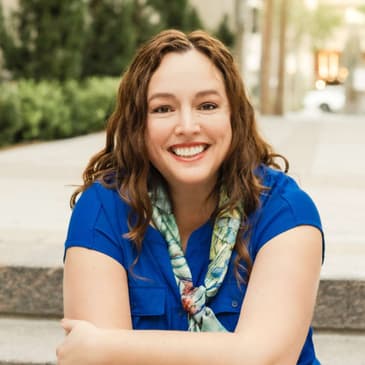

Today’s guest is someone who beautifully bridges two worlds—science and story, medicine and meaning.
Amanda Skenandore is an award-winning author of historical fiction whose novels have been translated into multiple languages and recognized by organizations like the American Library Association, Reader’s Digest, Silicon Valley Reads, and Apple Books. In 2024, she was honored with the Nevada Arts Council Literary Fellowship for her contributions to literature and the arts.
But what makes Amanda especially fascinating to me is that before she ever became a full-time writer, she spent 16 years as a registered nurse.
And you can feel that in her work.
Her stories don’t just live in the past—they dig into the human experience of medicine, justice, and belonging… often in the overlooked corners of history where voices have been silenced or forgotten.
Today, we talk about that journey—from bedside nursing to bestselling author, how her clinical experiences shaped her storytelling, and what it means to care for people… whether through medicine or through words.
In the five-minute snippet: they are just so cute. For Amanda's bio, visit my website (link below).
Contact The Conversing Nurse podcast
Instagram: https://www.instagram.com/theconversingnursepodcast/
Website: https://theconversingnursepodcast.com
Your review is so important to this Indie podcaster! You can leave one here! https://theconversingnursepodcast.com/leave-me-a-review
Would you like to be a guest on my podcast? Pitch me! https://theconversingnursepodcast.com/intake-form
Check out my guests' book recommendations! https://bookshop.org/shop/theconversingnursepodcast
I've partnered with RNegade.pro! You can earn CE's just by listening to my podcast episodes! Check out my CE library here: https://rnegade.thinkific.com/collections/conversing-nurse-podcast
Thanks for listening!
[00:00] Michelle: Today's guest is someone who beautifully bridges two worlds.
[00:04] Science and story,
[00:06] medicine and meaning.
[00:08] Amanda Skenandore is an award winning author of historical fiction whose novels have been translated into multiple languages and recognized by organizations like the American Library Association,
[00:21] Reader's Digest, Silicon Valley Reads, and Apple Books.
[00:26] In 2024, she was honored with the Nevada Arts Council Literary Fellowship for her contributions to literature and the arts.
[00:34] But what makes Amanda especially fascinating to me is that before she ever became a full time writer,
[00:40] she spent 16 years as a registered nurse.
[00:44] And you can feel that in her work.
[00:47] Her stories don't just live in the past.
[00:49] They dig into the human experience of medicine,
[00:53] justice and belonging,
[00:54] often in the overlooked corners of history where voices have been silenced or forgotten.
[01:00] Today we talk about that journey from bedside nursing to best selling author.
[01:05] How her clinical experiences shaped her storytelling, and what it means to care for people,
[01:11] whether through medicine or through words.
[01:15] In the five-minute snippet,
[01:17] they are just so cute.
[01:38] Michelle: Well, good morning, Amanda. Welcome to the podcast.
[01:42] Amanda : Thank you so much for having me. I'm excited to be here.
[01:45] Michelle: I am excited as well.
[01:47] We were introduced by the amazing, incredible DD Finder.
[01:54] DD was a guest on this show a few years ago now,
[01:59] and he is a nurse and an author like yourself.
[02:02] And DD has sent some amazing guests my way.
[02:06] So when he told me about you,
[02:08] I said, yeah, absolutely, DD, I trust you. And so that's why I'm so excited. He read some of your books and he said,
[02:16] she's an amazing author. She's an amazing nurse. Like you have to have her on.
[02:21] So here you are and I'm very, very excited.
[02:25] Amanda: Thank you. I'm excited too. And he is a great guy. And listening to, you know, his story on your podcast, reading his books, it's really inspiring and fantastic.
[02:36] Need more of that, I think, in the world.
[02:39] Michelle: Oh my gosh. Yes. Yes times a thousand. Right?
[02:43] Okay. Well, you have a very rich bio.
[02:45] Your bio includes your family history. When I read it, I was like, this is so cool. What an interesting family to grow up in.
[02:55] So tell us how you grew up and how you came to love books, reading and writing and how nursing entered the picture for you.
[03:05] Amanda: Yeah, I grew up in,
[03:08] I would say a family of scientists. My dad is a physicist. My mom was a mathematician and a teacher,
[03:15] both of my sisters went into science,
[03:18] physics, and biology.
[03:20] But there's also been a lot of, I guess, maybe, like, right
[03:23] Brain influences in my life too. My mom was a artist, a painter. My sister, one of my sisters, is very a skilled musician.
[03:33] And for me, I have always loved
[03:35] writing,
[03:36] but in terms of reading, I actually came to reading a little bit slowly. You meet a lot of writers, and they're always like. I was an avid reader when I was a kid, and that was not me.
[03:47] I really struggled to read, dyslexic, and it was really hard for me. I don't know if anyone remembers this is back in the 80s, but one of the things that they did to get kids to read was the Book It program with pizza Hut,
[04:01] you know, if you logged a certain number of hours, you got a free personal pan pizza. And I have this memory of,
[04:10] you know, following my mom around the house as she's, you know,
[04:13] doing laundry and all these things.
[04:15] And I'm reading aloud to her because I'm trying to log my Book It hours because I love pizza so much.
[04:21] But I'm crying.
[04:22] I'm literally crying as I'm reading because it is such a struggle for me. It was so hard.
[04:27] So that's kind of an early, like,
[04:28] reading memory of mine. It was not something that I enjoyed. But one thing that I really credit
[04:33] my parents for is that they still
[04:35] They always read to me, and that
[04:39] helped me be able to love story, right?
[04:41] When you're not struggling to figure out what the next word is, you can just sit back and you can absorb the richness of what's being read. And I think I definitely credit that with
[04:51] loving to read.
[04:52] Even before I could read, right. Loving the idea of stories.
[04:55] And eventually I did become an avid reader. I love to read,
[04:59] and as I mentioned, I love to write. That was always my favorite assignment back in school.
[05:03] They're like, okay, let's do some creative writing.
[05:06] Or I had a friend, she and we would, instead of passing notes back and forth in class, we would pass stories. So I might start a story in the first period, and I'd pass it off to her.
[05:17] She'd write more of the story in second period and then back and forth all day long, we'd be writing storiesbinstead of paying attention, which we
[05:23] probably should have done.
[05:24] But again, like, it just was something I love to do.
[05:28] But then by the time I got to college, I thought, well, you know, I should do something practical.
[05:35] And I met someone who was studying nursing.
[05:38] I Talked to her about it. And I loved the idea that it was both something that was hands on, where you would be doing something, you
[05:47] know, moving where you would, where no two days would look the same. But also that there was a lot
[05:52] of, I think, thought behind it, both knowledge and intellectual thought, but also the
[05:57] kind of compassion and emotional thought I would say that nursing is so known for. So that really appealed to me.
[06:04] And I actually had a degree already
[06:07] in linguistics, and then I went back and did an accelerated program to get my BSN.
[06:15] Michelle: Wow. So very interesting. Love to hear just the family connections and the scientific mind and then also the right brain, creative mind. That's how they all came together. That's really amazing.
[06:31] Well, Amanda, you spent 16 years as a registered nurse, some of that time in NICU and some in infection prevention before transitioning into writing.
[06:42] So how has that clinical experience shaped the way that you tell stories?
[06:48] Amanda: You know, quite a bit. And I don't think I've realized that out of the gate. When I was first. When I first became a nurse, I
[06:58] went to a NICU.
[07:01] That's where I started. I know, having listened to many of
[07:04] your past episodes, that there are many
[07:07] people that can relate to this, but
[07:08] it was definitely one of those experiences where, you know, nurses eat their young.
[07:12] And it was a really, really trying experience. I also think perhaps just maybe not the best fit for me, you know, NICU.
[07:20] And even though I thought, in my mind, I thought, this is what I
[07:23] want to do, but in the reality of it probably was not a great fit for me.
[07:27] So I really struggled the first three years that I was a nurse.
[07:31] And that's kind of how I fell back into writing,
[07:35] almost as a way to, like, escape what I was doing, my job, right.
[07:41] And I took a short story class.
[07:43] And I remember the professor, he said, you know, short stories aren't great, but writing a novel, that can change your life.
[07:50] And I just thought, oh, I want to try to write a novel.
[07:54] So three years in, I should say three years out of nursing school. Well, I said to my husband, I said, I think I want to quit my job and become a writer.
[08:02] He was so great. He was very, very supportive. He's always been very supportive.
[08:05] Well, you know,
[08:07] if you're sure, okay.
[08:09] And I did.
[08:10] I left that job and I decided I'm going to be a writer.
[08:13] And I wrote a book that has never, never been published, probably never will. Kind of a training book. And then I realized, oh, I know nothing about the publishing industry.
[08:24] So I had to learn about that. And as all this is happening, I was realizing this is not something that's going to be an immediate success for me. Let's say that, right?
[08:33] Like, this is something that takes a long time to do, to find, to write the story, to edit the story, to find a literary agent and a publisher.
[08:40] None of this happened overnight.
[08:42] So I realized, okay, I better go back into nursing.
[08:47] And I found another NICU job at a different hospital. And just want to say for the listeners, like, what a difference that makes. Sometimes it's literally just the unit that you're on, just the particular culture of that particular unit, maybe even that particular shift, right?
[09:03] It made a really big difference. And I found I was a lot happier at this other unit.
[09:08] But as this is happening, as I'm also there,
[09:11] I'm starting to write.
[09:14] And I put that first book aside. I start writing another book,
[09:19] the book that would eventually become the first book that I ever sold in my mind. I kept the two things very separate, right? I'm a nurse, and I'm a writer.
[09:27] Eventually,
[09:28] after I finally published my first book and started to write a second book,
[09:33] I found that I actually love writing about medical history.
[09:37] And I sort of just stumbled onto that. My second book is about an embalmer in the 18th century.
[09:43] And some of my favorite parts of the research were researching these old embalming techniques. It was just wild, the things that they were using to embalm these bodies. But also more broadly than that, I think the way that people in America in the 18th century Approach death and the way that it wasn't just,
[10:01] you know, sometimes it can be very jarring, I think, for people in modern society, because you spend so much time caring for the people you love up until the point that they die, and then suddenly we'll take over from here, and then the body goes to the, you know,
[10:15] the funeral home, and that's the end. Whereas people would care for the person as they were dying through their death, and then afterward, too, preparing them for burial.
[10:24] And I think that gave people perhaps better transition into the grief of mourning. Anyway, so all of that was fascinating to me, and I kind of stepped back after that second book and thought, you know, maybe this is where I want to take my writing.
[10:40] And absolutely. Then the next book I wrote was about Hansen's disease. Leprosy.
[10:45] By that time, I was an infection prevention nurse.
[10:48] So I was pulling on these, you know,
[10:50] this background that I had this knowledge to kind of help me both, I think, feel comfortable in the research knowing, like, okay, I can read these books about this disease and understand what's being being said, but also knowing that I wanted to make sure I could take this and translate it in a way that people who are not nurses,
[11:12] who are not doctors, who weren't in the healthcare profession could understand what was happening.
[11:17] And ever since then, I've kind of stayed on this path and I'm always looking for those sort of interesting medical history stories, those moments where,
[11:28] you know, we were in the medical
[11:31] profession making these great strides or
[11:33] not making these great strides, really suffering, backstepping, these kinds of things. Those are all things that appeal to me. And trying to put myself in the mindset of someone who,
[11:43] was alive before we had antibiotics or anesthesia or understood germ theory, you know, just that sort of, I think mental exercise is very, very interesting.
[11:53] Having a horsemen on the other side and knowing how important those things are for our current healthcare success.
[12:01] Michelle: Well, first of all, I have to say was taking that leap from leaving nursing to writing, was that scary?
[12:10] I would be super scared, but maybe you were exhilarated.
[12:15] Tell me about that feeling you had.
[12:17] Amanda: Ooh, it was, it was both. It was definitely scary. And I remember I had two charge nurses.
[12:27] And one of them, I probably had more than two
[12:29] but I remember two charge nurses from that time.
[12:31] And one of them said to me, she said, Amanda, you're making the biggest mistake of your life.
[12:35] And another one said, you know, I'm really excited for you and just, you know, go out there and get them.
[12:42] And so I think I was feeling
[12:43] both of those things that they, that they were expressing at the same time that this is this great potential possibility. But also,
[12:51] wow, what if I completely fail?
[12:55] I initially stopped working. I was only out of the profession for about a year. But, but from that initial leap,
[13:02] it was eight years before I had a book published. Right. So it was a really long time. And there were definitely more than that initial moment
[13:11] Times during those years where I was
[13:14] like, is this crazy? You know, should I just be putting
[13:19] this aside and returning and giving all
[13:20] of my focus to nursing and that's kind of the,
[13:26] I think the balance that you're trying to walk and to,
[13:31] I don't know, it is important to take, to take these leaps,
[13:35] but it's a great thing about nursing too, is that I was able
[13:39] to find a job and go back
[13:40] so quickly and I was able to work per diem and a couple of
[13:45] different per diem jobs, sometimes at the
[13:47] same time and also even within that, even as a per diem nurse, move within profession. You know, I said specialties, move specialties. Right. So in that way I was really lucky that I was in arsenal, that I did have this background because it made those eight years while I wasn't making any money for my writing.
[14:07] It made that feasible.
[14:09] Michelle: Yeah, that flexibility, gosh, it's so perfect.
[14:12] And I would think as a historical fiction writer that especially writing about things like nursing, medicine, all of those things that you would just have unending material really,
[14:29] because there's just so much involved.
[14:32] Did you have any guilt leaving bedside,
[14:35] Amanda? Because many nurses,
[14:37] when they leave the bedside for whatever it is, they feel a sense of guilt or a sense of identity loss.
[14:44] Did you experience that at all?
[14:47] Amanda: I did in the slightly, maybe unorthodox way.
[14:52] So I was working in NICU and then I transitioned to infection prevention, which I think certainly is still very, very
[15:00] much fundamental to nursing and a key part of healthcare.
[15:05] It was sort of a step removed from the bedside. And I did that for 10 years. And I would say leaving that was actually the hardest because even though you are not at the bedside and you're not, you know, doing hands-on care for the patient,
[15:19] I really do feel that what infection preventionists do is so important. And you really do feel like you make this incredible contribution to the hospital. Even though, like it's so imperfect and
[15:33] you can never tackle all the things that you want to tackle. You're never making as much change as you wish that you could. I still think it's incredibly important.
[15:43] And the pandemic really solidified that for me. Suddenly I think I had felt perhaps ambivalent about my identity as a nurse up to that point.
[15:54] You know, I,
[15:54] I do this, this is my job, this isn't who I am. I think was about nursing. But during the pandemic, that definitely shifted for me.
[16:02] And one, it was just like necessity. Right.
[16:06] You know, I mentioned I was a per diem nurse, but there were two of us. There were two Infection Preventionists for my entire hospital.
[16:12] Right. So like, you couldn't just be in, in per diem at that moment. Right. You know, I was working 40, 50 hours a week sometimes.
[16:19] And I'm glad I did and I'm happy about that. And I again, in my very, very small way,
[16:24] removed from the bedside. I did feel like I was making a difference. So I think after that experience,
[16:30] being with my colleagues, being at my hospital during that time period, leaving that was very difficult,
[16:37] and I will say so. It's been about a year that I've been away from the hospital, and I still trying to land on my identity.
[16:46] Right. Nursing now feels like a very big
[16:48] part of me, and I still
[16:49] have an active license. I'm going to renew my Infection Prevention certification.
[16:55] Michelle: Yeah, I totally get that. And it's so funny. I feel like,
[16:58] you know, we nurses that have kind of left nursing or for something else. Mine was for retirement.
[17:06] You know, I still have an active license, too.
[17:09] I feel like that's something I need to justify. Like, I'm still a nurse. Like, I have an active license.
[17:18] Don't dismiss me yet.
[17:20] Amanda: You know, I feel like that, like, deep in my soul, and I just think, you know, when I just heard you say that, like, I have an active license, it's like,
[17:29] we're holding on, you know,
[17:31] don't get rid of me. I'm still a nurse. I. Yeah. Wow.
[17:35] And yet everything, you know, your entire
[17:37] career, I mean, you worked, 36
[17:40] years as a nurse, like, no one
[17:43] can ever dismiss that.
[17:45] It's a funny thing that, you know, maybe.
[17:47] Maybe isn't justified.
[17:48] Like, I think about you, and
[17:50] I think, of course you will always be a nurse. I don't know. I can't quite extend the same idea to myself.
[17:58] Michelle: Yeah, I thought that was funny.
[18:01] Okay. I want to get into your creative process.
[18:04] So, as you know, nursing requires close observation, empathy, and stamina.
[18:10] Amanda, do you notice those same skills showing up in your writing process?
[18:14] Amanda: Absolutely. I think all of those, I would start with perhaps the empathy piece is key, especially for, I would say, for any author.
[18:25] But I write fiction, and so I'm trying to put myself into my character's perspectives.
[18:33] And having that empathy is a way that I can look at them and
[18:38] look at all their choices and understand
[18:40] where they're coming from and hopefully present them in a more realistic way on the page so that they are flawed
[18:48] in some ways and have little flashes
[18:52] of great skill and exciting behavior on the one hand, but again, as I
[18:59] mentioned, are imperfect because for me, anyways, I enjoy reading about imperfect characters. I'm not necessarily wanting to read about the, you know, the perfect heroine that, you know, makes no mistakes.
[19:10] We all make mistakes. And as a reader, I like to see that on the page because it
[19:15] gives me hope as I see these
[19:17] characters progress, that I can change. I can become a better person too,
[19:23] in a kind of converse way too. I think writing has helped me be
[19:28] a more empathetic nurse as well.
[19:31] I remember this one example, as I mentioned, I wrote about Hansen's disease, leprosy. And there was so much,
[19:37] and still is today, but certainly before we had a cure for the disease, there was so much stigma about the disease and people were just ostracized and you know, locked away in these,
[19:49] these colonies, these hospitals,
[19:52] sometimes for their entire lives.
[19:54] And it really made me think,
[19:56] not just like on a high level about,
[19:58] oh, we really have to be careful
[20:00] that when we're in medicine that we are not making
[20:04] personal judgments about people because of their
[20:06] health presentation, but really like on an individual level.
[20:11] Right. Sometimes I think you're in there, you're looking at a
[20:14] patient's chart and you're seeing, oh, you
[20:15] know, they've got high blood pressure and
[20:18] you know, they're non-compliant with their meds and they're, you know, maybe
[20:23] they're not exercising or they have a high BMI, all of these things.
[20:28] And we just make all of these assumptions about the person and about their culpability for their current illness. And having, I think explored so much
[20:42] about how people are hurt by the
[20:44] stigma of disease in some of my stories,
[20:47] it just this way for me to check that kind of, it's almost just this impulse that we have to just kind of do, you know, and part of it is
[20:55] we're just trying to categorize, right? We're trying to take information, filter it and categorize.
[20:59] But that ability to step back and
[21:00] say, like, this is a person and
[21:02] they have an entire life worth of
[21:05] experiences that have led them to this place that I know nothing about that
[21:10] just having that small bit of compassion,
[21:12] extra compassion maybe for that person, I think in that way really made me a better nurse.
[21:18] But to go back to the writing and how writing or how nursing has helped me in my writing. The other thing you mentioned too, I think, you know, we know nursing is
[21:27] it's a lot of hard work,
[21:29] it's a lot of stamina and writing is very much the same way.
[21:32] You cannot wait, I think, for the muse to just come to you
[21:37] or let me say, certainly if you're writing just for pleasure and you're writing as just a way of expression, don't make it a hard, stressful thing for yourself.
[21:47] But if you're writing because you're on
[21:49] a deadline with your publisher, you have to get those words on the page.
[21:53] And in that way, just like showing
[21:55] up every day to put more words down, that's important. And that's the sort of stamina that I think definitely carries over from nursing.
[22:05] Michelle: Wow. I'm so surprised on one hand, and I, maybe our listeners would be, too,
[22:10] at the process. You know, just talking about stamina to write.
[22:16] You know, when I think of a writer writing, I
[22:20] think of them like, going to this place that's maybe, you know, like a little cabin in the woods or,
[22:28] you know, a little beach house by the ocean and being alone with their thoughts and
[22:35] just kind of lazily writing,
[22:40] not, you know, for deadlines, for publishers. And,
[22:44] you know, that's something that is surprising that you just told me, and I think a lot of other people would find it surprising as well, but it makes 100% sense.
[22:58] And I like how you spoke about the morality of kind of judging patients. I think that's a dangerous, dangerous road to go down where we are assigning a moral code or a moral ethic to somebody's health condition.
[23:14] I think we absolutely have to stop ourselves when we see that happening,
[23:19] because as you said, they're people and we don't know their story. Right.
[23:25] Amanda: And it doesn't help us.
[23:27] it does it such a disservice both to us as their care providers and certainly to them. People trying to get comprehensive, thoughtful medical care.
[23:37] Michelle: Yeah, absolutely. Well, Amanda, what does your research process look like? Take us through that.
[23:44] Amanda: I tend to write about things that I don't know a lot about. Right. I'm curious. I think that's a big part of creativity, is the curiosity.
[23:53] So I spend a lot of time in the beginning learning about my subject,
[23:59] trying to get a good foundation so that I can,
[24:02] as I'm thinking about the story, build a plausible framework upon that.
[24:06] That foundation of truth, of history, if you will.
[24:10] So that usually takes two or three months of just, you know, solid research.
[24:16] And then sometimes, if I'm able to, I will go and visit the location that I'm writing about. Sometimes that happens later,
[24:24] after I've written the first draft, but usually that I try for that to be part of my research as well, because there's so much you can learn about a place being there.
[24:35] The feeling of the weather,
[24:38] The way that the sunlight plays on the horizon at sunset or sunrise.
[24:44] Those are different from place to place.
[24:45] The smells, those kind of things. I want to get those right.
[24:48] So I do try to go to a place if I can.
[24:51] That doesn't always happen in the beginning, but eventually, once I feel like I have a good base, that's when I will sort of build my story on, on top of that foundation and start writing.
[25:01] And at that point I try not to do too much research because it can completely sidetrack you for hours, for days.
[25:10] And when I'm in that period of writing, I really want to get to the end,
[25:16] complete the story so that then I can begin my revisions. And I don't like to
[25:20] edit as I go, so I like to have my research kind of done
[25:25] on a foundational level. In the beginning, as I write, I'll
[25:28] just make little notes like fact check
[25:29] this or you know, figure out what someone would be wearing in 1926, that kind of thing. And I just move forward to the end. And then as I'm revising, I'll do a whole other layer of research,
[25:42] smaller things, right? Like I mentioned, what was someone wearing?
[25:46] What kind of food might they be eating in this moment or this place?
[25:50] Because what I have found the hard way is that if I do too much of that small, the detail type of research before the story is really set,
[26:00] I end up cutting so much of that material.
[26:04] And then the hours that you spend figuring out how to operate a wood burning stove, for example, like if that scene doesn't get into the, the end book,
[26:13] all that time you spent,
[26:15] while not wasted, is not necessarily the best use of your time. And so I really tried to wait until I know, okay, this scene is going to be in the book and then I do all that small detail type research.
[26:26] Michelle: That is so cool. I had absolutely no idea. I was very naive thinking,
[26:31] you know, maybe a few weeks of research and you just blew that all to smithereens with your months of research.
[26:40] And I love it. I mean to be able to visit the site of
[26:47] where your character came from and to get that historical perspective. But then just like you said, the little day to day details of, you know, what did the sunrise look like?
[26:59] What would they eat, what would they wear?
[27:02] That's what makes your writing so rich, is because you have done that really deep research.
[27:10] And we'll talk about the book that I read in a moment, but wow, that's so, so interesting.
[27:16] Amanda : Thank you.
[27:17] Michelle: How do you know when a story is ready to be written?
[27:23] Amanda: You know, that's a good question and kind of a tough question, honestly,
[27:28] Or I should say it is a tough thing to know.
[27:32] Sometimes, like, I'll be circling an idea and kind of, it's almost like I'm trying to find the way into the story. So I will have a sense of, like, okay, I want to write about this historic place or this historic thing,
[27:49] this event. But,
[27:51] you know, I'm writing historical fiction, not non-fiction. So I'm really looking for a viewpoint, a character or characters who will sort of take the writer into that story or the
[28:04] writer and the reader.
[28:05] And finding that person, finding the right person and the right perspective to see these events or this.
[28:13] This particular place, that can be really tricky. But once I do, once I find maybe the guide, if you will,
[28:22] who will become the main character,
[28:23] then I can start to envision the story from their perspective. And that's when things just really start to take shape. And that's when I feel I'm ready or getting close to ready to actually write the story.
[28:38] Michelle: Okay, well, thank you for taking us through that process again. Very fascinating.
[28:43] Amanda, have you experienced the dreaded writer's block? And if you did, how did you resolve it?
[28:51] Amanda: I definitely do.
[28:53] Writing is.
[28:54] It's wonderful. It is also hard, especially when you are sitting down day after day and you've got, you know, a looming deadline coming up.
[29:03] But I very much ascribe to that idea that,
[29:07] you know, you cannot wait for the muse. The muse is a fickle thing.
[29:11] And if I waited for,
[29:15] I think, inspiration to strike every day that I sat down to write, I would be writing very, very slowly.
[29:22] So to me,
[29:23] it's about sitting down and. And just doing it, putting words on the page,
[29:29] whether or not it feels particularly inspired,
[29:31] because there's so many times, I think, in the writing process that you are going to touch an idea or a word, a sentence, a chapter. You know, you've got your initial ideation,
[29:42] but that might change when you actually sit down to write the words.
[29:46] But let's say those words are terrible. You're gonna touch them again when you revise probably three or four times before it's over. So I just remind myself when I am having these moments of writer's block where nothing feels like it's coming, like it's okay if this is terrible,
[30:02] because I can fix this.
[30:06] I need to write myself into a place where I am feeling inspired by being able to see the larger picture, feel the muse, if you will. I can't just wait for it to happen.
[30:17] I really have to be engaged with that and have,
[30:21] I think,
[30:22] grace and say, it's okay if this is bad.
[30:25] It doesn't mean that it's going to be bad forever.
[30:29] MIchelle: I like that because sometimes as creatives, we get into that,
[30:33] you know, we hear that judgmental side saying, you know, as we're doing something, for me, it's like painting, or, you know, I'm doing something like that, and I'm like, oh, this looks like crap.
[30:45] And, you know,
[30:46] I think sometimes to go in with the premise of, like,
[30:49] okay, this first draft, it's going to be bad. I know it, but I'm going to work on it, and I'm going to improve it, and it'll turn out being okay.
[31:00] I think that brings creatives like yourself, like, so much comfort and peace, I guess.
[31:12] So a lot of your writing is around the themes of justice, advocacy, and belonging.
[31:20] And advocacy is a core nursing value for patients or populations whose voices were historically silenced. Amanda, how does advocacy show up in your storytelling?
[31:33] Amanda: In a way,
[31:35] I think what I'm trying to do is maybe advocate for a more complete and sometimes more nuanced understanding of history.
[31:45] So I'm trying to bring voices that were discounted,
[31:50] sometimes intentionally buried up to the surface so that we can take a moment and see things through their perspective, see how they contributed to the past. And I definitely think in that contribution,
[32:09] contributed to our present, too. Right. That, you know, certainly what happened in the past affects how we live our lives today. And so it's important to have a full understanding of all the people that,
[32:21] again, that contributed to what we experience today.
[32:26] And also,
[32:27] and I definitely think this is true for nurses,
[32:30] It really behooves us to be able to sit down and empathize and try to appreciate the experience our patients are going through from their perspective as best we can, and understand that in this moment, they have brought, like, their entire lives, right, their entire life's worth of experiences to this moment that are very likely incredibly different from the experiences that we have brought to this moment.
[32:57] And so writing,
[32:59] I think, writing at all, but certainly writing stories of the past, stories that look at, you know, underrepresented voices,
[33:07] It's an exercise in that.
[33:08] Right?
[33:09] It's an exercise in putting myself in a different perspective,
[33:13] not only in that moment where the story or the scene takes place. But thinking about everything that came before for that character and how it impacts them in that moment.
[33:23] And in that way, I think it's very translatable to nursing, and in a way like vice versa, too, that being a nurse has helped me cultivate that skill. Wanting to understand my patients, knowing how important it is to feel that empathy for them,
[33:38] helps me as a writer do the same for my characters, and vice versa. It reminds me as a nurse, this is important.
[33:47] This is just as important as, you know, the medicine I'm giving them,
[33:52] being able to understand them and bring compassion to the moment.
[33:56] Michelle: Yeah. And I think, you know, even nursing aside, like, we need writers like you that give us a look into the past, into the history,
[34:07] because maybe we are not aware of it or maybe we are, but it just reminds us of,
[34:13] you know, how far we've come, or maybe we haven't come that far and we need to go farther.
[34:19] You know, I think that is so important, and certainly for nurses who are advocates at their core,
[34:26] to be reminded of how your characters advocate for their patients,
[34:32] historically, I think that's really, really valuable.
[34:37] Another thing that comes up in your writing is belonging.
[34:41] And many nurses struggle with feeling unseen or undervalued.
[34:47] Why is the theme of belonging important to you, Amanda?
[34:52] Amanda: It's something that, you know, regardless of the story that I'm telling, all of my stories are.
[34:57] pretty different.
[34:59] They always, as you mentioned, they always circle back to this idea of belonging. And it's not intentional. It's not that I'm trying to, like,
[35:06] excavate this particular theme,
[35:08] but the stories just tend to go that way for me. So I do think it's something that is important to me. And the more I think about that idea, like, to me, belonging, it's not just this idea of fitting in,
[35:21] but it is the idea of being valued for who you are,
[35:25] being respected, having that feeling of dignity,
[35:30] And that's something that we
[35:33] We share with one another. Right.
[35:37] I do think there is, you know, a small parallel, certainly to my
[35:41] nursing experience, because I did spend quite
[35:45] a while feeling as if I didn't quite fit in with the profession.
[35:50] I didn't come from a family of nurses. There was no one close to me who was a nurse. I kind of came to the profession, I suppose, from the outside,
[36:02] And I, you know, again, looking back,
[36:05] you know, I think there were probably a lot of us who didn't feel like you belong when you're a brand new nurse.
[36:09] Everything is so difficult that I think we're all just struggling to stay afloat
[36:14] that we all feel a bit out of place. But you know, for me, I was questioning like, well, maybe this isn't the
[36:19] right thing for me or maybe, you
[36:21] know, I'm just not of the right material of the nurse material. And the,
[36:27] more experiences I had,
[36:30] the more, the longer I was in the profession, the more you see that you do belong. You do belong. Regardless of,
[36:37] you know, whether or not you're a first generation nurse or one of a long, long line of nurses,
[36:43] or whether you always wanted to be a nurse or you decided later in life to be a nurse,
[36:47] whether you are a bedside nurse or,
[36:50] you know, working behind the scenes.
[36:52] I think we all come together to create in, you know, in those perfect scenarios, something really important and beautiful and,
[37:00] and I find that in life as well,
[37:02] for me,
[37:04] and certainly for my characters, but I do think for a lot of people, we are struggling to find those places where we do feel seen and we feel valued and we feel like we are contributing, that we have something to contribute.
[37:16] And to me, all of that is belonging. And I think that's why I'm always circling that idea in my story, because it just seems so fundamental to humanity and to happiness and to community.
[37:27] I think community is so important.
[37:30] Michelle: I love your definition of belonging.
[37:34] It's so global,
[37:36] it's so all encompassing,
[37:38] where we tend to think that belonging is just being part of a group and so much more. As you just stated.
[37:47] And you know, coming from,
[37:50] You said you didn't come from a family of nurses, and I'm the polar opposite. Like,
[37:56] out of eight siblings,
[37:58] six of us are nurses.
[38:01] And so there's that connection.
[38:04] So I felt from like an early age, as a teenager,
[38:08] watching my older brothers become nurses, that,
[38:12] yeah, like, I'm a nurse too. Like, I was already feeling like I was a nurse before I was a nurse.
[38:18] Yeah, I love your different perspective. That's neat.
[38:22] Yeah, it takes a village to make a profession.
[38:27] Well, I want to talk about some of the recognition that you've received,
[38:31] Amanda, from your writing.
[38:33] Your books have been recognized by organizations like the American Library association and Reader's Digest.
[38:39] And then in 2024, you received the Nevada Arts Council Literary Fellowship.
[38:44] How does that kind of recognition or what does that kind of recognition mean to you as an author?
[38:50] Amanda: It is certainly such an honor.
[38:54] I think when an external body sees your work and says, okay, there's something of value here.
[39:02] And ideally, I think as creatives, you know, you create for yourself, and you create because you love to do that.
[39:12] But at some point,
[39:13] especially if you have the intention of sharing your work with the. With the world, you are hoping that on some level it touches someone.
[39:23] And so receiving some of those acknowledgments, it's just this feeling of, okay,
[39:29] I did what I set out to do, and I did it in a way that connected with people.
[39:34] And so,
[39:35] you know, receiving those accolades, it's just a little bit of a buoy to, like, okay, keep doing this.
[39:42] You are making a difference. Cause, you know, we were talking about those moments of writer's block you have where you've got that critic sitting on your shoulder.
[39:51] It can be so debilitating.
[39:53] And so having these moments to kind of remind yourself that, no, I can do this, and there is purpose to what I'm doing, and it doesn't have to be, you know, an award from American Library Association.
[40:07] I have, you know, readers who will write to me,
[40:10] and I save their emails. I save them to, like, read again when I'm feeling like nothing I do matters, like I'm not a good writer. All the things. Right.
[40:20] I read these things to remind myself there was a time that I did something and it touched someone else.
[40:26] And, ah, gosh, at the end of the day, you can't ask for anything more than that.
[40:30] Michelle: Yeah. I mean, first, to be recognized by those literary associations is so meaningful.
[40:36] And then to have readers provide that feedback that, you know, they loved this story or they loved this character,
[40:45] That just has to be so satisfying. And, you know, I've said it many, many times before that nurses,
[40:52] you know, we don't do it for the money or the applause.
[40:56] Right.
[40:56] But when we get it,
[41:00] we like it. It feels good.
[41:02] Amanda: It does, right?
[41:02] Michelle: It does. Could the same be said for writers?
[41:06] Amanda: Absolutely. I think that is so true. I imagine that you could say that just about any profession that,
[41:13] you know, you do do it because there is a calling, because something inside you brings you to that.
[41:20] But we do want to know that we're
[41:22] doing an okay job, that we are, that the effort that we're putting out there is being received in a positive way.
[41:29] And, you know, you mentioned that about nursing. And immediately I can think of those small moments where,
[41:34] you know, and it
[41:35] wasn't even, like, a supervisor or a
[41:37] boss or someone that said something, but,
[41:40] like, when a patient or a patient's family just said, thank you, or,
[41:45] you know, I really appreciate that you took the time for this. Like,
[41:48] I can picture those moments in my mind. They mean so much. They're like, you know, the blink of an eye. But I will carry them with me my whole life.
[41:55] Michelle: Yes. Very, very meaningful. And like you, I'm kind of a nerd like that.
[42:00] When I started podcasting, people would reach out to me and say, oh, I love this episode. And I saved those emails, too.
[42:09] Yes. Because you do have those times where you're just like,
[42:13] is anyone listening?
[42:16] No, I see, like, the number downloads and everything that I have. And,
[42:20] but it's just, it's so nice to get that personal feedback. It's just. Yeah, yeah, it's very, very valuable.
[42:28] Very cool.
[42:29] Well, you were so kind, and you sent me your book, the Nurse's Secret, which I absolutely loved.
[42:35] And the title character, Una, had quite a secret.
[42:39] You think that nurses harbor secrets?
[42:44] Amanda: I do think so.
[42:46] I mean,
[42:47] in some ways, I think, again, I think everyone harbors secrets.
[42:51] But I think,
[42:53] and there's something about nursing in particular, or maybe it's these types of professions where there's just a, there's such a public perception about what nurses are,
[43:06] and this is what a nurse does and all these things. And, and in some ways,
[43:10] I think that's wonderful. Right? I love that, you know, nursing is the most trusted profession, and I love that we're a visible profession.
[43:18] But I do think sometimes this idea of a nurse can become stultifying, like you feel almost trapped within this
[43:29] maybe I'm not a nurse or I'm not a good nurse, and so I have to hide those parts of me that,
[43:40] don't fit this mold.
[43:42] And I think that nursing is getting so much better at that, at embracing just a wider swath of people,
[43:50] people from different backgrounds.
[43:52] But I do think that is something that we are fighting against a little bit, this legacy of,
[43:57] of what a nurse was as a very, very narrow conception. And so in that way, I think nurses do sometimes, definitely, you carry secrets of who you are, because you are so much more than just a nurse.
[44:12] We are all so much more than just what we do.
[44:14] And again, we're bringing, you know,
[44:17] an entire life's worth of experiences with us.
[44:20] You know, every moment we Step onto the floor. And we're always. You know, we're always managing that. And most of the time,
[44:26] it's kind of easy to,
[44:28] I think, put that in the background and just sort of move forward wit your day. But it's not always easy. Right. And those are the moments, I think,
[44:38] that it becomes hard because there is this expectation that you always can,
[44:42] and that's just not possible.
[44:46] So in that way, I do think
[44:47] that nurses harbor secrets.
[44:50] Michelle: You know, I think of the nurses that I've worked with over the years,
[44:55] And I would totally say that's true. And, you know, when Una was becoming a nurse in that time, like, it was so strict,
[45:04] the nursing school, the requirements to get in were so strict.
[45:07] And I think about my own mother, and my mom was in nursing school in,
[45:13] let's see, I want to say, 1958.
[45:17] Okay. So I think that wasn't that long ago, you know,
[45:21] but in 1958,
[45:24] if you got married,
[45:28] You couldn't stay in nursing school. And so she got through half way through nursing school, and she met my dad and,
[45:35] you know, fell head over heels, and they wanted to get married, so she dropped out of nursing school.
[45:41] And I think, oh, my gosh, that's so archaic.
[45:47] And that was the 1950s, almost the 1960s.
[45:51] Right? Not so long ago.
[45:53] Yeah. Yeah. So interesting. Well, why do you think it's important for nurses to know the history of their profession?
[46:01] Amanda: I think it's twofold.
[46:03] One, I think we have so much to be proud of, and I do,
[46:10] I think that's important to remember what nurses, you know, have contributed,
[46:15] whether it was,
[46:16] you know, the nurses who were there alongside the soldiers in World War I, in Vietnam, you
[46:22] know, World War II, you know, all
[46:24] these different battles, for example. But also, you know,
[46:27] the important work that nurses have done here throughout history and the way that was something I loved learning about when I was researching for the Nurses Secret.
[46:40] Just the way that initially, when it was proposed, the idea of the Bellevue School of Nursing,
[46:46] it met with a lot of resistance from the physicians, and they very much saw nursing as a way for women to try to wiggle themselves into the field of women physicians.
[46:58] And they didn't want any women physicians. Right.
[47:01] And so they were largely opposed to the school for that reason.
[47:05] But very, very quickly, like, in a matter of just a few years,
[47:09] it became so evident what a benefit it was to have these women who were skilled and trained with, you know,
[47:18] I think a clear set of, you know, this is what you're going to do, and this is how you're going to help. Like, it made such a difference that
[47:26] doctors were suddenly like, oh, no, this is great.
[47:28] Having these nurses is great.
[47:31] And I do think that remembering that contribution and what we bring to healthcare is so important.
[47:37] At the same time, I think it's also important to see and to know the ways that,
[47:44] again, that I think our history has sometimes made it difficult for
[47:50] nurses to embrace all different types of people.
[47:54] So, for example, you know, at Bellevue, when they very first opened, this was 1873,
[47:59] you know, they were only looking for white women, and they were only looking for women, and they were really only looking for, you had to be religious,
[48:07] which on paper meant you had to be Protestant. You know, they weren't looking for Jewish women. They weren't really looking for Catholic women. They were looking for a very specific type of woman.
[48:17] And the biggest reason that they turned women away was because of bad breeding. Right. So this is just an incredibly archaic idea.
[48:24] But I think that some of these things have stayed with us and that we're continuing to fight,
[48:30] or maybe it's the wrong word, but to strive to be, I think, more inclusive.
[48:36] And I also think it shows up quite a bit in the continued hierarchy that we see in medicine in that, again, because physicians were very, very much opposed to women being physicians when they started Bellevue.
[48:53] And so many other schools then were patterned after Bellevue.
[48:57] And we were patterned after, or Bellevue, I should say, was patterned after a school that Florence Nightingale had opened in
[49:03] England. Like, this idea was that nurses had to have a very separate role than what doctors were doing.
[49:09] And this idea of obedience was very strong in. In the founding. In the construction of what a nurse was.
[49:18] And I think that is something that we are still trying to.
[49:24] What do I want to say? Like,
[49:26] weed out a little bit or deal with. Because, you know, as we know, right, like when you have surgeries happening on the wrong leg, because people don't feel like they can say, oh, wait a minute, that's not the right leg we
[49:37] need to be cutting off.
[49:38] Like, that's a gigantic problem. And to me, part of that stems from the way that nursing developed. So just, I think knowing that history, right, like, knowing why.
[49:49] Why is it this way?
[49:50] Why did this develop this way, I think can help us as we're trying to solve some of those problems.
[49:57] Michelle: I think it is crucial that we know where we came from. And even I'll say once again, you know, I got hired as a new nurse at 21 years of age in 1985.
[50:10] Again,
[50:11] not very long ago. Right.
[50:13] But in 1985, in my hospital, in my pediatrics unit.
[50:18] Well, in our hospital, we still wore the white nursing caps and white dresses and white stockings and white shoes.
[50:25] This is 1985.
[50:28] Yes. And we were expected when the physicians entered the unit, if we were sitting down, charting, we were expected to stand up and give the physician our chair in 1985.
[50:42] you guys, that wasn't that long ago,
[50:46] you know, and the nurses in the NICU, this wasn't true in PEDs, but in the NICU,
[50:51] they were not allowed to start IVs. Only the physicians could start IVs.
[50:58] Yeah. And so, man, have we come a long way. When I retired in 2022,
[51:03] I felt like nurses and physicians were more contemporaries.
[51:09] You know, I felt like that had really changed, that we had become a team and nobody was kind of above the other.
[51:19] And of course, in terms of scope and all that is different.
[51:23] But, man, we've come a long way.
[51:27] And I venture to say we still have a long way to go, but absolutely crucial that we know where we came from.
[51:35] Amanda: Yeah. And then we can celebrate. Right? Like, we can see,
[51:39] you know, when you talk about that and you even just looking back over your career and you can see that change,
[51:44] when you're aware of that, you can celebrate, like, yes, we have come a long way.
[51:48] We are making progress.
[51:50] And that in and of itself, I think, is important because it. It tells us for the next,
[51:55] you know, struggle, whatever that is,
[51:57] that we.
[51:58] We can overcome that too.
[52:01] Michelle: Exactly. Yep.
[52:02] Well, Amanda, this has been so great. I have learned so much,
[52:07] and I just thank you so much for coming on and sharing what you do as a writer, as a nurse,
[52:15] as a person.
[52:16] It has just been fascinating for me. I know, for our listeners, too. Anybody that loves reading is just going to love to know the process that you go through as a writer.
[52:27] And thank you so much. What is next for you?
[52:32] Amanda: Well, the next thing I'm working on, or I should say that is coming out in just a few months,
[52:38] is another book. I wrote another book about a nurse. This one is set in the 1940s,
[52:44] and it's about an illegal women's clinic that kind of operated as an open secret in the heart of downtown Chicago. A real. A real clinic that was then became part of a very high profile lawsuit and trial.
[52:59] That then had a lot of rippling effects out in the community. And so I'm writing about this again, this real clinic and this real trial
[53:07] : from the perspective of a nurse who
[53:09] : worked at the clinic. It's called When No One Else Will.
[53:12] Michelle: Love it. I've seen some sneak peeks on your social media about it. So excited for that one.
[53:18] Amanda: Thank you.
[53:18] Michelle: Awesome. Well, where can we find you and where can we find your books?
[53:23] Amanda: My books are available wherever books are sold and you know, if it's not there, I always try to steer people to their local indie.
[53:30] : If it's not on the shelves, they can definitely order it.
[53:33] : And you can find me on my website, amandaskenandor.com I always respond to everyone who writes in.
[53:41] And as I mentioned, I really do cherish those notes from people.
[53:46] But also on social media, I'm on Instagram and on Facebook.
[53:51] Michelle: Awesome. Awesome. I know people are going to reach out because I am. I'm sure that they have found this as fascinating as I have
[54:00] and I know you're available for questions and so thank you so much.
[54:04] Amanda: Yeah.
[54:04] Michelle: Yes.
[54:05] Amanda: And thank you so much. Thank you for this amazing podcast and for letting me have the opportunity to chat with you. It's been great.
[54:12] Michelle: Oh, thank you, Amanda. I appreciate that. And I did make you a bookstore. On bookshop.org I have the Conversing Nurse bookstore. And so people can go to that and just search the Conversing Nurse and then you'll see Amanda's page and all of your books are there.
[54:30] So very cool.
[54:31] Amanda: Thank you.
[54:34] Michelle: Well, we've reached the end and it's the last five minutes.
[54:38] So we're just going to have five minutes of fun where our audience gets to see you as kind of off duty. When you're not writing, when you're not nursing,
[54:48] you're just being a regular person in Las Vegas.
[54:52] So you're ready to play the five-minute snippet?
[54:55] Amanda: I am.
[54:56] Michelle: Sweet.
[55:36] Okay,
[55:38] one nursing skill that you still use every day, even outside of healthcare.
[55:45] Amanda: I think definitely prioritization. Thinking about the day, the way that you, you know, would think about your, your patient assignment and being like, okay,
[55:53] I gotta do this and then this, and then this and this is gonna happen here. I'm still doing that today in my. Just my day to day life. What are the triaging?
[56:01] MIchelle: Beautiful. Okay, I'm going to give you three words and you're going to tell me which one you instantly connect with and why. Okay?
[56:12] Penguin. Dragonfly, Leopard.
[56:18] Amanda: I immediately connected to penguin because I love the water, I love to swim, and I just.
[56:26] Oh my gosh, they're so cute, these little penguins. I love. You know, I could, I could watch them kind of waddling around forever.
[56:33] MIchelle: They are so cute. Okay, if you could time travel to observe one historical moment, where would you go?
[56:42] Amanda: Oh, that's such a fun question.
[56:45] You know, I recently read a short
[56:47] story that talked about traveling back to one of the world's fairs. And I think I would love to do that. Maybe like the 1876 World Fair or there was another 1890s.
[56:58] Like, just because then you could see.
[57:00] You'd be able to see both. Like, this is the time period of the 1876. But also like, these are the things that just need develop.
[57:10] these are humanity's hopes for the future.
[57:12] And to be able to see, oh, look, that totally took off. Or like, oh, no one is using that. No one is doing that. That actually didn't take off. I just think that would be such a fun thing to do.
[57:21] And by going to one of these world spheres, you could like do all of that in a very like condensed time period and location.
[57:29] Michelle: That would be very cool. Okay, Charting or research notes, which is harder.
[57:38] Amanda: Definitely research notes. I mean, I suppose with the one
[57:44] caveat, like if you are charting on record that it is buggy or glitchy or just not designed well,
[57:52] that is so hard and frustrating and much worse than any, any research notes that you could be taking.
[57:59] MIchelle: So true. Okay, last question. You live with a pet turtle named Lenore. Does Lenore have a personality? And how would you describe it?
[58:10] Amanda: I think Lenore totally has a personality.
[58:13] People are surprised, but like, she responds to her voice.
[58:17] She's very, she's curious. But I also, I think the one
[58:20] thing I would describe her as is a bit aloof. She responds when she wants to. She eats when she wants to.
[58:28] Michelle: When I read that, I thought, oh, how interesting. I love interesting pets. So very cool.
[58:33] Well, you did fabulous in the five minute snippet. Amanda,
[58:39] It always causes a bit of angst for some people.
[58:42] Amanda: What if I can't think quick enough?
[58:44] Michelle: Exactly. Just the unexpected. But you, you were great and this whole conversation was great. Thank you so much for coming on and bringing all of your experience and your processes and your humanity.
[58:58] I just really appreciate it.
[59:00] Amanda: Thank you. It was absolutely my pleasure. Thank you for having me.
[59:03] Michelle: Yes. Well, you have a great rest of your day.
[59:06] Amanda: You too.