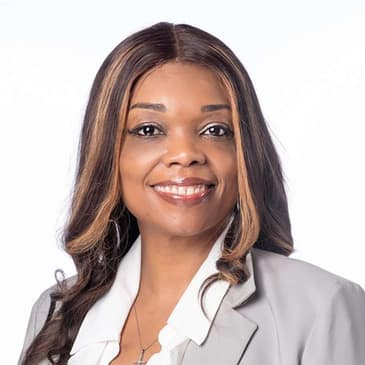

This week, my guest is Tracy Hicks, a doctorally-prepared and dual-certified family and psychiatric mental health nurse practitioner. She also holds an MBA, which is particularly useful in her role as a CEO.
Tracy is the founder of C-Trilogy Comprehensive Clinical Care and C-Trilogy Outreach, a certified community behavioral health clinic that provides mental health services, substance use support, primary care, and 24-hour crisis help.
I was excited to talk with Tracy, who is an expert in the care and treatment of individuals with schizophrenia, because in my 36 years as a nurse, I have encountered only two patients with this diagnosis, both of whom were teenagers. I knew very little about the condition and was eager to learn from Tracy, and she did not disappoint.
We discussed long-acting injectables as a successful treatment option, the challenges of compliance, and the management of a long-term chronic disease. We also emphasized the crucial importance of a strong support system to help patients lead meaningful lives.
A recurring theme in our conversation was Tracy's passion when discussing these complex cases. This emotion stems from her lived experience, as two of her beloved family members—her father and her daughter—both have the disease. Growing up with the stigma of having a father with schizophrenia has shaped her perspective, and even though her daughter is now grown, Tracy’s concerns for her never waver.
Tracy’s days are incredibly busy. Between practicing in the clinic, serving on multiple boards that advocate for marginalized populations, and shaping the next generation of nurses as an Associate Professor, people often ask her how she manages it all. Her answer? When you align with your purpose from God, He will guide your steps. She truly is a blessing to her community.
In the five-minute snippet: Be prepared to jump! For Tracy's bio, visit my website (link below).
Dr. Tracy Hicks Puts Her Mind to Improving Access to Mental Care, Frontier Nursing
Empowering Care Partners Through Psychoeducation in Schizophrenia Care, Psychiatric Times
Contact The Conversing Nurse podcast
Instagram: https://www.instagram.com/theconversingnursepodcast/
Website: https://theconversingnursepodcast.com
Your review is so important to this Indie podcaster! You can leave one here! https://theconversingnursepodcast.com/leave-me-a-review
Would you like to be a guest on my podcast? Pitch me! https://theconversingnursepodcast.com/intake-form
Check out my guests' book recommendations! https://bookshop.org/shop/theconversingnursepodcast
I've partnered with RNegade.pro! You can earn CE's just by listening to my podcast episodes! Check out my CE library here: https://rnegade.thinkific.com/collections/conversing-nurse-podcast
Thanks for listening!
[00:00] Michelle: This week my guest is Tracy Hicks, a doctorally-prepared and dual certified family and psychiatric mental health nurse practitioner.
[00:10] She also holds an MBA which is particularly useful in her role as a CEO.
[00:16] Tracy is the founder of C-Trilogy Comprehensive Clinical Care and C-Trilogy Outreach,
[00:23] a certified community behavioral health clinic that provides mental health services,
[00:28] substance use support,
[00:30] primary care and 24 hour crisis help.
[00:34] I was excited to talk with Tracy, who is an expert in the care and treatment of individuals with schizophrenia,
[00:41] because in my 36 years as a nurse, I have encountered only two patients with this diagnosis,
[00:48] both of whom were teenagers.
[00:50] I knew very little about the condition and was eager to learn from Tracy,
[00:55] and she did not disappoint.
[00:58] We discussed long-acting injectables as a successful treatment option,
[01:02] the challenges of compliance and the management of a long term chronic disease.
[01:08] We also emphasized the crucial importance of a strong support system to help patients lead meaningful lives.
[01:16] A recurrent theme in our conversation was Tracy's passion when when discussing these complex cases.
[01:22] This emotion stems from her lived experience as two of her beloved family members,
[01:28] her father and her daughter,
[01:30] both have the disease.
[01:32] Growing up with the stigma of having a father with schizophrenia has shaped her perspective.
[01:37] And even though her daughter is now grown,
[01:40] Tracy's concerns for her never waver.
[01:44] Tracy's days are are incredibly busy.
[01:47] Between practicing in the clinic,
[01:49] serving on multiple boards that advocate for marginalized populations,
[01:54] and shaping the next generation of nurses as an Associate Professor,
[01:59] people often ask her how she manages it all.
[02:02] Her answer?
[02:04] when you align with your purpose from God,
[02:07] he will guide your steps.
[02:09] She truly is a blessing to her community.
[02:14] In the five-minute snippet,
[02:16] be prepared to jump.
[02:18] Here is Tracy Hicks.
[02:34] Michelle: Well, good morning, Tracy. Welcome to the podcast.
[02:37] : Tracy: Good morning. How are you, Michelle?
[02:40] Michelle: I'm doing well, thank you.
[02:42] So we, we're just going to jump right into it. I'm excited to talk to you today because when I found out that you are a schizophrenia expert, I started thinking back,
[02:54] how many patients have I cared for that had schizophrenia? And I found two patients.
[03:00] So two patients in 40 years.
[03:02] So I don't know anything about schizophrenia.
[03:07] Very, very little. And I would think a lot of nurses, unless they work in the mental health realm, maybe that is true for them as well.
[03:16] So I'm really excited to talk to you today and learn all I can about schizophrenia.
[03:21] I'm just going to jump right in.
[03:23] Tracy, how does schizophrenia start? Talk about that.
[03:27] : Tracy: So I will always refer because I have personal and professional experience.
[03:32] So I will always refer to my personal experience.
[03:36] My daughter, she was a typical case. She had prodromal features and what that means is there was a little bit of paranoia, you know, some subtle signs that we didn't equate to her having the diagnosis of schizophrenia.
[03:49] But her correct diagnosis is schizoaffective bipolar type.
[03:54] But she had the paranoia, the delusions and they were really subtle. For example,
[03:59] we have a blended family and we were visiting my in-laws
[04:08] And you know, she said don't eat that food.
[04:09] looking back, you know, I was thinking, okay, just as a regular teen, she doesn't like the fact that I'm, you know, you know, getting remarried and you know, all the things because you don't want to think.
[04:18] Even though I had a really strong family history.
[04:21] So she had those prodromal, those subtle symptoms that come. But her breakthrough where she had full blown psychosis, hearing voices, command hallucinations telling her to do bad things to herself,
[04:32] paranoia, isolating,
[04:34] just this splatter effect that began that hit when she entered into college where she had the full blown psychotic episode. So you know, it can look different in people but for her that was her trajectory and it's pretty much textbook because around early 20s is when that, that first psychotic break is usually expected.
[04:56] Michelle: Okay, that's what I was wondering if it started in like teenage years. Late, late teens, early 20s.
[05:04] : Okay. And when I'm remembering back to my patients,
[05:08] one of them was in nursing school. In my psych rotation we had a 17 year old gentleman who was diagnosed with schizophrenia and he was trying to get into, he was hanging out on the freeway on-ramp and he was trying to get into people's cars and warn them about President Reagan.
[05:29] At that time,
[05:30] it was in the 80s,
[05:32] was going to a summit and I can't remember the name of the summit with Gorbachev.
[05:39] And he was, he was trying to warn everybody that he needed to get over there so that he could warn President Reagan that his life was in danger.
[05:49] So they picked him up from there and brought him into the psych unit.
[05:53] And then my other patient was also 17,
[05:56] a female and her baby was in our NICU.
[06:00] She had delivered prematurely.
[06:03] And this young girl was really well managed on lithium and she wanted to breastfeed very, very,
[06:12] very, very bad.
[06:14] And you can't breastfeed while you're on lithium. Uh, it's not a good drug for breastfeeding.
[06:20] And her case was actually instrumental in our NICU going to a donor milk model. We hadn't used donor milk before,
[06:30] but we called our Children's Hospital up the road and talked about her case,
[06:36] and we ultimately ended up getting donor milk because of that patient.
[06:41] So very kind of interesting that you say that that's the age around which people are diagnosed.
[06:49] So when someone is diagnosed with schizophrenia,
[06:53] what are the biggest challenges that they and their families face early on, Tracy?
[06:59] Tracy: I think one of the biggest challenges is just having the disease itself and how to manage it, how to respond and how to react,
[07:06] and most importantly, how to communicate.
[07:09] And I can tell you, we've been dealing. My daughter is 35 now. We've been dealing with this for quite some time, and we're still learning how to communicate. You know, for instance, you think, you know, when my daughter's upset, we say, you know, we used to say things like,
[07:23] did you take your medicine? Well, that's off-putting for her because we can't equate every emotion that she feels to, did you take your medicine?
[07:30] So it's just learning how to communicate and having. Just even having the diagnosis, you know, what does this mean? You know, now, no, I can't work the way I used to.
[07:40] I can't do the things that I used to. I'm losing friends.
[07:43] You know, family doesn't want to come around.
[07:45] So it's so many implications, and a lot of them social.
[07:49] But we need to talk about the health implications,
[07:52] you know, because, you know, many times you start treatment, and that could have some metabolic effects. So having a provider that looks at that holistically is very important.
[08:01] Michelle: Yeah, I would imagine the role of the provider is just crucial. And the families,
[08:07] really, everyone.
[08:08] And I imagine asking someone if they've taken their medicine when they're having an angry outburst would be really similar to, you know, I remember when my daughter was a teenager,
[08:21] and she would be having all those and saying,
[08:26] are you on your period?
[08:28] Right.
[08:29] Tracy: It's like, exactly, Michelle. Exactly.
[08:33] Michelle: It's very patronizing. Okay, Tracy, why is schizophrenia so different from a lot of other chronic conditions in terms of treatment planning?
[08:44] : I always want to be careful when we say different because I work really hard to say, let's treat this like a serious chronic illness like anything else. And. And I've been very successful in getting patients to realize that you have a dysregulation of dopamine, and we need to address that,
[09:00] just as if you had your blood sugar was out of control,
[09:04] a dysregulation of your blood sugar, and we would need to treat that as well.
[09:08] Framing is so important. And again,
[09:11] let me make sure I'm answering your question. Could you repeat it one more time? Because I got into my soapbox about chronic.
[09:20] Michelle: I would say schizophrenia is a chronic condition, but why is it so different from other chronic conditions in terms of treatment planning?
[09:29] Tracy: When we talk about treatment planning with schizophrenia,
[09:32] it's the things I mentioned earlier, right. You're not going to lose a friend because you have diabetes. Right. If anything, they're going to be more supportive. Right.
[09:40] But with schizophrenia, you might be losing friends. And although that may not be as important as a provider, because you're looking at trying to heal the hallucinations and all those positive symptoms that you see,
[09:52] but those positive symptoms,
[09:54] you're going to have a difficult time treating them if you don't address those social issues that are deleterious for that patient, like losing family, learning how to communicate, not being able to do the things that you used to be able to do.
[10:04] So coordination of care is so important and we're probably going to skip ahead. But I think using treatments like Arisada a long-acting injectable is so important early on so you can get a handle on that early and not looking at that as a, as a punitive option,
[10:21] but yet an opportunity to get control of the condition.
[10:26] Yes, there are social factors with diabetes. I'm not discounting that,
[10:30] but they're really significant when you're talking about something like schizophrenia. My daughter to this day has talked about friends she's lost. So we have to kind of talk and work through that.
[10:40] Michelle: Yeah, it's such a shame that the stigma with mental health.
[10:45] It's like you said, like, you're not gonna lose any friends if you have diabetes. They're probably gonna rally around you and help you and do whatever they can to support you.
[10:54] But it's not the same with somebody having a chronic mental health illness. Right.
[11:00] And I think that's where the stigma comes in. And yes, we're definitely going to talk about long acting injectables. So thank you. Tracy, can you talk about what happens when there isn't a clear long term treatment plan in place?
[11:13] Tracy: When there's not a clear long term treatment plan in place. And Michelle, this is a great question because many providers are in the here and now because it is, you know,
[11:24] acute psychosis is something to deal with. But you still have to really hone in on the long term treatment planning that is so crucial. Because if you don't, you're looking at re hospitalizations, you're looking at possibly entering into the criminal justice system,
[11:40] being homeless, all of those things that can occur with schizophrenia, you know, health conditions.
[11:46] If we don't get control of this early on.
[11:49] Michelle: Yeah, it's something that I think it's just crucial to have a long term plan in place because as you said, it just can't be treated in the moment. We have to look further to prevent all of those things that you talked about.
[12:06] So very, very important.
[12:07] What does a good schizophrenia treatment plan look like beyond medication alone?
[12:14] Tracy: So you mentioned it earlier and was a great example. When you're working in a hospital setting, you called the Children's Hospital and you formulate a plan for donor milk. Well,
[12:27] we have to coordinate care early on. Do we need case management?
[12:33] Do we need to contact housing? Is there peer support? If your clinic doesn't have that, where is the nearest clinic that does?
[12:40] Getting people locked into community resources early on is crucial.
[12:45] I am very fortunate in that I received funding from SAMHSA, but it took a lot of research because I saw a need.
[12:51] We received funding from SAMHSA for planning, development and implementation of a community behavioral health center. So we have patient case management,
[13:00] navigation therapy,
[13:03] pharmacy underneath one roof,
[13:05] so one stop shop for the patient, so, and even integrated primary care. So making sure we look at that patient or that person holistically.
[13:14] Michelle: Thank you for saying that. Thank you for bringing light to that.
[13:17] That's been my rallying battle cry forever,
[13:21] is, you know, you know, being in healthcare that sometimes our care is so fragmented and so siloed and to look at the patient holistically is so, so important.
[13:35] And this particular patient in question in our NICU,
[13:39] she had a wonderful support system.
[13:42] She was well-supported by family,
[13:45] by her provider.
[13:46] She was very stable on the medication.
[13:49] And you know, we got a little bit nervous because some of our neonatologists also wanted her to be able to breastfeed so badly that they were contacting her psychiatrist and seeing if they could change her medication.
[14:03] And the psychiatrist said,
[14:05] absolutely not.
[14:07] She's postpartum, she's fresh postpartum. So you have all the hormonal things going on and she's well managed on this medication and this is not the time to do this,
[14:20] but I think it's so important for the support to be there and also for the healthcare providers to have knowledge about the plan as well.
[14:33] Tracy: Oh, yes,
[14:34] yeah, thanks for speaking to that.
[14:36] Michelle: Well, I do want to talk about long acting injectables and what are some of the medications and how do they work, Tracy?
[14:44] Tracy: So I gave one an example of a medication, Aristata, which is a long-acting injectable. And this is the, this allows for therapeutic dosing throughout the month, or if they're getting it every, you know,
[14:59] few weeks to, you know, every two months, it allows for therapeutic delivery of the medication for the duration of the month so they don't have to remember to take a pill.
[15:09] So that's the most important thing.
[15:11] If you think about it, a pill could be a reminder of this disease process. Not saying that they're not going to have to take other pills for other things, but that's just one reminder that I have schizophrenia.
[15:21] And, you know, because of the stigma, that's an issue.
[15:23] So long-acting injectables, we need to
[15:26] view that as an opportunity rather than you're not taking your medication.
[15:30] So I'm going to give you a shot. Okay.
[15:33] So you can say things like I've said, well, instead of, what does this look like? Instead of taking a pill every day, you can take a medication,
[15:40] take an injection, and the medication is slowly released into your bloodstream and you keep your symptoms controlled 24/7. What are your thoughts about that? And then they can give you their opinion and thought and you can glean so much information from open ended questions like that we're very successful in our practice because that's the approach that we take.
[16:00] You know, what is your goal for today?
[16:03] Okay. And then they give us that goal and we can say, well, I have an opportunity for you. Let's consider this long acting injectable again. You're going to get therapeutic dosing of your medication throughout the month and you don't have to remember to take a pill.
[16:15] We can even go out, for instance, with Aristada every two months.
[16:19] Michelle: And do you find that most or many of your patients are accepting of this form of treatment?
[16:24] Tracy: Most are accepting. It is how you deliver the information.
[16:28] It's how you present it. If I tell you, well, Michelle, you're not taking your medication, so I'm going to give you a shot, how does that come across?
[16:35] Michelle: Right? Exactly. And you know, and wow, you're involving the patient in their care. Tracy, that's, that's amazing.
[16:43] Tracy: Empowerment. Empowerment is key.
[16:46] Michelle: Well, long acting injectables are often misunderstood and historically they've been kind of viewed as a last resort. Why do you think that is?
[16:56] Tracy: Again, it goes back to that stigma. Right,
[16:58] and, and how we take in our biases. Right. What has been your experience with an injectable? How was it presented to you?
[17:06] It's just like our, what we call our family curses. Right? Those things just kind of keep going on until we break those curses and say, let's look at this from a different perspective.
[17:16] Let's see this through a different lens.
[17:18] And so I think that the delivery and everybody's experiences and their thoughts and what they may have learned in training,
[17:26] it really permeates into everyday life, whether you're a healthcare provider or a family member or a patient seeking treatment.
[17:34] Michelle: Well, I'll tell you, researching this episode,
[17:37] I wasn't even aware that long acting injectables were a form of treatment for schizophrenia because like back in the day when I was practicing, we didn't have those.
[17:49] How long have they been on the market?
[17:52] Tracy: Oh, gosh, it's been a minute.
[17:54] I think probably I'll have to look that information up. That's a great question, Michelle, because I've never really said, but I know at least the full time of my practice and I've been practicing in psychiatry as a nurse practitioner since 2015.
[18:09] So they've been available at least that duration. But I want to know that information myself.
[18:15] Michelle: Okay, well, at least a decade. Right, so at least a decade.
[18:18] Tracy: But I'm saying at least for that, that piece and I'm sure before that.
[18:22] Michelle: Okay, well, from a clinical and quality of life standpoint, what are some of the advantages of injectables compared to the oral medications?
[18:32] Tracy: So I said some earlier,
[18:34] so not remember to take a pill every day. You're going to get therapeutic dosing through throughout the month.
[18:40] You don't have to worry about those spikes. And like when you skip a pill, your body start. This is a metabolism thing that we have to do. You know that when we take a pill, they tell you to take your antibiotic twice a day.
[18:51] Well, how many times?
[18:52] For instance, when you have a UTI, even don't take that antibiotic twice a day, but you get the symptoms relieved. Right, but it's going to come back, right, because you didn't keep that therapeutic dosing in your body for that entire time.
[19:04] Well, with long-acting injectables,
[19:07] the plus with that is that you have therapeutic dosing throughout the month or two months, if that's how it's ordered.
[19:14] Michelle: So injectables are those discussed earlier in the treatment rather than after the patient has multiple relapses. Is the first Line, oral treatment or do you discuss injectables early?
[19:28] Tracy: Unfortunately, what I see and I get to speak to providers across the nation, unfortunately, usually the peel is the first option, but for me, I present all options because I feel like that's very important.
[19:40] And yeah, I think,
[19:42] I think routine is to, to go to the pill first,
[19:47] but in my practice, we present all the options up front and we talk about the benefits and the risk of each. You know, you know, some people, and if they say they don't want to take a shot because they're afraid of needles, well, we explore that.
[20:00] Tell me about your experience with needles and then I can give you more information.
[20:06] Maybe we can, we can better understand each other and your thought process because we respect that.
[20:12] Michelle: Love it. Is the injectable something that the patient self administers or do they receive this in the clinic?
[20:19] Tracy: They receive it in the clinic. And some pharmacies are able to deliver the medication to administer the injections as well.
[20:26] Michelle: Okay, very good. Well, I'm learning a ton.
[20:30] : Okay. What do patients say after transitioning to the injectables that surprises you?
[20:37] Tracy: After they are able to take the injections?
[20:40] Michelle: Yeah, like maybe they were on the oral medication first and then they transition to the injectables.
[20:48] Is there anything that they report that surprises you? Like, you know, wow, I didn't think I would feel this good or it would be this easy talk about that.
[20:58] Tracy: Many things. Right. They say, you know,
[21:01] for instance, I'll give you my daughter. She says, I don't, I don't have to remember to, to take a pill every day. I don't have to be reminded her words that I'm crazy.
[21:11] And I, you know, I have to explore that.
[21:13] You're not crazy. And she said, you know, now that I'm kind of on board with this, I,
[21:19] I like having a clearer mind.
[21:21] And some outside of my daughter, patients say, you know, I really didn't think I wanted to do this, but I'm glad I signed on to this because again, like my daughter, I don't have to remember to take a pill.
[21:33] And it's just easier. It's. Overall, it's easier. And I wish someone had told me about it sooner.
[21:38] Michelle: Wow,
[21:39] that's gotta be so liberating for the patients to not have that stigma that they feel about themselves having mental illness. Right.
[21:52] The daughter is like, it makes me feel like I'm not crazy.
[21:56] You know, that that's everything.
[21:58] Right, that, that they feel normal.
[22:02] Tracy: Yep, exactly. And on this vein of long acting Injectables. I just got some great information from a very reliable source.
[22:10] Aristada was approved,
[22:12] The long-acting injectable we talked about. It was approved in 2015.
[22:16] I think we've had some earlier ones as far back as 1968,
[22:21] but. Yes.
[22:22] Aristada in particular.
[22:23] Yeah. So we've had this option, these options for a long time.
[22:27] Michelle: So I've been in the dark.
[22:31] Tracy: Welcome to the light. Come to the light, Michelle. Yes.
[22:35] Michelle: Thank you.
[22:36] Tracy: You can walk into this light. I'm a movie buff, so you can think about Poltergeist. Come into the light. You can walk into this light.
[22:45] Michelle: Well, let's talk about education, because in your clinic there, you do a ton of education and why is education just as important for families as it is for patients?
[22:59] Tracy: Because we're all in this together. You know, there's no I in team. And it takes a village. It takes a team to deal with serious mental illnesses like schizophrenia and bipolar disorder.
[23:09] We need everybody on board.
[23:12] You know, of course, we have to have the patient or client's consent. And I will say this, too.
[23:17] If they don't give me consent to include caregivers or family, I explore lightly and delicately, delicately. I ask them to tell me more about that.
[23:28] How can we help? Because, you know, we need our entire team. We're here with you, but I want to explore that. Maybe we can help you with that. So tell me more about that.
[23:38] Michelle: I love it. I mean,
[23:39] I feel like working in PEDS and NICU my whole career that I haven't worked in a silo.
[23:45] Pediatrics and NICU patients, they come with their parents. Right. They're a whole unit. And so we can't separate them.
[23:54] But I think with adults, it's kind of easy to separate them from their family.
[23:59] And I know sometimes hospitalized adults, family can kind of get in the way and be a barrier to the patient's success.
[24:09] But I just imagine that you have to have the family on your side.
[24:16] They have to be involved in the treatment, the education,
[24:20] so that they can support the patient.
[24:22] Tracy: Michelle, you know, that takes me back to the earlier, because my daughter is an example of rehospitalizations,
[24:28] incarceration.
[24:30] And it was because the communication was not effective.
[24:34] And I'm sure there are different reasons for that. Lack of education,
[24:38] maybe some clinical apathy, things like that.
[24:41] But I can tell you the communication was not good.
[24:46] And because of that, there were re-hospitalizations and incarceration.
[24:52] So not including the family and just taking the patient's word.
[24:57] Because, you know, my daughter, at times she was psychotic or manic, and she wasn't able to make decisions. And many times,
[25:03] I didn't tell you this, but my dad, we grew up with my dad having schizophrenia. And I know he loved my mom, but when he had his first psychotic breakthrough, our family unit changed, and it was like he,
[25:15] His anger was toward my mom. And, you know, we think that. And I read an article, and it says many times that people living with schizophrenia, the people that they love the most are the people that they usually get more paranoid about or turn against.
[25:29] And we saw that in real-time in our family. So many times my daughter was like, you had me locked up and, you know, you didn't want me around. And so, you know, they took that as not including me in care, in the care plan many times.
[25:44] Michelle: Well, Tracy, I imagine your first person experience with schizophrenia is just.
[25:49] Has made you just a more empathetic,
[25:53] compassionate provider with your patients and your families.
[25:56] What are some of the common misconceptions that families have about this new diagnosis of schizophrenia?
[26:04] Tracy: Some of the common misconceptions are the person may not be able to do anything that they used to do,
[26:12] that psychosis is evil.
[26:15] And we see a lot of things on TV, a lot of movies,
[26:19] a lot of people do things on television, and then they have a pill in their hand or, you know, a pill that they should be taking. So, of course, that stigma and how it's branded,
[26:28] we can't be around family anymore. People are going to be, you know, being embarrassed. People will look at us differently.
[26:35] I remember growing up and, you know,
[26:37] Tracy had the crazy dad. You know, my sister and brother and I, we had the crazy dad, you know, with the, you know, he hears the voices. So you don't want to go over to their house.
[26:46] So all those things. Right.
[26:49] Well.
[26:50] Michelle: Well, that's tough.
[26:51] That is really tough.
[26:53] Okay, so what some of the misconceptions.
[26:57] What about health care providers? So what are some of the misconceptions that they might have about this disease?
[27:04] Tracy: Let's take it back to long-acting injectables. That people overall are not interested in taking injectables. So they, you know, they go to appeal.
[27:13] And a lot of people, I ask questions like this when I'm speaking to healthcare providers. I say, you know, when you, let's close your eyes and when I say,
[27:23] tell you that to look at a person with schizophrenia in your mind's eye, what does that look like to you?
[27:29] And many of them say homeless, someone in jail, someone not well dressed. Well, schizophrenia can be anybody.
[27:35] Okay. And if you view them in that space, then that's what you're going to see. Even when they're not.
[27:42] Michelle: Yeah. Wow, that is powerful right there, how you view things. You know, if you think it's this way, then it's this way. Right.
[27:51] Tracy: If you're not going to spend the mental capital to work on your biases, because we all have them. Right. They're pervasive. Right.
[27:59] If you don't spend that mental text and saying, hey, I'm going to look at this differently, what is the difference? Perspective for this. And one of my favorite. I love emotional intelligence.
[28:08] So you mentioned empathy, which is my favorite part of EI is, you know, you may not agree with everything,
[28:14] but at least try to see it from that person's perspective.
[28:17] Michelle: Yep, exactly. God, imagine the world we would live in if 50% of people did that.
[28:25] Tracy: Right? Yes.
[28:27] Michelle: Yeah. Well, what would you say to a caregiver who just is exhausted, feeling guilty, or maybe unsure if they're supporting their person in the right way?
[28:40]Tracy: I would say, give yourself grace,
[28:43] Reach out for support. There are so many organizations like NAMI and SAMHSA, the Substance Abuse and Mental Health Services Administration.
[28:51] NAMI is a National Mental Health Alliance.
[28:55] Reach out to organizations like that. They're more than happy to help 988, but I would tell them to always keep hope and understand your controllables. Right. The things that you can control and the things that you cannot.
[29:08] And it's okay to have boundaries. I know sometimes the guilt comes from,
[29:12] well, you know,
[29:14] I'll use my daughter. She's doing X, Y, Z,
[29:18] and I'm not comfortable with that. It's okay to have boundaries. And there have been times where I told my daughter,
[29:22] you know, I love you. I'm here for you.
[29:25] And I use words like, you know, you're rocking, I'm rolling. I was a young mother, so, you know, we have that kind of relationship,
[29:32] but I can't do this. And I keep it focused on me. I don't say, you did this, you did this, you did this.
[29:38] I have this boundary. I can do this, but I can't do that.
[29:42] Michelle: Wow, Tracy, your daughter is so blessed to have you for a mother.
[29:46]Tracy: She's realizing that. Yeah, they don't. She's teaching me so much, too. Oh, yeah. And, you know, it just.
[29:55] Michelle: It doesn't usually happen until they're adults, that they go, wow, mom, you did.
[30:00] : A pretty good job,
[30:02] Tracy: Yeah. I wish you just said that statement probably like, Michelle, like, probably like three, four weeks ago.
[30:09] I didn't realize you knew all of that. I didn't realize you that much. I was like, oh, okay.
[30:16] I love it. I love it.
[30:17] Michelle: Well, what resources should every family have access to, but often doesn't.
[30:23] Tracy: I think people forget about resources like 988. And again, I mentioned NAMI, resources like that.
[30:30] You know, most every area has a local mental health authority, you know, reaching out to those people for help because there's peer support there, usually case management,
[30:42] just being active. People don't realize that you can be active in your community and ask questions,
[30:48] remain curious. Okay? Because many times there are resources. You know, we sit in our living rooms and, you know, on our televisions, and we look at our,
[30:56] you know, our community leaders, and we sit on the couch and we say, let's do this. I wish they would do this. I wish they would do this. But how many city council meetings have you attended?
[31:05] How many community events have you attended?
[31:08] So I would just tell people to always remain curious, get involved, volunteer, you know, in area organizations like NAMI that I mentioned earlier,
[31:17] because the more information you get,
[31:20] the more knowledge you have,
[31:23] the better questions you can ask. Not gonna say you're gonna solve everything by that. But knowledge is key, and knowledge is power.
[31:30] Michelle: Absolutely. And don't just complain. Find a solution. Right? Be the solution.
[31:34] Tracy: Be solution focused.
[31:36] Michelle: Yeah. Well, what does recovery from schizophrenia actually look like, Tracy? And why does it look different for everyone?
[31:44] : It's different for everyone.
[31:46] Recovery looks like an improved quality of life.
[31:51] Right.
[31:52] How you're able to navigate life,
[31:55] why the goal question for us is so important,
[31:59] because in the beginning, we want to know, what is the client's goal? What is that person sitting in front of us? What is most important for them?
[32:08] And I remember when my daughter started coming to my clinic, that's when she started to be on this. On the great trajectory, because we have a great communication model.
[32:17] And she told the provider here, my goal is to go to dinner with my family.
[32:22] Again, different for everybody. But that's just one example.
[32:26] Yeah. And different for everybody because we're all individuals, right? We all have. Yeah, we all have different.
[32:34] : We're all human.
[32:36] You know, when I usually introduce myself, I say I'm a human first,
[32:39] and then I'm a mom, I'm a friend, I an educator and a mentor,
[32:45] wife,
[32:46] cousin, all those things. We don't realize how many hats we wear and how we navigate those.
[32:54] Michelle: So true. If you could change one conversation happening in communities today, what would it be?
[33:02] Tracy: I don't know if it's a conversation. I think it would be more of a how do we come together and do the. The best that we can for the people that we serve?
[33:11] What resources that you have that can that work well with the resources that I have.
[33:16] And how do we better communicate?
[33:19] I think the conversation of better communication and collaboration needs to occur more.
[33:25] So rather than identifying a conversation, I think the conversation that we're not having. Right.
[33:30] Preparing to do a moderation for some.
[33:35] Some legislative contenders. And one of the things I statements I said is that we should treat mental health like an infrastructure, just as we do roads,
[33:45] housing,
[33:47] because all that lines up together.
[33:50] Michelle: Wow. We need to get you on. I know you're already on a bunch of boards and we'll. Yeah. But wow, I love that. That's profound.
[34:00] Tracy: Thank you, Michelle.
[34:02] Michelle: What gives you the most hope right now in schizophrenia treatment?
[34:07] Tracy: I think treatments like Aristada, long-acting injectables. I think having platforms like this to talk about the importance of communication and not working in silos and reducing stigma. Right.
[34:22] Again, going back to that statement of treating mental health like a infrastructure. Just like we do all those other things that we're so concerned about. Financial.
[34:32] We're all like one step away mentally.
[34:36] Right.
[34:37] And so we need to think about that.
[34:40] Michelle: Yep. You know, I often say, but for the grace of God. You know, for the grace of God.
[34:47] You're right. And we need to keep that in the forefront.
[34:50] Well, most of my audience,
[34:53] our healthcare providers or people that are in healthcare.
[34:57] What's one message that you want clinicians to take away from today's conversation?
[35:03] Tracy: I would like clinicians to take the statement of remaining curious.
[35:09] Right.
[35:10] Working on your biases, but always remain curious. Ask more questions. Because we all have our stories. Whether you're sitting behind the desk or on the other side of the desk,
[35:21] we all have stories. And how do those stories connect and how do we do better for each other?
[35:28] Michelle: I think that's an amazing message and one that we should all take to heart, because I think so often as clinicians, we.
[35:37] Our ego kind of takes over. Right. And we think we know everything about what this patient is experiencing.
[35:45] And so we shut down that curiosity and we don't ask questions and we don't try to find answers. And so to remain curious.
[35:53] That's very good advice and a great message to clinicians.
[35:59] So one of the things that I saw when I was looking at your huge bio Tracy, let me say that bio is completely packed.
[36:09] So there was a feature story in Frontier Nursing University.
[36:13] Was it a magazine or a newsletter?
[36:16] Tracy: It's a newsletter. Their magazine.
[36:18] Michelle: Okay. And that's your alma mater, is that correct?
[36:21]Tracy: Yes, for my DNP, yes.
[36:23] Michelle: One of the things you said in there really struck me. You said, my motto is restricted NP Practice anywhere is restricted access to care everywhere.
[36:36] So talk about the importance of NPs in healthcare, especially in rural communities where there are shortages of physicians.
[36:44] Tracy: Oh, my gosh, that. That's a whole podcast. Michelle, you want to have me back?
[36:51] Well, so, so it's. You know, I just had a conversation with a psychiatrist actually the day before yesterday, and he was like, well, I want you to come and I want you to serve on this panel.
[37:01] But I want this one thing. I don't want you to go around saying nurse practitioners are better than psychiatrists.
[37:08] And I was like,
[37:09] well, I'm not going to say that. I don't think that either one is better. I think we're different and we need to learn to work together.
[37:18] I thought it was funny that he said that, but I think we're all so important. Nurse practitioners bring a different model of healthcare, just as physicians bring that different model and we bring that education together.
[37:31] It's phenomenal.
[37:33] But I feel like we provide nursing.
[37:36] My mom was a nurse and she wanted me to become a physician. And I know I'm kind of getting off a little bit, but it's coming back to the point.
[37:42] She wanted me to become a physician. And I had had experience with physicians and I had nothing against physicians. I think physicians are great. But I was attracted to the field of nursing because I loved her holistic approach,
[37:55] you know, and how she interacted with her patients. I love the whole adie, assessment, diagnosis, implementation, evaluation.
[38:03] You know, we are trained to look at the patient. And I'm not saying anything about, I'm just talking about nursing training.
[38:10] So usually you have that experience as a nurse and then you obtain prescribing privileges when you go back for advanced practice.
[38:18] So having those two things together, it makes a phenomenal provider. And then in areas like rural settings, like take me, for instance, I think it's horrible. I had to close my clinic down during the pandemic.
[38:30] I couldn't treat patients for two whole weeks because one of my collaborating physicians died and one retired.
[38:38] Michelle: Oh, wow.
[38:39] Tracy: That was all in a two week timeframe. And I had to ask myself if I wanted to continue practicing.
[38:44] So my answer to that was to apply for funding and, you know, do roles like president of Texas Nurse Practitioners. You know, I could have wallowed in that anger and upset and frustration, but I chose that to use that energy to do something,
[38:59] to make it actionable. And so research got the funding for planning, development and implementation of a community behavioral health center. Those are the kind of things that nurse practitioners do.
[39:11] That's the way we think. And I can't speak for physicians. I work with physicians, and they're great.
[39:16] But that nursing model, I can tell you we are the most trusted profession consistently for a reason.
[39:24] Michelle: Yep. Wow.
[39:26] Yeah. And I would agree with you.
[39:28] Nurses and physicians are different. They're a different model.
[39:32] And my listeners know that I've had a nurse practitioner as my primary for decades,
[39:38] and there's a reason for that.
[39:40] I love the way she provides care.
[39:44] She is an excellent listener.
[39:48] She is a holistic provider. She sees me as a person.
[39:52] She sees me as a whole person. She doesn't fragment my care.
[39:57] And then when I was going through breast cancer treatment, I also had an oncologist,
[40:01] but I also had an oncology NP and absolute best, best care.
[40:09] So I'm a fan of that model as well.
[40:12] And I live in a rural area as well,
[40:15] and we have many, many nurse practitioners and I think our community is just so much better because of it.
[40:23] So thank you for speaking to that.
[40:25] Tracy: Of course, My pleasure.
[40:27] Michelle: Well, I want you to give some love to your clinic because you are the founder and CEO of C-Trilogy Comprehensive Clinical Care and Outreach. So give your clinic some love, Tracy.
[40:41] : Oh, well, thank you for that, Michelle.
[40:44] So I started C-Trilogy Comprehensive Clinical Care in 2015,
[40:48] and it was just myself and I had a part time nurse and an occasional front desk person.
[40:54] And then as I explained earlier, the pandemic hit and all those things hit me at once. And I was at this crossroad of what I wanted to do with this frustration and anger I was feeling.
[41:05] And so I decided to establish a nonprofit C-Trilogy Outreach in 2020.
[41:11] And in 2022, received funding from SAMHSA after extensive research,
[41:17] received funding from SAMHSA for planning, development and implementation of a certified community behavioral health center, C-Trilogy Outreach. And we have pharmacy under one roof. We have case management,
[41:29] nursing therapy. We do an intellectual disability group.
[41:34] We're licensed to provide substance use disorder treatment. So we're building that program out. We see people with substance use disorder now, but we're building out a program with that because of the work in the community for C-Trilogy Outreach I've been appointed by the mayor to, to chair the mental health task force.
[41:52] And so, yes, the sky's the limit.
[41:57] Michelle: Phenomenal.
[41:58] : Gosh. Nice work, Tracy.
[42:03] Tracy: Thank you, Michelle. I think, you know, when you line up with what your purpose is from God,
[42:07] he will guide your steps and what, what the average person sees as how do you do all this? I see as this is my work that God has provided for me.
[42:16] Michelle: Wow.
[42:17] What a blessing. What a blessing you are to your community and your patients and,
[42:22] and to our listeners today. I really want to thank you for coming on and talking about your expertise in schizophrenia treatment and just all the education that you've brought to us today.
[42:36] I learned a ton,
[42:38] so thank you.
[42:39]Tracy : Well, thank you, Michelle. I've learned a ton as well. And again, we should remain curious and I appreciate your time and giving me this platform.
[42:46] I enjoyed it immensely.
[42:49] Michelle: Well, thank you. I've gotten many guests from guests who have recommended them. So is there someone that you recommend as a guest on this podcast, Tracy?
[43:01] : Oh, I have several people in mind. But the first one that comes to mind because he is just true go getter. And he's going to kill me. His name is Peter.
[43:10] Last name is. I'll spell it wrong. I call him Dr. Peter. But he has Mindful Moments.
[43:17] He started that. And he also does past view and he helps nurses and nurse practitioners prepare for certification. He is a true trailblazer.
[43:30] And I was just recently on his podcast, so I think you would have a great discussion with him.
[43:34] Michelle: Oh, sweet. Okay.
[43:36] Tracy: Yeah, if you can that last name via email. But it's his podcast is Mindful Moments.
[43:42] Michelle: Okay, I will look at that and then I'm sure people are going to have questions from our conversation today. So where can we find you?
[43:52] : So my website for my practice is C-trilogy, C T R I L O G Y Outreach.
[43:59] Just like it's spelled ctrilogyoutreach.org or you can get me on Instagram @drhicksnp. I just really started that platform, so you can get me there and then also on Facebook at under my name, Tracy Moore Hicks.
[44:15] So, yes, you can find me in all those spots.
[44:18] I'm also an educator at UT Tyler, so you can find my information on that site as well. And of course, Texas Nurse Practitioners being the president.
[44:29] Michelle: Absolutely. All right, well, thank you so much again, Tracy. Wow, phenomenal work. Phenomenal work. And I feel blessed to talk to you today.
[44:40] Tracy: Same here, Michelle.
[44:42] Michelle: Well, we're at the last five minutes.
[44:44] So if you know this podcast, at the last five minutes, we do something called the five minute snippet.
[44:50] And it's just a fun way for our listeners to kind of see the off-duty side of Dr. Tracy Hicks when you're not being an expert in schizophrenia and running your clinic and serving on all the boards and doing all the things.
[45:06] So are you ready to play?
[45:07] Tracy: Sure. And, and forgive me because I missed that. I'm gonna, I listened to it, but I said, did I not? I missed the five minutes. I'm excited. I'm surprised.
[45:16] So we'll see. Yes.
[45:20] Michelle: Okay.
[45:20] Just five minutes. You can do anything for five minutes, right?
[45:23] Tracy: Yeah, I'm good.
[46:05] Michelle: All right. Convince me to live in your hometown.
[46:09] Tracy: So if you want somewhere that's really green and relaxing, occasional issues with traffic, but not daily friendly atmosphere, sugar, come on in. Come to my area.
[46:22] Michelle: All right. Love it.
[46:25] Okay, Tracy, we're in your home and there's a picture on the wall of your favorite travel destination.
[46:31] Where is it and who is in the picture?
[46:35] Tracy: Las Vegas. Michael Jackson.
[46:38] Michelle: Whoa. Very cool. Love it.
[46:44] Okay, finish this sentence. Public speaking makes me feel _____.
[46:50] Tracy: Public speaking makes me feel empowered. It used to make me feel sick.
[46:58] God, you got over that, right? Because you have to. I got over that.
[47:02] Yeah. See? Keep hope alive.
[47:04] Michelle: Yeah. Did you have a favorite childhood game?
[47:08] Tracy: My favorite childhood game was.
[47:13] What was Operation. I would say Operation was my favorite childhood game.
[47:17] Michelle: Pretty fun. I have to agree.
[47:20] Tracy: I was trying to think. I lost my word for a minute. But yeah, Operation. Because that little buzz when you hit the side, I loved it.
[47:26] Michelle: It's horrible. Makes your stomach turn. Flops. Yeah.
[47:31] What do you do to get out of your head, Tracy?
[47:35] Tracy: Positive affirmations, reading the Bible.
[47:38] I do breathing techniques quite often.
[47:44] I like to sit in silence sometimes. And I like to take in a movie or dinner by myself.
[47:50] Michelle: Those are all great things to do. Wow, me too. Okay, your favorite local cuisine.
[47:58]Tracy: My favorite local cuisine. If I had to say locally, it would be hibachi.
[48:05] : My local cuisine would be hibachi.
[48:07] Michelle: Okay. If you were stranded on a desert island, what book would you not want to be without?
[48:15] Tracy: If I was stranded on a desperate island, what book would I want not want to be without? The Bible.
[48:23] Michelle: Bible. You definitely would not run out of reading material.
[48:28] Okay, last question. There's a billboard on the side of a major highway with your picture on it. Tracy, what is the message?
[48:39]Tracy: Oh, wow, That's a good one. She's amazing.
[48:48] Michelle: I could see you doing it. You're like, you're going to call the highway, hey, I need a picture.
[48:55] Tracy: I need a billboard on the board. Because here's the thing. There's going to be a lot of thoughts. Right. She's arrogant, all the things. Right. But if you're not a curious person, you're not going to find out.
[49:06] Michelle: That's right.
[49:07] And I would say I would 100% agree with that statement today Tracy,
[49:14] you are amazing. And what a blessing to be able to talk with you and get to know you and what you do and why you do it and for you to share your expertise with our audience.
[49:27] Thank you so much.
[49:29] Tracy: My pleasure, Michelle. Hope to talk to you again.
[49:32] And hope your year has started out great and have a fantabulous rest of your year.
[49:37] Michelle: Yes. Well, you have a great rest of your day.
[49:40] Tracy: Bye. Bye. Thank you.