
What does it really mean to be born too soon?
For a premature infant, every day in the NICU can be a battle—and the care these tiny patients receive can have an impact that reaches far beyond their time in the hospital. One of the most powerful tools in that care may also be one of the most natural: human milk.
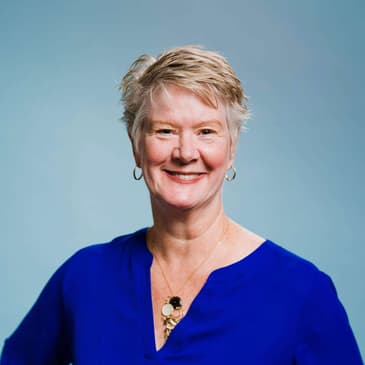
Today, I'm joined by Dr. Melinda Elliott, a board-certified neonatologist and Chief Medical Officer of Prolacta Bioscience, who has spent more than 30 years caring for premature infants. As a NICU nurse, I knew this would be a great conversation because neonatologists are some of my favorite people.
In our conversation, she takes us inside the world of the NICU and clears up some of the misconceptions surrounding prematurity. We talk about the unique needs of these incredibly vulnerable infants, why human milk can function almost like medicine for a premature baby, and why using a human milk-based fortifier can play such an important role in their growth and development.
Dr. Elliott also shares what the research tells us about human milk feeding, including its relationship to earlier discharge from the NICU and potentially fewer negative long-term complications.
And perhaps most importantly, she talks about the people behind this care—the mothers providing the milk and the dedicated nurses, physicians, and other NICU professionals who work together to give these babies the best possible start.
This is a fascinating conversation about science, compassion, advocacy, and the extraordinary resilience of our tiniest patients.
In the five-minute snippet: I think I can, I think I can.
Stepping Stones Exclusive Human Milk Diet Benefits- Prolacta Bioscience
Contact The Conversing Nurse podcast
Instagram: https://www.instagram.com/theconversingnursepodcast/
Website: https://theconversingnursepodcast.com
Your review is so important to this Indie podcaster! You can leave one here! https://theconversingnursepodcast.com/leave-me-a-review
Would you like to be a guest on my podcast? Pitch me! https://theconversingnursepodcast.com/intake-form
Check out my guests' book recommendations! https://bookshop.org/shop/theconversingnursepodcast
I've partnered with RNegade.pro! You can earn CE's just by listening to my podcast episodes! Check out my CE library here: https://rnegade.thinkific.com/collections/conversing-nurse-podcast
Thanks for listening!
[00:01] Michelle: What does it really mean to be born too soon for a premature infant? Every day in the NICU can be a battle,
[00:08] and the care these tiny patients receive can have an impact that reaches far beyond their time in the hospital.
[00:15] One of the most powerful tools in that care may also be one of the most natural.
[00:21] Human milk.
[00:22] Today, I'm joined by Dr. Melinda Elliot,
[00:26] a board certified neonatologist and chief medical officer of Prolacta Bioscience who has spent more than 30 years caring for premature infants.
[00:36] As a NICU nurse, I knew this would be a great conversation because neonatologists are some of my favorite people.
[00:44] In our conversation, she takes us inside the world of the NICU and clears up some of the misconceptions surrounding prematurity.
[00:53] We talk about the unique needs of these incredibly vulnerable infants,
[00:57] why human milk can function almost like medicine for a premature baby,
[01:02] and why using a human milk-based fortifier can play such an important role in their growth and development.
[01:11] Dr. Elliott also shares what the research tells us about human milk feeding, including its relationship to earlier discharge from the NICU and potentially fewer negative long term complications.
[01:24] And perhaps most importantly, she talks about the people behind this care,
[01:30] the mothers providing the milk, and the dedicated nurses, physicians and other NICU professionals who work together to give these babies the best possible start.
[01:41] This is a fascinating conversation about science,
[01:45] compassion,
[01:46] advocacy,
[01:47] and the extraordinary resilience of our tiniest patients. In the 5 minute snippet:
[01:55] I think I can, I think I can.
[02:15] Well, good morning, Melinda. Welcome to the podcast.
[02:18] Melinda: Thanks, Michelle. And thank you so much for having me. I'm thrilled to be here.
[02:22] Michelle: I am thrilled that you are here as well. I want to thank you and your team for reaching out.
[02:28] I love talking to people who are interesting, who are doing things for the nursing community,
[02:36] for the patient community,
[02:39] and of course, that's you. You are a physician, you are a neonatologist. And talk to any NICU nurse and they will tell you some of their favorite people are neonatologists.
[02:51] And that is certainly true for me.
[02:54] So thank you so much for being here.
[02:56] Melinda: Well, I think you talk to the neonatologist, you're going to hear the same thing,
[03:00] except in reverse. I, you know, some of my lifelong friends
[03:05] are nurses,
[03:06] advanced practice nurses, bedside nurses, transport nurses, you name it. You know, those are the people that got me through residency and fellowship.
[03:15] You know, I wouldn't have be here without my nursing friends.
[03:18] Michelle: Well, thank you so much for that. That's a great relationship that we have.
[03:23] So you've spent more than 30 years caring for some of the tiniest and most vulnerable patients imaginable.
[03:31] What was it about premature babies that just captured your heart and made you want to devote your life to neonatology?
[03:39] Melinda: What a great question, Michelle.
[03:42] Well, first of all, I always wanted to be a pediatrician.
[03:45] My best friend, Jenny and I, from the age of three in West Virginia, where I grew up, used to tell everyone that I was going to be a baby doctor and she was going to be a baby nurse.
[03:58] And we literally told everyone that that is who we are. We did not do it together.
[04:04] But Jenny indeed was a pediatric nurse. She's recently retired. I, indeed am a baby doctor.
[04:11] So when I went to med school, it was all about being a pediatrician and my fourth year of medical school.
[04:19] Probably all of your listeners are aware that in the fourth year of med school that students,
[04:24] you know, they rotate, they choose electives, they have a few things they have to do, and then they choose other things to probably help cement an application for residency.
[04:36] So I did that. Like, I knew I wasn't going to stay in West Virginia, so I traveled around and I did a NICU rotation in Memphis, Tennessee,
[04:45] and that was my first time walking into a big NICU. And I walked in there,
[04:52] and I can describe it no other way than to say I felt like I'd come home.
[04:58] I just walked in and I'm like, this is the best place ever.
[05:03] And I love this, and I can do this.
[05:06] And so I went to residency planning to be an neonatologist.
[05:11] Michelle: Wow.
[05:12] Such a cool story. I love hearing the stories of how people choose their professions.
[05:18] They just never disappoint me.
[05:21] And, you know, I've asked a lot of neonatologists the same thing. As far as, you're a pediatrician first, right?
[05:31] Melinda: Yeah.
[05:31] Michelle: So how did you decide to get into neonatology? And I've heard so many similar answers. Just, you know, I did my NICU rotation, and I just fell in love with it.
[05:42] And I hear that from so many nurses as well.
[05:45] So it's definitely a special place.
[05:48] Melinda: I think one of the things,
[05:50] perhaps that applies to all of us who work in the NICU is the impact we can make. The patient we're looking at,
[05:57] that baby has 70, 80, 90 years ahead of them.
[06:03] What we do today for that little person makes a huge difference and it's not like it's only going to be for a few weeks or months or even years. This is lifelong, whatever we do for that baby.
[06:16] Michelle: Yes, that is so true. And part of my job in the NICU the last 12 years that I was there was we instituted a developmental care program very similar to the one Heidelise Als developed
[06:30] the NIDCAP program.
[06:34] Melinda: Yeah, we had that.
[06:35] Michelle: Yeah, it's so cool. And we didn't get NidCap certified, but that was kind of my job, as well as being a certified lactation counselor.
[06:45] Yeah, and I always said, man, that's the best place to be is being able to meet with families every day, talk with moms,
[06:55] talk about breastfeeding, talk about pumping,
[06:58] talk about the importance of breast milk, just sort of allay some of their fears that they have about having a premature baby or a sick baby in the NICU. It was just,
[07:10] It was actually so much fun. I really loved coming to work every day during that period.
[07:16] So I want you to help us understand the premature baby. For someone who's never been inside a NICU, what is actually happening physiologically with an extremely premature baby?
[07:29] Melinda: Absolutely. I'd be happy to try and do that.
[07:31] Let's kind of start with the basics. And those listeners of yours that are NICU nurses can kind of temporarily turn off a little. But I think, you know, first of all, 10% of all births are infants that are born prematurely.
[07:45] But 10% of those,
[07:47] so 1% of all births are babies born very prematurely. So three months or more before their due dates, they weigh less than 3 pounds at birth.
[07:59] Pretty common. 38,000 or so babies a year are born this size and this gestational age.
[08:06] When you're born three months early,
[08:08] you know, we all think of pregnancy as nine months. We know that's not exactly nine months, but three months early is you've missed the last third of pregnancy in the uterus where you belong to grow and develop.
[08:22] So that's what we do in the NICU. For the premature, the very premature babies that I mostly am discussing,
[08:30] we are there to help them grow and develop outside the womb.
[08:35] And it's not as easy as it is if they would have stayed in there. So we try very hard to first do no harm and then next,
[08:47] by all means, support normal growth and development so that we get healthy babies so that at, say, six years on the playground in first grade, you don't know who was born very prematurely or who was born full term.
[09:00] That's sort of our overall goal. I think normal, healthy kids and even those that may have problems in the neonatal period,
[09:10] we want them to still be the best they can,
[09:13] support as good a development as that child can reach,
[09:16] support their families in getting there.
[09:19] We do more than just give medications and maybe help babies breathe in the NICU. We do it all just like you referred to with the developmental care.
[09:29] Michelle: Yeah, it's certainly an extra uterine developmental place. And I think when I was doing developmental care,
[09:41] I always stressed to all the staff because everybody who came in contact with that baby, whether they are the parent,
[09:52] the grandparent,
[09:54] the speech therapist, the physical therapist,
[09:57] everybody that touched that baby had an impact on that baby.
[10:02] And the way that you touch and the way that you interact with the baby, as you know,
[10:08] it forms their development and super crucial.
[10:14] Some people think of premature babies as just being small.
[10:19] What do people misunderstand about prematurity?
[10:23] Melinda: Sure. I think the first thing is it's just like children are not just small adults.
[10:29] Premature babies are just not small children.
[10:33] Many of our patients, when we're talking about very low birth weight babies, those born less than three pounds, their skin is not fully developed.
[10:41] It is very fragile. The wrong touch, the wrong tape,
[10:46] the wrong anything attached to the baby can actually tear skin.
[10:51] The eyes are not fully developed. In fact, some of the babies born at the earliest gestations, those at 22 and 23 and 24 weeks.
[11:01] So 16 to 18 weeks before their due date, their eyes are fused when they're born and they actually open for the first time in the NICU.
[11:10] You can see their veins through their skin.
[11:13] They are very different. They almost all have immature lungs, they all have immature intestines. And so what we feed them is as important as how we feed them.
[11:23] And that's where I think human milk comes in.
[11:26] We all believe human milk is the right thing for every baby. If it's possible for mom to breastfeed, and you as a lactation counselor know better than anybody, moms in the NICU struggle.
[11:36] But human milk is medicine in the NICU for these very premature infants. And, and avoiding exposure to cow milk has a huge impact on these immature systems and how they develop in those first critical weeks and months.
[11:50] Michelle: Absolutely.
[11:52] It is, as you said,
[11:54] nutrition is medicine.
[11:57] So let's go down that road because you are the Chief Medical Officer of Prolacta Bioscience and I'm familiar with Prolacta. We'll talk about why,
[12:08] but when we're talking about caring for an extremely premature infant,
[12:13] how important is nutrition to their survival and their development critical to both?
[12:20] Melinda: Nutrition is critical to survival because they are born with essentially no fat stores.
[12:27] They will not survive if they do not receive at the very least a glucose infusion right away.
[12:34] But glucose alone or dextrose is not enough because they already are at a protein deficit.
[12:41] So we have to find a way to nourish them. And you know, historically in the U.S. NICUs, the first type of special nourishment we learned about was intravenous nutrition. And while that is absolutely life saving,
[12:55] we've learned over the years that intravenous nutrition is not the best way to nourish these babies.
[13:01] And there have been multiple studies in the last 10 years or so where they showed us that the importance of early enteral nutrition. So feeding them, they can't suck and swallow, so they're fed with feeding tubes into their stomachs and feeding them is the best way to get a good outcome.
[13:21] And there have been great studies that came out that showed us the amount of enteral protein given in the first two weeks has a huge impact on long term development.
[13:33] And that the faster babies achieve full enteral feeds, the lower the risk of long term disability.
[13:40] But as every NICU nurse knows, there is this thing called necrotizing enterocolitis. And because of that,
[13:48] we've historically been afraid to feed babies quickly.
[13:51] So it's kind of a double-edged sword. Until human milk based feeding became available universally in the U.S.
[14:00] that means mom's milk first and foremost. So that takes us back to our lactation support. We have got to support moms in breastfeeding. That is the most important thing a mom can do.
[14:10] Not every mom can make enough milk. And that's okay too because it's a very stressful situation. But that's why we have donor human milk.
[14:19] And no matter how hard mom tries, even if she makes enough milk for her baby,
[14:24] that baby's needs are much greater than mom's milk alone can provide.
[14:29] So those little tiny babies, those born three months or more early,
[14:33] need 20 to 40% more calories and protein than a full term baby. And they need three to five times the calcium and the phosphorus. And mom's milk cannot provide that because the baby can't tolerate that huge amount of milk even if mom had enough.
[14:50] So we have to fortify.
[14:51] And there's two types of fortifiers, human milk-based, like those from Prolacta and cow milk-based.
[14:59] And those have been around longer.
[15:01] They were adopted out of necessity because we learned in the medical community early on that if we did not fortify babies did not have good developmental outcomes, and we're talking the little people, not the bigger preterm babies.
[15:17] So the human milk fortifiers made from cow milk, and that's another conundrum right there, they call them human milk fortifiers. They're not made of human milk, they're made of cow milk.
[15:27] And that's very confusing for parents. It's even confusing for a lot of healthcare providers. So you have to ask, what's my human milk fortifier or my HMF made from? And it's human milk or cow milk.
[15:37] One of the two. The cow milk fortifiers were brought on the market out of necessity. They've been around a long time,
[15:45] almost as long as I have,
[15:48] and they were needed because we needed those little babies to grow.
[15:52] But the human milk based fortifiers came on the market about 20 years ago,
[15:57] and they have been adopted in an increasing fashion over the last 15 years.
[16:02] And we've learned a lot about how much better the human milk based fortifiers are for very premature babies.
[16:08] Michelle: Yes.
[16:09] As you were recounting that,
[16:12] I was thinking of a story of when our NICU decided, well, okay, let me go back. So when I became a CLC for the NICU,
[16:25] one of the neonatologists that I worked with told me about Prolacta.
[16:30] And I started doing my research and I thought this is what he really wanted to bring it to our NICU.
[16:37] So I started doing my research, I went to my managers and presented it to them.
[16:45] And just as you said, there are different fortifiers, and the ones we were using were cow's milk fortifiers. Okay.
[16:57] And so I'm talking to them about Prolacta and how it's a human milk-based fortifier.
[17:04] And exactly as you said. These professionals were very confused,
[17:10] "but we use human milk fortifier."
[17:14] I'm like, no,
[17:15] it's not. No, we don't. Let's look at the ingredients together.
[17:19] There's no human milk in this. This is cow's milk fortifier.
[17:24] So we kind of had to go back from there. But,
[17:27] you know, sadly, our NICU did not choose to go with Prolacta.
[17:33] And I was told it was because of the expense.
[17:37] And I'm kind of the person who is like, well,
[17:40] pay me now or pay me later.
[17:43] Because if you don't get that strong base,
[17:49] that strong foundation when you have these extremely premature babies,
[17:54] you're going to have problems later.
[17:57] And of course, I'm sure problems still happen as they do with all extremely premature babies. But it's going to be less, there's going to be less problems and there's going to be better outcomes as all the research shows.
[18:12] But our institution chose not to go with Prolacta because of the expense.
[18:17] So I can imagine that this has come up before.
[18:21] What's your response to that? How do you feel about that?
[18:26] Melinda: It's actually a really good question because you're right, it has come up a number of times. There's a perception that Prolacta is expensive and I would argue the exact opposite, that we as healthcare providers caring for the smallest of babies cannot afford to not use the products.
[18:44] And the reasons are first of all, in my institution, when we first adopted the Prolacta fortifiers, we did a study,
[18:54] it was published now 10 years ago, hard for me to believe.
[18:57] And we saw in Baltimore,
[19:02] in one of the poorest parts of the city of Baltimore,
[19:05] that we actually saved money by using the Prolacta products. And what we saw in our nursery was a marked decrease in the incidence of necrotizing enterocolitis, retinopathy of prematurity and bronchopulmonary dysplasia and earlier discharge for these babies compared to babies who received a cow milk fortifier.
[19:27] And we actually saved about $27,000 in infant after paying for the cost of the products.
[19:36] So my first response is in my own experience and my own studies,
[19:43] no, it is actually less expensive to use the products. Now I'm not the only one that has done this work. USC has done some work like this where they also saw a savings of about 2.7 times the spend.
[19:57] And then there was a different study, a multi center study out of Virginia, University of Virginia and five other centers where they saw the same thing again,
[20:07] that two to three times savings over what they spent based on the children just being healthier,
[20:15] less NEC, less BPD, less ROP, less sepsis.
[20:20] It's kind of been seen over and over and over.
[20:22] And when you run the numbers,
[20:24] it actually is cheaper to use the products than it is to not. Now, I don't know how long ago you were talking to your team.
[20:31] Has it been like a while or was it recently?
[20:35] Michelle: So I retired in 2022, so it was 10 years before that. So we're talking about 2012.
[20:41] Melinda: Yeah, yeah. So that's that back then this data wasn't all out. In fact there was only at that time there was only one paper and that was the original trial,
[20:51] the original prospective randomized trial by Sullivan in these last years since then,
[20:56] we have seen all these economic data come out. Like I said, mine was published in 2016, so it was after that.
[21:02] But Prolacta even has a team now that will help the healthcare team look at what their spend might be and what their outcomes might be based on their own data and then they will come back.
[21:14] If they do implement the diet, they will come back and a year or two later look at their outcomes and run the numbers for them at very little effort on their part because the healthcare health expenses team, the economics team.
[21:28] We'll run that for them. It's one of the services Prolacta will provide.
[21:32] Michelle: Well, that's great. You're absolutely right. I didn't have that much data at the time.
[21:41] But I still have the common sense to say
[21:44] we're going to use less resources for these babies because they're going to have less problems, they're going to be healthier,
[21:52] they're going to go home earlier.
[21:55] But I didn't have all that data to back it up.
[21:58] Melinda: And funny story,
[22:00] when we adopted the Prolacta product. So first of all, sad story, why we adopted the Prolacta products.
[22:06] We had a patient, I had a patient who was 27 weeks and healthy. Like no respiratory support, doing great on mom's milk and cow milk fortifier. And at three weeks of age he got NEC.
[22:17] It was one of those lightning overnight things.
[22:21] And by the next morning he was in the operating room and he lost a large amount of bowel and survived the surgery but ended up with short bowel syndrome. And so we spent the next period of time in the NICU trying to grow him to get him big enough to a bowel transplant.
[22:37] And he had his bouts of line sepsis during that time because he was line dependent for nutrition. He could tolerate very little mother's milk.
[22:47] But he was growing, he was developing. We were told he had to be at least 11 months old and had to weigh at least 9, 10 kilos before they would do a bowel transplant back then,
[22:57] this is in 2011 and at eight and a half months he died of sepsis and liver failure and he had never been home. He, prior to that was smiling and babbling and he was sweet as could be and I will never forget him.
[23:11] And of course his family was devastated, but we were all devastated. Everyone that cared for that little guy loved him and had gotten to know him.
[23:19] And at the same time, I happened to walk past,
[23:23] This is about the same time you were trying to convince your hospital. I happened to walk past a booth at a conference where they talked about Prolacta, had the Sullivan trial there.
[23:32] And I thought in my little simple analysis of the situation, I'm like, well, that makes a lot of sense.
[23:38] A human milk product instead of a cow milk one. And came back and got my nurse manager and our head of the blood bank at the time. Because in Maryland, just like in California, human milk was looked at as a tissue.
[23:50] Michelle: Exactly.
[23:51] Melinda: And so we got together, we started the project where we were going to provide this to all our patients under 1250 grams or under 29 weeks.
[24:01] So at that time, back in 2012, we did not have barcode scanning of milk or blood. And as a nurse, I know you are more than familiar with the amount of documentation involved in a blood transfusion, for example.
[24:18] So it's not dissimilar in a human milk product.
[24:21] The nurses didn't have to do vitals every 15 minutes, of course, but they had to document every single bottle and double check it as if it were a blood product.
[24:32] They were not pleased. This was on paper when we implemented this.
[24:37] They were not pleased. That is an understatement.
[24:41] I joke only partly that I had to hide in my office for about three weeks.
[24:47] It was a scary time.
[24:50] But the funniest thing was, is that when we started using it,
[24:54] yes, their paperwork went up tremendously. And I know why they were not happy.
[24:59] But after about three weeks,
[25:02] everything changed.
[25:03] The nurses were like, wait a minute.
[25:05] There's not as much apnea. Wait a minute. The babies don't care if we fortify.
[25:10] Wait a minute. They tolerate this so well. Why didn't we do this before? So I could finally leave my office. But, you know, the nurses at that point became the biggest champions for these
[25:22] products. They said, we're going to help the residents order it. We're going to make sure they do it right. Like, they literally took over the project because they believed in it.
[25:31] And it gives me chills even to talk about that, because we were such a great team. Like,
[25:37] everybody together worked on this project, and everybody believed in it. And anytime it was threatened,
[25:43] everybody stood up and said, we don't care how much it costs. Just like you were saying earlier,
[25:47] before I had my data on how much money we'd saved. Everybody fought for it.
[25:52] Michelle: That's so cool. And, yeah, it takes us a while, Dr. Elliot,
[25:57] To come around, but when we do, you are absolutely right. We can be the biggest champions for it.
[26:03] Melinda: I don't blame 'em for being mad. Their paperwork really did go up.
[26:07] Michelle: Yep, that's so true.
[26:10] Okay,
[26:11] so we're gonna get into the nuts and bolts of everything.
[26:15] So as the Chief Medical Officer for Prolacta Bioscience, you've done significant research into exclusive human milk diet for extremely low birth weight infants.
[26:27] So what does that actually mean and what have we learned about how it affects these babies? And you did touch on some of those things.
[26:35] Melinda: Well, let's for level setting purposes,
[26:38] clarify what it means. So an exclusive human milk diet means we're using a base milk of only human milk, ideally mother's own milk.
[26:47] If mother's own milk is not available or not a sufficient volume that is supplemented with donor human milk.
[26:55] And then you need to fortify like we said. And the exclusive human milk diet uses only human milk based products.
[27:03] And currently the only ones available in the U.S. are those from Prolacta.
[27:07] And there are fortifiers that are multi nutrient fortifiers providing different amounts of protein and calories depending on what's needed. And then there's an additional caloric fortifier, Prolacta CR,
[27:20] which is made out of human milk fat.
[27:23] So once you achieve the protein intake you are aiming for from a nutrition standpoint,
[27:30] but the baby might need more calories because they're burning more. Maybe they have respiratory distress or lung disease, bronchial pulmonary dysplasia. You can add the CR product to add additional calories at a minimal volume addition.
[27:43] So you can really tailor the diet to the infant's needs using the exclusive human milk diet. In terms of outcomes. Over the years, we've learned a lot.
[27:54] The first study that came out, I referred to earlier was a multi center randomized controlled trial. Blinded to the person writing the orders,
[28:04] not blinded to the people feeding because it was impossible to do that given what the products looked like.
[28:09] But they compared a cow milk fortifier to a human milk-based fortifier.
[28:15] The difference being when the study was done in 2007,
[28:19] it was not standard of care in the US to use donor milk. Uh, in fact, that was pretty unusual in 2007. So to make up for a shortfall of mom's milk in this study, they used infant formula.
[28:32] That has obviously changed over the years.
[28:35] And so now we are usually defaulting to donor human milk when mom's milk is not available.
[28:41] Despite that though, the Sullivan trial had a very, very high incidence of mother's milk. In fact,
[28:48] the kids in the cow milk group had more mother's milk than the kids in the human milk fortifier group and they saw a remarkable decrease in the incidence of necrotizing enterocolitis.
[28:58] And you know, I saw you shake your head earlier when I said every NICU nurse knows what NEC is.
[29:03] None of us ever want to see it.
[29:05] Interestingly, we're seeing it less than we used to,
[29:07] which is sort of making it a little more difficult for new units to adopt human milk-based fortifiers from Prolacta.
[29:17] Because now that our NEC rate in this country is overall about _____ in infants under 1500 grams, it's still 8 to 10% in babies under a thousand grams.
[29:30] But when it's down to 7 or 8%, you have to feed more babies to see a significant difference.
[29:36] So, for instance, there's a couple of recent prospective randomized trials in the literature that say there's no difference in the outcomes, but neither of them has enough infants in the study to actually make that statement.
[29:50] And there are probably 30ish publications, including those in the literature, that support the use of human milk based fortifiers from Prolacta to decrease the incidence of NEC, to improve survival,
[30:06] to decrease severe retinopathy of prematurity, to decrease bronchopulmonary dysplasia,
[30:12] to shorten length of stay, to decrease late onset sepsis.
[30:16] And then most recently, we've seen some really fascinating data out of Southern California, the Kaiser Group, where they looked at infants who received exclusive human milk versus those who received a cow milk-based fortifier.
[30:30] And even though the babies receiving Prolacta products were smaller and younger from a gestational age, they actually had better motor outcomes at age 3 than the more mature bigger kids.
[30:43] And they did control for those sizes and outcomes in this study.
[30:47] You would have expected the bigger kids to do better anyway, and that was not the case.
[30:52] And I think that's because I think like we said earlier, human milk is more than just nutrition, it's medicine.
[30:58] There are bioactive ingredients in human milk that cow milk products don't have, and they play a role in infant development.
[31:07] Michelle: Yeah, absolutely. Wow,
[31:08] A very important role.
[31:10] So let's talk about the person behind the milk, and that would be the mother.
[31:17] What is it like for a mother to have a baby in the NICU and then be told essentially like, we need your milk?
[31:25] Melinda: Ah. The first word that came to mind as you were asking that question was stress.
[31:31] I was fortunate to have babies, two babies at term, but was threatened with preterm labor starting at 24 weeks with my first.
[31:41] So I can never say I lived that life or walked that walk,
[31:47] but I was scared to death for a long time.
[31:50] And of course I know many families that have been in that predicament, as do you and your listeners.
[31:55] You know, she walks in or is wheeled in usually,
[31:59] and she too could even be sick or she may have just had surgery from a C section.
[32:04] And it is so critical for her to start pumping early.
[32:09] As you know,
[32:10] pumping within the first few hours after birth really is associated with a better long term supply.
[32:16] So it's up to us as a medical care team to support her.
[32:19] I had a wonderful head of lactation at my last hospital. I swear she's the greatest lactation consultant ever. And I don't want to insult anyone when I say that, but she is.
[32:31] She would go to labor and delivery and she would like bake them, what she called her lactation cookies,
[32:38] which were shaped oddly like the female breast. And she would just feed the nurses and talk about the importance of getting those pumps in the room. And,
[32:49] and whenever a mom would come in with threatened preterm labor,
[32:53] she would go back over and remind the nurses, say, hey, you know, don't forget, get the pump in the room. She may not be awake, but help her pump. And then she would also go and mom and say, look, we're going to help you do this and if you're not able to do it,
[33:07] we'll be there to help you and she'll make sure that was okay with that Mom.
[33:12] I think that kind of support takes a little stress away.
[33:16] It, nothing totally removes the stress because you're looking at your sick child who's in an isolette and probably got a lot of tubes and wires and all the beeping and everything that happens in the NICU.
[33:27] It's a very scary place.
[33:30] and yet here we are saying mom every three hours. Come on, let me see you do it.
[33:35] And so, you know, it's a double edged sword, I do think,
[33:40] at least in my experience, and I'd love to hear what you think.
[33:43] Most moms,
[33:45] once they understand the importance and understand why it's like medicine and how they can help,
[33:51] it's something they can do and with the right support, they're usually all in and they wanna do it. And then we always enlist the dads to like be the ferrier for the milk.
[34:01] Like, dad, you can help label, you can bring it in, you can check the amount.
[34:05] And now we even have apps, right? Like we have apps.
[34:08] Some of these apps allow for the nurses to even tell the mom how much milk's in the freezer and know when to bring it back in. So I think while it's a big ask for sure, in a time of great stress,
[34:20] there's things we as healthcare providers can do to help.
[34:23] Michelle: One of my favorite jobs involving lactation and development was when those moms were admitted preterm on our labor and delivery unit.
[34:34] The neonatologist would go in and talk to the mom, talk to the family and tell them what to expect. And then I would go and it just was such a great conversation to be able to come in and have somebody be so anxious and so scared for what's going to happen and by the time that you leave,
[34:59] for them to be feeling more,
[35:02] I guess, confident in their ability to parent this child or provide what we needed was so, so satisfying. And sometimes I would never see those,
[35:15] those families again.
[35:17] They would go home and they would come back and deliver at term and sometimes I would see them the next day in the NICU.
[35:24] And the amount of guilt that we see from these moms is,
[35:30] is horrendous.
[35:31] I used to, in my office, I had a magic wand and when I would go talk to the moms and sit down with them and say, tell me how the last 24 hours have been.
[35:45] Because I think it's really important when we talk to these mothers and families that we ask open ended questions,
[35:54] not how are you? Because they're going to try to make you happy and they're going to say, I'm fine. Which we know is complete bullshit. Right,
[36:03] Melinda: Exactly, they're not fine.
[36:04] Michelle: They're not fine. And you know, to say,
[36:07] tell me about how the last 24 hours have been.
[36:10] Then you see the tears start falling and, and then they tell you, it's been hell. I've been really scared.
[36:18] I'm in pain.
[36:20] I started pumping like you said, but I'm not getting anything or I only got 1 milliliter.
[36:27] And you know, we make a big deal about that. One milliliter,
[36:31] Because it's like, well, your baby only weighs 600 grams. And so the baby's only getting a half a milliliter twice a day.
[36:44] Melinda: I got two feeds right here. Exactly.
[36:47] Michelle: And so when you break it down in that way,
[36:52] they see their power and they see their agency and they become very invested. And those fathers become very invested in helping their partner's pump and,
[37:05] yeah, very, very satisfying.
[37:09] That's a great part of the job.
[37:12] Melinda: It is, yeah.
[37:13] Michelle: What do you think healthcare professionals sometimes fail to appreciate about what that experience is like for her?
[37:21] Melinda: I think.
[37:23] I can't speak for the nurses.
[37:25] You'll have to speak for the nurses.
[37:27] I can try, but I,
[37:29] I shouldn't. I can speak for the doctors. And I think that the mistake doctors make most often is just forgetting how hard that is when they're trying to get through whatever it is they need to do that day.
[37:42] Michelle: Right.
[37:43] Melinda: If you have 30 patients to see and 30 notes to write and 30 sets of orders to write, and, you know,
[37:51] it's hard to get through the day, but you can't forget. You just can't forget.
[37:57] And,
[37:58] you know, sometimes I'd be there late because I spent an hour talking to a mom who wasn't doing well. And if mom's not doing well, that baby's not gonna do well.
[38:05] Like, we gotta help them. Nobody signs up for this. Nobody signs up to meet me,
[38:11] God forbid. I mean, you know, maybe in the well-baby nursery, when I'm doing well-baby, okay, fine, but not in the NICU.
[38:18] Michelle: It's just extremely difficult. And where I was going earlier with the magic wand was the guilt thing that they feel.
[38:27] And I would bring my magic wand to the bedside and I would hear their long list of,
[38:34] I don't know why I couldn't keep the baby in till term.
[38:38] What's wrong with me,
[38:40] you know, I'm a failure. I failed.
[38:43] I'm probably going to fail at breastfeeding, too. And I would take my magic wand and say, if my magic wand really had any magic in it,
[38:52] I would remove all guilt.
[38:56] And you could go forward and I hope that you would remove some of that guilt from yourself, because some things are beyond our control,
[39:06] and this is certainly one of them.
[39:08] I think in some instances, that made them feel better.
[39:12] Melinda: I love that. I think whether they admit it or not, most of them are feeling guilt when they have a premature baby. And I think it behooves us to all remember that. I love your magic wand idea.
[39:25] I think even if they don't say it, we need to remember it's there. And we as healthcare providers need to speak to families,
[39:33] keeping that in mind.
[39:35] Like, we don't want to say, you need to do this, whatever this is, because maybe there's something else going on and we need to understand what that is. And we need to help them do whatever it is we're asking them to do.
[39:47] Michelle: Yeah, well, nurses are often the people spending the most time with both the baby and the parents.
[39:54] Melinda: Absolutely.
[39:55] Michelle: So what role do you think nurses play in successful human milk feeding and just more broadly in helping premature babies thrive?
[40:05] Melinda: Well, I think nurses are the, you know, front line, right? You're there at the bedside longer than I am every day.
[40:13] You're the first medical person to potentially see a problem.
[40:17] You're the first medical person to have a family sort of hear your opinion. You may not be directly giving an opinion,
[40:25] but I think nurses are so valuable. If they are human milk advocates and they believe strongly in human milk and in supporting mom and supporting skin to skin,
[40:35] it's a huge difference for the outcome of that baby. And,
[40:40] you know, I think nurses just continuing their educations, as they all do,
[40:44] and learning more and more about the power of human milk. I don't know how much time general nursing education is spent on human milk and breastfeeding, but I can tell you in pediatrics, it's not enough.
[41:00] And I think the more I've learned over the last 20 years about human______ is,
[41:05] I mean, you could fill volumes of things that I've learned and there's so much more out there and there's more every day.
[41:12] And so nurses, I think, can really advocate for their patients by learning and being up to date and understanding the differences, that cow milk products are certainly good for certain babies,
[41:25] but the smallest of the small cow milk's a foreign protein. It's not good for these babies. There's long term data about increased incidence of diabetes and leukemia and obesity and all kinds of things in children who were given cow milk compared to human milk.
[41:41] And that has to only be amplified in the very preterm population.
[41:46] Michelle: I think you're right on with the education. I think nurses, and I always promoted nurses educating themselves on what, what are we doing the NICU, why are we doing these things?
[41:59] And some of the best education honestly came from other nurses coming to our institution, from bigger institutions, level four nurseries who used Prolacta and were advocating for it, talking about it, bringing it into the conversation.
[42:19] We also had those nurses that were more seasoned and that had sort of grown up in our institution and were kind of the antithesis to what we wanted to promote.
[42:33] And were telling moms, because it's hard to sit by and watch somebody suffer with guilt and with sadness and grief.
[42:45] And so to remove that from the mom.
[42:50] They were kind of on board with the "fed is best", which,
[42:54] yeah, I totally understand that. We want babies to be fed,
[42:59] but we're not talking about term babies,
[43:03] you know, we're talking about extremely preterm, very vulnerable babies.
[43:08] And they just wanted to tell the mom what she wanted to hear when she's like, I can't do this, this is really hard. I have two other kids at home and tell the moms it's fine.
[43:20] Formula's been around for a long time.
[43:23] Your baby's gonna be fine without your milk. Now, we did have a very robust donor milk program at our institution, which we were very proud of.
[43:34] And funny,
[43:36] this has probably happened to you too, where we talk about the donor milk with the moms preterm as they're in antepartum. And we hear this because the mom would initially say, no, I'm not going to breastfeed.
[43:49] And so then the neonatologist would bring in the donor milk conversation and the mom would say, wait,
[43:56] you're going to give my baby milk from another mother?
[44:01] No, you're not. I'm going to give my baby my milk.
[44:05] And they would just jump on board. And those are the moms that provided the milk the longest and the most milk. They were like, no, you're not taking my job away from me.
[44:18] Once they saw what was at stake.
[44:21] So that was very cool.
[44:23] Melinda: Yeah, I have experienced that exact same thing as well. You know,
[44:27] most of the literature out there supports the use donor milk in terms of when they look at whether or not mother's own milk volume is better. There's been one publication where they did not have as much mother milk.
[44:42] Every other publication, it actually increased the use of mother's milk.
[44:46] Which also emphasizes why when you look at the literature, you don't just look at one paper.
[44:52] You know, you've got to really look at it with an eye to, okay, what is out there?
[44:57] What are each of these studies showing me? What is the difference between the studies? And really look at it with the educated eye that, you know, everybody's trained to use.
[45:06] We just recently were approved in Japan for use in Japan, the Prolacta fortifiers.
[45:14] And interestingly in Japan,
[45:16] the fortifiers, the exact same ones we have here in the US have been regulated and approved as a drug.
[45:24] Very different.
[45:25] First time in the world where a nutritional product like this has been approved as a medication.
[45:33] And I spoke with a lot of Japanese doctors while we were going through this process. It was an eight year journey to get the approval for. It's not just like an overnight thing to get the approval for drug use in the country.
[45:47] And interestingly, Japan was a little later to the game in milk banks. The first one opened in Japan in 2017, which is pretty recent.
[45:57] Michelle: Wow.
[45:58] Melinda: Japan also has the best survival and the lowest rates of necrotizing enterocolitis in the world.
[46:06] Michelle: Wow.
[46:06] Melinda: And they always have.
[46:08] So even though they didn't have milk banks, they were really good at what they did.
[46:13] And the reason that Professor Mizuno, who was the lead investigator for the study to get the products on the market there,
[46:21] came to us was because he told me that they were very good at saving babies and very good at getting them discharged. But when they got to middle school, they were struggling and they weren't doing well in school.
[46:35] And what he needed was for every single premature baby to be his or her best.
[46:40] And the way to do that, he believed, was with good nutrition.
[46:44] And I think that that has been borne out in the literature that the better we nourish these babies in those first weeks and months,
[46:51] the better they will do long term.
[46:53] So we were recently approved in Japan as a drug. It's pretty exciting.
[46:57] And they used to think, just like you were saying, that, well, we have formula, it's fine.
[47:02] And they now realize that the way they used the formula, while it didn't necessarily cause neck or immediately negative outcomes, they were not feeding the babies well. And so that was the downside because they wouldn't use it because of the risk of NEC.
[47:20] So,
[47:21] you know, we've learned things over the years. I think you and I are of a. Perhaps a similar age, and we started this a long time ago. And the things that we thought were fact when we started have.
[47:32] We have learned that's not necessarily true. Neonatology started when JFK's last son was born and died in Boston of respiratory distress syndrome at 34 weeks.
[47:44] Nobody expects that now.
[47:47] And we've learned a lot since then. But we started out as treating them as little tiny children.
[47:52] Michelle: Right.
[47:53] Melinda: We learned that's not right. And I think the most important thing we can all do, no matter what our age is, is keep an open mind and try to look at the literature and what's happening with an open mind.
[48:05] And it's okay. If what we were doing before, because that was what we were taught, is no longer the way to do it, that's okay.
[48:13] And I think the best care we give happens when we realize that and we forsake the old practices because new evidence shows Us, there's a better way.
[48:24] Michelle: Things change.
[48:25] Melinda: Right.
[48:26] Michelle: I mean we all change and there's new information.
[48:30] Yeah. And we have to keep up. We have to keep up as healthcare providers. For sure.
[48:36] It's hard with all the things that we have to do. Right.
[48:40] And then. And on top of it, keep learning constantly.
[48:44] So I want to talk about you for a minute
[48:47] Melinda. You've been practicing neonatology for more than three decades.
[48:52] What do we understand about premature babies today that we didn't understand when you started?
[49:00] Melinda: Well,
[49:01] I mean, the first biggest thing is that the limit of viability is much lower than 28 weeks.
[49:09] So when I started,
[49:11] 28 week infant was indeed about the limit of viability.
[49:14] I started.
[49:16] Your listeners may be horrified to hear, but I started when the first surfactant trials were starting.
[49:23] So I initially treated babies without surfactant. It didn't exist.
[49:29] It was a game changer.
[49:31] And so that right there pushed the limit of viability lower.
[49:37] 28 week babies were not as difficult.
[49:40] But that meant with the new limits of viability, there were new issues.
[49:45] And the lower that limit goes, right now it's sitting right around 22 weeks. 20, 22, 23 weeks.
[49:52] Those babies are very, very different from those 28 week babies I took care of when I started.
[49:58] And it really is a different type of infant, a different type of patient, and they should be treated differently.
[50:06] What else has happened since I started, I've been around for much of it.
[50:11] You know, nitric oxide came around since I've been in practice. That was a miracle drug for bigger babies with hypoxic respiratory failure.
[50:21] Cardiac surgery changes have occurred that have been remarkable.
[50:27] Babies are surviving now and doing well where before they didn't even try to repair those defects.
[50:34] We've learned nutrition's important in those kids too.
[50:38] And human milk nutrition makes a huge difference for them as well. There's a human milk based fortifier from Prolacta for post surgical babies and they grow better developmental care.
[50:50] I remember when I started how we would take care of those babies on open warmers and often with restraints because we thought they would pull out their tubes and lines.
[51:01] We learned fairly early in my career that was a bad idea.
[51:04] But there's so many things that we have learned over these 30 plus years that I've been in this world.
[51:11] And you know, I actually think the human milk based fortifier is one of the landmark changes. You know, we had cow milk fortifiers because we needed something to fortify. It was not appropriate to not fortify.
[51:23] But it should be human milk. We should be feeding these infants human milk. And when I think about landmark changes like surfactant and nitric oxide and ECMO
[51:33] I think human milk-based fortification is one of those things. It changes the way babies can be fed.
[51:40] Michelle: Gosh, just mentioning all those changes in your career is, it's gotta be just so satisfying and,
[51:49] and, I don't know,
[51:50] I guess fun, it seems like. I mean, just your personality, you're very exuberant. And has it been fun to see all those changes and to be like, right in the middle of it?
[52:02] Melinda: So fun. Yes.
[52:03] Michelle: Yeah.
[52:03] Melinda: Like, when I first walked into that NICU in Memphis,
[52:08] I could not have predicted all this.
[52:12] That was an era where early cranial ultrasound was just beginning. And Dr. Papil was one of the founders of sort of that whole line of research. And it was so early.
[52:24] We didn't even really have much 2D echocardiography. Like, it was all M mode. I don't know if you even heard of that.
[52:34] All these changes have made diagnosis so much easier. And then it allows us actually to spend more time helping families understand what's coming.
[52:43] I think the biggest impact, I mean, of course, survival has improved dramatically and what I call intact survival. In other words, a child without a disability,
[52:52] that has dramatically increased. And the babies have gotten younger and smaller.
[52:56] But most importantly, we're sending more of them home healthy.
[53:01] And even though they have gotten younger and smaller, the proportion of children with a disability hasn't changed.
[53:09] There's still a lot of place for us to make an impact. And I think education is underneath it all for medical staff,
[53:20] for families, for parents.
[53:24] Something as simple as knowing that there's two kinds of human milk fortifiers, right? One's made from cow and one's made from human milk.
[53:31] Michelle: Exactly.
[53:31] Melinda: Which one would you want your baby to have? I would want my baby to have a human milk-based one.
[53:36] Michelle: Yeah, exactly. And it is as simple as that. After 30 years in the NICU, Dr. Elliot, what still moves you?
[53:46] Melinda: Seeing a baby go home healthy,
[53:48] there's nothing better. There's really nothing better.
[53:50] Like, you know,
[53:52] why that baby came into the NICU for whatever reason.
[53:55] And when they go home healthy,
[53:57] a sleepless night was worth it. Multiple sleepless nights were worth it. To send a little child home healthy with his or her family.
[54:05] And then when they come back for the reunion,
[54:08] it's the best ever.
[54:09] Michelle: Those reunions are so great, huh?
[54:12] Melinda: They're the best.
[54:12] Michelle: Yeah. I love it. Wow. I mean, that's why you do what you do. Right? You want to see those great kids that started out on shaky ground go home happy and healthy and their families reunited.
[54:28] That's what we do it for,
[54:30] for sure. Yeah.
[54:31] Well, this has been an awesome conversation, Melinda. I thank you so much for being here.
[54:37] Melinda: Thank you.
[54:38] Michelle: I thank you for everything that you're doing for these extremely vulnerable infants and their families.
[54:46] It's so, so important that we have individuals like you caring for families like these that really need us. And just you, you must be a joy to work with.
[54:57] I'd love to talk to some of the nurses that work with you because again, we get very attached. At least our group did. Got very attached to our neos and formed some really strong bonds over the years.
[55:13] Melinda: Well, full disclosure. Full disclosure. I retired from clinical practice at the end of this past December.
[55:18] Michelle: Okay.
[55:19] Melinda: I decided that I was too old to continue to take night call, but I am still in contact with a lot of my friends from that time and I'm sure they will be happy to tell you the good and the bad, but you know what?
[55:32] I would not have traded that for the world.
[55:35] Michelle: Yeah. What a great experience and what a great life. That's wonderful. Okay. Well, for people out there that have questions, where can they find you?
[55:44] Melinda: Prolacta has a website www.prolacta.com. There's a contact us place. There's a page for healthcare provider if anybody wants to look into more information about Prolacta Bioscience and the human milk based fortifiers and products that we have.
[55:59] And yeah, it'll get to me. No worries at all. Happy to answer anybody's questions.
[56:05] Michelle: Okay, perfect. I will put those links in the show notes for anybody that wants to find you. And again, wow, thank you so much for such a great conversation.
[56:16] Melinda: Thank you, Michelle. It's been a treat.
[56:18] Michelle: Yeah. So we've reached the last five minutes, Melinda, and the last five minutes of my show I do a thing called the five minute snippet. And it's just five minutes of fun and it's a chance for our audience to see the off duty side of Dr.
[56:35] Melinda Elliott, when she's not a neonatologist,
[56:39] when she's not the Chief Medical Officer for Prolacta Bioscience.
[56:44] So it's a lot of fun and there's usually a lot of giggles. Are you ready to play?
[56:49] Melinda: I am ready.
[56:50] Michelle: Okay.
[57:30] Would you rather give a presentation to 500 doctors or sing karaoke in front of 50 strangers?
[57:38] Melinda: Oh, the presentation to the doctors. Hands down,
[57:42] Michelle: You're not the first one that's told me that.
[57:47] Melinda: I'm a horrible singer. Lip sync. Now if you ask me about lip sync.
[57:50] Michelle: Okay.
[57:50] Melinda: I'd be all over the lip sync.
[57:52] Michelle: Okay. What's one thing that you are surprisingly bad at?
[57:58] Melinda: Well, first singing. I already admitted that I'm really bad at singing. Oh, I am crazy bad at attempting to paddleboard.
[58:08] Michelle: Oh God, you and me both.
[58:10] Melinda: I mean, I'm so bad. I keep trying. I finally stood up this year. Lasted about 12 seconds.
[58:17] Michelle: That's good, you got about 11 seconds on me.
[58:21] Melinda: I've been trying for quite a while.
[58:24] Michelle: Okay, if you weren't a neonatologist, what do you think you'd be doing instead?
[58:30] Melinda: I think I probably would have been a teacher.
[58:32] That was the only. Was a very, very brief period of time in high school when I considered being an English teacher. And I think it's because I just had the world's greatest English teacher and really loved her and she seemed to enjoy what she did.
[58:44] And plus my mother was a teacher. But I think I would have been an English teacher in high school.
[58:49] I really can't imagine doing that, but I can't imagine doing anything other than that. If I wasn't in neonatology,
[58:57] Michelle: I think it would fit right in. I mean, you do so much education just in the daily rounds of your of your job,
[59:05] whether that's in the NICU or at Prolacta Bioscience. So you're always educating. So I think that would fit really well.
[59:14] Do you have a guilty pleasure TV show?
[59:17] Melinda: Oh, well, it's a weird one. It's probably not the kind of one most people would say.
[59:23] I think possibly my favorite TV show of all time is The Wire.
[59:26] Michelle: Oh, okay. I haven't watched any of that.
[59:29] Melinda: I love that show. And I came to mind quickly cause my husband and I are rewatching it again. I don't know what round this is for me,
[59:37] but I can sit and watch an episode of The Wire anytime, all day long.
[59:41] Same for the West Wing, but I don't really watch reality shows much.
[59:47] I have a friend who's got a lot of them, and she keeps me up to date on those.
[59:52] Michelle: That's funny.
[59:53] Melinda: I love The Wire. If you haven't seen The Wire, it's a really good HBO show.
[59:57] It's about Baltimore and it will make you think you cannot walk down the streets of Baltimore without getting shot. That's not true.
[01:00:04] But still, it's a great show.
[01:00:07] Michelle: Love it. Okay. Do you have a pet peeve?
[01:00:11] Melinda: I think my pet peeve is a little abstract,
[01:00:15] but it is people who don't try to do their jobs well. I don't care if somebody makes a mistake, if they're trying.
[01:00:25] I care when they don't care.
[01:00:28] It just really gets me when that happens.
[01:00:31] Michelle: It's a big one. Yeah.
[01:00:32] Melinda: Somebody's caring that's trying hard. We can work together and get there. If you don't care, you're never gonna get it.
[01:00:38] Michelle: Yeah. Wow. So true.
[01:00:40] Melinda: It drives me crazy.
[01:00:42] Michelle: Okay, your best purchase under $100.
[01:00:47] Melinda: Oh, I think, I think it was my steamer. My clothes steamer.
[01:00:54] Michelle: Those are great, right?
[01:00:56] Melinda: Yeah, I travel a lot. It's really good.
[01:01:01] Michelle: I have one from Target that was $10 and it's so good.
[01:01:04] Melinda: Yeah, this one wasn't very much. Yeah, it wasn't very much.
[01:01:07] Michelle: That's so funny.
[01:01:08] Melinda: That might be my best one.
[01:01:10] Michelle: Okay, last question. There's a billboard by the side of a major highway with your picture on it. What is the message?
[01:01:20] Melinda: Human milk matters.
[01:01:22] Michelle: Oh, I love it. Okay. That's great.
[01:01:26] Melinda: I've been living this for the last 10 plus years, and I believed it long before that. Yeah, it's just so important.
[01:01:34] Michelle: Well, let's get that billboard all over the United States. I agree.
[01:01:39] Melinda: No cows in the NICU. At least not for the tiny babies.
[01:01:42] Michelle: I love it. I need that bumper sticker. No cows in the NICU.
[01:01:45] Melinda: No cows in the NICU. That'd be a good one. I think it'd be a good one.
[01:01:48] Michelle: Right.
[01:01:49] Melinda: Well, feel free to make it and make money off of that. I don't need to give credit for that, but have at it.
[01:01:56] Michelle: I love it. Thank you so much again, Dr. Elliott. It's just been so much fun. It's like taking a trip down memory lane for me.
[01:02:04] Melinda: I'll bet. Thank you.
[01:02:06] Michelle: Yeah. Well, you take care, whatever you're doing the rest of the day.
[01:02:09] Melinda: Thank you. You too.