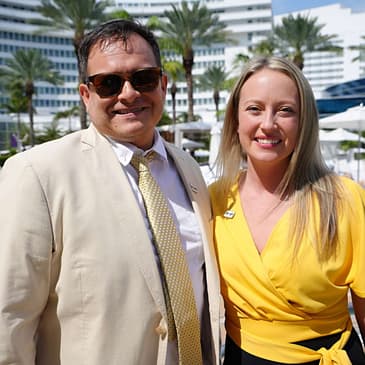


Today's guests are Diego Davis and Danielle Doyle, co-founders of Access Healthcare, a nurse-founded healthcare staffing agency connecting healthcare professionals with opportunities across the United States and internationally.
Danielle and Diego began their careers at the bedside before becoming travel nurses, and it was during a travel assignment that they met. Drawing from their own experiences as clinicians, they set out to build a staffing agency that would treat nurses as people—not just placements.
Today, Danielle serves as CEO and Diego as CFO, leading one of the fastest-growing healthcare staffing agencies in the industry. But what stood out most to me during our conversation wasn't their impressive growth—it was their genuine passion for supporting the nurses they serve. Their leadership is rooted in understanding the realities of travel nursing because they've lived it themselves.
In this episode, we talk about their journey from bedside nursing to entrepreneurship, the evolving world of healthcare staffing, what travel nurses should look for in an agency, and how putting clinicians first creates better experiences for nurses, healthcare facilities, and ultimately, patients.
Whether you're a seasoned travel nurse, considering your first assignment, or simply curious about the business behind healthcare staffing, I think you'll find this conversation insightful, encouraging, and refreshingly genuine.
In the five-minute snippet: It's a version of the Newlywed Game, and I think Diego’s got the right idea.
For Diego and Danielle's bios, visit my website (link below).
Contact The Conversing Nurse podcast
Instagram: https://www.instagram.com/theconversingnursepodcast/
Website: https://theconversingnursepodcast.com
Your review is so important to this Indie podcaster! You can leave one here! https://theconversingnursepodcast.com/leave-me-a-review
Would you like to be a guest on my podcast? Pitch me! https://theconversingnursepodcast.com/intake-form
Check out my guests' book recommendations! https://bookshop.org/shop/theconversingnursepodcast
I've partnered with RNegade.pro! You can earn CE's just by listening to my podcast episodes! Check out my CE library here: https://rnegade.thinkific.com/collections/conversing-nurse-podcast
Thanks for listening!
[00:01] Michelle: Today's guests are Diego Davis and Danielle Doyle, co-founders of Access Healthcare. A nurse-founded healthcare staffing agency, connecting healthcare professionals with opportunities across the United States and internationally.
[00:17] Danielle and Diego began their careers at the bedside before becoming travel nurses.
[00:22] And it was during a travel assignment that they met.
[00:25] Drawing from their own experiences as clinicians,
[00:28] they set out to build a staffing agency that would treat nurses as people,
[00:33] not just placements.
[00:35] Today,
[00:36] Danielle serves as CEO and Diego as CFO,
[00:41] leading one of the fastest growing healthcare staffing agencies in the industry.
[00:47] But what stood out most to me during our conversation wasn't their impressive growth.
[00:52] It was their genuine passion for supporting the nurses they serve.
[00:56] Their leadership is rooted in understanding the realities of travel nursing because they've lived it themselves.
[01:03] In this episode, we talk about their journey from bedside nursing to entrepreneurship,
[01:09] the evolving world of healthcare staffing,
[01:11] what travel nurses should look for in an agency,
[01:15] and how putting clinicians first creates better experiences for nurses, healthcare facilities,
[01:22] and ultimately patients.
[01:25] Whether you're a seasoned travel nurse considering your first assignment or simply curious about the business behind healthcare staffing,
[01:34] I think you'll find this conversation insightful,
[01:37] encouraging,
[01:38] and refreshingly genuine. In the five minute snippet:
[01:44] It's a version of the Newlywed Game,
[01:46] and I think Diego's got the right idea.
[02:07] Well, good morning, Diego. Good morning, Danielle. Welcome to the podcast.
[02:12] Danielle: Good morning. Thanks for having us.
[02:14] Diego: Good morning. Thank you for having us, Michelle. Look forward to it.
[02:17] Michelle: Yeah, I've been looking forward to it, too. And thank you both for rescheduling when I wasn't feeling well. I really appreciate it. I don't like to miss out on on great guests who have wonderful messages that everybody needs to hear.
[02:31] So thank you guys again for rescheduling.
[02:35] Danielle: Of course.
[02:36] Diego: Thank you.
[02:37] Michelle: All right, we're going to get into it.
[02:39] I want to know your story.
[02:41] So take us back to the travel assignment where you first met.
[02:46] Did you guys just know immediately that you would work together someday? How did it work?
[02:53] Diego: Well, I'll let Danielle, do you want to take it? Because you,
[02:56] Danielle: Yeah, I'll take it. Yeah, I'll take it. Back to the beginning. So the year is 2015,
[03:04] and I'm working as a staff nurse at St. Francis Medical Center in Trenton, New Jersey, and I had just started working in the ICU and I started hearing this word in the hospital.
[03:18] And it was, the travelers are coming.
[03:20] And I had never heard of what a traveler was.
[03:25] So the next thing I heard was, Diego's in the building. And I'm like, who is Diego?
[03:31] And if you know Diego, I compare him to the word Madonna. He only needs one name. You just know who he is. And
[03:39] That's who he was in the industry. And they said, you've got to meet this guy. Great guy, great energy. So I'm like,
[03:45] first, I'm researching what's a traveler. Found out that there they are nurses that come into hospitals to help when there are staffing shortages for a short, short amount of time.
[03:55] Secondly, I set out to meet him. So one day, I'm in the med room in the ICU at St. Francis, and he walks in. So I'm like, oh, my God, he's here.
[04:04] Like, hi, I'm Danielle. Nice to meet you. I've heard so much about you, even from other.
[04:08] hospitals where other nurses were working, were texting me like, he's at your hospital. I'm like, okay, cool. So we immediately hit it off. And like most nurses do, we started going out at night, hanging out, going out to dinner and whatever.
[04:22] Thirteen weeks passed. It happened really quickly. And he says, okay, I'll see you next time, or I've gotta go. Like, this is my last shift.
[04:30] Like, what do you mean, it's your last shift? And he said, well, we only work for 13 weeks at a time,
[04:35] and I'm leaving, moving on to my next assignment, but you should give it a try.
[04:40] So I started researching what travel nursing was.
[04:45] At that point in time, I was very scared to make any changes in my life. I was a single mom. I was living paycheck to paycheck, and I wasn't really ready to make that move, but I knew I had to do something, and I knew I had to make a change,
[05:00] so I took a risk. I quit my job, within two weeks, and I went per diem at the hospital and took off traveling.
[05:07] So start traveling around the country.
[05:11] Country. The state. I'm sorry, wasn't that adventurous.
[05:14] Start traveling around the state, and maybe six or seven months later, we end up together again up in Newark, New Jersey, this time at St. Michael's so once again, we start going out.
[05:26] We're like, all right, let's go to dinner. It was my 30th birthday, and we're sitting at the Tiger Tail having lamb,
[05:34] and he says, what do you want to do with your life? Because, you know we're not the type of people that talk about boring things. We're talking about goals and
[05:43] And stars and stuff. So I said, I've always wanted to start a business. I just don't know what it's going to be. At that time, I was working on starting a travel company for people that had, like, a last wish in life and figuring out how to transport them to different places.
[06:00] And Diego, at the time, was working on creating a company where he could escort nurses around the country and help them see,
[06:08] go on excursions and stuff. But neither of those things really worked out for both of us. So the conversation next led into, what are you making?
[06:16] Like, what are they paying you? And I found out that day that I was making about $500 less a week than Diego was. And we had the same recruiter, the same agency, and we were working in the same hospital,
[06:30] same unit, everything.
[06:32] So I said, how is this possible that you're making more than me?
[06:36] And he said these words that I'll never forget. It's, you don't know what you're worth.
[06:41] He said, I've been doing this a lot longer than you. He's been traveling about 20 years. And I had just started, and I was very happy with what I was making, by the way.
[06:49] But when I found this out,
[06:51] we said to each other, why?
[06:53] How is this possible?
[06:54] And why don't we do something about it?
[06:57] So that night,
[06:59] I went outside, we went to our car, looked up at the stars. It was a very clear night.
[07:04] And I thought to myself, what will my life be like in a year if I actually do this? You know, what'll it be like in five years if we actually create this agency?
[07:14] So we set out to create an agency where everyone is treated equally,
[07:19] independent of experience,
[07:20] recruiter,
[07:22] anything. We just wanted to create a fair market.
[07:25] And we woke up the next day, applied for the license,
[07:29] and immediately called the director of the New Jersey Hospital association and invited her out to lunch. Like we had any business doing this.
[07:40] We did it.
[07:42] And she said yes.
[07:43] And her name was Diane Adams. God love her, because she was like a big mentor.
[07:49] Diego: She was the gatekeeper for New Jersey, the Hospital of New Jersey market other than California,
[07:55] like Jersey and California are synonymous in volume. I mean, Cali's a bigger state, but you'd be surprised how much medical staff, but go ahead. Sorry, Danielle.
[08:04] Danielle: Yeah.
[08:04] So she said yes, and we went to lunch with her in Spring Lake, New Jersey, where she has her vacation property.
[08:11] And we just sat down. We're so excited. Guess what? We started an agency.
[08:16] Can we have contracts? Can you let us in? And she said,
[08:19] no, absolutely not.
[08:21] First of all, you have no experience,
[08:24] and you are not going to fail here.
[08:26] So she offered some suggestions. She said, first,
[08:31] go to Pennsylvania. It's much easier to get started in that state.
[08:35] And then come back and tell me how you're doing every three months.
[08:39] Secondly, she said,
[08:41] I need you to write these two words down.
[08:43] VMS and MSP.
[08:45] And at that point, I didn't even know what she was talking about. I thought that agencies just went directly to hospitals and they opened the doors and they were like, sure, come on in.
[08:56] Staff us. And it was going to be super easy. She said, no, this industry is managed mostly by MSP's and VMS's right now.
[09:03] And the third thing she said, which I'll never forget, is what other questions do you have for me? Because in business,
[09:10] you only get the answers to the questions that you ask.
[09:13] So learn to ask good questions.
[09:16] So we left that day very disappointed, as you can imagine.
[09:20] We thought we were working in the clinics, and I don't know what we were going to do at that point, but I called her every three months for four years until the point where she told me to stop calling her, and I didn't.
[09:34] And we worked hard, and we built ourselves up. And she finally let us in on Thanksgiving of 2019, I believe it was.
[09:43] But before that,
[09:45] a lot of really good things happened. So I'm going to let Diego take the story and lead us off into our first traveling.
[09:52] Diego: It was crazy. Like, the one thing that Danielle and I, you know, we were crushed. Talk about a big buzzkill in New Jersey. We were thinking, we were picturing, like, dreaming of, okay, overnight, we're going to be the success, because we had a big following of travelers.
[10:04] We could place all these people everywhere. You know, everything's going to be rolling great. Everybody's going to. Yeah, Kumbaya. But it didn't happen that way. So just, like, I didn't realize, like, entrepreneur, you know, Kevin Hart even said he's been a comedian for 20 years, and people don't know what it took for him to finally get in front of the camera.
[10:21] And he had to grind. He had to really grind. So,
[10:24] you know, Danielle and I, we were. We had such a fight in this, and we were thinking, how can we do this?
[10:30] How can we do this? So we were thinking Walgreens flu shots. We could start that way, maybe small start, you know, providing help for that, and then maybe graduate from there, try to get other things.
[10:40] You know, I'm a big believer in faith in God. For me and Danielle too, we're big, you know, we're big in our faith. And what happened was really crazy. I was still working as a traveler and it was like maybe four or five months later and I got a phone call.
[10:54] I was working a 12 hour shift in New Brunswick, New Jersey at a Level 1 trauma hospital and been working 12 hours and such a rough day at it. One of those patients that had maximum drips, ventilated balloon pump coming off of, you know,
[11:08] had a heart surgery that just didn't go too well because of his comorbidities and just had a rough day. Around 4 o' clock, I got a phone call from a hospital in Trenton, New Jersey and they were desperate for a CTCU nurse to recover patients that they didn't have coverage for.
[11:23] And they said, Diego, if you,
[11:25] if you can be here, you know, when you get here after your other shift and help us,
[11:30] we'll give you your first contract with your company, Access Healthcare.
[11:33] So this is like one of those ride or die moments. I was like, you know what, there's a Starbucks downstairs,
[11:39] look at some fresh scrubs, throwing a little bit of cologne.
[11:42] Drove an hour,
[11:44] you know,
[11:44] got there and just had another rough night. You know, I was able to help that patient at the New Brunswick and they survived,
[11:53] got to Trenton, same situation, patient was not doing well at all and you know, was able to recover him as well.
[12:00] And yeah,
[12:02] in the morning I've been working close to like 20 plus hours, 24 hours. And I knew nothing was going to stop us at that point, you know, it just really did well.
[12:11] So yeah, after working 24 hours, it was just completely insane. I was just like what some nurses call in zombie mode. It's where you have enough dopamine hits all throughout the day and night that now you're in automatic mode.
[12:25] And how we react and I think that's the wonderful thing, nursing and medical professionals, even physicians, you have to have that.
[12:31] You're going through,
[12:33] you know, like a spiritual, physical, you're putting every thousand percent into your patients and you kind of forget about yourself and you know how to react even when you're exhausted.
[12:42] But when we got through that shift, I knew that was amazing. I could do that physically and spiritually, mentally, that accomplished that. And with Danielle, I said, nothing's going to stop us.
[12:51] So we got our first contract,
[12:53] started supplying to that hospital and next thing you know is three months later and now I'm driving through the snow in the Pocono Mountains, 3 o' clock in the morning.
[13:01] We finally got our big break with Health Trust in Pennsylvania at a
[13:06] huge facility in the mountains at Geisinger Medical center in Danville, Pennsylvania, which is a really beautiful area.
[13:12] But I had to be there at 7am shift and driving with my little Honda Accord four door through the snow in the mountains. And I was like, am I going to make it?
[13:19] But I made it just in time. And that was our first huge contract. And we just started taking off after that. You know, that was, that was that one, Geisinger Medical Center.
[13:28] Then we just started getting on different panels throughout the US, different vendors.
[13:32] We're up to 27 vendors or 24 vendors today. Then we just, we supply hundreds and thousands of hospitals throughout the US and it's just, you know,
[13:42] I believe our story when they say the American dream is not there, it truly is. You know, you just have to really fight for what you want. That's where Danielle and I kind of come together.
[13:53] We don't like to fail.
[13:54] We just pivot. If you give up, then, you know, you really have to fight through those moments. And I think we've done a really good job of it. You know, to this day, we're pivoting, you know, to this moment.
[14:08] We pivot. You know, we kind of research the data now that we're in the bigger picture of things and try to provide a great service. But, yeah, that's our story.
[14:18] Michelle: Wow, what an incredible story.
[14:21] I just am completely in awe of both of you.
[14:24] Your innovative spirit. Like, is that something that you think comes from your nursing background, or do you feel like this was something that you both had innately in you?
[14:38] Danielle: I feel like it's always been there ever since a young age. I remember being young,
[14:47] I would hear sirens and I would run towards them, which kind of sounds weird, but even when I was eight years old,
[14:53] I would just hear a siren, and I'd be like, where is it coming from? Like, where is the action at? And I ran to it, and that's part of what got me into nursing school.
[15:02] But also I believe that we all, you know, we all have a gift and we're all placed on this earth once,
[15:09] at least to our knowledge, and we have to do the most with our life. I'm not going to sit here and just exist.
[15:17] So we get this one chance. Diego and I were just hanging out prior to the business being built, I saw on his table he had a book called The Secret and I was reading it at the same time.
[15:32] So everything that happens in life, is happening for you, not happening to you. And follow it and listen beyond what you can see in this world, you're going to be guided towards your destiny.
[15:44] Michelle: That's a great message.
[15:45] Diego: Yeah,
[15:46] intuition's a great, great, great thing. And not, I totally believe that even just a secret. We read a lot of books, even Rich Dad, Poor Dad, which is great. And it's amazing how if you put the intensity of your work ethic behind something, a project that you just continue to fail forward and get ahead in life.
[16:05] It's just amazing.
[16:07] Versus when you don't do anything, you just talk about it, nothing will happen. You'll get that as well, you know.
[16:12] So yeah, I think that's where we're online as well. We love to help people and ever since I was a kid,
[16:18] I've been the same way. I've always been for the underdog, I've always pulled for the underdog and I've done a lot of things in my life that I haven't even spoken about that to try to help people even,
[16:28] even behind the scenes, you know, and that's who we are, that's our ethic. And you know, and I get it, you know,
[16:35] business is a dog eat dog world, but we still have to have that,
[16:39] respect for our fellow people, you know, to really be transparent, loving and have an empathetic heart for the people in the world, you know?
[16:47] Michelle: Yeah, absolutely. Still have to humanize it, right? Was there something that you both saw in healthcare staffing that made you say there's gotta be a better way?
[17:00] Diego: Yeah, I mean for what Danielle was saying, I think just having a fair like playing ground,
[17:06] equality and just to be very transparent,
[17:10] you know, business as well. Like I think this is a no-no in our industry, but I've put people on a call, on a zoom call to show them exactly what we build the hospital and how the business works.
[17:21] Because we also believe that if we have transparent relationships and trusting relationships with our travelers, we build a long lasting relationship. It's not like a hit and run type relationship where we just pick a bunch of people.
[17:32] We've had people with us for seven years because of our transparency and you know, forthcoming of knowledge and teaching them how the industry works.
[17:40] I think that's where we,
[17:42] that's where the industry came from. You know, in the 80s, it was great. I heard it was just booming 90s. There was no,
[17:50] there was no price ceiling for what agencies were doing until the VMS started coming in in the 90s. 95 of the vendor, vendor management systems that were controlling the agencies for the hospitals, then they were taking a little piece of it.
[18:03] So it's kind of leveled out, normalized a little bit. But there's other ways that they're doing businesses that we're
[18:12] not really partial to, but, you know, we're, you know, we're thankful for their partnerships, but we're also trying to do our own thing, getting private contracts and helping the hospitals as well,
[18:23] to save on income as well, to get great help into their facilities.
[18:28] Michelle: In your bio, you specifically mention real alignment between clinicians and facilities. So talk about what that actually means
[18:38] Danielle: For me, it means that we're not like, like Diego had just, he had previously stated, we're not just trying to get a deal. We're trying to build a relationship and we're trying to advocate for the nurses and for the healthcare professionals.
[18:54] So sometimes it can be easy to propose a position that would be good for us but not good for them.
[19:00] But when I'm recruiting and when our team is recruiting, we're really proposing,
[19:05] we're really looking at the whole picture. You know, I want to know who they are, I want to know about their families,
[19:11] I want to know why they are traveling. There's many reasons to travel.
[19:15] During COVID it was all about the money.
[19:18] But now that that is gone, it comes back to, are you looking for experience or are you looking for destination?
[19:26] Or are you just looking to get out of the politics of the hospital and make a little bit of money? There's many reasons. So finding the core reason why someone is traveling helps us to place them into a position that they're going to be happy in.
[19:40] And with the intention that they're going to want to stay there and stay with us,
[19:45] maybe even one day become a staff member. You know, we see this happening a lot. We're trying to really help the facilities build up their talent pool and retain staff.
[19:54] And if we can provide good travelers to them that eventually work there maybe for a year and then convert over as staff, that's helping them, that's helping us get our name out there.
[20:05] But it's, you know, it's about the nurse and it's about making sure that they're comfortable and fully aligned between what they want to do with their career.
[20:15] Michelle: Okay, Diego, take us through the process.
[20:18] How does it work? I'm a nurse working in a hospital.
[20:22] I think about traveling. I find your,
[20:27] business on a Google page and I call you and say, hey, I want to know what this is all about.
[20:36] So take me through how you would kind of onboard somebody.
[20:40] Diego: Yeah, just to play off Danielle too. The first question I would ask, you know, tell them about our little, our story so they can kind of understand, you know, we refer them to our web page as well.
[20:49] It tells our story as well, on social media as well. I love our social media team, but I'll say I'll tell them. You know, really my first question when I always ask people about travel is like,
[21:01] why are you doing this? Are you doing this for income?
[21:04] You doing this to be close to family or a loved one or you want to go see the world? Do you want to see something really beautiful that you see on Instagram reels?
[21:11] So determining on what they tell me I can build their path and how, you know,
[21:16] money wise,
[21:18] pay package, compensation wise with the benefits and what they're actually looking for or they actually going to want to go see Hawaii? You know, it depends on what they want to do.
[21:27] So I first find out what their MO is for traveling and then from there,
[21:32] you know, we start looking at places to see what they will send them, four or five places to really look and see what they're really looking for. If it matches, it aligns with them and then you know, we talk to them about the hospital in the area.
[21:43] You know, it's amazing. I've been able to travel to a lot and I think a lot of it,
[21:47] especially these kids in their 20s and 30s right now, like let's say the 20 year olds, they want to go see places like Hawaii and get out there to California where you're at and really see things.
[21:56] And you know, we can refer them to the hospital, we give them background on the hospital. You know, is it a teaching hospital? What level?
[22:03] And the great thing about the travel, nursing and medical professionals, it's a community.
[22:10] You know, if there's a lot of travelers there, then they might have the fortunate time of meeting fellow people. You never know when you meet your next best friend,
[22:18] husband or wife,
[22:20] or even a business partner, you know, so your travels really just to get out there. I think there's a lot of travelers in the facility. Says a lot know that they're,
[22:29] know people like to go there. You know, they like to go there or they're expanding on their programs at the hospital, needing a lot of people, but we have a lot of like minded travelers.
[22:37] It's just a magical moment because you guys are all there for, to help the patients at the facility to advance
[22:45] whatever they're creating, whatever program they're, they're doing. So I, I find all that out. What, what's your purpose? To travel. First of all, that's ground zero. And then from there we can kind of build and look around.
[22:58] Michelle: I love that you are asking that question. I can't imagine many other agencies are asking that. I think it's so cool that you want to know the why because you know, as you said, you can match them a lot better.
[23:14] Is there a minimum amount of experience that a nurse needs to be a traveler?
[23:21] Diego: Well, Danielle, you want to go? Because I'll talk all day.
[23:25] Danielle: Yeah, so when someone applies to the position, we look at their resume and we screen it. We ask that they have at least two years of experience working in the unit that they're applying for in order to apply for a travel position.
[23:42] Reason being is that it is very intense.
[23:46] You need to have that experience under you. The time management skills and the ability to pivot and float in order to travel.
[23:56] So when you get into the hospital, the one thing remains the same. You know, the patient is basically the same. But the way that the diseases are managed,
[24:06] the technology that they're going to be using, the charting systems, the pumps,
[24:10] everything is different.
[24:13] So you have to have that experience underneath you to be able to pivot in order for it to work out well for you as the traveler. Otherwise you're going to be overwhelmed.
[24:24] Another thing is you are not going to get the orientation that you're used to.
[24:28] You're lucky if you get eight hours.
[24:31] So that's the thing that we want to make sure we're setting them up for success and a new grad cannot do it. And someone who's just been working for,
[24:41] for a year would have a very difficult time.
[24:44] Michelle: Yeah, I would think they would need a minimum and I think for a new nurse, two years is really reasonable for all of those,
[24:54] reasons that you cited.
[24:56] Danielle: For sure. Yeah.
[24:59] Michelle: Well, I want to talk about healthcare staffing for a moment because healthcare staffing, as you both know, it isn't just about filling shifts.
[25:09] The public and many nurses often assume that staffing agencies just recruit nurses, but in reality,
[25:19] they're balancing hospital needs, patient safety,
[25:23] nurse satisfaction, compliance,
[25:26] licensure,
[25:27] payroll contracts,
[25:29] retention.
[25:31] So let's explore all of that.
[25:34] Diego: A lot of hot words there. A lot of keywords.
[25:39] That's what we talk about every day.
[25:43] It's the reality. Yeah,
[25:45] yeah, we kind of
[25:47] With our company, we have responsibilities. You know, Danielle, like, kind of learned she's more of the type A, I'm more of the type AB. So I get out there, really talk about the business a lot more, and, you know, I'm more of the creative side and able to just kind of reel it in.
[26:02] We have two different styles, you know, which is great. We kind of balance each other out. You know,
[26:06] We help each other when we feel down, you know, the other one will pick the other one up. No one to run with the ball. You know, it's a great partnership.
[26:13] But, you know, Danielle. I'll let her talk her piece, but it's mainly about the credentialing. We kind of meet in the middle with the recruiting and with the contracts. You know,
[26:22] We kind of develop as we go. Things change every year, you know, everything here, we have to have different stipulations, guaranteed hours for different contracts that we can get with facilities.
[26:37] My end of it is mainly monitoring the payroll, making sure payroll's good. Cause you're as good as your payroll, actually making sure your money's paid the proper, the good amount.
[26:47] Make sure there's not as many errors. And I run the social media, and Danielle and I kind of join together for recruiting, to motivate the recruiters with the KPIs and all that,
[26:57] to make sure. We have weekly coaching calls to make sure our sales team is really, our recruiters are on point and making sure. We're kind of following the same formula that we've been using, which has been proven success after 11 years.
[27:10] I would hope so, you know.
[27:12] Yeah. But, Danielle, I'll let you take over with the credentialing part of it.
[27:15] Danielle: Yeah. So the, you know, the one thing I want the people to know and the nurses who haven't traveled yet to know is that a lot of people believe that agencies, like you had just said, are
[27:26] this middleman that passed the travelers to the hospitals. And that is anything but true. We are actually their W2 employer. So what that means is that, you know, we onboard you, we welcome you to the company, we help you build your resume,
[27:41] we submit you to the position. Once you get the position,
[27:44] just like a staff job, you're expected to credential. So it takes at least two weeks to get through our credentialing process.
[27:51] And while we're doing that, we're making sure that you have all of your medical records, your MMR, your varicella. You're going to have to take some online testing,
[28:00] court competencies for joint commission,
[28:03] maybe some testing for the facility, because that's been becoming an increasing thing that we're seeing recently.
[28:09] And then once you're cleared to start, you head into our onboarding with our HR department. You're going to be offered many benefit options.
[28:17] So we offer Cigna health insurance. We also have a more affordable MEC plan,
[28:23] we have a matching 401k plan,
[28:25] disability,
[28:26] short term, long term life insurance,
[28:29] you name it. And Diego,
[28:31] being the creative mind that he is, also got us some discounts with airlines,
[28:36] rental car companies. We have a housing department.
[28:39] So there's a lot of support that you're offered before you even step into the hospital.
[28:44] And then once you're working,
[28:46] you know, we make sure to our very best ability that you're paid correctly and the nurses are,
[28:51] and the healthcare professionals are paid correctly and also remain compliant. So we have a partnership with a company called Mobile Certifications.
[29:01] Our nurses and travelers can do online BLS,
[29:04] ACLS, PALS.
[29:06] We have continuing education,
[29:10] it's all about just enhancing the skills of the traveler and helping them to get everything that they would like out of this experience and supporting them along the way until they exit, whether it be to a staff job within one of our contracts or God forbid, they want to work with another agency.
[29:30] But while they're here, we make sure that they're fully supported.
[29:33] Michelle: That sounds like such a comprehensive program with all the things that you offer. That's just fantastic.
[29:40] Danielle: Yeah, I mean, we wanted, when we built the agency, we had a blank slate and we said to ourself,
[29:47] how can we make this as enjoyable as possible? And how can we make it somewhere that, that we want to show up to every single day? I don't want to go to work and not want to be there.
[29:58] So we built it the way that we would want it to be if we were travelers.
[30:03] Michelle: Well, that's one of the things I absolutely love about nurses, is they see something that they like or they don't like and they set out to change it.
[30:12] And I feel like that's very particular to nurses. Travel nursing has changed over the last several years.
[30:24] What trends are you guys seeing now?
[30:27] Diego: Wow. Do you want me to lead off, Danielle?
[30:29] Danielle: Yeah, yeah.
[30:31] Diego: Well,
[30:32] you know, I know this is overspoken, but it's like, AI definitely. You know, we're seeing a lot of technology changes that are really changing the game. And, you know, we're trying to keep our tech stack ahead of the game as well.
[30:44] You know, we're catching up. We were fortunate to build a team that built our CRM. We have our own CRM. We have our own app now.
[30:52] So we're trying to automate it more to make the experience a lot better for the traveler. They're able to go in, scan their timesheet into the app, and we're able to, you know, get their time that way and to upload their own documents, you know, to make it fun.
[31:06] You know, actually make it fun to make them responsible for it and to give them rewards. Even if they have documents that we didn't get, you know, that we had to pay for, that they're bringing in themselves.
[31:15] That kind of saves our company money. Then we kind of interact with them and give them bonus, you know, for that. Why not? You know, saving us money overall. Yeah, but it's.
[31:24] We're seeing that now. And, you know, we're seeing a lot of international help.
[31:28] Huge shift in international help. You know, we're seeing a lot of folks from India and the Philippines, and we jumped on the Philippine train. You know, we built a company, Access International,
[31:39] about Danielle, what, about five years ago?
[31:44] Yeah, 21.
[31:46] So we have, you know, half our teams from the Philippines.
[31:49] And now just to catch up, we've actually.
[31:51] We have some people from India as well, which are amazing people that can help us as well. But we have a lot of domestic help as well from the States
[32:00] That's helping us.
[32:01] That's the biggest trend that I'm seeing in a lot of,
[32:05] You're seeing a lot of foreign companies coming in with foreign money that we're competing with. You know, we're really trying to keep,
[32:11] It's amazing when people have their own money and they're not being financed, that they can make better deals. So we're trying to keep up, and we're doing a great job.
[32:19] You know, we're really.
[32:21] very humble.
[32:22] You know, we don't have huge boats, but we just,
[32:25] We try to reinvest our money into the company and the main reason we're here is because of the medical professionals. So we pay them the best.
[32:32] If you could see our P&L statements, you would see that we overpay
[32:37] the people that really deserve on the front line.
[32:39] That's the only reason we're here, you know, and we have to have complete gratitude for them and our in house staff to kind of really get those great practitioners out there in the US.
[32:50] Michelle: Wow, that's fantastic. What misconceptions do nurses have about staffing agencies?
[32:59] Diego: Great question, Danielle. I know you probably spout off a million.
[33:03] Danielle: Yeah,
[33:04] I would say that we,
[33:08] one of the biggest misconceptions I see is that we're, we are just that we're taking all of their money. You know, they need to understand that in some cases there is a middleman between us and the hospital and that's called the MSP or the VMS and they take around 7% of the bill rate from us just to enter that hospital.
[33:33] On top of that, insurance costs have rose significantly. When we went to market last year, our health insurance went up by 40%.
[33:42] And we, this is, this is happening nationally. It's all over the place. Inflation is just out of control.
[33:48] So it's not that we are trying to take any more of the margin or the money from their pockets. We're actually giving them, like Diego had just said, more than we should at this point than other agencies are.
[34:00] But I don't think they understand the financial strain that we're under in order to service the hospitals as well.
[34:08] On top of the medical insurance, our workers comp. and our general insurance for lawsuits has skyrocketed. These insurance companies, a lot of them have exited the market completely after Covid.
[34:20] They don't want to touch a staffing agency. So in order for us to stay here,
[34:25] we have to pay upwards of $500,000 a year just to be insured in order to exist.
[34:32] So they just need to know that we are doing our best. We're giving at least accesses, we're giving as much as we can to them and they should be looking to work with agencies that are doing that now.
[34:45] There are some that are offering way less. And if you see an agency offering less than typical, it's because they're trying to keep the margin for themselves and they have options, you know, even beyond us, they have options.
[34:59] There are some agencies I see offering more than us.
[35:03] But you also have to consider if you see someone paying ridiculously high,
[35:09] why is that? Are you going to get the same customer service that you're accustomed to.
[35:14] When you work with one of these companies that just popped up that's not from the United States,
[35:20] you might be trading that when you work with an agency that doesn't have a longstanding reputation.
[35:26] Michelle: Well, on the flip side of that, what misconceptions do hospitals have about staffing agencies?
[35:34] Diego: You know, what we really realize is that the hospitals think they're paying way much for agencies. Like, they're paying like 35, 40%.
[35:42] But, you know, we did some research,
[35:45] and it's amazing how much turnover a hospital has. Right?
[35:49] So they have to pay. Check this out. So they hire their person, the HR part. They have to credential them. So that cost us a grand. Must cost them a thousand or even more just to get them in the door.
[36:01] Then they bring them in for that, that week of orientation, possibly two weeks, they've lost that.
[36:06] Then they're training them for four months,
[36:10] right. So that they're double paying. So they're trailing another nurse and they're training them as well. Right.
[36:16] Then guess what happens? They become a nurse practitioner. After a year,
[36:19] they maybe have six months with that person. Then they go back to school.
[36:23] They've went on to traveling, or they've went on to another hospital that offers better, better money, better rates.
[36:30] It's a different generation. I hate to say it. You know, I come from Generation X.
[36:34] I think Danielle's on the tail end of Generation X or probably millennials, but the next generations,
[36:39] the only loyalty.
[36:41] It's not like from where we grew up. We were loyal to our work, which provided food for our table and our families.
[36:47] Now it's work-life balance, sound familiar?
[36:51] Michelle: Yep.
[36:52] Diego: Yeah.
[36:55] Michelle: That's what I'm hearing. I'm hearing from all of the multitude of nurses that I've interviewed now that it's all about work-life balance.
[37:03] you know, and talking about loyalty, Diego,
[37:07] I'm a boomer.
[37:08] Okay? So we invented loyalty,
[37:11] right?
[37:12] Danielle: Right.
[37:13] Michelle: Yeah. And we're the most crushed generation when we don't see that anymore. We can't fathom it, but part of us is like,
[37:22] good for you.
[37:23] You know, good for you that you are going after what you want.
[37:29] You are filling your needs. As Boomers, I think generally, and I might get a lot of feedback from this, but we have this attitude of selflessness.
[37:39] You know, just give and give and give and,
[37:42] and just give till you die. And,
[37:45] you know, that's what I love about the new generation of nurses. They're like,
[37:49] no, I want something for me.
[37:52] I want, I want something for me.
[37:54] Diego: No, and I agree. I mean that the hard thing too. And you know, God,
[37:59] shout out to the Boomers. I love, your generation is amazing. It's very respectful. I love talking to people and I love how Generation X kind of fell into that same thing.
[38:08] We're still you. Yes, ma', am. No, ma'. Am. That type of thing. We work hard, but then we were. We're crazy. We invented rap music.
[38:16] Google came from us.
[38:20] I remember the times we had no cell phones. Cell phones are just starting out with a whole new, whole new thing. But no, you know, we, that's in our advertisement.
[38:29] We do that too. We try to show people.
[38:32] My gift to a lot of people is like on my Instagram and my Facebook, I like to, you know, I like to show people where I've been and what you can do with your life to not just dream, just actually do it.
[38:43] You know,
[38:44] we're here for a blink of an eye,
[38:46] and I don't want to have any regrets. And that's including in my personal life and our business life. I want to make sure that,
[38:53] we can tell the world why we're here.
[38:56] To really enjoy yourself. You can have a work-life balance. You can go see these places all over the United States. You can make enough money to go to Europe or wherever you want to go to, to.
[39:05] To experience these things, you know. Yeah,
[39:08] but definitely, I think that's where we align as well as our.
[39:12] The way we dream and the way we built this business to kind of allow people to fulfill their dreams.
[39:18] Michelle: Well, my nurse friends want to know what is the biggest red flag a travel nurse should never ignore?
[39:26] Diego: Hmm. At the facility or by agency, you think?
[39:32] Michelle: I think by agency.
[39:33] Diego: By agency. Danielle, you want to, you want to do a couple red flags?
[39:37] Danielle: There's a couple,
[39:40] A couple red flags,
[39:43] I mean, like, too much, paying too much, a ridiculous amount of money. If they're paying too much,
[39:52] It's not possible. And what people don't understand is we all, for the most part, have the same bill rates. And if someone's offering you way more money than anyone else,
[40:03] you almost need to get that contract notarized because there's a chance that it's not really going to exist.
[40:09] It's just impossible. You need to ask questions and unapologetically ask questions until you get all the answers that you need.
[40:18] Another red flag is when
[40:21] You sign a contract and your recruiter disappears.
[40:24] I mean,
[40:25] the relationship should continue.
[40:28] There's really no end to it.
[40:31] We reach out to our travelers at least every other week,
[40:34] make sure you're okay,
[40:36] make sure your housing is going well, make sure you're enjoying the facility and aren't dealing with anything internally. So just being sure that you have a relationship with the agency that you're working with, it's another.
[40:49] Another thing to look out for.
[40:50] Michelle: Love it. Is there a contract clause that nurses don't pay enough attention to?
[40:58] Diego: I think there's probably,
[41:03] You know, what? If you asked me that yesterday, I'll probably rattle them off. But yeah, I think, you know, we have to be realistic, too, as an agency.
[41:13] A lot of places right now. Like, if we're not, if you're being constantly canceled at a facility,
[41:19] you got to think the agency's got to be able to build that facility to pay your salary and be in business.
[41:24] But I think a misconception a lot of times is like, you know,
[41:29] we should get full pay. Even though, like, you call out sick or you're not going to attend your full hours on that contract for that 36 hours that we all agreed upon.
[41:39] So whenever they don't get paid, we don't get paid as well to keep our lights on. We're just making just a wee bit enough to make our lights stay on.
[41:48] It's insane that with our company, we work with, you know, a lot of finance companies, and at the end of the day, when it's said and done, the dust settles.
[41:56] You would be surprised how much we make. It's not even like it's people thinking this guy's driving around a Ferrari. Absolutely not.
[42:04] No.
[42:05] But, you know, we. Our mindset even. It's not even like that anyway, but we make enough to turn the lights on and just have a comfortable living. But like we say, they really have to watch the verbiage on guaranteed hours.
[42:17] You gotta make sure, you know, if the hospital is guaranteeing your hours, which we try to push for, obviously,
[42:22] because we want to make sure if someone's traveling from Georgia to Maine to go to work, they're not going to be canceled and not paid. So we push for guaranteed hours and just to make sure that verbiage on the
[42:32] cancellation clauses to make sure when the hospital cancels in that they offer you another shift.
[42:37] I want to put it out there. Not being a fellow traveler is like if they cancel, you try to pick another one up later that week. You know, really get out there and try to try to do it.
[42:46] Because when the agency fails because of the non-working hours,
[42:51] that's a big hit. That's something controllable that we can do all together as a team. You know,
[42:56] we have to be able to build to stay alive.
[42:58] Michelle: Yeah, I think your credibility is really high because you've lived it, right? You're both travelers, you've worked with agencies,
[43:08] you have worked with hospitals.
[43:11] And there's something to be said for that credibility.
[43:15] Is there something that recruiters wish every nurse understood?
[43:20] Diego: Yeah. But let me. Can I reverse the boat back a little bit?
[43:23] Michelle: Yeah, absolutely.
[43:25] Diego: One of the things I would say,
[43:27] you know, we always offer, even if you don't travel with us, that we'll tell you what you should be making in those hospitals and hopefully we can have a relationship with you in the future.
[43:35] You know, we believe in transparency.
[43:38] The other thing is too, I would always, I'm a big Google review guy.
[43:42] So click on their website,
[43:44] check their Google reviews, make sure, you know, they have a good Glassdoor review.
[43:49] we really love what we do and it reflects in our reviews, you know, that we have a lot of people that really are dedicated to us and you know, our fairness and stuff like that.
[43:59] Are we going to please everybody? Absolutely not. It's the world, you know, there's different personalities,
[44:05] But I think we've done great. You know, we had five stars reviews for the last several years in all across the world, on Facebook, anywhere. We have reviews, a lot of positive comments.
[44:15] And in checking our social media,
[44:18] I would check the company's social media as well if they're present because you want to know, are they, are they a viable company? Are they going to be able to pay me what they're promising?
[44:27] Are they going to like Danielle say, are they going to disappear after my first day?
[44:31] Your recruiter's gone.
[44:33] You want somebody that you interact with and trust with, you know, you want to know that
[44:38] we're like make your next best friend. That's what we tell our recruiters. It's such an amazing world.
[44:43] Get out there, find out about their family, find out about, you know, what they're about. You know, you never know who you'll become best friends with. So,
[44:50] but to go back to the other question, which is now you have to remind me.
[44:57] Michelle: Is there something that recruiters wish every nurse understood?
[45:01] Danielle: What I wish that they understood was that you are doing yourself a disservice by working with multiple agencies at one time.
[45:09] Now, there are good ways to do it. There are useful ways to do it, but you have to A, I mean, you have to let each recruiter know that you are working with another agency,
[45:21] and you have to be very transparent in which positions you want to be submitted to. Because right now we're running into these double submission scenarios where a traveler thinks, if I work with two agencies and I submit to the same job twice,
[45:37] I will get the job.
[45:39] And you're actually blocking yourself from it. You're creating an issue when you work with two agencies and submit to the same position. It's called blind submitting.
[45:48] Now, what happens on the facility level with that is they see a traveler as someone who's not committed and not loyal,
[45:56] and they wonder, how are they going to work well internally if they can't even make a choice to work with one agency?
[46:03] So really consider that. And that's why when you're vetting these agencies, you have to know who you want to work with and build that relationship and be communicative.
[46:13] I do have travelers that I'm currently working with that say, hey, listen, I submitted to this position with this other agency. Do not submit me there.
[46:22] And I completely respect it. But if you're not having that conversation, you're doing yourself a disservice.
[46:29] Michelle: Wow. Love it.
[46:30] Who knew, right?
[46:32] Every time I think that I know everything about traveling, travel nursing,
[46:39] somebody comes along and proves me wrong and educates me.
[46:45] And so I love it that, I love what you guys are doing and how you're doing it,
[46:51] and I love that we have the chance to talk today.
[46:55] Diego: Thank you so much. I appreciate it.
[46:57] Michelle: Yeah. Is there anything else that you guys wanted to talk about today that we haven't covered?
[47:03] Diego: You know my tagline, Danielle, always check our social media, Facebook, Instagram, and TikTok. We're out there just whether for jobs or just make you smile.
[47:11] We're out there with a lot of creative stuff, guys. A little inspiration as well. So thank you so much, Michelle.
[47:18] Michelle: Yeah. Awesome. Well, so how did they find you on social media? Is it your Access Healthcare.
[47:26] Diego: Yeah, AccessHealthcarestaffing.com.
[47:29] You can just. Yeah, if they.
[47:31] You can hashtag that in Instagram. It will come up with our famous logo or a little black and yellow logo. Same with Facebook as well.
[47:39] Michelle: Yeah. Awesome. Okay.
[47:42] Danielle: Yeah. You can never, never forget that you need access to get in.
[47:47] Michelle: I love it. I love it. All right, I'll put all those in the show notes.
[47:51] Thank you guys so much for what you're doing for nurses. You know, my listeners have heard me say this many, many times. I have the utmost respect for nurses who help other nurses.
[48:05] I think that nurses have a really hard gig in many, many ways.
[48:12] And for somebody who knows our needs and how we operate and how we work,
[48:21] To help us out, I think that's really cool. And so I thank you both for what you're doing and for sharing what you do today.
[48:31] Diego: Thank you for having us. Thank you for getting the word out there.
[48:34] Michelle: All right, we're at the last five minutes, you guys.
[48:36] So because there's two of you today,
[48:39] we do this thing at the end, and it's called the five minute snippet. And it's just five minutes of fun.
[48:45] And it's just a chance for our audience to see kind of your off duty side. And there's usually a lot of laughing that takes place.
[48:54] So because there's two of you, we kind of do a version of the Hollywood game.
[49:01] Diego: Right, right. Hollywood Squares?
[49:03] Michelle: Oh, I'm sorry, no, the Newlywed Game. Even though I know you're not newlyweds, but you're co-workers.
[49:12] Danielle: And people surprised how many people think we're married.
[49:17] Michelle: That's so funny, right? I know.
[49:19] Diego: Yeah. Okay, so I think they think your son's my son.
[49:22] Michelle: That's so funny.
[49:24] Well, I have to say, when I,
[49:26] So, Diego, it's like Diego Davis and Danielle Doyle.
[49:31] I was like, that's four Ds. Like, that's a lot of.
[49:34] Like, that's.
[49:36] I was like, yeah,
[49:38] there has to be some kind of.
[49:40] Diego: If we ever live together, we could just have the same towel, right?
[49:44] Michelle: I love it. DD on everything.
[50:29] All right, so,
[50:30] Diego, this first question is for you.
[50:33] Who is most likely to answer an email at 11:30pm?
[50:39] Diego: Definitely not me. I just discovered emails. It's a great thing. No, no, Danielle. Definitely Danielle.
[50:47] Danielle: Oh, yeah. I tell Diego we've been, we've had many offers for acquisition, and it's all sitting in his email. Everything is living in there. Never gets looked at.
[50:59] Michelle: That's great. Okay, Danielle, this one's for you. Diego has one superpower, and it's _________.
[51:09] Danielle: Diego's superpower is making people feel good about themselves. I think that's one superpower he has.
[51:20] Michelle: I would totally agree.
[51:21] I totally agree.
[51:23] Okay, Diego, if I asked your employees,
[51:26] which one of you is more likely to say,
[51:29] let's just figure it out,
[51:31] who would they pick?
[51:34] Diego: I honestly think that we're kind of in the middle of that, you know,
[51:38] let's do it together. But Danielle's more the optimist. What I love about her is she's already got a plan in place. You know, she's already thought this out and, you know, like 20 minutes later, like, have you ever tried this?
[51:51] And I'm like, duh.
[51:53] Michelle: You know, she's like, I'm one step ahead of you, Diego.
[51:57] Diego: Right, right.
[51:58] Michelle: Okay, Danielle, who's the bigger perfectionist?
[52:01] Diego: Who?
[52:02] Danielle: It's me. That would be me.
[52:05] Michelle: I kind of saw that coming. Diego, which one of you is more likely to talk a nurse out of quitting after a bad shift?
[52:17] Diego: I think we're pretty 50/50 on that one, right, Danielle? We're pretty good about it.
[52:21] Danielle: I could do it, but Diego does it more.
[52:25] Michelle: Yeah.
[52:25] Diego: Sit on the phone.
[52:26] I relate with them. Like, I'll, you know, refer back to my clinical skills because I did it for 20 years, you know, so I really, it's working in a CTCU, trying to become a CRNA,
[52:36] but, you know, I kind of fell back. I can relate and, you know, I'm very thankful. I always thank them. First of all, like, my God,
[52:43] you know, the medical professionals are just so,
[52:46] People don't understand what they go through. It's amazing.
[52:49] It's just like they endure physically,
[52:52] spiritually, and mentally. And by the time you're done with your 12 hour shift,
[52:57] you're just like, you don't want to talk to anybody. You're just done, you know,
[53:00] great respect. And I've talked some people off the ledge because of that.
[53:04] Michelle: Yeah,
[53:05] so true. Okay, Danielle, finish this sentence.
[53:09] Diego cannot resist _________.
[53:14] Danielle: A donut.
[53:16] Michelle: Oh, wow.
[53:19] Truth comes out.
[53:22] Okay, Diego, you finished this sentence. Danielle's biggest work pet peeve is ________.
[53:30] Diego: Unorganization.
[53:32] Michelle: Oh, okay. Yeah. That goes along with the perfectionistic stuff. She's probably very organized.
[53:38] Diego: Workflows.
[53:39] Michelle: Yeah.
[53:41] That's great. You guys know each other so well. Okay, Danielle, which one of you is more likely to say,
[53:47] we can totally pull this off, before knowing exactly how?
[53:51] Danielle: Diego, I need the roadmap. He's just like, jumps like, let's do this.
[53:57] Michelle: You're like, wait, wait, wait.
[53:59] Danielle: Hold on one second. Did you think about this?
[54:03] It's already done, by the way. At the time that he says it, it already, like, the train station, and I'm like, running. Wait,
[54:12] Michelle: Diego, what hidden talent does Danielle have that most people don't know about?
[54:22] Diego: Well, a lot of people know, like, Danielle.
[54:24] I'm gonna give her two little talents there. She's funny. She is, like, subtly funny. It's just hilarious. Like, we could be in a very intense situation. She'll just drop something and just.
[54:34] It's just so intelligent. You're like, oh, my gosh,
[54:38] it was crazy. But she's able to break the ice down in a lot of situations.
[54:42] A hidden talent.
[54:44] Well, everybody knows her other talent, too. She's a mom of three and running a big business and, you know, recently married and just managing a house. I think that's just a lot of talent.
[54:56] Yeah, I don't think anybody knows that about her. That the world should know. I don't. I don't know. And she's. She still
[55:03] proudly recruits because she loves meeting people and she has a book of business as we speak,
[55:09] and I manage the rest. Like,
[55:11] she doesn't deal with the human people side of it. That's my part. I'll jump in and try to bail people out and get. Make them feel good and, you know, make sure we're on the right.
[55:20] On the right track.
[55:21] Michelle: Yeah. Wow.
[55:23] Okay, last one is for you, Danielle.
[55:26] If I asked your families,
[55:28] which one of you has a harder time actually taking a vacation,
[55:33] who would they say?
[55:36] Danielle: Me.
[55:37] Michelle: Yeah, it's hard to have downtime.
[55:40] Danielle: It is. It is hard to have downtime.
[55:44] I mean, both of us. But Diego has been more places than me. He's the one that's going to be like, oh, by the way, I'm leaving for Spain next Thursday.
[55:55] Can you cover for me?
[55:57] And like, I'm always, like, in a month, I'll be in Florida for five days.
[56:02] Just write it on your calendar. But he's just gone or he's at, you hear him and he's at the airport and you hear him walking through the baggage claim and like, there's chatter on the streets like Diego's getting on a plane.
[56:14] And I'm like, where the heck is he going?
[56:19] Michelle: I love that.
[56:20] Diego: I travel a lot more to, for like, to promote our business. Like I was. I've never been to Omaha. Just got back from Omaha. Yeah.
[56:28] Danielle: What's the name of the company Daniel there.
[56:31] Diego: Track five. Yeah. Out there you got to meet a lot of people. But yeah, you know, I'm at that age, though. Danielle's just starting and I'm able to, I have more liberty to get on a plane and go.
[56:42] Michelle: You have a free spirit, though. I feel like you're very free spirited and spontaneous and.
[56:48] Diego: Yeah, I'm an Aries.
[56:50] Michelle: Yeah,
[56:53] that's great.
[56:54] You guys are great. I love your chemistry. And if I didn't know that you weren't married, I would have thought they're in a relationship.
[57:06] Diego: It's my work wife.
[57:07] Michelle: Yes. There you go.
[57:09] Danielle: We, our employees have seen us argue and we say that like, mom and dad are fighting. Like, cover your ears. And then we're just like,
[57:18] ah, that's great. Go at it.
[57:20] That's great.
[57:21] Michelle: I love it. I love your energy that you brought today.
[57:24] And I learned so much.
[57:27] So I consider myself very blessed. Thank you guys so much for joining me today.
[57:33] Diego: Thank you so much.
[57:35] Michelle: Have a great rest of your day.