
Today’s episode is one that really hits close to the heart — because it’s about the people who spend their lives caring for others, and what happens when no one’s caring for them.
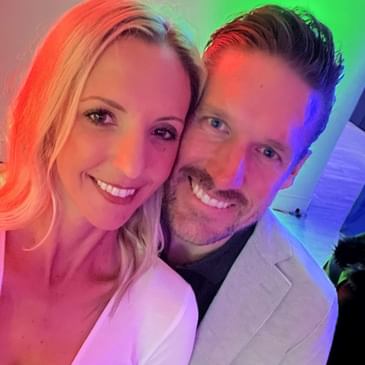
You’re about to meet Kevin Dickinson, the founder of GetVitals, and his co-founder and clinical advisor, Amber Smith. They developed a mental health app built specifically for nurses — starting with those working in emergency departments.
Kevin didn’t come from healthcare; he came from engineering. But after watching Amber, an ER nurse and educator with more than a decade of experience, struggle through exhaustion, compassion fatigue, and burnout, he decided to do something bold: he left his career to build a tool that actually supports the people on the front lines.
Together, Kevin and Amber are bringing a deeply personal and powerful perspective to the conversation about mental health in nursing — one that blends love, lived experience, and a shared mission to change the culture of healthcare.
We’ll discuss what burnout really looks like inside an ER, what inspired GetVitals, and how they’re helping nurses take care of themselves with the same compassion they provide their patients every day.
So settle in. This conversation is honest, hopeful, and a reminder that healing the healers might just be where change begins.
In the five minute snippet: He nailed it! For Kevin and Amber's bios, visit my website (link below).
Contact The Conversing Nurse podcast
Instagram: https://www.instagram.com/theconversingnursepodcast/
Website: https://theconversingnursepodcast.com
Your review is so important to this Indie podcaster! You can leave one here! https://theconversingnursepodcast.com/leave-me-a-review
Would you like to be a guest on my podcast? Pitch me! https://theconversingnursepodcast.com/intake-form
Check out my guests' book recommendations! https://bookshop.org/shop/theconversingnursepodcast
I've partnered with RNegade.pro! You can earn CE's just by listening to my podcast episodes! Check out my CE library here: https://rnegade.thinkific.com/collections/conversing-nurse-podcast
Thanks for listening!
[00:01] Michelle: Today's episode is one that really hits close to the heart because it's about the people who spend their lives caring for others and what happens when no one's caring for them.
[00:11] You're about to meet Kevin Dickinson, the founder of Get Vitals and his co- founder and clinical advisor, Amber Smith.
[00:20] They developed a mental health app built specifically for nurses,
[00:24] starting with those working in emergency departments.
[00:28] Kevin didn't come from healthcare. He came from engineering.
[00:31] But after watching Amber, an ER nurse and educator with more than a decade of experience,
[00:37] struggle through exhaustion,
[00:39] compassion, fatigue, and burnout,
[00:42] he decided to do something bold.
[00:44] He left his career to build a tool that actually supports the people on the front lines.
[00:50] Together,
[00:51] Kevin and Amber are bringing a deeply personal and powerful perspective. Perspective. To the conversation about mental health in nursing.
[00:59] One that blends love,
[01:01] lived experience,
[01:02] and a shared mission to change the culture of healthcare.
[01:06] We'll discuss what burnout really looks like inside an ER,
[01:10] what inspired Get Vitals, and how they're helping nurses take care of themselves with the same compassion they provide their patients every day.
[01:19] So settle in.
[01:21] This conversation is honest, hopeful, and a reminder that healing the healers might just be where change begins.
[01:30] In the five minute snippet:
[01:33] He nailed it!
[01:35] This is Kevin Dickinson and Amber Smith.
[01:52] Well, good morning, Kevin. Good morning, Amber. Welcome to the podcast.
[01:57] Kevin: Thank you so much for having us.
[01:59] Amber: Yeah, thanks for having us. Great to meet you. Chat with you.
[02:02] Kevin: Yes.
[02:02] Michelle: Thank you for reaching out on LinkedIn. I have had many wonderful guests from LinkedIn. It's just a great platform.
[02:12] My audience has heard me talk about it ad nauseam, probably.
[02:17] But I do love LinkedIn and I thank you guys for reaching out because you have a.
[02:23] A really interesting story.
[02:25] And so let's just start at the beginning.
[02:27] Kevin, you were in engineering leadership, which is a pretty demanding field in its own right.
[02:34] What did you see or experience that made you decide to leave that world behind and build Get Vitals?
[02:43] Kevin: Yeah, so Amber is my partner and she's an ear nurse of about 10 years, not an educator in that field.
[02:49] And I witnessed her go through in nursing what they call burnout.
[02:55] And she kind of explained it to me and I'm like, well, what do you mean by burnout? Like, you're just really tired. You know,
[03:02] see, in tech, we just sit at our job, we sit at our desks and we work. It's very simple.
[03:07] And you know, sure, we might work long hours at times,
[03:10] but it's not the sort of burnout that we have in nursing that I pretty quickly realized that Amber is going through.
[03:16] And so,
[03:17] you know,
[03:19] there's a cliche kind of the story that she described to me and for example, like a pediatric code or pediatric drowning. And I think she even did
[03:27] She's told the story to many people at this point, but it basically goes through the story of having a young child, which is,
[03:33] you know, on the brink of death because they're drowning or they had just gone to a drowning event.
[03:38] And she describes,
[03:40] you know, the mother sitting there hoping, praying that the,
[03:43] that the, that their son would survive. And of course,
[03:47] unfortunately, he did not. And you hear the mother scream and,
[03:52] and just that the sound of, and how describing it and how it stays with you. And you're thinking about it for, you know, the next few weeks.
[03:59] And then I just realized, oh, wait, I just sit at my desk and work. You go through that?
[04:04] And that's when I realized, like, wow, you know, this is crazy. This is,
[04:09] this is crazy. And. And then I also kind of
[04:12] Conversations start, kept going from there. And we were talking about how there's just not a lot of support.
[04:18] She was using some different apps to try and support her through this. And, you know, there's really no specific tool. And as it turns out, as I researched it more and more,
[04:27] this is an enormous problem. And it goes beyond just nursing. It goes into all of frontline healthcare, even. I've talked to teachers that deal with, like, kids,
[04:36] you know, not in the right mental state. And so as an engineer, I, I like solving problems.
[04:43] So whether or not we can solve this, I don't think we can necessarily solve it, but I think we can provide a tool to manage it.
[04:49] And so that's what really interested me. There's a lot of, in my industry right now, there's a lot of, like, AI tech, hey, let's go build the latest AI image generation tool or whatever it is.
[05:01] But in fact, this problem is really interesting to me because it has real societal. In societal impacts and nursing's not going away. It's a problem that's going to be here for.
[05:13] I mean, it's already been here for hundreds of years.
[05:16] But so it's the widespread issue how big of a problem it is and also the impact it has on society. Those are some of the things that really made me lean in.
[05:28] I get that question a lot from people. It's like, hey, Kevin, why'd you decide to work on this problem. And yeah, for those three factors alone, it just really seemed interesting to me.
[05:38] Michelle: Well, I'll tell you what, Kevin. You think like a nurse, and I,
[05:43] I, I have talked to so many nurses now that they see a problem and they want to fix it. And I think that's just in our nature. And obviously,
[05:53] as an engineer, that's in your nature as well.
[05:56] And maybe I might be so bold as to say, as a male, too, that's also in your nature. I think males are traditionally, like, you know, very much into, I want to fix this.
[06:08] So,
[06:09] you know, that that is something that we encounter in our, in our lives as nurses and as you said, other frontline personnel, first responders,
[06:21] firefighters,
[06:22] you know, police officers,
[06:24] those kinds of tragedies. And I, you know, everyone remembers their first everything. Right? I definitely remember my first pediatric death, I was a peds nurse for 18 years.
[06:38] And the sound of the, you know, that those, the parents cries is something that stays with you.
[06:46] And, you know, I've been out of it now for many years, and I can say that I, I can still feel the impact of that.
[06:52] And, you know, you're right.
[06:55] As far as what is there out there,
[06:58] First of all, there's a big stigma in healthcare that,
[07:02] you know,
[07:03] we're not supposed to be vulnerable.
[07:05] We're not supposed to ask for help.
[07:09] There's just not a lot out there. So what do you do? You call EAP. You talk to you, you know, talk to your colleagues,
[07:15] like, this was really bad.
[07:17] You go out and drink until you, you know, can't remember what happened. So to have something like get vitals is really revolutionary and really critical to our industry.
[07:33] So thank you for sharing that story.
[07:35] Amber, you've spent over a decade in the emergency room, and that's intense,
[07:41] like, on every level. Right? Physically, emotionally, mentally.
[07:47] Paint a picture for us of what burnout looks like and feels like for nurses on the front lines.
[07:55] Amber: Yeah. So you're right. It is a very intense environment,
[07:58] and it challenges you and tests you in all of those areas that you said. I mean, physically, I mean, they're long emotional, or they're long physical. You know, shifts, 12 hours on your feet sometimes, you know, feels like you don't even get a bathroom break until you're, you know,
[08:12] clocked out and on your way home.
[08:13] Emotionally, the things that we, you know, we see, we encounter the, the ways that we're asked and expected and wanting to show up for patients and their families. And it just does take a lot out of you and so burnout for me,
[08:28] like Kevin mentioned, you know, this pediatric drowning was something that kind of made me,
[08:34] literally and figuratively, just throw out my hands and say, I don't. I don't know if I can do this anymore.
[08:40] I. I didn't have the emotional bandwidth for the people in my life, in my immediate circle that,
[08:48] you know, I wanted and needed to show up for my children,
[08:51] you know, my. My partner,
[08:53] my friends. It was just. I was exhausted emotionally. I couldn't take one more thing on.
[08:59] I was very short and impatient with people, and that was when I would even,
[09:04] you know,
[09:06] go to have those conversations or be with other people. I wanted to be isolated.
[09:10] I felt alone because,
[09:13] you know, like you said, it is something that you're just kind of expected to do as a nurse,
[09:19] that resilience. And I use, you know, air quotes for people who don't see us here, but, you know, we're kind of expected to be just resilient and tough and,
[09:29] you know, to be able to deal with these things clinically and then just move on to the next thing and show up for that next patient just as much as we had for the one before.
[09:40] And, you know, it's really important for people to.
[09:43] To kind of remember and have the respect for the fact that we're human beings, too, and it's okay to, you know, to have these emotions and these feelings. And in my opinion, it really makes us better nurses, it makes us better clinicians when we're allowed to,
[09:58] you know, kind of have these feelings and.
[10:01] And empathize with people when they're going through these things. But what do we do after that? What do we do at the end of the shift when we've taken all of these things on that are so heavy,
[10:11] and then we're expected to just get in our car and drive home, and then,
[10:14] honey, I'm home. Right? Like, let's all hang out and be happy when all of these things have happened over the last 12 hours. And so,
[10:22] you know, for me, I know that your question was, how did I kind of, you know, try and process these things is I would just kind of not show up.
[10:28] I was just stopping, you know,
[10:31] I didn't want to take on more emotional stuff.
[10:33] I didn't want to go to work the next day because I didn't think that I could do a good job or I could take one more,
[10:40] you know, death or sad diagnosis or, you know,
[10:44] I just got to the point where I questioned whether or not I really wanted to be in nursing anymore. And I think a lot of nurses get to that point and, you know, they call out sick,
[10:55] they're kind of grumpy and not approachable at work.
[11:00] So those are some of the things, you know, for me, that, that I felt. And I had to come to a point where I had, I looked at myself in the mirror and I was like, okay, am I going to be able to do this?
[11:09] And if so,
[11:10] how am I going to be able to do this well?
[11:12] how do I get back to this, you know, love for nursing and, you know, my patients and for this, this career and profession?
[11:20] Michelle: Yeah. Wow. Very well said. And I think any nurse that has experienced burnout could relate with everything you said.
[11:28] And it's like, we don't just clock out of our shift, we clock out of our lives,
[11:33] and we are really barely getting by.
[11:37] I experienced burnout for the first time in my career during COVID And,
[11:43] you know, before that, I really enjoyed what I did. I really loved going to work every day.
[11:48] And then Covid came and I was like,
[11:53] I don't want any part of this.
[11:55] And,
[11:56] you know, I think that was a turning point for many, many nurses and other people in the medical profession where they just said, that's it.
[12:06] But,
[12:07] yeah. Wow.
[12:08] I think the lay public has no idea what,
[12:13] what you and many other professionals go through on a daily basis.
[12:18] Kevin: Yeah.
[12:18] Michelle: And Kevin, when you were, I'm sorry.
[12:21] Amber: No, I was just gonna say really quick, too. It's not something that we're really taught. It's not something that, you know, it's not a,
[12:27] a course or part of your curriculum in nursing school even. It's maybe a one hour conversation at the very end.
[12:35] Right. Like, how do you think you'll deal with death and dying and then move on? It's not, there's. There's just not a lot of time spent on this topic and not, not if it's going to happen to you, but when, because of just the nature of this job.
[12:51] And so having,
[12:53] you know, things like get vitals where it. Is that a tool, like Kevin said before, it's not, you know, a solution. This is such a multifaceted problem,
[13:02] but we really are just kind of thrown into the profession like, good luck, Godspeed,
[13:08] without really any tools or any idea of what to expect and then how to potentially, you know, mitigate that.
[13:16] Michelle: Yeah. I share
[13:18] Your angst that it is not something that's part of the curriculum.
[13:22] And now I've talked to several nurses in academia and I've,
[13:27] you know, we've discussed that, that that needs to change and slowly. There are nursing programs that are incorporating things like mindfulness and journaling into their curriculum that can help with those kinds of things.
[13:42] But I think,
[13:44] as you said, it's just something that it just comes along with the job.
[13:49] You know, you signed up for this. I think a lot of people are just really kind of immune to the fact that we are human and we do experience a lot of the same emotions that our patients go through and our families go through and.
[14:05] But yet we're expected to just suck it up. And like you said,
[14:09] you mentioned the R word and the resilience, right?
[14:13] Yeah,
[14:15] yeah. And that can only go so far.
[14:18] Michelle: Wow. Thank you for sharing that story.
[14:20] Kevin, when you were watching Amber go through all of this, what stood out to you most about how the system responds or doesn't respond to nurses mental health needs?
[14:32] Kevin: Yeah, I don't know, I don't know if I had an expectation of the hospital dealing with it. I just saw Amber dealing with it on her own. And of course she went to go, you know, get some other generic mental health apps.
[14:42] And you know, in the back of my mind, I'm. She told me that she used one of the apps called Calm, and it's basically a generic meditation. And I kind of thought after she told me that story about the mother screaming and, and I've used Calm before.
[14:57] Think about the disconnect you go through a pediatric drowning. In that case, the mother screaming, you go through probably one of the worst days of my life if I've gone through that just as a witness to be in that room.
[15:08] And then you go to a generic app which has a meditation that kind of walks you through just walking through a grass field.
[15:16] I mean, it's completely disconnected from what you just went through.
[15:20] And so it's just. Yeah, I saw that. And you know, I knew that.
[15:25] I don't, I guess I intuitively knew that HR probably doesn't know how to deal with this. I mean, HR has to support everybody, whether the janitor of the hospital or the person who serves you food or the doctor or the nurse.
[15:36] Right. They don't have specific tools for this.
[15:38] And I later realized that after interviewing hundreds of nurses that they do use tools. It's an HR resilience module and it's tone deaf. And it makes you feel like it's your fault.
[15:51] So obviously there's a real opportunity here to actually provide something that actually meets them where they're at.
[15:59] Michelle: Well, I think it's fantastic. And I want to get into it. So let's talk about Get Vitals. What exactly is it? How does it work to support nurses in ways that traditional wellness programs might not?
[16:13] Kevin: Sure.
[16:14] Yeah. Well, before we get into it, I just wanted to preface this with saying this is not a solution to burnout. I don't know if there is a solution to burnout.
[16:22] This is a way to manage it.
[16:25] It's sort of like any sort of problem in marriage.
[16:28] Oftentimes problems in marriages are not solved. They're managed.
[16:31] Right.
[16:32] So.
[16:34] Michelle: I love that we're going to be playing the newlywed game at the end. And so, yeah, we'll. We'll talk about that.
[16:42] Kevin: Okay, so I mentioned the, you know, the disconnect there. Imagine you go through like, you know, the mother screaming. It's happened to a lot of nurses from what I've heard.
[16:52] And so we actually have an audio track that you can listen to after your shift. From what I've heard from talking to so many nurses is that they don't have time to even pee during their shift, but they do have time after their shift.
[17:05] They typically get in their car and they take a breath and they're trying to just decompress before they go home to their kids and their family.
[17:10] Right.
[17:12] And so they say, hey, cool, I can have time to do it then. All right, cool. Well, go ahead and listen to audio track. And as it turns out, we have specific tracks,
[17:20] calming tracks, that can actually help you walk you through and reframe your brain around that. One of them is called dealing with the patient's death.
[17:27] Some of the other ones are like, hey, when a shift felt overwhelming,
[17:31] another one might is remembering why you became a nurse in the first place.
[17:36] So these talk to them exactly where they're at.
[17:40] And so that's one of the tools that we're using.
[17:46] So that said, this tool specifically makes you feel calm emotionally.
[17:51] There is some evidence behind that.
[17:53] But the strongest evidence in the app that we've created, though, is actually based on a Harvard study,
[17:59] and it's from the People's Lab Harvard study in which they took 911 operators, which experience extremely high level of burnout.
[18:06] And they took, I think it's like 60 or 70 different locations, 911 operators. And they had all of the 911 operators send a piece, a single email to their manager once a week for six or eight weeks.
[18:18] And it was a single email. It was a simple story or advice to a peer that you're working with to a fellow 911 operator, the manager would take the best one and he would anonymously broadcast it to all of them saying, hey, here's the best one for the week.
[18:32] Read it.
[18:34] That's it.
[18:35] This reduced what they call burnout and turnover by 40 to 50% on average over six to eight weeks.
[18:42] And so what we've done is we've adapted that platform,
[18:47] that study into our app.
[18:50] And so the nurses are encouraged to share a story or advice to a fellow nurse.
[18:55] And so it does a couple different things. It,
[18:58] as you read these, as you tell a story, it builds a sense of belonging within the community,
[19:04] because that is part of the solution of burnout. So imagine if Amber posted a story in the app that talks about how she went through this pediatric code and, you know, the mother screamed and how she felt afterwards.
[19:15] Imagine if she posted that anonymously, by the way,
[19:18] and she got, you know, hey, 500 other nurses have read this today and reacted, said, hey, I've been there too.
[19:25] That's what makes you feel not alone,
[19:28] not completely isolated. A sense of belonging. That is from the research, part of what solves burnout.
[19:35] And so we built that in there and we're already seeing some positive results there.
[19:41] Yeah. What do you think ever? What else am I. I mean, I'm sure there's other things I can go through, but. You want to comment on any of that so far?
[19:46] Amber: Yeah, I think that the storytelling and the advice is, is.
[19:50] Is really one of the best features because it's twofold. It's really a win-win. Michelle, I know you can relate to this, but as a caregiver, we want to help people.
[20:00] Right? Like, that's why we get into the profession. We really want to make a difference in other people's lives. And typically that's our, our patients. Right. But this feature allows us to tell a story that could potentially help another nurse get through a tough time or a tough, you know,
[20:16] situation, patient, case, whatever.
[20:18] But as a result,
[20:20] telling the story is going to help me too.
[20:23] Getting that out and allowing it to, to just be right by speaking it into existence or writing it down and, you know, kind of getting it out of my own head and my own heart by putting that out there, it's helping me as well.
[20:40] And so that feature is a real win-win.
[20:43] And, you know, giving the advice is also super important because there is so much wisdom in nursing.
[20:50] I mean, you don't have to be a nurse for 25 years to have like, a good tip for a new, you know, a new nurse. Starting out or someone who maybe hasn't, you know, this.
[20:59] They're writing about their first death or something, and you can kind of give them something that's worked for you in the past and that just, it creates a sense of community.
[21:08] And like I said, it's. It's just a win-win for everyone involved.
[21:12] And like, I had, you know, shared a piece of my story is just feeling that isolation, like,
[21:18] you know, because you have this mindset that I'm supposed to be able to deal with this. This is what I signed up for. This is part of the job, especially as an ER nurse and ER nursing, there is badge of honor,
[21:30] right? Like, we wear it like the tough skin is like our badge of honor. Like, oh, I can. I can get through anything. Like, I'm, you know, I'm this, this tough nurse.
[21:39] And. And so that's, that's very isolating when you don't feel tough. You feel like, you know, you've. You've kind of failed. Maybe I can't do this. Maybe I'm not cut out for this.
[21:49] Maybe I'm not a good nurse. Just because, you know, you've let something affect you.
[21:54] And so to be able to open that app and go, oh, hey,
[21:57] like, other people feel these things too, and feel this way, I'm. I'm okay. I can, I can go to work tomorrow and not feel like I'm gonna have, like this huge breakdown or I'm gonna fail somehow.
[22:09] I think that, you know, we're seeing that a lot even in social media, like the Instagram, you know, nurse influencers. And that's, That's. I think one of the reasons why they're so popular is because they're saying these things and they're, you know, kind of making, you know, okay, that nurses,
[22:25] like, have these.
[22:26] These experiences or these thoughts within their job, and it really just does create that sense of belonging and community.
[22:35] Michelle: Yeah, I absolutely love it. And I will say, you know,
[22:40] for ER nurses, you know, to the rest of the nursing world,
[22:44] you guys are like the badasses of nursing.
[22:48] And so we probably put a lot on you too, you know,
[22:51] But I think you're absolutely right. Being able to verbalize things, write them down, get it out of your head, is so therapeutic.
[23:00] And Amber,
[23:01] as an educator in the emergency room, you know,
[23:05] obviously you've been a part of debriefs, and I'm sure other nurses, even as that aren't educators, have been a part of that too.
[23:17] And do you think the App is similar to a debrief in a way.
[23:23] What are your thoughts on that?
[23:25] Amber: Yeah, absolutely. And, you know, one thing that I want to point out too is,
[23:29] you know, as nurses,
[23:31] everything that we do is evidence based.
[23:34] Right? We don't just do something because it sounds good today or this doctor feels like it. Right. Although sometimes.
[23:40] Well, you know,
[23:42] but we do it because research has proven evidence has shown that these have the best outcomes. Right. Whether it's for the patients or for the nurses, you know, the clinicians involved.
[23:52] And debriefing is one of those things.
[23:54] It is something that has shown to, you know, improve teamwork, communication outcomes because you learn something so the next time, you know, when this happens,
[24:05] you're able to do it a little bit better. And so I 100% think that this, this idea of, you know, storytelling and advice falls right into that category of, of debriefing.
[24:17] And, you know,
[24:18] honestly, I personally feel like we don't debrief enough,
[24:22] especially in the ER because it is so fast paced that, you know, sometimes you just, you just don't have the time to, to really stand around and kind of have that conversation.
[24:33] But it is so vital to the health and the mental wellness and, you know, just the kind of closure of a case. It's, it's just really important for, for the people involved walking away and not kind of having that,
[24:50] that end to something is.
[24:53] It's not a good feeling. And I think most nurses know what that feels like. You just kind of like, okay, I guess we're done here, I'll move on.
[25:00] You know, but that, that is, that lingers with you. And so to be able to have that conversation, just kind of close it out, you know, take a moment, take that breath, take that pause, right?
[25:09] Especially when it is,
[25:10] you know, a patient that has expired, it's like, let's just take this pause and honor the life, honor what we've done,
[25:17] talk about it, and then, you know, we kind of have that moment of closure. It's really important. So I do think that getting it down, getting it out there,
[25:26] can fall under that category.
[25:28] Kevin: As it turns out, we have another tool in the app called Shift Debrief.
[25:33] And in fact, we have been looking at the metrics of this tool recently, just this week, and it's very interesting.
[25:41] Essentially, it's a version of an AI chat that we've trained to be a debrief consultant for nurses.
[25:49] And so what we've done is we trained it and we pass all of the data within the app. So like, for example,
[25:55] when you join the app, you're. You're asked to, to take a burnout assessment and we can track it over time,
[26:00] right? And so it's ideally take it every two weeks or so. It's kind of based on the MDI burnout assessment,
[26:07] similar to that, but not the same.
[26:09] And so basically what we can do is we can pass all that data into the chat automatically as part of the conversation.
[26:16] And when you say, hey, you know,
[26:18] I'm having this problem, you might come into here, start chatting with it.
[26:22] Kind of prompts you, hey, what kind of problems are you having today?
[26:24] Start chatting with it and it'll say, hey, by the way, cool. You know, I'm sorry that happened. By the way, I've noticed in your recent burnout assessment that the depersonalization section of your assessment was the highest, the worst.
[26:38] So let's work on these things first and these tools.
[26:41] And it's interesting,
[26:43] this was the initial thesis of building this is that there's a lot of things that nurses are uncomfortable talking to somebody else about. Think about like a nurse that has a husband that maybe is not understanding and they see something crazy in the workplace, like sexual or something, you know,
[26:58] like, what are you go talk to your husband about that. This, that doesn't work, right?
[27:03] Or maybe you made a medication error and you're embarrassed,
[27:06] you don't want to talk to a colleague about it or anything.
[27:09] And so you could go talk to this platform and you know, he'll walk you through it, the appropriate steps to take.
[27:14] And that initial thesis was spot on from the analysis of the conversations that we've seen.
[27:22] And they're being short. You know, nurses are talking about being short staffed and terrified,
[27:28] being bullied by coworkers,
[27:30] you know, crying in supplies, supply closet,
[27:33] something that Amber's even sharing, she's done it herself. Stories of losing a patient. It's, it's very interesting to see this, those conversations in real time happening. And,
[27:43] and I don't know, it kind of inspires me to like, hey, let's keep going.
[27:47] Let's make this better, let's. This is obviously doing something for them. And yeah, it inspires me to keep going, you know?
[27:54] Michelle: I mean, how could it not? I mean, and the other thing, you know, talking about AI,
[28:01] you know, AI, a lot of it is getting a bad rap, right?
[28:06] But innovators like yourself are starting to use AI in the medical profession and for good. And it's,
[28:16] really changing things.
[28:18] I talked to a nurse, an ER nurse who innovated a program, an AI program,
[28:25] just from so many people coming in his emergency room that were like, repeats. And, you know, they might have been unhoused or they,
[28:35] you know, they're not health literate, and they don't know how to take care of their high blood pressure.
[28:39] And he developed this program. It was an AI social worker, and they could access this program and it would send, you know, food to their house. I mean, it was.
[28:49] It was amazing. It was in Southern California.
[28:51] Kevin: That's really cool.
[28:53] Michelle: Yeah. I mean, there's so many great uses for AI, and that's certainly one of them. And now I think back to debriefing. I started my career in 1986,
[29:04] and I think by the early 90s, we had started doing debriefs.
[29:09] But they were really different from the debriefs today.
[29:14] They were punitive in nature.
[29:16] It was like, did you give this med at this certain time? And why not?
[29:21] What was the reason? And, you know, did.
[29:24] It wasn't a way to help you kind of offload some of the trauma that you had had absorbed from,
[29:36] you know, working this code or whatever the situation was.
[29:41] So I'm really glad to see that debriefs now. And I've seen through the years,
[29:45] we had a great clinical nurse educator in our NICU who was so good at debriefs, and she really brought that emotional component into it, because how can you not.
[30:00] It is an emotional event,
[30:02] and to break it down into just steps to be,
[30:08] you know, discussed and a punitive action that doesn't feel good to anybody, that increases the burnout.
[30:16] So I'm so glad to see that that's changing.
[30:20] You know, we talked earlier that there's a lot of stigma in healthcare around asking for help or showing vulnerability.
[30:28] How do you two hope Get Vitals can start to change that culture?
[30:34] Kevin: Yeah, that's. It's a tough one because you're right. I mean, I even, you know, I hear it from nurses even,
[30:41] you know, lately.
[30:43] It's just.
[30:44] It's kind of like, well, that's just part of the job. Right.
[30:47] I hope that Get Vitals allows the conversation to start and makes people feel a little bit more empowered.
[30:58] Especially like Kevin was mentioning with the debriefing tool.
[31:01] It really gives you steps like, you know,
[31:05] about how to deal with conflict with the colleagues. Like, okay, well, approach it this way. Right? Use I statements like, things like that. So I think just giving people the tools, first of all.
[31:16] So, you know, in education, it's like, you can't expect someone to get to a goal without giving them tools like you. Right. You can't expect. Okay, I just want you to know this.
[31:26] All of a sudden I have to give you the information.
[31:29] And so just having. For nurses to have a space where they can go to. With a specific problem related to,
[31:36] you know, the profession,
[31:38] a specific problem, and give them specific tools to deal with that, it's like, okay, well, now I have that information. I. I know I need to use I statements. I know I need to approach it this way.
[31:48] And now I can go do that. I feel empowered to have that conversation.
[31:53] I think that that will help,
[31:55] you know, eliminate this idea that nurses are just supposed to be tough and to just, you know, kind of shut your mouth and get through it, do the job, take care of the patients, go home after 12 or 13 or 14 hours and then come back tomorrow and be a good nurse and,
[32:09] you know, do the education modules and show up for the trainings and just, you know,
[32:15] it's allowing the conversation to happen. It's allowing nurses to be vulnerable and to kind of raise their hand and say,
[32:22] I'm dealing with this and I need help.
[32:25] Michelle: Yep. Man,
[32:27] I just love it more and more as you guys talk about it.
[32:31] And one of the things that, you know, I have the pleasure of seeing you guys interact and your partners, you know, your partners in life and now in the purpose of Get Vitals,
[32:42] and that's really powerful.
[32:44] What has it been like working together on something that's so mission driven and really personal?
[32:52] Amber: Yeah, I can speak to that.
[32:54] Kevin: it's kind of like me coming into her job.
[33:00] It's not the opposite. Right. I joined the healthcare professional in a way.
[33:05] And yeah, I think that it's really interesting that in fact,
[33:09] I mean, she told me a little bit about burnout and, and what she went through with the pediatric code and all that. But as we were starting this, this was right around the time when the episode series, the pitch came out.
[33:22] Michelle: Oh, wow.
[33:23] Kevin: And so I really,
[33:25] you know,
[33:26] as a partner, you know, you hear about their day and sometimes they talk forever and just kind of goes in one one ear, out the other. You're like, okay, somebody died, you know. But in fact,
[33:37] when I,
[33:38] When I found myself like leaning into it, it's like, hey, this is what we're gonna build.
[33:43] I leaned in and actually really learned.
[33:45] And when I started watching that series, the Pit, I was like, oh, my gosh, this is crazy. Like, you guys, again, Going back to the conversation, you guys go through this, like, every week, every day, and I just sit at my desk and work.
[33:58] It's. It's just insane to me,
[34:01] you know, and so I think that that was the. The most shocking for me is to see.
[34:06] I don't know how.
[34:08] How I was to have gratitude for my job. It's so simple.
[34:11] And then to lean in and kind of see, peek around, around the curtain to see the insights of what nurses are going through.
[34:19] That's been the most interesting for me. And of course, yeah, it brings us together. We, you know, on the weekend we're analyzing some data and, you know, we're just doing it this past weekend, and I think that it.
[34:29] It has been good for our relationship. And yeah, now that said, Amber is still working full time.
[34:36] And so it's not like we're working full time on this together,
[34:39] but it has definitely brought us together on that mission.
[34:42] And I think another thing that's very interesting about this is that I hired a few interns, engineering interns, over the summer, and I've worked in healthcare, biotech previously.
[34:53] But there's something about this problem which is very interesting. It's in business, they talk about concept that you want to build something that other people can fit inside of. You know, you want to be able to get somebody in there that they can build a career under your business.
[35:08] And not only that is possible with this,
[35:11] what we're seeing is that we actually see a lot of passion in that. There's interns that are very interested in working on this at no pay just because it's an awesome problem to work on, and they want that purpose as well.
[35:24] And so that's really interesting to me,
[35:26] you know, going back to, again, it's not just some simple AI tool or video,
[35:31] you know, like what most of my colleagues are working on in tech right now.
[35:36] Michelle: Amber, what's it been like for you working with Kevin on this project?
[35:40] Amber: First, I want to say that, you know, Kevin mentioned that he just sits at his desk and, you know, his job is easy. It 100% is not. When we were analyzing some data over the weekend, you know, we're both kind of standing at the desk and he's got one of those really big,
[35:55] big computer screens that you can have, like, 50 windows open at one time. And I mean, he's just like clicking and highlighting and like writing just numbers, which I didn't know meant, you know,
[36:07] translate to words, which is, you know, my, my brain doesn't. Doesn't compute. But he's just like, click, click, and highlight this and put this over here. And, okay, now that. Here's all the data. And I'm like,
[36:18] I was on step number, like, one, and he's all the way at the end of this. So it. I think that, you know, we need to give a lot of credit to the building of the app.
[36:27] I mean, when you open something on your phone and it is,
[36:30] you know, interactive, and you can click a button and it takes you somewhere, and, you know,
[36:34] it's pretty, and you want to be a part of it, and I think that that.
[36:39] That is crucial to this working.
[36:43] Nurses have to interact with it. They have to want to open it. It gives, you know, notifications throughout the day, like, hey, you know,
[36:51] you're important to this work, right? Like, things like that. And so all of that has to be built. It has to. You know,
[36:58] there has to have a creator. And Kevin's done such a good job with just that, you know, the actual app and. And having it be a tangible, real thing. It's like we can have all these visions of how you know, what we want, but to go in and spend hours just rewriting code and,
[37:14] you know,
[37:15] all that stuff is. I mean,
[37:17] you know, Michelle, like, nurses,
[37:19] if I turn it off and turn it back on and it still doesn't work, I'm just gonna go home for the day. Like, give me my PTO, right?
[37:26] It is not helping me. I can't do it. So I have a lot of respect for everything that Kevin has done, because, like I said, I mean, I could tell him all the ways that I feel and the things that nurses think and do and whatever,
[37:39] but without the actual building of the app,
[37:42] this doesn't exist.
[37:44] So when we watched The Pit together, I will make just a tiny bit of comment on that one.
[37:50] I had watched a few episodes, and I came back to him and I said, hey, I like. I know you don't really like the blood and the gore and, you know, all that kind of stuff, but I said, I really think that you should.
[38:00] We should watch the show together because it gives you. Without being able to come into work with me, which you can't really do.
[38:07] They don't have a, you know, bring your partner to work day, unfortunately. I think a lot of nurses would really like that, though.
[38:13] I said, let's watch this because it's the most realistic, you know, kind of medical drama that I've watched in a really long time. And so he said, okay. I'll give it a shot. And I even told him, I said, I can. I can give you a heads up when something's coming up that's. You're probably not going to, like.
[38:28] And you can, like, we. You can close your eyes or something.
[38:31] But he watched it, and it was funny because he. Every, like, five minutes, he'd pause it and he'd go, wait, is that really happening?
[38:39] Or what is that? And so I'm kind of giving, like, these really quick,
[38:43] like, education things. Yeah. I'm like, okay, just keep watching. Like, just push play.
[38:49] So it was, it's been really fun. I mean,
[38:53] nothing good worth building is going to come without challenges. Right. And so it has challenged us, I think, and we've gotten better at communicating really intentionally and specifically.
[39:06] It's allowed me to open up. It's even been cathartic for me. Right. To be vulnerable and to.
[39:12] Because he really needs to know. He's like, what do you really think about this? Like, how do you really feel about these situations? And so I'm kind of the.
[39:19] The nurse guinea pig in this,
[39:22] you know, and. And trying to give a good voice and perspective for the nurses that are out there that could, you know, potentially be using this. And so. So, yeah, it's been.
[39:33] It's been a fun adventure so far. I think that it's been good for us as a couple.
[39:40] And I think that, you know, the fact that we both really, really believe in this project,
[39:46] our heart and soul is in it. Like Kevin said, I mean, we work on it on the weekends. It's not something that's just kind of like, okay, let's clock out and let's go do something else.
[39:54] I mean, we're. When we go out to dinner, we. We talk about it. And so it's something that really means a lot to us,
[40:00] and we want to make it, you know, the best product that we can because we believe that it. It will help nurses.
[40:07] Michelle: Yeah. You can definitely see how dedicated you guys are to helping the nursing community.
[40:12] And, Amber, I think you're onto something. I really like the idea of bring your partner to work day.
[40:18] I think we should.
[40:21] Amber: I think we'd be picking up a lot of fainting husbands. So I don't know.
[40:25] They're gonna all come to the ER and they're all gonna have head trauma, so maybe that's not a great chance.
[40:31] Michelle: Oh, my gosh. Yes. And. And Kevin, you're brilliant.
[40:35] And Amber obviously recognizes that in you. And, you know, as you talk about yourself and your profession, about, you know, I just sit at a desk all day. You know, I'm wondering,
[40:46] what do engineers burn out from? Like, do they burn out from boredom or like, what. What do you guys burn out from?
[40:54] Kevin: I think that the actual question should probably be what did a founder burn out from?
[41:00] Because being a founder and an engineer are completely two different things.
[41:04] So a founder, of course, and somebody starting a new company, trying to disrupt the status quo.
[41:09] And I can tell you that,
[41:11] you know, there's times where you need to push through regardless. And one of those times is when we initially went with this project,
[41:19] we were targeting hospitals.
[41:21] The concept was, hey, what?
[41:23] Here's the overall concept.
[41:25] Hospitals lose 5 to $8 million per year per hospital.
[41:29] It's a $38 billion problem to solve.
[41:33] Right. There's a lot of money.
[41:35] So if I can provide a solution to a hospital that can reduce their turnover and save them millions of dollars,
[41:41] that's probably the best person to pay for this product, right?
[41:44] Well, after banging down on hospital doors for a few months and constantly getting no's,
[41:51] that's the sort of thing that as a founder you get burnt out on,
[41:55] just rejection after rejection.
[41:58] And eventually I said, you know what? I'm going to stop asking permission for permission. I'm just going to throw this out for free for nurses for a while and see how they respond.
[42:06] And that's when we started seeing traction.
[42:08] And so to answer your question,
[42:10] burnout as a founder is just continual rejection with no support.
[42:14] It also has to do with a sense of belonging as well.
[42:18] Very similar to nurses. Having a community of other founders you're working with or other people that are there to support you,
[42:25] that is crucial.
[42:26] So, yeah, I mean, as an engineer, though, I mean, of course a lot of engineers are working really long hours. Sometimes they have to do like a release on the weekends, working all weekend or something.
[42:36] I'm fortunate that I've never worked for a company that's really demanded that out of me.
[42:40] But I think that having passion and purpose in what you do really helps you get through those tough times as a founder, as an engineer as well.
[42:50] Michelle: Very, very well said. Okay, looking ahead, guys, what is your vision for Get Vitals? Do you see it expanding beyond emergency departments or even beyond nursing?
[43:03] Kevin: Absolutely.
[43:05] Yeah. So we initially were focused as we were building this, on building it specifically and only for ER nurses.
[43:14] And that was the initial approach. And we started having all of these people.
[43:19] There were other types of nurses coming out to us, hey, what about me? What about me?
[43:23] And so we pivoted to having all. We're supporting all nurses at this point, and then we expanded to nurse practitioners.
[43:30] Right? But we still have tons of other professions coming in. Midwives and, I don't know, medical techs. And they all want support,
[43:40] and I want to support them.
[43:43] And we will support them.
[43:45] However, we need to focus and we need to niche down.
[43:48] If we're trying to support everybody, the support will not be personalized. We will not be able to achieve the KPIs. The goal that we're trying to achieve, to really get traction within a specific audience.
[43:59] And so the plan is to essentially penetrate the nursing profession in a big way,
[44:06] show some sort of real traction,
[44:10] real progress, and then expand to the rest of the audiences. And so that includes doctors,
[44:19] police, firefighters, teachers.
[44:21] It even goes to military. I've interviewed a few people from each of these professions, and it is pretty widespread. And I believe that a lot of these tools can actually be repurposed for each of these specific professions.
[44:36] But, you know, it's a lot of work, too. I mean, like that. That audio track that you listen to after you're done with work about, like, losing a patient,
[44:43] that may not apply to a teacher, right? A teacher may need a different workflow. Like, when are they listening to it? Is it after their shift or is it on their lunch break?
[44:53] Like, there's a whole different audience.
[44:55] And so if we try to just support everybody at once, right now,
[44:59] it's kind of like in marketing, when you talk to everybody, you're really talking to nobody. And so right now, we're talking specifically to nurses, so we can just focus in laser focus on what they need and give them the exact pulls that they need.
[45:12] And we selected that not only because Amber's a nurse, but because I believe that this is one of the biggest areas of burnout within frontline healthcare.
[45:22] Amber: I think, too, one of the things that I had mentioned earlier, you know, is I,
[45:27] when I was feeling burnt out,
[45:29] is that I didn't feel like I was doing a good job showing up for my patients.
[45:34] And we've also seen in research that feelings of burnout can lead to errors, medication errors, you know, procedural errors, these types of things. And, you know, I kind of. I think I had brought it up to Kevin at one point.
[45:46] I'm like, is that the kind of nurse that you want taking care of you?
[45:49] Right? And so I think that, you know, a lot of people can. Can relate to this feeling, too, of like, you know, for us, it's like we want nurses that are going to take care of our communities.
[46:01] Well,
[46:02] if I need to bring my, my son or my, my mom into the ER, like, I want a nurse who,
[46:07] who is present and who is, you know, has the, the emotional and mental, they're in the right space to be able to take care of someone well. And it just, it, you know, it really is far reaching and benefits, you know, benefits our communities too.
[46:22] Michelle: Yeah, I love that you guys are drilling down into the nursing community.
[46:27] And you know, Kevin, if there's one other profession that I could see this really having huge benefits is in the firefighter community.
[46:37] I have a friend, James Geering, who is host of the Behind the Shield podcast that I would love to get you in touch with,
[46:45] because this, this is something that he's talked about for nine years. He's a retired firefighter and he has a pretty huge community,
[46:54] but he's talked about the shift work and the things that, you know, firefighters see that they can't unsee and the lack of support in the firefighting,
[47:08] you know, institution or industry, whatever you want to call it.
[47:11] And he's a huge proponent of mental health. And I think something specific for the firefighter community could just be so,
[47:21] so beneficial to them as well.
[47:24] So, yeah, be thinking about that and I'm going to get you in touch with them.
[47:28] Kevin: Awesome. Let's do it.
[47:29] Michelle: Yes. So, you know, for any nurses listening who are feeling burned out, unseen or just exhausted, what would each of you say to them right now?
[47:43] Amber: I would tell them, you know,
[47:45] you're not alone. I can guarantee that there is at least one other nurse out there that's feeling the same way.
[47:53] I think that it's important to have real honest conversations with ourselves to name what is going on. Do I feel burnt out? Do I just feel,
[48:04] you know, emotionally exhausted? Do I have compassion fatigue?
[48:07] You know, what are the contributors to that? And I think a lot of times nurses don't know. They don't know how to pinpoint it. Right. It's just like, well, I'm just tired.
[48:20] I'm a nurse.
[48:22] But like Kevin briefly mentioned, the burnout assessment really asks specific questions. What are you feeling,
[48:30] you know, burnt out about? What are the things that contribute to your exhaustion,
[48:34] you know, from this profession? And so being able to kind of target those things and say, okay, it's,
[48:40] you know, I feel like I'm, I'm working too much.
[48:43] Well, take a step back and, and look at that. How many overtime shifts have you picked up over the last couple weeks?
[48:50] Are you volunteering to stay late if the next shift is short staffed?
[48:55] Maybe it's a conversation you need to have and say, maybe I can drop down to part time for a little bit until I can kind of get a handle on this.
[49:03] So I think what I would say is don't let your feeling just be a feeling and then continue on as, as normal, because there's only so long that you can do that.
[49:14] And I speak from experience.
[49:16] I know that I just kept going and I use this analogy a lot. You know, the things that we,
[49:23] that we see and we do and we, we experience within the profession are like boxes. They're really, they're heavy things that we put in a box and we kind of close it up and we stick it on a shelf and we're like, I'm going to deal with that later because we don't have time,
[49:36] you know, we can't do the debrief. I've got more patients. I'm going to put it on the shelf and we'll unpack it at some point, right? Well, over so many years of doing that and not taking those off the shelf and not unpacking them and not really looking into what was put in there.
[49:54] You stack too many heavy boxes on a shelf and what's it going to do? Eventually it's to going to fall down, it's going to crash on your, come crashing down on your head, and then you're going to go, well, I guess I can't do this anymore.
[50:04] I can't do it. I'm not happy. I hate being a nurse. The profession is messed up, whatever, right?
[50:09] And so taking those things as they're happening, sitting in your car and doing the debrief,
[50:16] listening to that audio track,
[50:19] putting it out in the universe, allowing yourself to feel it,
[50:22] process it, and then it's not a heavy box that has to get put up on that shelf. It can be unpacked right then.
[50:28] And then, you know, you're, you're able to kind of move forward from that. So my advice would be to look in the mirror, allow those feelings to be felt,
[50:39] and equip yourself with tools to help you process those things.
[50:45] Michelle: Love it. Kevin.
[50:47] Kevin: Well, my advice may not be as,
[50:50] as good as Amber's, obviously,
[50:52] but I will tell you that I've talked to nurses that as they're clocking in, they tell me they're, they feel like they're getting throw up.
[51:00] And I cannot even relate to that.
[51:04] I It does really motivate me to.
[51:08] I mean, that's what we're. That's why we're doing this. But I will say that through all of the, all of the data that we've selected, emotional exhaustion is the number one component here.
[51:18] And what I would say to them is, hey,
[51:21] I've literally devoted six months of my life to build this product right here. It's for free right now. Just go download it, try it out, and tell us what you think.
[51:29] I mean, if it's helping or not. I'm very responsive.
[51:33] Very responsive. We're building things every week.
[51:36] In fact, we have a new tool as well that, you know, be very interesting to hear your take on this, Michelle, we scraped Reddit, we scraped nursing Reddit with AI, and we analyzed the entire thing and we kept coming across.
[51:49] It was actually one of our interns over the summer that came across this, and he said, hey, I keep coming. I keep seeing Tetris. Nurses are playing Tetris. I was like, what?
[51:57] Why aren't they playing Tetris? And, you know, dig down, drill down. And we see that there's actually a clinical trial on this that nurses are playing. Specifically, ER Nurses are often playing Tetris to deal with trauma.
[52:09] So when you see something traumatic, maybe you get workplace violence in the work as you're working, or whether you have a traumatic, you know, hearing the mother scream, those things, they have flashbacks.
[52:20] I mean, it's happened to me for other things in my life as well. When you have trauma, sometimes you have flashbacks. It's happened to me recently as I'm going to bed and I'm thinking about it, and it keeps me up.
[52:28] Your mind runs as you're going to bed.
[52:30] And so using.
[52:32] Using Tetris within 6 hours of a of the event for 20 minutes, you can reduce flashbacks by like, a significant percentage. There's multiple clinical trials on this.
[52:44] So just in the next few days, we're releasing a new version of the app with Tetris in there. And it's like a calming version of Tetris, and it times you.
[52:52] And so, yeah,
[52:53] what I would say to them is, that person that burnt out right now is like, hey, just go download the app. It's free at the moment,
[53:00] so, you know, go use it. We have tons of tools that are built exactly for what you need.
[53:05] Michelle: I love it. Wow,
[53:06] that's so interesting about the Tetris. And I think a lot of nurses really love puzzles. And maybe it's a way for our brains to organize things or compartmentalize or un-
[53:19] Compartmentalize.
[53:21] Wow, that's so interesting.
[53:23] Kevin: The visual spatial thing, specifically, like rotating your images and putting them in place. It like,
[53:28] I don't know. I haven't read all the,
[53:30] all the trials, but I skimmed them and that was enough to make me build the game.
[53:36] Michelle: That's very cool.
[53:38] Okay. One thing that I noticed when I went on the Get Vitals website, which is amazing, by the way, at the very bottom of the website there is a scripture verse and it's Matthew 11:28,
[53:53] "come to me, all you who are weary and burdened, and I will give you rest."
[53:59] Why did you include this, Kevin?
[54:02] Kevin: I included this because I've gone through a lot of adversity in my life and found that crisis provided a lot of support for me.
[54:10] And so what we've done is I was kind of inspired by some of the other companies that are kind of Christian based the little quote on their packaging or something.
[54:23] And this was just,
[54:24] you know, one of those little quotes. But in fact, what we built is on the, when you're signing up for the app, you can choose, you can say, hey, are you Christian?
[54:32] Yes or no. And if you are, what we do is we weave Christian content into your entire experience.
[54:39] Michelle: Wow.
[54:39] Kevin: And so what we do is if you're a Christian and you know there's other Christians on the app, we can actually inspire you to sit by prompting you, you know, we talked about stories or advice you might be prompted saying, hey, tell us a story about when you felt the Holy Spirit near the bedside with you and they'll tell that story.
[54:58] And if it, if it is like scripture related, we'll show it to other Christians. And I think that that is a very powerful thing that I think is underutilized in,
[55:08] in,
[55:09] I don't know, mental health.
[55:10] So some of the other things as well as we talked about ship debrief, you might be talking about stories of losing a patient.
[55:16] Well, the AI system is prompted in a way and is trained in a way that will actually cite script scripture to help you process that.
[55:24] And it's very interesting to see what kind of it just, it knows the Bible so well. It's read the Bible, you know, thousands of times every version of the Bible.
[55:33] And so it just pulls out scriptures from there.
[55:36] Also what we're doing is if you've turned on, if you are a Christian, it'll send you notifications, like a daily inspiration notification,
[55:44] which will be, you know, a Christian based quote. Not always, but sometimes you might say like, you know, hey, remember, you're doing God's work, or,
[55:52] you know, imagine getting that sort of notification for a moment while you're feeling burnt out on the bedside.
[55:58] I personally think that if I was a nurse, that would help me and it has helped me in my life.
[56:04] So, yeah, every time I see a sign up and they've selected Krishna, I'm like, I'm. I'm.
[56:09] I'm excited for them. And, you know, it's. It's so cool that we can use that,
[56:13] the power of the Holy Spirit to help them out.
[56:16] Michelle: Well, it is so cool. And for so many,
[56:19] you know, people in the helping professions,
[56:22] faith is like, first and foremost, right?
[56:25] And to include that is just phenomenal. I saw it and that verse, it feels to me like,
[56:34] just like a hug from God,
[56:37] you know, that you can.
[56:39] You're in his arms now and you can let down, you know, he can take your burdens on. And it was just something that I thought, I wonder why he put that in there.
[56:52] Thank you for telling me the reason behind that.
[56:55] Well, guys,
[56:56] this has been really fun.
[56:58] It is so inspiring to see people,
[57:03] nurses and non nurses, working towards the benefit for the nursing profession. And you guys have certainly done that, and I have just really loved having you both. These are the conversations that we need to be having in healthcare,
[57:18] and I'm so glad that we had it today. So thank you,
[57:22] thank you.
[57:23] Kevin: Thank you so much. It's been great.
[57:25] Michelle: Where can we find you guys?
[57:27] Kevin: You can find us. you can search Google, Get Vitals, you can find us on the App Store, the Play Store, Get Vitals,
[57:34] or you can go to our website, GetVitals Care.
[57:38] Michelle: All right, awesome. Well,
[57:40] you guys made it to the end, to the last five minutes where we play the five minute snippet. But because there's two of you today and you are partners.
[57:48] Kevin: Oh, no.
[57:49] Michelle: We're going to play a version of the Newlywed Game,
[57:53] and it's so fun. I can already see the apprehension building on Kevin's face,
[57:58] but it really is fun. Kevin, you're going to have a great time. So are you guys ready to play?
[58:05] Amber: I think I'm getting bad connectivity all of a sudden, I don't know.
[58:10] Kevin: All right, I'm in. Let's go.
[58:52] Okay,
[58:53] first one is for Kevin.
[58:55] Kevin, who said I love you first? And where were you?
[59:02] Kevin: I'm not gonna be good at this game.
[59:04] Okay, no, no, no, no. I remember.
[59:07] I think I said it first. And we were at the park as my kids were playing on the playground. It was right near the harbor in Huntington beach,
[59:16] actually. Some said Huntington Beach Harbor. Yeah,
[59:19] I remember.
[59:20] Michelle: Is that correct?
[59:21] Kevin: Approximately 6:00 pm after dinner. Oh.
[59:24] Michelle: Oh, wow.
[59:26] Amber: He's 100 percent right.
[59:28] Michelle: Yeah. I love it. Okay, Amber, if Kevin were an animal, which one would he be?
[59:35] Amber: Oh, well, it's funny. We actually talked about this recently.
[59:39] Oh, well, we were specifically talking about dogs, though. So you're an animal. I think that he would be a golden retriever.
[59:47] Michelle: Aw.
[59:48] Amber: They're just so much energy. They love water. Kevin is like, he's always in the ocean. They're energetic. I don't know. That's what I would say.
[59:57] Michelle: I love it. Okay, Kevin, what is Amber's. Go to comfort food.
[01:00:03] Kevin: Go to comfort food, Amber? I don't know. Is it the chili? Oh, Amber, no.
[01:00:12] Amber: Because I have to make the chili, so.
[01:00:15] Kevin Oh, okay. Well, anything she does.
[01:00:17] Amber: Oh, it's a second guess. Okay.
[01:00:22] Michelle: That's great.
[01:00:23] Kevin: I think it'd probably be pizza.
[01:00:25] Michelle: Oh, gosh, yes. I think I could eat pizza for every meal forever.
[01:00:30] Okay, Amber, what is one chore that Kevin secretly hates, but he pretends to tolerate it?
[01:00:39] I know they're hard.
[01:00:40] Amber: This one is hard.
[01:00:42] Secretly hates. I don't know. I think that he kind of makes it well known when he doesn't like to do something.
[01:00:51] I guess I'd probably say like cleaning the toilets. I don't know.
[01:00:56] Michelle: Yeah, I get you. I get you, Kevin. I don't like it either. Okay, Kevin, who's more likely to start a silly argument over nothing?
[01:01:07] Kevin: Definitely Amber
[01:01:08] Amber: Yeah, I was gonna say you can be truthful. I might start an argument about it, but no. Yeah, he's definitely right on that.
[01:01:16] Michelle: Okay, Amber, what is Kevin's guilty pleasure? TV show or movie? Maybe it's sport.
[01:01:26] Amber: No, he's not a big sports guy. Is it cake? I don't know. Watching the show on Netflix.
[01:01:35] Amber: Guess if something's cake or not.
[01:01:39] Michelle: Oh, wow.
[01:01:39] Amber: He doesn't really watch a lot of tv.
[01:01:42] Kevin: Too busy working.
[01:01:43] Amber: I know. Yes, he's surfing or working. That's where I can find him.
[01:01:48] Michelle: Okay, Kevin, if Amber could spend an unlimited amount of money on one thing, what would it be?
[01:01:57] Kevin: Probably travel.
[01:01:59] Michelle: Ah, travel bug. Okay. Yeah. Okay, Amber, who's more likely to survive a zombie apocalypse?
[01:02:07] Amber: Oh, Kevin. A hundred percent. Yeah. My only.
[01:02:10] Michelle: Oh, my gosh, I was gonna say it was you because you're an emergency room nurse.
[01:02:14] Amber: My only saving grace is that I'm an emergency nurse. I think that I could probably convince people to keep me alive so that I could help them if they were injured, but otherwise, no, no,
[01:02:25] it would be Kevin.
[01:02:26] Michelle: All right, that's a good, good, good thing to have, Kevin. Last one. Kevin.
[01:02:31] If Amber were a fast food restaurant,
[01:02:34] which one would she be and why?
[01:02:37] I know you probably don't eat a lot of fast food.
[01:02:40] Kevin: I'm thinking fast, casual, healthy restaurant, honestly. And that's because she's soothing, calm, and good for me. Aw.
[01:02:50] Michelle: Wow. That's cool.
[01:02:52] I love it.
[01:02:53] Okay, Kevin, I have one last question for you. And this is because I went to your website, kevindickinson.com and I saw all the amazing innovations that you've done.
[01:03:04] And I really love the Wave Escort.
[01:03:08] And my question is, can this be used by lifeguards?
[01:03:14] Kevin: Yeah. So what she's talking about is a patented device that I created.
[01:03:18] It's basically a tiny jet ski that you can get towed behind, like, as if you're wakeboarding, but it's behind a hydrofoil. So anyways, I'm not going to go into too much detail.
[01:03:28] And yes, it could be.
[01:03:30] Michelle: It's really cool.
[01:03:31] Kevin: It could be. But,
[01:03:34] yeah, I think that somewhere in Australia they used a similar product or they prototyped it out.
[01:03:40] But, yeah, I mean, we live here down in Huntington beach, and the lifeguard, they're very capable in what they do. So, I mean, it's not often where it takes more than 36, 30 or 60 seconds for the lifeguard to get there.
[01:03:51] Now, there have been times where somebody gets sucked out offshore. It doesn't happen that often, though.
[01:03:57] So to actually have the lifeguard spend ten grand for each one of those devices, it probably does not make sense from a cost efficiency perspective.
[01:04:06] But, yeah, that device actually is amazing. I have used that thing for. For years. And it. It's such an amazing tool and basically gets that in your way.
[01:04:15] Michelle: Yeah,
[01:04:16] Yeah,
[01:04:17] I thought so. I was like, he's gotta be doing this himself.
[01:04:21] It was so cool. And I love it. And I encourage everyone to go to the get get vitals app, website and check everything out there. And again, thank you guys so much.
[01:04:34] Just have really enjoyed talking to you. Thank you for everything that you've brought to our audience today and to the nursing profession and just to the universe.
[01:04:45] Kevin: Thank you so much.
[01:04:46] Amber: Thank you so much. Thanks for having us.
[01:04:48] Michelle: Yeah, you guys have a great rest of your have a great rest of your day. You too.