
**Hey, before we jump into today's episode, I want to give you a quick heads-up. This conversation includes a personal story about an attempted suicide and some mental health struggles.
If that's something that feels heavy or triggering for you right now, it's completely ok to skip this episode or come back to it another time. Take care of yourself first.
If you're listening and finding that this brings anything up for you, just know you're not alone. You can call or text the 988 Suicide &Crisis Lifeline anytime, or reach out to someone you trust. Support is out there, and you deserve it.
Today’s guest is the kind of educator you don’t forget.
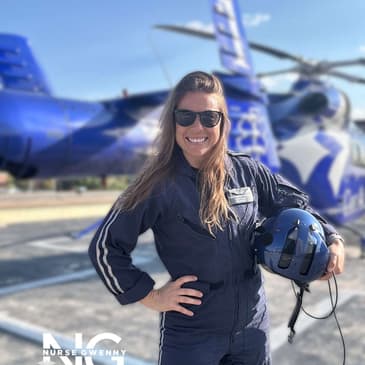
Gwenny Winkler, or Nurse Gwenny, built her career in some of the most extreme environments in healthcare—from the emergency department to helicopter EMS—where decisions are fast, the stakes are high, and there’s no room for autopilot.
But what makes Gwenny stand out isn’t just her clinical background—it’s how she teaches.
She believes learning should be fun, engaging, and built for real life—not just for passing a test. And she’s known for creating those “aha” moments that flip a switch for her students and bring their curiosity back to life.
Often described as “intense,” Gwenny brings a fast-paced, high-energy style to everything she does—but her real superpower is knowing when to slow down, connect, and treat the human behind the condition.
In 2026, she and her husband, Mr. Nurse Gwenny, launched The Nurse Gwenny Library, a modern continuing education platform designed for today’s learner, with over 100 hours of content that actually sticks.
We talk about what’s broken in healthcare education, how to prepare clinicians for the realities of high-acuity environments, and why curiosity in the form of the question, “But, Why?” might be the most important skill Gwenny is teaching.
I’m grateful for our conversation because I’m certain someone will benefit by hearing Gwenny’s deeply personal story of a
Contact The Conversing Nurse podcast
Instagram: https://www.instagram.com/theconversingnursepodcast/
Website: https://theconversingnursepodcast.com
Your review is so important to this Indie podcaster! You can leave one here! https://theconversingnursepodcast.com/leave-me-a-review
Would you like to be a guest on my podcast? Pitch me! https://theconversingnursepodcast.com/intake-form
Check out my guests' book recommendations! https://bookshop.org/shop/theconversingnursepodcast
I've partnered with RNegade.pro! You can earn CE's just by listening to my podcast episodes! Check out my CE library here: https://rnegade.thinkific.com/collections/conversing-nurse-podcast
Thanks for listening!
[00:00] Michelle: Hey, before we jump into today's episode, I want to give you a quick heads up.
[00:05] This conversation includes a personal story about an attempted suicide and some mental health struggles.
[00:13] If that's something that feels heavy or triggering for you right now, it's completely okay to skip this episode or come back to it another time.
[00:21] Take care of yourself first and if you're listening and finding that this brings up anything for you,
[00:28] just know you are not alone.
[00:30] You can call or text the 988 Suicide and Crisis lifeline anytime or reach out to someone you trust.
[00:39] Support is there and you deserve it.
[00:43] Today's guest is the kind of educator you don't forget.
[00:48] Gwenny Winkler, or Nurse Gwenny built her career in some of the most extreme environments in healthcare.
[00:55] From the emergency department to helicopter EMS
[00:58] where decisions are fast, the stakes are high,
[01:02] and there's no room for autopilot.
[01:05] But what makes Gwenny stand out isn't just her clinical background,
[01:09] it's how she teaches.
[01:11] She believes learning should be fun, engaging and built for real life,
[01:15] not just for passing a test.
[01:18] And she's known for creating those moments that flip a switch for her students and bring their curiosity back to life.
[01:25] Often described as intense,
[01:28] Gwenny brings a fast-paced, high-energy style to everything she does, but her real superpower is knowing when to slow down, connect and treat the human behind the condition.
[01:41] In 2026, she and her husband, Mr. Nurse Gwenny,
[01:46] launched the Nurse Gwenny Library,
[01:48] a modern continuing education platform designed for today's learner. With over 100 hours of content that actually sticks.
[01:57] We talk about what's broken in healthcare education,
[02:00] how to prepare clinicians for the realities of high-acuity environments and why curiosity in the form of the question, "but why?"
[02:10] Might be the most important skill Gwenny is teaching.
[02:15] I'm grateful for our conversation because I'm certain someone will benefit by hearing Gwenny's deeply personal story of a dark time in her life and how she overcame it by doing the next right thing. In the five-minute snippet: Hallmark,
[02:33] Step aside.
[02:35] Here is Gwenny Winkler.
[02:51] Well, good morning Gwenny. Welcome to the podcast.
[02:54] Gwenny: Thank you so much for having me. It's a joy to be here.
[02:57] Michelle: I am so excited that you're here as well.
[03:00] We were introduced by your friend and mine, DD Finder,
[03:05] nurse and author.
[03:07] And you are also an author and a nurse and we'll talk about your book in a little bit.
[03:12] But, oh, and you have a part in DD's second book, Two Minutes Out.
[03:19] That was so fun to start.
[03:20] Gwenny: Really?
[03:21] Michelle: Yep.
[03:21] Gwenny: I didn't even know about that. You'll have to tell me.
[03:24] Michelle: Yeah, it's towards the end, and it's a very happy ending.
[03:29] But, yes, DD introduced us, and I actually first became aware of Nurse Gwenny and all of your awesomeness on Sam Brawley's podcast, the 911 Nonsense Podcast.
[03:43] That was back in January of 2025, so over a year ago.
[03:47] You were excellent on there. Loved it.
[03:49] Gwenny: Thank you. She is such a wonderful podcast host. I've been on,
[03:55] oh, I don't know, maybe a dozen or so podcasts, and she is, hands down, my favorite host. Like, I did not expect to finish that. Absolutely cackling at some points and crying at others.
[04:05] She's got a knack for that. It really is a gift.
[04:09] Michelle: She really does. And I know that, I, as a listener to that episode,
[04:14] I was laughing and crying and cackling along with both of you, and I know many listeners were doing that,
[04:22] but she was so sweet because she asked me, she was so excited to talk to you,
[04:27] and she asked me before the interview, do you have a question that you want to ask Gwenny?
[04:34] And I said,
[04:35] Gwenny: I know what question this is gonna be. Yeah, I remember it. Is this, like, what happens?
[04:41] Michelle: Yep.
[04:41] Gwenny: When you have to go to the bathroom.
[04:43] Michelle: Yep, yep.
[04:44] Yeah. And you guys answered that so well.
[04:48] So thank you for that and I'm gonna put that episode in the show notes because I think people need to hear that episode. It was so powerful in so many ways.
[04:58] It was so filled with so much humanity and compassion and just humor, and I just absolutely loved it.
[05:09] So, yeah, definitely.
[05:10] If you guys haven't heard Gwenny on that podcast, go back and listen.
[05:15] But, man, I'm just so excited that, that you're here today.
[05:19] So let's just get started.
[05:21] Gwenny, you've worked in the ED,
[05:24] in helicopter EMS, and now education.
[05:28] What originally pulled you into this kind of high-intensity nursing?
[05:34] Gwenny: Yeah, sure. Good question. So I have wanted to be a nurse since I was a preschooler. My mom will tell the story that when I was 4 years old and at the pediatrician's office getting my kindergarten shots,
[05:47] that the nurse gave me all of my, you know, vaccines. I don't know how much it was, how many shots. It was back in 1989, I now know that when I took my kids to get their kindergarten shots, it seemed like it was like a hundred of them.
[05:59] But I was pretty pissed off at that nurse.
[06:01] And out of spite, I was like, someday I'm gonna grow up and become a nurse so I can give somebody else shots.
[06:08] I don't remember this. My mom tells the story, and she does have a flair for maybe exaggerating and dramatizing things for theatric effects. So that might have been part of it.
[06:16] But I do remember being in second grade and we had this little book in my school library. Went to a very small rural school in southern Illinois.
[06:25] My graduating senior class had 24 people in it. I mean, just like a really small school. But there was a book on how to become a nurse.
[06:32] And if you go back and look at that book, if they were to still have it. And that was before the days of barcode checkouts, right? It was that little index card that sat in the envelope in the front.
[06:41] If you look at it, it would say, Gwen Stokes. Gwen Stokes, Gwen Stokes, Gwen Stokes. Because I checked it out just back to back to back. And I always read it and I loved it.
[06:49] Well, nursing had kind of always been on my mind. I got to high school. You know, your mind changes every day by the time you're a sophomore.
[06:56] And I was a pole vaulter in high school. I got a full ride scholarship to a university that didn't have a nursing program.
[07:04] They had pre-med. And so I was like, well, I'll just go be a doctor instead of a nurse. No big deal. I finished my first year of pre-med, and I was like, this sucks.
[07:12] And I don't want to do it for like 12 years. You know, for undergrad, med school, residency, all of that. I don't want to do that. So no big deal.
[07:19] I'll just. I'll go psychology and choose the soft sciences. Like, that's still very adjacent to nursing, still helping people.
[07:26] So got a bachelor's degree in psychology. And as it turns out, there's absolutely nothing you can do with a bachelor's degree in psychology. You have to go get a master's.
[07:33] I did some social work for a year right after graduation.
[07:36] That was not for me. My hat is off to any social worker out there, particularly those who have to work with at risk children or abused children. I was putting children in foster care, and it was so incredibly painful.
[07:51] Like, it just. It wasn't for me. I could not imagine putting my own children through the situations that I was forced to put some of these other children through. And so I thought, I gotta figure something out.
[08:00] This isn't for me. I got married really young, started having children like a year and a half after I got married.
[08:06] Had my own business as a designer and seamstress. Cause I had grown up in 4H learning how to sew and things like that.
[08:11] And nursing was just kind of always like a tap on my shoulder or a voice in the back of my mind. And I thought, that's crazy.
[08:18] My first husband, we were married for 15 years. He was a pastor, so we didn't have two nickels to rub together. There was no chance I could afford going back to school.
[08:26] And after he finished his master's degree,
[08:28] I thought, I gotta do it. I can't silence this voice in my mind that tells me like, I, I gotta be a nurse.
[08:34] For me, it wasn't just a job, it was a calling.
[08:37] And so I went through an accelerated nursing program. If you're unfamiliar, it's like four years of nursing school cramped into 15 months. It's awful. It's hell on earth. It's like riding a bicycle.
[08:46] And the bicycle is on fire, and also the street is on fire, and also your hair is on fire.
[08:50] But I was very grateful that I got to get it over with quickly. I only had two of my kids at the time. They were young toddlers. And so that was pretty rough.
[08:58] Working nights on a critical care tele floor and then going to school during the day.
[09:02] That sucked. But it allowed me to have a career that I absolutely love. I love being a nurse.
[09:08] So I started out in the emergency department right out of nursing school. Moved to Kansas City a year later and started working at a level one trauma center. And just loved the adrenaline.
[09:17] I loved that every day was something different. You know, I might work fast track and have a whole bunch of low acuity patients.
[09:25] And that allows you to have kind of a lighter spirit with your patients, the ones that are there for a twisted ankle, sore throat, sutures, things like that.
[09:32] Whereas other days you might have super sick patients and you're providing critical care for really, really sick patients or holding ICU patients. So it's a variety. It's perfect for somebody who may have some ADHD tendencies and like to move on.
[09:46] But it's really rough working at the hospital that I was working at at the time. It's a level one trauma center safety net urban hospital.
[09:54] A lot of patients that,
[09:56] you know, used a lot of abusive behaviors. It was routine that we were getting assaulted and so after three years of that, I was like, I love the work. I don't love the culture here,
[10:06] the lack of safety. I gotta find something else.
[10:10] And anytime I would see a helicopter come into our hospital, it just like lit a fire within me. I wanna do that. I gotta figure that out. So I switched over to flight.
[10:20] I stayed PRN in the ER. I'm still PRN in the ER because I can never give up my first love of the emergency department.
[10:27] But yeah, you're right, it is a high adrenaline environment. But it's also more than just being like, cool, sexy, fun helicopter.
[10:34] It is a cognitive puzzle that keeps me challenged. That no flight,
[10:41] I shouldn't say no, very few flights go exactly like the book says it's gonna go. You know, if it's a stroke patient, it's,
[10:50] there's not a whole lot we can do with it. If it's a severe one, we might have to manage the airway. But for a lot of our patients who present with like, you know, a simple stroke patient, we're just flying them and getting them to the CT really quickly,
[11:01] starting their line, getting a glucose, performing a neuro assessment. You know, those are pretty easy. But the rest of our flights, no two are the same and not a single one of them goes just like the textbooks say they're going to go.
[11:15] You might have like,
[11:17] I had a flight shift a couple of days ago and there was a patient with a workplace exposure. I don't want to give too many details because it is very specific.
[11:25] I don't want anybody to find it in the news or what have you,
[11:29] but it was one that I was like, nobody's ever taught me to do for this particular exposure. I have no idea how dangerous this is.
[11:36] And so that's adding in an element when we get there of, yes, take care of this critically injured patient, but also be thinking about, I'm going to put this patient and my partner and myself into a very small aircraft and am I going to fumigate my pilot?
[11:51] Like, how do I decon this?
[11:52] You know, and it's so much fun. And it's a cognitive puzzle that I have to figure out all the time. And I really enjoy that aspect of flight nursing.
[12:01] Michelle: I can see how much it lights you up. Yeah, just, just watching you talk about that.
[12:07] And, man, I,
[12:10] longtime NICU nurse, we were a community NICU and so we had a tertiary center about 45 minutes away by ground and about, I think, maybe 15 or 12 minutes by air.
[12:26] And so those Flight nurses would come in to pick up our very extremely sick or premature babies,
[12:33] and they would walk in in their flight suits and it's like angels singing. And they always look so amazing. And we were just like, wow, you know, in awe.
[12:46] Unlike you. I never said, like, wow, I want to do that. Probably because I am claustrophobic and I couldn't imagine being in the back of a little tiny helicopter.
[12:58] And then there's the whole thing about, you know, what if you gotta go?
[13:01] But, man, just huge, huge respect for what you guys do.
[13:07] Gwenny, was there a specific moment when you realized, I love teaching as much as I love practicing?
[13:16] Gwenny: Oh, man,
[13:17] like hundreds, if not thousands of moments like that. I mean, every time I'm in the classroom with students,
[13:24] it fills me with energy.
[13:26] I know the listeners can't see it right now, but I'm in a recording studio that my husband built for me so that I could film long-form content. Occasionally, I'll do some short-form videos down here, but mostly I use this for my long-form content.
[13:39] And I enjoy doing that. I enjoy creating content and putting it out into the world for students to learn from. But I really love being in the classroom feeling the energy from the students because it's not just unidirectional.
[13:54] It's not just me teaching them. It's also an opportunity for me to learn from the students. Because as I travel all over the nation to speak at conferences or teachers for different agencies,
[14:05] I learned things that are kind of regionally specific. You know, medicine is largely the same everywhere you go. But even if it's something as silly as what they call something, you know, I did a video about doing a walk around, around the aircraft yesterday, and somebody commented, oh, we call it a pre-fly.
[14:21] You know, so just nomenclature for things or practices or different patient populations. Like, I don't treat rattlesnake bites in Kansas City,
[14:31] and I go to other places of the country and they might not know what it's like to try to treat, you know, the Amish population if they live in a part of the country.
[14:39] So it's just learning the experience. I don't treat altitude injuries here in Kansas City. So it's just learning things like that or learning little life hacks. I was teaching out in Crest Butte, Colorado a couple of years ago, and a medic taught me, I don't know if this ever happens in the NICU where you have experience,
[14:54] but in the transport environment,
[14:56] our vent circuit comes disconnected from the ET tube, Oh, my goodness, so often, because we're either loading them in the helicopter and then pulling them out and then moving to this cot.
[15:05] It's not uncommon for that to accidentally pop off.
[15:08] And sometimes even the ET tube adapter will pop out of the ET tube. And a firefighter showed me that if you just flick up that ET tube adapter with an alcohol swab before and put it in there while it's still wet,
[15:20] as that alcohol evaporates, it just glues those together and so you don't have a pop apart from your circuits. So just like little tricks like that. But what really fills me with energy too, is seeing it click for students.
[15:33] Like, there is just no better compliment for me.
[15:36] When a student says, like, I've been a paramedic for 20 years and I've always known what you taught me, but I didn't understand it, and now I fully comprehend the concept and I'm like, ugh,
[15:50] who needs illicit drugs when you can have a compliment like that? Right? Oh, my gosh, it just feels so good.
[15:57] Or I do a little bit of coaching, too, with some coaching clients, like people who are trying to get into a flight job or people who maybe are struggling to pass their CFRN or something, and just working one on one with those students, and they're struggling and struggling and struggling.
[16:10] And then there's a light bulb moment where it clicks for them and they go beyond just memorizing the answers that you have to know for your nclex, your CFRN or whatever,
[16:20] and actually understanding the process of the pathology of the interventions.
[16:26] Oh, that just fills my heart with joy to see it click for people. Because, like, we were talking about a few minutes ago, like, I had this calling within me to be a nurse that I tried to silence for 10 years,
[16:40] and finally I gave into it and it was super fulfilling. And I want to help other people be able to reach their calling, whether it's to be a flight nurse or,
[16:49] you know, whatever their goals are. I love helping people find the power within themselves to reach those goals.
[16:56] Michelle: That's clearly evident.
[16:58] And I absolutely love that as a teacher, you also consider yourself a student.
[17:04] I think those are the best teachers that say, you know, these people that I'm teaching, I can learn from them.
[17:12] And that, I think, that could never,
[17:16] send you in the wrong direction. That's amazing.
[17:19] Was there a patient or an experience that fundamentally changed how you show up as a nurse?
[17:28] Gwenny: Yeah,
[17:29] yeah,
[17:30] the patient was me.
[17:32] Gosh, I don't want to dig too deep into this story, I know you're a little bit familiar with it being that you listened to the episode I did with Sam Brawley.
[17:39] I don't always speak very publicly about this, but back in 2020, when everybody's life was in shambles, mine was in extra shambles. I was going through a divorce.
[17:50] I was just lost. It was almost like a crisis of identity. I don't know,
[17:56] a crisis of faith, trying to figure out who on earth I was.
[18:00] And I was struggling at work, at the base that I was at at the time. It was super toxic.
[18:08] I know that word kind of gets used a lot, but it really, truly was not a healthy work environment.
[18:15] It got to the point where, like, I had to file criminal charges and get an order of protection against a coworker.
[18:21] It just was really yucky. So I was struggling at work. I was going through a divorce at home. I was working routinely a hundred hours a week to avoid going home.
[18:29] And it just, everything sucked. And it came to the point where it wasn't that I wanted to die, it's that I just couldn't bear to be alive any longer. I could not keep doing the difficult things, and I gave into that, and I attempted to take my own life.
[18:46] And someone who I was really close to at the time knew that I was struggling and couldn't get ahold of me. And it was really unusual for me to not have my phone 3 inches from my face at all times.
[18:57] And he took it upon himself to come and find me. And he did find me in time.
[19:02] And I don't remember a whole lot from that day. I remember getting to the hospital.
[19:07] I overdosed on Benadryl.
[19:10] Absolutely awful.
[19:11] I was sick for, like, three weeks. But that's beside the point. What I do remember is, is maybe my first 20 to 30 minutes at the hospital.
[19:19] And I remember my nurse being so mean to me. He was so mean and, like, unnecessarily mean. I wasn't combative. Like, I didn't want to hurt anybody else. I just didn't have any fight left in me.
[19:32] And I remember feeling in that moment like I'm such a failure that I didn't even get this right. Like, I just needed a couple more hours at home in bed, and I would be gone right now.
[19:43] I couldn't even get this right. And I was so mad at myself.
[19:47] And then this nurse was being so mean to me. I have a gigantic AC,
[19:52] gigantic vein over here in my left AC.
[19:54] And listen, I can put IVs in people. I can put a chest tube in, like, I can do all the things, but when it comes time to be on the receiving end of it, I'm such a huge wimp.
[20:03] And when he was trying to start a line on me, I said, you don't even have to use a tourniquet. Like, I have a huge AC over here on the left side.
[20:10] I was, like, trying to help him,
[20:12] And he slapped me, Michelle
[20:15] He took his hand up and he slapped my hand away when I was pointing to my AC and he was trying to get me to give him a urine sample while I overdosed on Benadryl.
[20:24] You can't pee when you're in an anticholinergic overdose. Like,
[20:28] you can't. And I remember trying so hard, and I remember thinking, like, I'm gonna fall over. Cause I was in a Benadryl overdose. Like, I couldn't walk straight. My everything looked like I was in, like, circus house of mirrors.
[20:39] Like, it looked all wonky and stuff. And I was trying so hard to comply with what he wanted because I didn't understand why he was being so mean. And he shook a Foley in my face and said, if you don't pee for me, I'm gonna shove this in you and get that pee.
[20:52] And he was so, so mean.
[20:54] And I don't remember anything beyond him shaking the Foley in my face from that day.
[21:00] But I remember how badly that experience just exacerbated the acute pain that I was already in.
[21:07] Fast forward,
[21:08] I don't know, two years maybe.
[21:10] I had been putting in the hard work to kind of put my life back together and find healing. And I worked with an amazing therapist for over a year to heal some of my lifelong broken behavioral patterns and thinking constructs in my mind.
[21:25] And I was traveling. This was during COVID I was on a nursing contract working in an emergency department.
[21:30] And I met another nurse that we just clicked right away.
[21:35] And Molly said, have we ever worked a contract before? You look so familiar. And I was like, I don't think so. Like, you don't look familiar to me. Like, here's where I've worked, blah, blah.
[21:44] We couldn't figure out a way that our paths had crossed.
[21:47] And as we began talking, we just chit chatting. And at the time I had
[21:53] With the money that I had made during COVID I bought some ground. I built myself a dream house. Like, that was my healing project.
[21:59] And I was kind of loving life. I was learning to love life for the first time in, like 36, 37 years.
[22:06] And I came back on shift the next night, and I was working with Molly again, and she was acting a little bit weird, and I didn't think anything of it.
[22:15] And after we had kind of, you know, gotten the start of our shift and we were settled in, she said, can we talk? And I was like, yeah.
[22:22] And she said,
[22:23] it hit me. I sat up in the middle of the night from a dead sleep, and I realized why you look familiar. And I said, okay. And I couldn't figure out where on earth she was going about it.
[22:32] And she said, I was there that day.
[22:34] I said,
[22:35] what day, Molly? I don't know what you're talking about.
[22:38] And she starts to cry.
[22:39] And she said, the day you tried to take your life.
[22:42] And I was like, what?
[22:44] And she said, I was there that day. She said, I was a float nurse for that hospital system.
[22:49] She just so happened to be put at that particular location that day. She just so happened to overhear that nurse being super mean to me. And she said,
[22:58] I heard just enough of your story that something about it summoned me to your bedside. And she said, I held your hand. She said you sobbed. You kept saying,
[23:08] like, how broken you were and how you just wanted to do your best for your kids and that your life was in shambles, and you didn't know how you were gonna put it back together.
[23:19] And she said, you cried so hard, and I held your hand, and I told you how sorry I was,
[23:23] and I just sat with you. She said, my rooms weren't that busy. And she said, I sat with you for several hours.
[23:29] And I have no memory of her that day. I don't remember her.
[23:33] And of course, I burst into tears as she's telling me this, and we're sobbing and we're hugging, and I thanked her.
[23:40] I thanked her. Because even though I don't remember Molly from that day,
[23:46] I know that based on the Molly that I know now, I know what a loving, kind, caring spirit she has. And I know that in that moment when I was at my worst, she brought me comfort.
[23:59] And so Molly and I are still friends. We haven't seen each other in probably a year or so. We meet up in the middle of where she lives and where I live for lunch maybe once or twice a year.
[24:08] But Molly showing up for me on that day changed me. It changed who I am.
[24:15] You know, I've always tried to be really compassionate to people who show up in the emergency department in a crisis.
[24:22] Right? I know that the painting with a wide brush of just saying psych patients. Like, I don't like that terminology because I feel like it dumps everybody into one singular bucket.
[24:33] And it might be, you know, drug abuse or intoxication or,
[24:38] you know, suicidal ideations or somebody who said they had chest pain when they were getting arrested. All of those patients tend to get dumped into one bucket, and they all get treated the same, and it tends to be.
[24:48] They get treated really shitty. And I absolutely, I've always hated that.
[24:52] But after my experience,
[24:54] it changed me, even on a deeper level.
[24:57] And the first memory that I have back from my time of being unresponsive from my Benadryl overdose is I do remember once I was eventually transferred to a psychiatric facility.
[25:10] A nurse came in and he introduced himself, oh, shit, I'm gonna cry again.
[25:15] He said he had a computer on wheels,
[25:19] and he scooted it to the side and he said, hi, Gwenny. My name is Cody, and I'm so glad you're alive.
[25:27] Michelle: Wow.
[25:28] Gwenny: And I remember in that moment being like, well, it's good that one of us is, you know, is what I was thinking. But I was like,
[25:35] I don't even know this guy.
[25:37] I'm not glad I'm alive.
[25:39] Why the hell is he glad that I'm alive?
[25:43] Gosh dang it, Michelle, now you've got me crying, too. You and Sam both. I'm not coming on either of your podcasts again.
[25:50] But, like, how Molly showed up for me in that day,
[25:54] and then I found out about it two years later when it came full circle,
[25:58] and then me remembering Cody saying that to me that night.
[26:01] I say that to every single patient that I take care of that is in a crisis like that, that feels like they're at the end of their rope, is I tell them, I'm so glad that you're alive.
[26:13] Because sometimes the patients aren't glad that they're alive.
[26:17] And my own encounter as a patient changed me who I am. I don't know how else to say it other than I know what it feels like to be on the other side of the paper towel gown that those patients are required to wear.
[26:37] Michelle: Wow, Gwenny,
[26:39] thank you for sharing that. That was very emotional.
[26:44] I think probably a lot of people could connect with you on that level.
[26:49] And I also think that that's the ultimate way that you're paying it forward by being that real with your patients,
[26:58] because you've lived it. You know what it feels like. You know how dark it was,
[27:03] and you know exactly what kind of place they're in.
[27:07] And being able to share just that sentence with them and that feeling, and whether it's holding their hand or just looking into their eyes and saying, I'm glad that you're alive,
[27:18] I'm sure it's having the same impact on those that
[27:22] That that nurse had on you.
[27:24] And that's really a beautiful way to pay it forward.
[27:28] Gwenny: I hope so.
[27:29] Michelle: Yeah. Wow.
[27:30] Wow. Where. How do we move on from that?
[27:35] Gwenny: Well, going back to how I moved on from that was, not too much longer after that,
[27:44] a movie,
[27:45] Frozen 2, came out. I don't know if you have grandbabies that you watch the Frozen movies with.
[27:52] Okay, listen, the music was better in Frozen 1. The story is better in Frozen 2. Okay, that's. Yeah.
[27:58] I took my girls to see Frozen 2 kind of in the midst of when my life was in shambles and.
[28:04] Sorry, the spoiler alert coming up. If you haven't seen Frozen 2, pause here, go watch it, and then come back.
[28:10] Olaf the Snowman is a figure of Elsa's magic. Like, Olaf can't exist outside of Elsa's magic.
[28:18] There's a time in Frozen 2 where Anna and Elsa are separated, and Olaf the Snowman is with Anna. She's the one that doesn't have magical powers. And Olaf starts to turn to flurries in front of her eyes.
[28:30] And Anna knows that that means that something has happened to Elsa because her magic is disappearing,
[28:37] because Olaf is disappearing. And Anna is totally overcome with grief in that moment, and she starts to collapse,
[28:45] and she starts singing to herself,
[28:47] like, what am I gonna do? Like, I can't carry on. And she said, I just have to do the next right thing.
[28:55] And listen, Michelle, I was hard crying,
[28:57] snot, bubbles, cry hiccups, the whole nine yards, as discreetly as I could in this movie theater,
[29:04] because I was like, that's it. That's it. That is my ticket out of feeling this miserable is I just need to do the next right thing. Because the thought of getting better,
[29:16] of getting through that was too much. It was too much, right? It was like somebody saying, hey, you gotta eat this whole elephant. Well, how do you do it?
[29:24] One bite at a time.
[29:26] It just seemed like an insurmountable task that I was faced with.
[29:31] And every single day was a fight to just keep going versus not give in to the desire to like, I just, I don't have any fight left in me.
[29:40] And I still use that concept today. As a matter of fact, I came out with a line of T shirts recently, and one of them says just do the next right thing.
[29:47] Because I have found that that mantra is so applicable in many settings, Whether it's I'm struggling through a season of, you know,
[29:57] not not being my best, and it's just really hard to keep carrying on. Well, I don't know how to get through this season, but I do know how to do the next right thing.
[30:05] And so the next right thing might be meeting my body's physiologic need for good food or sleep.
[30:13] Whatever it is, maybe the next right step is going for a walk outside and getting a little bit of sunshine. Before we started recording, you were talking about you spent this morning watching the sunrise and reading a book.
[30:23] Like, sometimes that's the next right thing.
[30:25] Sometimes the next right thing is reaching out to your person, whoever it is, and saying, like, hey, I'm having a hard day. Can you just, like, hug me? Or can we just watch our favorite movie?
[30:36] Just do the next right thing. And eventually, if you put enough next right things together,
[30:43] you have summited the seemingly insurmountable task.
[30:47] And so not only does it work for our personal lives, I have found that it works clinically.
[30:51] If I have a really tough case, I get to the bedside of a patient who is on a balloon pump, and they have transvenous pacing, and they're on 11 drips, and they're intubated, and they, you know, I've got all of these things going on.
[31:06] I look at that patient, and I'm like, I don't even know where to begin to get this patient moved over to all of my equipment and loaded into a helicopter.
[31:15] This seems like an insurmountable task.
[31:17] So I just do the next right thing. Well, the first right thing is for me to move all of those drips over to my pumps. And then the next right thing is for me to move his swan gan's line over to my monitor.
[31:30] And the next right thing is to check my settings on the transvenous pacer and make sure that I know what it's at in case something goes haywire during flight. And then the next right thing is to move him over to our cot.
[31:41] And then the next right thing is to move him over to our ventilator. And then the next right thing is to package him and figure out a way to where we have access to all of his lines and then move him to the helicopter.
[31:51] And so what seemed insurmountable when I walked into that ICU room,
[31:56] now I have done it. I have done it by just doing the next right thing.
[32:01] And so if there's anybody who's listening to this podcast and you had to pull over your car because you're crying so hard, you have snot everywhere, and you're struggling, you're where I was back in 2020.
[32:13] First of all, I want you to know that I'm really glad that you're alive.
[32:17] I want you to know that you matter.
[32:19] You probably matter to way more people than you have any idea.
[32:23] But the thought of you getting through this, whatever your struggle is, whether it's personally or you're struggling through school, whatever your struggle is,
[32:34] I don't want you to think of it as one huge task that you have to overcome.
[32:39] I want you to just do the next right thing.
[32:42] So maybe the next right thing is you haven't slept in 48 hours because you're working nights and you're going to school during the day.
[32:48] The next right thing is for you to go home and sleep for a few hours. Or the next right thing is for you to make an appointment with your doctor and talk about some of your symptoms.
[32:55] Or maybe the next right thing is feeding your body something nutritious, right?
[33:00] An Arby's roast beef and cheddar and curly fries might be delicious, but they're not the right choice for your body.
[33:06] Maybe an occasional.
[33:09] But just doing the next right thing. Michelle.
[33:12] When you're in over your head, whether it's clinically or personally or whatever it is,
[33:18] just do the next right thing. And I promise, if you just keep doing it, you'll get there.
[33:23] You'll make it.
[33:24] Michelle: That is a promise that you can actually make, and that can be kept.
[33:29] You know, my listeners know that I recently shared a health scare that I had over the summer. I took a supplement that I wasn't supposed to take, and I had a reaction to it, and basically it sent my system into overdrive.
[33:46] And my cortisol level is super high. And I started having a lot of neurological problems and just huge, huge amounts of anxiety and subsequently became dependent on benzodiazepines.
[34:03] And so after about two weeks of having constant suicidal ideation,
[34:12] I said the next right thing for me to do is to stop these benzos.
[34:19] And I did it the wrong way.
[34:23] I just went cold turkey off of them.
[34:26]Gwenny: Oh, goodness.
[34:27] Michelle: Yeah,
[34:28] so it definitely wasn't fun. The next three days were like complete hell.
[34:35] And the other thing is, Gwenny, I didn't tell anybody about the suicidal ideation.
[34:40] I was in a place of sleep deprivation. Like, I hadn't slept more than two hours a night for probably over a month.
[34:51] And you know, I was taking the benzos to fall asleep, but then I would wake up two hours later, and if I wanted to sleep the rest of the night, I had to take them again.
[35:01] But then I was having rebound anxiety and I just had gotten in this loop and I couldn't get out.
[35:10] But it's been four months, and surprisingly, I'm still having some trouble,
[35:17] you know, with the withdrawals. But everything that I'm reading says I'm within that six month time frame.
[35:23] I thought, you know, once I got over the initial couple of weeks of,
[35:28] muscle rigidity and,
[35:30] all of those symptoms, that,
[35:32] I would be good.
[35:34] My sister, longtime ICU nurse, longtime flight nurse,
[35:39] said, what the fuck?
[35:42] Gwenny: What the fuck?
[35:43] Michelle: Are you trying to get yourself admitted to an ICU?
[35:47] Are you trying to go into, you know,
[35:49] seizure mode? Like, what are you doing? And,
[35:53] we're very close. And I just said I, I had to get off of them. I couldn't take them for one more day. I knew that they were destroying me.
[36:01] But, man, the one right thing, the next right thing for me, it was like, you know, one day at a time.
[36:09] The process of going through that seemed insurmountable, like you said.
[36:14] And the only control I had over was, like, this day that I was living,
[36:20] I could beat myself up about the past or I could look too far into the future, which was overwhelming.
[36:27] But I adopted a scripture that I had adopted when I had breast cancer. And it was the same thing, like,
[36:37] looking at six months of chemotherapy. Like, how am I gonna get through this?
[36:41] This is the day the Lord has made. I will rejoice and be glad in it.
[36:46] We have a choice of what kind of attitude we're gonna have,
[36:51] and I just took that attitude like, I'm just gonna think about this day.
[36:57] I can't change the past.
[36:59] I know. You know, I was upset about getting breast cancer, and I wanted to know why. And,
[37:05] well, maybe, Michelle, because the two years before, you were working,
[37:09] 90 hours a week, and you were not taking care of yourself,
[37:13] and this was your wake up call. I couldn't change that.
[37:17] And I certainly didn't know what the future held, but I knew that this day I could, in my power, do the best that I could for this day.
[37:27] And it was life saving.
[37:30] And I imagine that
[37:32] Your message to others about just do the next right thing will be life saving for somebody today.
[37:42] Somewhere out there.
[37:44] So thank you so much for sharing that,
[37:46] man.
[37:46] Gwenny: Michelle, thank you for sharing part of your story and I'm so glad that you're still here with us.
[37:51] I'm really glad that you're still fighting against,
[37:54] your body's reaction to you coming off of those benzos. And don't give up, don't give up. You're worth, you're worth all of the fight that it takes.
[38:04] Michelle: Thank you, Gwenny. I plan on being here for a long time and just glad to have gotten to where I am today because, man, when I look back, I go, woo.
[38:15] That was,
[38:16] that was hard.
[38:18] Yeah.
[38:19] I want to talk about your teaching philosophy because you say learning should be fun and I totally 100% agree with that.
[38:28] What is broken about how we traditionally educate nurses and other professionals?
[38:35] Gwenny: Yeah, I think the education style in all of the country, not just within the nursing, nursing industry,
[38:44] has been broken for a long time. I know that, like my little brother was just constantly in trouble growing up in school because they wanted you to sit in a chair and listen to the teacher, wa, wa, wa, wa wa wa, at the front of the classroom.
[38:58] And that just, that just doesn't work for so many people.
[39:02] And my mom will tell the story also that when my brother was in third grade, his teacher told my mom, he's never gonna amount to anything. He's only ever gonna be a failure.
[39:11] Like, you might as well just give up now.
[39:14] And my mom left that parent teacher conference feeling so broken and she fought so hard for my little brother. And again, we grew up in a small rural community, so there weren't many resources for him,
[39:25] but it was just because that wasn't his learning style. He was a high energy little boy. And now he is a full time fire paramedic and serves his community.
[39:35] He also runs his own construction business. You know how every firefighter has a business on the side runs that. He and his wife have been married for almost 20 years.
[39:45] They have two beautiful girls. And a couple of years ago, my brother was given an award by the governor of the state where he lives in because when he was off duty, there was a terrible car accident that happened right in front of him.
[39:56] And one guy's vehicle was totally engulfed in flames. And my little brother, with none of his firefighting equipment, crawled up on the hood of this vehicle, smashed out the windshield, grabbed the unconscious driver from the vehicle, pulled him out and maintained an airway,
[40:11] just holding with a jaw thrust until somebody else got there, till EMS got there and took over and the guy lived.
[40:19] And my mom clipped out the newspaper clipping of my brother getting this award from the governor and sent it to his old third grade teacher and said it echoed in my mind for years that you told me he would never amount to anything.
[40:33] And look at him now. Like, my little brother is one of my closest friends. My "But Why?" book is dedicated to him.
[40:39] He's just such a cool dude. But he just didn't learn the way that our school system wanted us to learn. And in nursing school, that's how I was brought through everything.
[40:49] Like, read the textbook and then come to class and we will lecture you and, like, snore like it. I graduated nursing school prepared to sit for my nclex,
[41:00] passed it without any problems.
[41:02] But I still. There was a lot that I didn't understand. And the same thing happened when I got into flight nursing. Like, I studied my butt off to be able to pass my CFRN on my first attempt, and I memorized all the answers, but I didn't understand it.
[41:12] And so I went on this journey of, like,
[41:14] diving deep. I was ordering med school textbooks and listening to podcasts and reading everything I could get my hands on, because I wasn't okay just knowing the answers. I wanted to actually understand this.
[41:25] And once things would click for me, I would think to myself, gosh, I wish somebody would have taught it to me this way.
[41:30] And it just so happened, right about that time in my life,
[41:33] I started working for a ground EMS service as well, helping to launch their critical care program. And they said, can you help teach it? I'm like, yeah, what's the curriculum?
[41:41] It doesn't exist. I was like, okay, no worries. I can do this. So I wrote the curriculum, I started teaching the classes, and I noticed that, like, it was clicking for so many people.
[41:50] They're like, oh, my gosh, that totally makes sense.
[41:53] And so it just kind of snowballed from there. And I have found every time I go to teach a class in person, you know, and they have the tables and the chairs set up, I'm like, I don't expect a single one of you to sit in that chair for the next two days or however long we're going to be there,
[42:07] I cannot sit in a chair for longer than a half an hour. Right? I was at a conference yesterday, and I had to stay at the back of the room because sometimes I need to sit down, sometimes I need to stand up, I need to do squats, I need to move around.
[42:19] Like, I don't hold still very well. And that's also how I teach. I tell people, like, if you need to get up and like move your body around, like we're in healthcare, we as nurses, we in EMS, we don't sit still, we're constantly on the go.
[42:33] And so to ask us to sit in a chair and be quiet with a pencil in our hands and to just listen, that's not how our brains work.
[42:41] And so I encourage people like it's a conversation, like if you have a question, like you don't have to raise your hand, just say your question and interact with me.
[42:49] And I don't stand at the front of the room, I walk all the way around the room. Sometimes I'm teaching from the very back of the classroom and sometimes I'm walking through the aisles of chairs and you know, I will say like, go to a student, like, hey, can I put my hands on you?
[43:04] And then I demonstrate something like, okay, here is how heparin acts on your clotting factors versus here is how warfarin works on them. And you know, I'll put em in a headlock for the heparin.
[43:16] So engaging multiple parts of the brain. Because if you look at the literature in the, in this studying of learning,
[43:23] the more parts of the brain that we can engage during instruction, the more likely that learner is to retain that information.
[43:31] So if you're speaking to them, you're engaging audio, if you're also showing them something, whether it's movement from the instructor, instructor or graphics on the screen or something for them to look at, that's another part of the brain.
[43:44] Then if you have your student take notes, that's engaging another part of the brain. If you use humor in it, that unlocks that like exponentially increases the amount of information that they're going to retain.
[43:57] Because you're using yet another part of the brain.
[43:59] If you can get them to speak it back to you, you're engaging yet another part of the brain. If you can get them to put their hands on something, whether that's play with a fidget spinner or some silly putty or something,
[44:11] every layer of brain activity that you can engage while you're learning, it's only going to increase your information retention.
[44:20] And so making it fun,
[44:22] I think is, is my niche teaching style, making learning fun, making it applicable,
[44:27] but also engaging a whole bunch of parts of the brain. Like probably my learners don't realize that I'm trying to brain hack them in doing a lot of this. So you just spilled my secret.
[44:37] You just told everybody what I'm doing to them.
[44:40] But yeah, engaging all the parts of the brain and teaching in an unconventional way. And I just teach the way I learn. And it just so happens that it tends to click with a lot of people.
[44:50] Michelle: Yeah. How refreshing, right? And like, where were you during nursing school?
[44:56] Gwenny: Where was I when I was in nursing school? Why couldn't I teach me then?
[45:00] Michelle: Exactly. No, it's so true.
[45:03] People learn so many different ways.
[45:06] For me, definitely when I need to learn something, like, I'll go to YouTube because I have to see something and if I can do it with my hands, it's even better.
[45:17] Exactly. Everything that you were saying.
[45:19] Gwenny: Yeah.
[45:20] Michelle: Yeah, that's cool.
[45:22] Well,
[45:22] Gwenny, this is not news to you, but you're known for being intense.
[45:27] How has that helped you as an educator?
[45:30] And when has it challenged you?
[45:33] Gwenny: Gosh, when doesn't it challenge me?
[45:36] People ask me a lot, like, where do you get all the ideas for your Tik Tok videos? And I tell them it's intrusive creativity.
[45:44] Like, it keeps me up at night. I'm like, brain, stop it, stop it. We're trying to sleep. And instead I'm like, you know what would be really cool is making a video about different ventilator settings using tiny glasses of Diet Coke.
[45:56] Like, those ideas, they just come to me. But, like,
[45:59] a lot of things about me are intense. My voice, I don't, I try really hard to have an indoor voice. It doesn't always work.
[46:05] I'm, you know, very animated.
[46:08] Yesterday at the conference that I was at, I was teaching people about art line management and we were just doing like seven minute stations. So I had to cram in so much art line education into seven minutes.
[46:18] And at the end of it, somebody was like, you were so animated. That made it really easy for me to pay attention. And I was like, I don't mean to be like,
[46:25] It just happens. So, yeah, I think my intensity is both a blessing and a curse. Sometimes I have to dial it down and other times I just let me be me.
[46:34] I know who I am and how I function best, and it helps me to hold the attention.
[46:38] If I'm talking teaching about the renin angiotensin aldosterone system, some might think that's boring, but challenge accepted. I'm going to make it fun, and in doing so, I'm going to be intense about it.
[46:49] Michelle: Hey, intensity is not a bad thing.
[46:52] I think sometimes we can view it as a challenge for people. Like, I am so like,
[47:00] non intense that when I see a person with your intensity, like, it translates to me. Like, I start feeling that energy and I start getting excited.
[47:13] But if I had to teach that way it would never come across for me that way. I'm.
[47:20] I'm too chill. And, you know, it's like,
[47:24] I think, like, let's just start accepting people for who they are, right? It's
[47:30] still, my style is chill. Your style is intense.
[47:34] They're not bad. They just are. And yes, you know, like, let's stop feeling bad about that.
[47:41] Yeah, I think we have to go.
[47:43] Gwenny: I wanted to challenge you just 30 seconds ago, but I didn't want to interrupt you. That's something, my intensity, it causes me to interrupt, and I have to work so hard not to interrupt you because I just get so excited about what I have to say.
[47:54] You said I'm too chill, and I wanted to say, no, you're not. You're exactly the right level of chill. Because I am somebody who learns a certain way, and so that's how I teach.
[48:04] But not everybody else learns that way. Other people learn differently. And so just like, I have a teaching philosophy that I want to make education fun, that I do make it high intensity, that it's loud, that it's funny, that we're going to make fart jokes,
[48:16] things like that. That's not how everybody learns. Like, my style isn't for everyone, and that's okay. We need teachers with your style. We need some chill teachers out there, because for some people, the intensity is too much.
[48:27] And that's okay. I'm not going to shrink myself to fit into somebody else's expectations.
[48:32] But, like, I'm not going to force them to accept my intensity either. Like,
[48:36] someone might learn differently and they might learn better in a calm, chill environment like you offer.
[48:42] And so the onus is not on the instructor to make sure that the student retains the information that is the student's responsibility to take in that information and integrate it into their brain and retain it.
[48:55] The instructor has some influence over that, but it's ultimately the responsibility of the student. And a student will be so much more successful if they can figure out what type of learner they are and then go seek out education in that style.
[49:09] Right? If somebody says, like, I'm an audio learner, then podcasts are going to be for them all day, every day, Audiobooks, things like that. Whereas if someone is a tactile learner, they need to go to the skills lab.
[49:20] They need to put their hands on these.
[49:22] mannequins or these simulators or what have you. Or they need to go get clinical experience where they can be around patients doing the things. So learn. Knowing what your learning style is and then maximizing your ability to retain information in whatever avenue that your brain requires.
[49:38] Michelle: Do you have a knack for maybe looking at your students and figuring out what their learning style is? Maybe they don't even know what it is.
[49:48] Gwenny: I feel like my job is a little bit akin to, like, a therapist, right? A therapist doesn't tell their clients what they should be doing. The therapist walks alongside the clients to help them figure it out for themselves.
[50:02] And sometimes I have to ask students, like, hey,
[50:05] what's a situation where you felt like something really clicked for you? And helping them to realize.
[50:12] I don't tend to assess students and figure out what their learning styles are. I just let them figure it out for themselves because. And even with patients, right? I'll ask patients like, hey, if they come in in acute pain, I'm like, what medication typically works for you because you know you better than I know you?
[50:26] Or if patients will say, hey, I have a really good vein over here that you can stick. That usually does really well. You know, if I'm going for a big AC and they're like, oh, my gosh, everybody tries that one, and it never works.
[50:38] I believe the patient because they know themselves way better than I know them, and students are the same way. They know their own brains better than I ever could.
[50:48] And sometimes we just have to help them realize that they know themselves.
[50:51] Michelle: Yeah, that's great. That's a great way of putting it.
[50:54] Well, I heard you say on Sam's podcast that you are an enneagram two.
[51:02] And I was like, oh, yeah, I am too.
[51:05] Gwenny: Oh, my God, that's so cool.
[51:08] Yes, a lot of nurses are, because we're the helpers.
[51:11] We're the ones that, like, we get our dopamine hits from helping others.
[51:16] However, when we are not functioning at a place of health, we become very resentful and we get angry when our kindness and selflessness is not reciprocated toward us. And so if people that are listening, if you don't know your enneagram type, look like, just go online and type in free enneagram test.
[51:35] Don't pay for it. There's tons of free ones online.
[51:37] It helped me. I learned my enneagram type back when I was healing back in 20, 20. 21 learned my enneagram type, and it helped me to learn things about myself that I didn't know,
[51:47] and it helped me to recognize red flags within myself so that I didn't have to wait until I was at a point of crisis to say, oh, no, there's something wrong.
[51:55] But I can recognize red flags in my life and be like, ooh, I'm feeling really resentful right now. Have I overextended my own gifts? Have I given something to someone, whether it's my time or my energy or something in expectation for something in return, or was I doing it just because I felt like that's what they needed?
[52:16] And so I have to check myself.
[52:18] So knowing your enneagram type and also my husband learning his enneagram type really helps us to relate to one another,
[52:24] because I am a verbal processor. Like, he tells me something, and I'm gonna need to talk through it, and I'm gonna make a decision right now.
[52:31] And that's not him. He's an enneagram 6. They are the thinkers.
[52:35] And what I have to do with him is give him a little bit of information and let it percolate maybe for a day or two and come back and give him a little bit more information and give him time to process that and collate that, and then come back,
[52:47] like, a few days later and say, hey, remember I kind of told you this thing and told you that thing. Well, we need to make a decision about X, Y, Z.
[52:55] Have you had time to think about that and what do you think?
[52:58] And then he can make a decision there. But if I were to treat him the same way I like to be treated, it would not work, not for a single day.
[53:06] So knowing your own enneagram type helps you to help others interact with you better, Helps you to interact with yourself better.
[53:15] And, yeah, I think. I think everybody should know their enneagram type.
[53:18] Michelle: Oh, man. I agree. It's so fascinating, and you learn so much about yourself,
[53:22] and it can really help you along with, you know, the gift giving and whether it's time or actual gifts. Like, I am so guilty of that.
[53:32] You know,
[53:33] the five. What is it? The five love languages.
[53:36] Gwenny: Love languages.
[53:37] Michelle: Yeah. My number one is, like, gift giving. I love giving gifts and love receiving gifts, but I can go overboard
[53:46] And give too much, too much time, too much, you know, money, whatever it is.
[53:51] So. But yeah, I definitely agree.
[53:52] Really fun to do that.
[53:54] Well, I want to talk about your husband for a second, Mr. Nurse Gwenny.
[53:58] as you refer to him.
[54:01] Gwenny: Yes.
[54:01] Michelle: You guys built this year, the Nurse Gwenny Library. What inspired you and your husband to build that?
[54:11] Gwenny: It was, he is the best supporter I could ever ask for.
[54:16] You know, when he and I first met, we've been married for almost two years now when we first met and the Nurse Gwenny platform was like five minutes old when I met him.
[54:26] And he is a landscaper by trade, so he knows nothing about healthcare. Like you even say the word blood and he's having a near syncopal episode.
[54:34] Um, so he doesn't, he doesn't know anything about healthcare.
[54:38] And he was asking me about this Nurse Gwenny thing and he would just kind of facilitate think and dream sessions for me and say like if, if there were no obstacles, where would you take this thing?
[54:49] And kind of my end goal was to get accreditation to be able to offer CEUs and to create long-form content.
[54:55] But I thought that that was like way far away, right? That was one of those insurmountable tasks that I didn't think I had it in me to do that.
[55:02] And he helped me and encouraged me and we figured it out. We just did the next right thing, we just filled out the next round of paperwork, we just did the next thing to get the trademark, we just did the next thing to, to get the learning platform,
[55:17] we just did the next thing to build the website and eventually we stood up the Nurse Gwenny Library which is a subscription based service that includes everything. Like there are a lot of education companies out there and you have to buy this class and you have to buy that class.
[55:29] And I didn't want it to be complicated. I just wanted it to be one place where you can come and get all of your learning. And so I have CFRN of a critical care transport.
[55:39] So it's good for paramedics and for nurses prep course that's 30 hours long that they can take that prep course. And I've taken all of my short form content, so years worth of, I think it's like 700 short form videos.
[55:51] They're anywhere from one minute to some of them are six or seven minutes and grouped those together and so I have like, you know, EKG bites and it's like 30 videos.
[56:00] I've done all about EKG interpretation and I have one that's like critical care bites and it's a whole bunch of short form critical care and then you can earn CEUs for that.
[56:10] I've gotten accreditation through the Kansas Board of Nursing and I have long form content where I teach all about trauma triads or I just today right before I got on the podcast for finished editing and uploading a video called Trauma on the Farm that I grew up on a farm in southern Illinois and so farm injuries have always been near and dear to me.
[56:28] So I created a whole long-form content just about agricultural related trauma.
[56:33] And so just creating stuff like that in my teaching style because I can't tell you the number of people who've commented on TikTok videos or what have you that said, man, I got more out of this than my health stream.
[56:43] I wish I could get a credit. I could get some CEUs for this. I'm like okay, you can,
[56:47] you can now. So come to the Nurse Gwenny Library. You can find it@nursegwenny.com and it's G W E N N Y.
[56:54] Like it's a weird name. I get it. So come to nursegwenny.com Sign up for the Nurse Gwenny Library. And it's got all of this education. I also invited some of my super smart friends to be part of it.
[57:04] So I've got a full 4 hour ventilator course from Melody Bishop RT.
[57:09] I have some content from Nurse Dose podcast. I have some content from Sarah over at Rapid Response Nurse.
[57:16] Like they are brilliant educators also that have contributed into the Nurse Gwenny Library. And there's so much cool content in there that if you're in nursing school and you're struggling with pathology or pharmacology, come to the Nurse Gwenny Library.
[57:29] I have tons of stuff for you if you want to get to flight. I have content on like here's how to master your interview for flight, here's how to build your resume, here's how to make the best of a ride along day content like that.
[57:41] And then I have monthly sessions where it's just 90 minutes of live Q and A. Like whoever can hop on. Like I just had one last week and a student hopped on and she was the only one on at that point in time and we just sat there and visited and it was so much fun for me to get to chit chat with her.
[57:57] So that's what we're doing in the Nurse Gwenny Library and it's now my full time job, my husband's full time job,
[58:02] we have five kids.
[58:03] I still work on the helicopter, I still work in the ER. So we're busy people but we absolutely love what we're getting to do,
[58:11] Michelle: Yeah, it's again, it's evident.
[58:14] I wish our listeners could see just the light beaming out of your face as you speak about these things.
[58:21] The enthusiasm is so contagious. And,
[58:25] yes, I checked out your library, and it's absolutely full of so many different resources that can help so many people. It's just awesome.
[58:34] Well, I want you to talk about your book, Gwenny, "But Why?"
[58:37] Who is this book for and why did you write it?
[58:40] Gwenny: Yeah, my But Why? book came about because my best friend was a flight paramedic at the time, before I had written this book. And she would call me up when she had a question and she would say, hey, it's in my protocols to give albuterol to a crush injury.
[58:53] But, like, that patient's not in respiratory distress. Why do I have to give them albuterol? And I'm like, well, it's because the hyperkalemia secondary to the rhabdomyolysis secondary to the crush injury.
[59:02] And so I just started a note in my phone of all the things that either I had thought why and I had gone to figure it out, or somebody else had asked me, why is this?
[59:10] And I just have figured it out. So. "But why?" is a book of over 300 practice questions with the correct answers and rationales to prepare people for the cfrn. So the flight nurse exam and the CTRN, which is the transport exam, and then for my paramedics, it covers everything in the FPC and the CCPC.
[59:29] So I wrote that like two and a half years ago. I now have a full course for it. But these are practice questions. If you're someone who learns by doing and you need to do practice questions, this is exactly what you need,
[59:40] because then I break it down and tell you why whatever was the correct answer and help you understand the why so that you're not just memorizing test answers like I did when I took my cfrn, but you're actually understanding these concepts because, look, I want you to pass your exam.
[59:54] I'm cheering for you all the way, but I actually don't care.
[59:56] I want you to take really good care of patients.
[59:59] That is what matters to me. So, yeah, I'm cheering you on. I'm super thrilled for you. Please send me a picture when you pass your CFR. And I'm going to crush the heart button on that.
[01:00:07] But what I really care about is that you understand these concepts so that you can give exceptional care to your patients.
[01:00:14] Michelle: Absolutely love it. Yeah, I love the title and I love that you provide the rationale.
[01:00:20] When I was studying for the RNC-NIC
[01:00:24] the book that I used had the rationale in the back. And it was the first such book that I had ever come in contact that explained the why.
[01:00:36] Why that answer was correct or why that answer was not correct. And it was so novel that I was just like, why doesn't every book have this?
[01:00:47] It would change the way healthcare,
[01:00:50] you know, providers go about their business and learn.
[01:00:55] And I think,
[01:00:57] you know, it's almost like a kid. But why, but why?
[01:01:01] You know, kids want to know,
[01:01:03] right? They want to know.
[01:01:04] Yeah,
[01:01:05] absolutely.
[01:01:06] Yeah. I ordered your book, 50 reminders, Affirmations and Gut Checks for Nurses. So it's on the way. It's already shipped.
[01:01:14] Mr. Nurse Gwenny has shipped it to me and I'm really excited about that.
[01:01:19] Those kind of books are like my kind of thing. I love like the touchy feely stuff.
[01:01:25] And you know, I'm not a practicing nurse anymore. I always have to say, you know, I'm still a licensed nurse, I have an active license, but I'm not practicing.
[01:01:35] But I'm just so excited to get that and to have those reminders of kind of why we do what we do and affirming our care and our worth, I think really, really great.
[01:01:48] Gwenny: Well, you beat me to the punch earlier when you said I love receiving gifts. In my head, I was like, as soon as we're done, I'm gonna go mail her a copy of 50 Reminders.
[01:01:55] But you beat me to it.
[01:01:56] Michelle: Oh, my gosh. I was on the website and I was like, oh, this looks so good.
[01:02:03] Gwenny: That one was fun. I wrote that in three days. I like shut everything down and just did like a three day lockdown for myself. And I wrote that one in three days and it was so much fun.
[01:02:14] I really enjoyed writing that one and I hope that you love it too.
[01:02:17] Michelle: Oh, I just can't wait. I can't wait. Sweet. Well, as we close, Gwenny, what do you want your learners to feel after spending time with you?
[01:02:27] Gwenny: I want them to feel great about themselves. I want them to feel good about the work that they're doing,
[01:02:33] both in the clinical setting. So whether they work in the NICU like you used to, or in the ER, on a helicopter, wherever you work,
[01:02:40] do really good work where you're at, that you are proud of,
[01:02:44] but also put in the work into yourself,
[01:02:46] your job as a nurse or whatever you do, whoever's listening to this, that is simply your job. Yes, it is a calling for so many of us. It's a big part of who we are, but it is not our identity.
[01:02:57] Please don't lose yourself and limit yourself to only being a nurse. I want you to know that you are more important to the world. No matter how good of a nurse you are, you're more important as a spouse, as a son or daughter, as a mom or dad, as a friend,
[01:03:11] a sister, a brother.
[01:03:13] All of his other roles are so important. And while yes, we should care about the quality of the work that we're doing and we can care about our patients, but we have to ident I develop our identities outside of our jobs and put just as much work, more work,
[01:03:30] I would argue, into who we are as human beings and not just what our job is.
[01:03:37] Michelle: What a great message, Gwenny. I heard you talk about passion on Sam's podcast and it was kind of like, you know, passion was like a bad thing. And how I was thinking about it later was like,
[01:03:52] you have a passion for life first.
[01:03:55] Gwenny: Yeah.
[01:03:56] Michelle:It translates well to your job.
[01:03:59] And I think sometimes,
[01:04:04] you know, I will say for myself that I had a passion for my job as a nurse,
[01:04:10] but it didn't necessarily translate well to life.
[01:04:16] I think we need to stop being embarrassed or whatever if we are passionate about our jobs. But I do think that if we could flip it around and have that same passion for life, that it would just make everything so much grander.
[01:04:35] Gwenny: You're so right. You articulated that so well. I might have to use that concept.
[01:04:41] Michelle: Steal it, Gwenny. Steal it.
[01:04:44] Man, this has been so much fun and yeah, I just can't thank you enough for coming on and sharing everything that you do and sharing the person that you are with with our audience today and with me.
[01:04:59] Thank you so much, Gwenny.
[01:05:01] Gwenny: Thank you, Michelle. I really appreciate your time today.
[01:05:03] Michelle: Well, tell everyone where we can find you.
[01:05:06] Gwenny: Yeah, sure. I'm on TikTok and Instagram, Facebook and YouTube. So whatever your preferred platform is, I'm on all of those. And then nursegwenny.com. I actually have five books out now.
[01:05:20] So whether you're pre-hospital or in the ER or studying to become flight,
[01:05:24] I've got something for everyone. And that's where you can also find my learning platform to get CEU's for the content that you're already watching on TikTok or wherever. So NurseGwenny.com
[01:05:34] Michelle: Sweet. I will put that in the show notes.
[01:05:37] And Gwenny, we've reached the last five minutes of the show and if you've heard this show, the last five minutes are just the most fun that we could have because it's just a little session for our listeners to see the off-duty side of Gwenny Winkler when she's not a mom and a wife and an educator and a flight nurse and an ER nurse and you're just Gwenny.
[01:06:03] So are you ready to play?
[01:06:05] Gwenny: Yes. Let's do it.
[01:06:46] Okay, the best way to drink a Diet Coke: can fountain or bottle? And why?
[01:06:52] Gwenny: Oh, can all day every day, but it has to be very cold can.
[01:06:58] Michelle: Okay. Drinking out of a can makes me burp way too much.
[01:07:02] Gwenny: Does it? So I do love a good fountain diet Coke. However,
[01:07:06] the multi flavor dispensers have ruined fountain soda for me. I know which McDonald's in Kansas City have single flavor dispensers versus which ones have multi flavor. And you have to park your car and you have to go inside to make it yourself because the drive thru has the multi flavor dispensers.
[01:07:23] But I know of two locations in Kansas City that still if you go inside have single flavor dispensers and I will go to those. And a McDonald's Diet Coke from a single flavor dispenser is even better than a can.
[01:07:34] But they're just hard to find.
[01:07:36] Michelle: You just know way too much about Diet Coke. Okay, do you have a go-to comfort meal after a brutal shift?
[01:07:46] Gwenny: Yep, I sure do because I work a lot of mid-shifts and so by the time I get home it's usually like anywhere from 1 to 3am and I'm way too tired to actually cook anything but like I need sweet, I need salty, I need heavy, I need, I need all of it.
[01:08:00] I get pita chips from Aldi's and then cream cheese and lingonberry jam from Ikea. So a pita chip with a smearing of cream cheese and a little scoop of that lingonberry jam is perfection.
[01:08:17] Michelle: Sounds really, really good. Okay, this is a would you rather. Would you rather do stand up comedy or karaoke for a large audience?
[01:08:27] Gwenny: Can I choose neither? I have terrible stage fright, which some people are like, what?
[01:08:33] I say no to probably 90% of the conferences that I'm invited to speak at because I get
[01:08:40] I get pretty intense stage fright.
[01:08:42] I will actually, if I sign up for either of those karaoke or standup comedy, I'll miss my stage cue. Cause I'll be in the bathroom having nervous diarrhea.
[01:08:53] Michelle: I heard you talking about your diarrhea hotties group.
[01:08:57] Like, that's. That is the one reason I don't fly. Because I could be in that group minus the hottie.
[01:09:04] Just the diarrhea.
[01:09:07] Gwenny: Only hot girls get diarrhea, Michelle. It's a universal rule. I don't make the rules, but I mean, it's true. Only hot girls get diarrhea. Yeah.
[01:09:15] Michelle: Okay. What is your "this is going to be a bad shift" early warning sign?
[01:09:21] Gwenny: When I pull up to the ER and there's like 11 police cars out front,
[01:09:27] that's when I know shit has hit the fan. And I actually am going to retrospectively call in sick
[01:09:36] Michelle: from the parking lot. Right.
[01:09:40] Gwenny: Yeah.
[01:09:41] Michelle: Here's another Would you rather. Would you rather write greeting cards or obituaries for a living?
[01:09:49] Gwenny: Probably obituaries, because I'm gonna make it funny as hell.
[01:09:52] I'm gonna learn about that person and I'm gonna make it absolutely hilarious. And if they had some petty grievances that they took with them to the grave, we're gonna, we're gonna work it out in the obituary.
[01:10:03] Michelle: Oh, my God, I love it. What's been your best purchase for under $100?
[01:10:09] Gwenny: Oh, a small weighted blanket that I have to have on my chest when I am sleeping on duty.
[01:10:16] I have a very difficult time sleeping all the time. Sleep is really a struggle for me. It's especially worse on duty. It is next to impossible for me to sleep on duty.
[01:10:25] If we're down for weather, I'll sleep a little bit more peacefully. But if I know that, like, tones are gonna drop and I gotta jump up and be ready,
[01:10:32] I have a really hard time going to sleep. But I think I got it for like 36 bucks on Amazon. But it's a weighted blanket that's, I don't know, it's like a two foot round circle.
[01:10:41] And I put that on my chest and it is a godsend. It's the only way I can sleep on duty.
[01:10:46] Michelle: I recently discovered the weighted blanket after going through all this stuff that I went through. And I got a seven pound,
[01:10:53] just like a lap blanket.
[01:10:55] And it's the best thing to just put it, like, on my torso.
[01:10:59] I never thought I would be a believer, but it's very helpful.
[01:11:04] Gwenny: Yeah, they are super helpful.
[01:11:06] Michelle: Okay, last question. There's a billboard by the side of a major highway with your picture on it. Gwenny, what is the message?
[01:11:16] Gwenny: Where's the nearest bathroom?
[01:11:22] No, I'm just kidding. It's probably always keep learning.
[01:11:26] That's anytime I sign a book for someone, when they ask for me to sign it, I always put always keep learning.
[01:11:32] Because it doesn't have to just be learning clinically. It doesn't have to just be learning about nursing. It could be learn more about yourself.
[01:11:38] Right? Learn who you are.
[01:11:40] Learn totally random facts. I'm fascinated with everything in the ocean. I love swimming, I love snorkeling, I love going to the beach, things like that.
[01:11:51] But I love learning facts. I like to watch documentaries about different bodies of water or sea creatures. Like, just keep learning.
[01:11:59] Always keep learning in every way that you can.
[01:12:03] Michelle: Absolutely. The best ending to such a great conversation. Always keep learning.
[01:12:08] And I certainly have learned a ton today, and I know our listeners have, too. Thank you so much, Gwenny.
[01:12:14] Gwenny: Thank you, Michelle.
[01:12:16] Michelle: Have a great rest of your day.
[01:12:17] Gwenny: Thanks, you too.