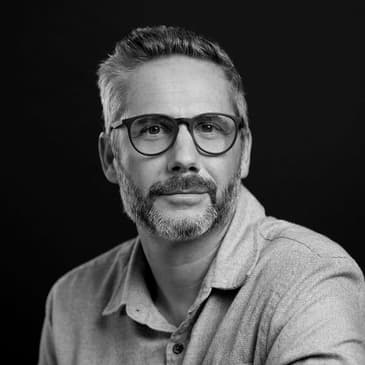

Today's guest has built a career around telling extraordinary stories—but first, he lived one.
Kevin Hazzard is a former paramedic whose years on the ambulance inspired his bestselling memoir, A Thousand Naked Strangers. Since then, he's become an acclaimed journalist, television writer, and bestselling author, uncovering some of the most remarkable and overlooked stories in emergency medicine.
His book American Sirens tells the incredible story of the pioneering Black men of Freedom House Ambulance who helped invent modern paramedicine, while his newest book, No One's Coming, explores the unconventional heroes our government calls when the impossible needs to get done.
But Kevin's journey has taken another unexpected turn. After years of writing about healthcare and reflecting on his own experiences in EMS, he's now a nurse, stepping back into the world of patient care from an entirely new perspective.
That unique vantage point—as a former paramedic, author, historian, storyteller, and future nurse—gives him an uncommon perspective on how healthcare has evolved, where it's headed, and what today's clinicians need to succeed.
In all honesty, I almost postponed our conversation because I was not in a good headspace. I am so thankful I didn’t because Kevin’s humanity was just the thing I needed to remind me why I’m here.
In the five-minute snippet: He might never leave this island.
For Kevin's bio, visit my website (link below).
Contact The Conversing Nurse podcast
Instagram: https://www.instagram.com/theconversingnursepodcast/
Website: https://theconversingnursepodcast.com
Your review is so important to this Indie podcaster! You can leave one here! https://theconversingnursepodcast.com/leave-me-a-review
Would you like to be a guest on my podcast? Pitch me! https://theconversingnursepodcast.com/intake-form
Check out my guests' book recommendations! https://bookshop.org/shop/theconversingnursepodcast
I've partnered with RNegade.pro! You can earn CE's just by listening to my podcast episodes! Check out my CE library here: https://rnegade.thinkific.com/collections/conversing-nurse-podcast
Thanks for listening!
[00:03] MIchelle: Today's guest has built a career around telling extraordinary stories.
[00:08] But first, he lived one.
[00:10] Kevin Hazzard is a former paramedic whose years on the ambulance inspired his bestselling memoir, A Thousand Naked Strangers.
[00:18] Since then, he's become an acclaimed journalist,
[00:22] television writer and best selling author,
[00:25] uncovering some of the most remarkable and and overlooked stories in emergency medicine.
[00:31] His book, American Sirens, tells the incredible story of the pioneering black men of Freedom House Ambulance who helped invent modern paramedicine.
[00:41] While his newest book, No One's Coming explores the unconventional heroes our government calls when the impossible needs to get done.
[00:50] But Kevin's journey has taken another unexpected turn.
[00:55] After years of writing about healthcare and reflecting on his own experiences in EMS,
[01:00] he's now a nurse,
[01:02] stepping back into the world of patient care from an entirely new perspective.
[01:08] That unique vantage point as a former paramedic, author, historian,
[01:13] storyteller, and future nurse gives him an uncommon perspective on how healthcare has evolved,
[01:20] where it's headed, and what today's clinicians need to succeed.
[01:24] In all honesty, I almost postponed our conversation because I was not in a good headspace.
[01:30] I am so thankful I didn't because Kevin's humanity was just the thing I needed to remind me why I'm here.
[01:38] In the five minute snippet: He might never leave this island.
[01:59] Well, good morning, Kevin. Welcome to the podcast.
[02:02] Kevin: Hey, Michelle, how's it going?
[02:03] MIchelle: It's going very well, thank you.
[02:06] First of all, I want to thank you for your people reaching out.
[02:11] They suggested that you would be a great guest on this program and I am looking forward to our conversation.
[02:19] Once I started looking into who is Kevin Hazzard, I saw that we have something in common.
[02:25] We were both guests on James Gearing's podcast, Behind the Shield podcast.
[02:34] James is fantastic.
[02:36] Kevin: He really is. He's got. Well, first off, he's got that accent. It's not even fair, you know, like you can't, you can't compete. Just can't compete.
[02:44] MIchelle: Yeah, exactly. Yeah. No, great. What a great host. So I saw that, that we have that in common and I watched your episode and it's just fantastic. So,
[02:54] really looking forward to our conversation.
[02:57] Kevin: Yeah.
[02:57] MIchelle: So,
[02:58] yeah, I like to just jump right in. We're going to talk about your writing and I've always had a thing for authors. I think it's something that, it's a talent that I don't have yet, but I would like to kind of delve into that.
[03:17] But let's talk about your first book.
[03:20] So your first book, A Thousand Naked Strangers is about.
[03:25] Well, you tell me what it's about.
[03:28] Kevin: It is an insider's look of what it's like to be on an ambulance,
[03:32] particularly, you know, in a city.
[03:35] But what I found is that the, my experiences are pretty universal to people who have been on. So I get people reaching out from very rural places, but it's, and saying that they completely,
[03:46] you know, like, they, they felt it.
[03:49] But yeah, it's the story of what it's like to be on an ambulance. I spent 10 years working for an urban EMS system. We were hospital-based, which was really cool, you know, gave us the opportunity to just walk into Grady Memorial, which is a massive public hospital.
[04:02] It's a massive trauma center, burn center,
[04:05] world's only 24 hour sickle cell clinic, you know, all these wonderful things.
[04:08] And so we could walk in there and pick up an extra shift if we wanted. But we got to know the nurses, we got to know the doctors, which gave us this sort of a leg up in terms of how medicine works.
[04:18] But I walked away from that decade. I was young when I got in. I was in my early 20s and I was in my early 30s with kids when I left.
[04:25] And I realized, like, if you think about it for a second, medicine is such a weird place to grow up.
[04:30] And it is a, it's just an odd look at the world. It's an odd look at humanity. And I think it affects all of us in ways that are both similar and, and then also dissimilar.
[04:39] But coming from that and then suddenly leaving,
[04:43] my wife got a job, we moved across the country and I just felt this massive hole. And I thought like, I, I, I had a hard time putting words to it, you know, and it occurred to me at some point, oh,
[04:56] this was an earth shattering decade for me.
[05:01] And I'm a different person now than I was when I walked in. And I don't really know what that means. I don't entirely know what the journey was. I don't entirely know who I am now,
[05:11] you know, sort of before, during and after.
[05:13] And I began writing the book to sort of hash out a lot of those questions.
[05:18] And specifically I got annoyed because every look at EMS was always so serious and so somber and it was, you know, these are the good people doing the good thing.
[05:30] And I just thought, you know, like, medicine is filled with people with wonderful senses of humor. You know, we're just so used to getting screwed, and we just sort of like.
[05:38] There's a pride you take in that, you know, I mean, I thought Nurse Jackie was like, the first really great example of what nursing is.
[05:45] You know, remove for a moment the TV part of them making her drug addict. Like,
[05:50] her attitude, her approach, you know, like how good she was, but also how biting and sarcastic and,
[05:55] you know, you couldn't, you weren't going to trick her. She had seen it, and she knew how the world works. And I think that's something endemic to medicine, is people understanding, understanding the score is.
[06:05] And so part of it was I wanted that sense of humor and that, you know, that sort of like, yeah, we get it. We've been here. We know how this is going to work.
[06:13] Part to the story.
[06:15] MIchelle: Yeah. Some of the best times in my life have been spent in healthcare as a nurse.
[06:21] In terms of the camaraderie that you share with your fellow colleagues and the fun.
[06:29] There's a lot of fun in it. And there's, you know, obviously a lot of seriousness, a lot of grief in it.
[06:36] But I think for many, many years, I went to work every day saying, this is fun. This is going to be fun. It's going to be hard, but we're going to find the fun in it.
[06:48] What did you want the public to know about EMS when you wrote this book?
[06:53] Kevin: Who does it and why?
[06:55] You know, why we get up every day and work this brand of medicine that, you know, I talked about this in the book, but, you know, any paramedic, the person who shows up, if your child chokes in a marble this afternoon, the person who walks through the door could get a raise if they quit and walked into Starbucks.
[07:11] And so why is it that they're putting themselves into such difficult situations, such demanding situations for so little in return?
[07:20] You know, when there's a disaster anywhere, you know, the news refers to police, firefighters, and other emergency personnel and that other emergency personnel,
[07:31] they're the people who are doing the work. You know, I mean, all respect to police officers,
[07:36] they're not providing medical care. And firefighters may or may not be in most cases, that's not what they signed up for. And in some cities, they're not the transporting agency.
[07:47] They're not the ones with the paramedics.
[07:49] So who are these people who do this thing? You know,
[07:52] what does it mean to hop on an ambulance and race out across the city to emergencies, big and small, emergencies that don't exist? You know, I mean,
[08:02] spend any time in emergency medicine. And, you know,
[08:05] the vast majority of the people who walk through the door aren't dying. Some of them think they are. Some of them think they're truly sick, but most times they aren't, which is okay.
[08:13] It's all, you know, it's, it's unfortunate. It's just kind of where we, you know, how the system functions and it's our job sort of wade through all of it. But,
[08:21] you know, who are the people who sign on for this? And that was what I wanted to do. I just felt like it was unheralded in terms of both getting its due, but also getting a realistic.
[08:31] Do you know, I don't think there's anyone in EMS who watches a show like 911, that thing that's based out of Los Angeles and feels like, yeah, that represented me.
[08:41] You know, I don't think we take any pride in that because it's just so unrealistic. You know, nobody.
[08:44] MIchelle: Yes.
[08:45] Kevin: At least, you know, like, tsunamis aren't hitting. So, like, it's not, it's not how. That's not what, you know, they're not going to space. I mean, you know, that show went to space.
[08:53] I believe so.
[08:55] You know, I felt like it was,
[08:57] it was a real job done by real people who deserve to have their story told honestly and with all of the, you know, good and bad that comes with it.
[09:07] MIchelle: Well, I'll tell you, my first foray into healthcare was actually in EMS when I was 16.
[09:14] You may be familiar with the.
[09:16] Oh, now it escapes me.
[09:20] It was a certain program for teenagers that they could ride along with law enforcement or EMS and tip my tongue.
[09:31] Kevin: I know, like, there's every listener's pride. Is it the Explorer program?
[09:34] MIchelle: Explorer. Thank you. Yes, the Explorer Program. And so I decided, oh, I think that would be really fun as a 16 year old. An extremely naive 16 year old.
[09:46] And I will say that the gentlemen that I rode with, there were no ladies at that time in this particular clan or whatever you want to call it.
[09:57] They were so protective.
[10:00] They did not want me to see anything that might traumatize me.
[10:05] There were some calls that we went on that were like motor vehicle accidents and they wanted me to stay in the ambulance. They were like, no, you're not coming onto the scene.
[10:16] Just stay right here.
[10:18] And,
[10:18] you know, I thought that was really cool.
[10:21] I wanted to see stuff like that. I wanted to be kind of in the thick of it. But they were like, no, no, no, this is, you don't want to see this.
[10:30] So I thought that was really,
[10:32] really kind and sweet.
[10:34] And I did that for about a year and then I decided that I wanted to go the nursing route.
[10:40] So that was my first foray into healthcare and I'll have to say it was, I had such a picture of the EMTs and they were just starting paramedicine in the city where, where I rode along during that time.
[10:58] It was like the early 1980s.
[11:02] So very, very cool experience.
[11:05] Kevin: Yeah, it's such a unique type of medicine. You know, I, I've always felt that it's very much like 19th century sort of house call medicine.
[11:13] You know, you are, you're going out to somebody's house and you know,
[11:17] a paramedic in particular is such a weird sort of provider because,
[11:22] you know,
[11:23] In order to leave that job and have a similar level of autonomy, you'd have to be a doctor, you'd have to be a nurse practitioner or PA, like nobody, you know, you are,
[11:33] Technically they say you're not diagnosing, but if you walk through the door, if I come into your house and I look at what's wrong with you and I decide which medicine to give and how much of it to give.
[11:41] I've a diagnosis regardless of what we call it.
[11:43] But, you know, that's what you're doing and you're going to someone's house, you're looking at the world they live in, trying to take that whole picture in. Both what's presently happening, then all the things in the house and all the circumstances that suggest what might have led to this and get a sense of who they are and what they really need.
[12:00] Whether, you know, so often it's,
[12:02] just sitting down and talking to them. You know, how many old, you know, old women who, whose husbands have died and whose children live, you know, a flight away,
[12:11] call 911 at 11 o' clock at night because it's been a long, lonely week. And, and I, you know, I loved those kind of calls or, or the ones you go to the same house over and over and over for something similar and you get to know the people,
[12:26] you get to know the family. You know, there was, there was a guy who had esophageal varices and I was his last, just like by pure chance,
[12:34] I was his last four transports. So I picked him up when the varices were first beginning.
[12:39] There were two in between where the varices were worsening. And then there was the last one where, where he died.
[12:46] You know, it was hard because I had gotten to know him a little bit,
[12:49] but I think there was also something comforting. You know, I know for a fact when I walked in and his wife saw me that fourth time, there was a look of recognition in her eyes, you know, and also,
[13:00] you know, I had provided good care,
[13:02] and they, you know, there was a sense of trust and, and of connection between us. And I could just see, even though this was clearly a bad, bad situation and she knew it, there was a certain sense of comfort that she got.
[13:14] So that's one of the things that always stuck out to me, you know, is how personal it is. There's really
[13:20] no barrier between patient and provider in EMS. You know, you're in their personal space and it's, you know, it's just, I don't know, it's a really unique situation.
[13:33] MIchelle: Yeah, it's a very intimate relationship. Did you think that you experienced grief when you left the EMS profession?
[13:43] Kevin: I experienced a profound sense of loss,
[13:46] which was to a certain degree masked because my children were preschool, so my life was very, very busy. You know, I had two really young kids, they were a year apart,
[13:56] and so life was busy.
[13:58] But there was this thing that was missing that I'd had a difficult time putting my finger on.
[14:05] And, you know, two things happened at once. You know, as I said earlier, when I left, we moved.
[14:10] And so the people who were meeting me did not know, who did not know me as a person that had been on an ambulance. They didn't know what had been a defining factor for me for a decade.
[14:24] And it was so suddenly I was coming in as a completely different person, which was really disorienting.
[14:30] You know,
[14:33] I don't think I can put a strong enough emphasis on that. It was, you know, you have an identity and you pull your sense of self worth from that identity.
[14:41] And when I got into EMS, I was like a lot of, you know, 23, 24 year olds kind of a bit,
[14:48] I don't know if lost is the right word, but just like directionless, you know, I wasn't exactly sure what the world held for me or what my goals should be or what my purpose should be.
[14:56] And I got into this and I found that.
[14:59] And so, you know, that, like, there's a lot of pride in knowing who you are and then in being good at that thing and being good at something difficult and you know, that which is, you know, that's part of like the weirdness of medicine as, you know, like that,
[15:14] the thing that gives you your sense of self worth is also the thing that's sort of like slowly chipping away at all the other parts of you, you know, because it can be a very difficult field.
[15:24] But when I left that, I very much felt uncertain of who I was and I was able to throw myself into the job of parenting.
[15:32] But I could feel this weird nagging hole, I guess is for a better, for lack of a better word.
[15:40] And it was, you know, again, it was the process of writing the book that really helped me put my finger on. Oh,
[15:46] there was this crazy moment, you know, that lasted for 10 years that I entered into, as we enter into almost all serious decisions quite capriciously,
[15:56] which forever altered the trajectory of my life.
[15:59] MIchelle: Yeah. Wow. Yeah, I could really relate to what you're saying just now about the identity and your self worth being tied up in that. And you know, as I said just a moment ago, how I entered the healthcare field at age 16 and then became a nurse at 21.
[16:17] And I just, I always say that I grew up in healthcare because I did. Those are still formative years of who you're trying to figure out who you are as a person.
[16:28] I was a single mother very young. I was,
[16:31] you know, who am I as a mother?
[16:33] and you're, you're growing up in that environment and,
[16:40] you know, most of the time you're loving it, but many times you're suffering trauma from the things that you see.
[16:46] Kevin: Sure.
[16:47] MIchelle: And trying to deal with that too at a young age. And I just felt how you were describing that whole,
[16:55] you know, when I retired four and a half years ago now,
[16:59] I really went through that first year of like, who am I if, you know,
[17:04] every time I spoke to people, I would say, I'm still a nurse. Like, I'm still a licensed nurse. And you know, to this day I'm still a licensed nurse, but I feel like I have to justify it.
[17:16] You know, I still hold the license. I'm still worthy in this profession.
[17:22] That doesn't go away. I still feel that after four years,
[17:25] you know, it's lessening, but it's real.
[17:30] It's very real.
[17:31] Kevin: It is very much an identity. My mother left nursing in the mid-80s. She was, she was pricked by a dirty needle kind of right as the AIDS crisis was really blooming.
[17:42] And I would say this is probably like '84, you know, everybody really knew that something was going on and it was on everybody's mind and it had really permeated the public consciousness and it was a fear and that happened.
[17:54] And you know, like you, she was a,
[17:57] she's been a young single mother,
[17:59] so we were, you know, I mean, she was,
[18:01] you know, we were by '70 or by '84, 7 years old. My sister would have been 10. So she had two small children and she was, you know, in her 30s herself and I think was looking around going, wait a minute.
[18:13] Or maybe even her late twenties at that point looking around going, what am I going to do? And so she immediately, you know, went to school and sort of created a new lane for herself.
[18:23] But that stayed with her having been a nurse.
[18:26] You know, anytime anything happened, she would be the first one to step into something. You know, my very first encounter with EMS was. It was a kid who's riding his bike up to a grocery store.
[18:36] He stopped and this is in the days when those huge plate glass windows were plate glass. He lost his balance as he was putting the kickstand down. The handlebar went through the glass and this,
[18:45] this like pizza shaped pizza, slice of pizza.
[18:48] MIchelle: Oh my gosh.
[18:49] Kevin: Blade of glass came down from the top and it got him right in the kidney, like, like straight into his flank.
[18:56] And my mother jumped out of the car and just held him in place until the ambulance got there.
[19:00] Interestingly, I've since met the paramedics who responded that, that to that call, which was a very like,
[19:05] you know, weird, you know, like universes colliding moment.
[19:10] MIchelle: Wow.
[19:11] Kevin: That was always who she was. When cousins were sick, when somebody was sick, everybody. People would call my grandmother or, excuse me, my mother, when my grandparents were dying, you know, my mother was the one who sort of everybody turned to,
[19:23] I think sometimes unfairly because it's a large burden to put onto one child. But, but that is, you know, people who,
[19:32] who come from medicine, you know, like, everyone really leans on you in a lot of ways. And you know,
[19:39] I've always had people, since I got into it, always had people turning to me and asking me and you know, I just like a week and a half ago past the NCLEX, so I'm getting sort of back into it and that,
[19:51] you know, so clearly I did not escape. But, that whole world,
[19:56] or excuse me, the whole world sort of turns to you when you, when you have that experience, you know.
[20:01] MIchelle: Absolutely. Yeah. Well, congratulations on passing the NCLEX,
[20:05] that's no easy feat. And I want to talk about your nursing career, your budding nursing career in a minute.
[20:13] I want to get into your second book, American Sirens: the incredible story of the black men who became America's first paramedics.
[20:20] Because, you're writing about history,
[20:24] and first of all, how did you come upon this story?
[20:28] Kevin: I got an email.
[20:30] Somebody who, you know,
[20:31] you know, God loved them. Readers like to reach out to people whose books have reached them in one way or another.
[20:38] And somebody who read Strangers sent me an email and said, hey, you know, I read Thousand Naked Strangers. Interesting story.
[20:44] Do you know this story?
[20:45] And American Sirens is about the story of Freedom House, which, you know, as you said, world's first paramedics. I did not know who they were. And, you know, on your first sign of EMT school, so even before you become a paramedic and you're, you know, you're.
[20:59] And you're there just stepping into this world,
[21:03] they teach you about Napoleon and the flying carriages and, you know, World War I, and we introduced the radio and all these things, like the sort of, the, the slow drip of.
[21:13] history that led to ambulances. And then it kind of moves forward and you get to 1965, which is the year they put out the white paper, which is, you know, a number of physicians around the country saying that there's this unchecked epidemic of preventable traumatic deaths in the United States.
[21:30] Somebody needs to do something about it. So that's sort of the clarion call that creates EMS. But we leapfrog from that moment in 1965 until 1972 when emergency comes out and it's Johnny and Roy and it's exciting TV show, that.
[21:43] Which, by the way,
[21:45] exciting TV show. It birthed a generation of paramedics, like it lent air of legitimacy, adventure, excitement,
[21:53] desire to be in this field,
[21:55] created an entire generation of medics.
[21:58] But it skips over, like, what happened between 65 and 72, what was going on,
[22:03] and nobody had ever addressed it. And I didn't know it. I'd spent a decade in this career, didn't know it. I didn't know anybody who knew it. I'd never heard of it, didn't know anybody who'd heard of it, certainly never heard it discussed.
[22:12] And I began looking into it,
[22:14] and what I found very quickly was that when the white paper went out, there just happened to be a doctor by the name of Peter Safer.
[22:22] Bonafide genius, nominated three times for the Nobel Prize in medicine. Inventor of CPR.
[22:27] Honestly, the inventor of CPR, one of the inventors of the ICU,
[22:32] created the paramedic and his first students. And the first people to take that training and step out into the street were black men from the Hill district of Pittsburgh, which is, you know, similar to Harlem or Watts.
[22:50] And they changed the way lives are saved around the world for,
[22:55] you know, for just under a decade, they served the city of Pittsburgh.
[22:59] But much more than that. What they did, how they did it, how they were trained,
[23:04] how they were equipped,
[23:05] went around the world. Doctors from everywhere came in to see what they were doing. Then they went back to their homes and they created EMS systems in the image of Freedom House.
[23:16] In 1974, President Gerald Ford decided that, that this new budding field of paramedicine, which again was created in Pittsburgh in 66 and 67,
[23:27] that it should be standardized. And he wanted to select a single service to serve as a national standard. And Freedom House was selected as a national standard.
[23:37] A book written by their medical director out of her experiences with them. Emergency Care in the Streets remains to this day the seminal text. And in pre hospital emergency care,
[23:48] they changed forever. They created forever what pre-hospital medicine looks like.
[23:54] And yet their story was completely swept under the rug. In 1975, the City of Pittsburgh shut them down and erased them from history.
[24:01] Their story in that regard is not, is not unique.
[24:04] But you know, what they did and who did it very much deserved to be told.
[24:11] And so when I sort of began to pull on the threads and get an inkling of the story that was there, I just became.
[24:17] I came became fascinated, but also frustrated, you know, as like they were,
[24:22] they were my forefathers. You know, the reason that I was able to do what I did was because of the work that they did. And, and I wanted to tell that story.
[24:32] And you know, luckily enough of them were still around to be able to sit down and say, hey, here we are and this is what we did.
[24:38] And it was a, you know, truly an incredible experience to be able to tell their story and help bring them and their contribution to the rest of us, you know, back into the national conversation.
[24:49] MIchelle: Yeah, it's,
[24:50] it's an incredible.
[24:52] It's fascinating. And I did not know about it until I saw you on the Behind the Shield podcast. And then I started reading about it and you know, one of the questions that I thought was, do you think medicine does enough to preserve its own history?
[25:08] Kevin: I Think some aspects of it.
[25:11] Many aspects. No, you know, we all know who Jonas Salk is.
[25:16] And so, so, you know, there are certain things that we can kind of point to and say, oh, hey, look, you know,
[25:21] look how that changed things. Although you can, you can also say, well, we clearly aren't learning enough of the lessons because we now have a large portion of the population who is insisting they don't need vaccines, even as the lack of a vaccinated public is leading to outbreaks of a virus that was declared eradicated in the United States 26 years ago.
[25:40] MIchelle: Exactly.
[25:41] Kevin: But.
[25:42] So, you know, clearly we're not learning the lessons.
[25:44] However, I think there are certain aspects we talk about, but the vast majority of it, no, I don't, I don't think we pay enough attention to the history. And I think that lends itself to many of the recurring problems that we have.
[25:55] You know, when I was researching American Sirens,
[25:58] I wanted to sort of say, like, hey, what happened in 66 in Pittsburgh was the product of literally thousands of years of people trying and failing to bring medical care to the site of insult or injury and then bringing it into the hospital where definitive care begins.
[26:18] You know, that is, that's a revolutionary concept when you think about it.
[26:22] And we have been trying, and I make this joke in the book, and I, you know,
[26:27] we have been trying since the Bible. The Good Samaritan is literally the story of a paramedic.
[26:31] A man is beaten on the street. Somebody happens along,
[26:35] they take care of him, they toss on the back of a donkey, they bring him to an inn where he heals. That is literally what I did for a decade in the city of Atlanta, minus a donkey.
[26:43] Although most of my ambulances were probably less reliable than a donkey.
[26:49] But in the process of that history, what I dug up was that the first time cholera hits London in the 1830s,
[26:59] and the city is uncertain really what the epidemic is or how to deal with it. The one thing that they can agree with is if we remove the infected from the uninfected, we will slow the spread.
[27:10] I mean, that's like a common sense thing. And so it's the first time that a cholera outbreak, which I think it's been a minute since I've looked, but I wanna say 1834 is the first time that, that, that patients are brought to a hospital by like a hospital-based carriage,
[27:29] But what immediately happens is people start going,
[27:33] hold on a second, there's no cholera.
[27:35] They're not removing your family members so you don't get sick. They're kidnapping your family members, and they're stealing their organs.
[27:43] And I'm reading this in 2020 at the same time that people are saying,
[27:49] prosecute Fauci and Covid doesn't exist, and it's not bad, and why should I have to wear a mask? And they're just trying to control you. This is the government's way of trying to control you.
[27:59] So almost a hundred years later, we're listening to the exact same conversation of people of fear and confusion creating anger and violence.
[28:11] And that, I think, gets directly to your question of how well do we understand medical history?
[28:17] I think if we understood those things maybe a little bit better,
[28:20] if we did a better job of telling that story, then perhaps during the 1918 flu epidemic,
[28:27] the city's public health departments handle it with a little bit more grace and a little bit more understanding. You know, I mean, the city of Philadelphia is so slow to respond and is initially so resistant to the idea that there's a flu pandemic that when it finally hits Philadelphia and they suddenly try to turn around and say,
[28:47] okay, there is this thing, and now we gotta impose these restrictions.
[28:51] There's violence in the streets.
[28:53] You know, you. We have something quite similar in the middle of the 20th century when. When Salk is coming up the polio vaccine, people are resisting him. And again,
[29:03] and it's because there's this lack of understanding.
[29:07] And you see this over and over and over and over again of, we don't get it. Therefore, there must be something nefarious going on. You know, like, in the absence of answers, the mind creates monsters.
[29:18] And absolutely do not do a good job, a good enough job of saying, hey, this is how the progress, the march of progress,
[29:26] the march of medical progress has happened through the ages. And this is where we are in this particular moment. We don't have all the answers, but these are the answers we presently have.
[29:35] And this is what we think might help.
[29:37] And I think it's most evident during COVID when people were resisting the masks.
[29:42] You know, if you'd had surgery in 1980, your surgeon would have worn a surgical mask,
[29:47] not because she was a Democrat,
[29:50] but because she understood that airborne particulate can be spread through expirations and that wearing a surgical mask reduces the spread of airborne particulate. It was a like. It is just a known, simple fact, but we allowed it to be turned into a political topic by our lack of understanding of how everything goes.
[30:10] And so,
[30:11] you know, no, I don't think.
[30:12] I don't think we do a good enough job. I think there are certain things we highlight, but I think the vast majority, the important things, I think we allow to slip repeatedly.
[30:20] MIchelle: Well, thank God for people like you that are bringing these stories to the forefront and educating people on the history,
[30:30] because we certainly don't want to repeat those parts of history that have not served us well.
[30:37] Kevin, if those original Freedom House paramedics could see today's EMS systems, what do you think would make them proud?
[30:46] Kevin: Well, some of them are still around, so some of them do see,
[30:49] there's about a half dozen. I think the thing that they are most proud of is when they see kids who look like they did coming into a field and understanding its importance.
[31:03] You know, I. These were, you know, and. And yes, they were all black men. And so.
[31:07] So perhaps some of, you know, to a degree, it's to look out at an EMS service and see faces that look like theirs. But I think there's also this idea that,
[31:19] you know, what they were doing at the time was experimental, and a lot of people didn't think it was real,
[31:24] and they proved that it was. And so to see young people entering into a field that they proved was viable and important and. And clinically possible,
[31:37] I think they really take a large amount of pride in that and. And the unbroken change. So many of the things that we do today, they pioneered from.
[31:45] From training to equipping to how. How we go out into the, you know, how we're deployed,
[31:53] how we're supervised. I mean, the first medical director was, you know, like, that was a very specific thing that Peter Stafford set up. You know,
[32:01] so many things. And so I think they look at that unbroken chain of.
[32:06] This was a field that we pioneered and proved was viable. And now, generations later,
[32:13] young people are stepping in to do this work that is so critically important.
[32:19] And so I think they take a lot of pride in that, very much so. And I think probably their biggest urge is for,
[32:25] you know, and I think we've seen this a bit with both police also, this notion that, you know, the people who serve a community should also reflect the community. Too many, in too many instances, that's not been the case.
[32:35] You know, you talked about your experience on an ambulance and that they were all guys. You know, population's not all guys. You know, know, it should be. It should be a little bit more reflective of the community simply because you tend to be more understanding of people that you understand and so if.
[32:50] If you have no connection to the people you serve,
[32:53] you know, there's going to be a void. The service that I worked for, Grady EMS,
[32:58] it was. Yeah. I was not aware that the field was so homogeneous. You know, we had people of all races,
[33:08] genders.
[33:09] You know, people were gay and they were straight. It was, you know,
[33:12] the average medic was covered in tattoos. You know, there was like a.
[33:17] We just sort of represented the city that
[33:22] we served. There was a great sense of affinity between Atlanta residents and Grady medics and I. And it's clear that that same sense is not shared everywhere.
[33:34] And they would understand as having, you know, having done it themselves, that,
[33:39] you know, a certain portion of the people who are on those ambulances need to be of the community in order to, you know, to sort of spread that understanding throughout.
[33:50] MIchelle: Yeah. I mean, if you're part of the community that you're serving and,
[33:55] you know, like you said,
[33:57] You look like them, you grew up in that community, you share the culture,
[34:03] There's just gotta be so much more trust between you and the patients that you serve.
[34:10] Kevin: Yeah.
[34:11] MIchelle: So, again, wow.
[34:14] What a great representation of those paramedics and the pioneering work that they did.
[34:21] Very cool.
[34:22] Okay, now we're going to talk about your third book,
[34:25] No One's Coming. The Rogue Heroes Our Government Turns To When There's Nowhere Else to Turn.
[34:31] And I read this book.
[34:32] Fantastic. So tell me, because I felt like this, this book would really resonate with nurses because it explores a lot of the challenges that nurses face every day,
[34:46] like making high stakes decisions with not a lot of information,
[34:51] collaborating across disciplines under intense pressure,
[34:56] advocating for patients when systems are slow or resistant,
[35:02] and innovating when protocols don't yet exist.
[35:07] So talk about this book and do you see a correlation or do you see how it could resonate with nurses?
[35:17] Kevin: So the book is set during the 2014 Ebola epidemic in West Africa.
[35:21] And it is centered on a group of people who, alone on planet Earth, literally the only people on Earth who had the ability and the willingness to transport Ebola patients by air.
[35:31] And so two American physicians were dying. The Ebola epidemic was raging through three separate countries.
[35:37] There was a legitimate concern. You know, Ebola is referred to as a caretaker's disease. There was legitimate concern that the world's healthcare providers would stop coming because so many of them were getting sick.
[35:47] Dr. Umar Khan, who was from Sierra Leone and had been leading the effort, had just died or at least was.
[35:54] I think he, if he hadn't just died, he was about to die, he was, he was on death's door when Kent Brantly, the American doctor, was diagnosed. And then a few days later, Nancy Ripel was diagnosed.
[36:05] And so, you know, there was a real understanding that healthcare providers were getting sick and they were dying. And so there was this concern that what will happen if people stop coming?
[36:16] And so a great effort was put into trying to rescue these, these two doctors, but nobody had the ability to do it. And there just happened to be this small, eccentric company in North Georgia that nobody had ever heard of who pulled off this incredible rescue.
[36:31] And that company included pilots, included engineers, included doctors, but you know, very specifically it included nurses. The first person to make sort of trans continental or intercontinental contact with the patient was a nurse by the name of Vance Farabee.
[36:47] And he you know, suited up at his PPE and he crawled into the back of a pickup truck in which Kent Brentley lay and he said, my name's Vance, I'm here to take you home.
[36:57] That moment,
[36:59] I mean, I get emotional thinking about it. That moment is like, if anything, screams healthcare more than that human connect, you know, in the midst of this extraordinary rescue which includes two different continents,
[37:13] multiple governments,
[37:14] almost unimaginable technology,
[37:16] huge risks,
[37:18] a disease outbreak that has caught the attention of the world,
[37:23] US Presidents being involved, future US Presidents really determined to see that it not happen.
[37:29] Fighting, fear,
[37:30] you know, a global,
[37:32] you know, spotlight being shined on this moment. And at the center of it all, just two people,
[37:37] one reaching out to another to say, you know, I'm here and you're gonna be good.
[37:41] I mean that's, that is why we do it. And you know, the person who, who did that, that, that was Vance Farabee, a lifelong nurse who started out in the 70s and you know, worked in all manner of, of nursing, did flight nursing and ER nursing and ICU nursing and all kinds of things and eventually made his way into this sort of,
[38:04] Phoenix Air is the name of the company. Then they, they fly all over the world to pull people out of austere environments in, in, in oftentimes in incredibly dangerous situations.
[38:12] And so that's the story of the book is, is the people who pulled off this incredible rescue over the course of 10 days.
[38:19] But in terms of its impact on nursing, I mean, everything you just listed is a hundred percent right. The idea that, that no protocols existed for transporting Ebola Patients and those.
[38:31] And none really in terms of what PPE ought to be where had been written since 1998. And the person who wrote those protocols was, was a nurse.
[38:40] In fact, the person who purchased the PPE from Home Depot because he went into the storeroom and realized he didn't have nearly enough was a nurse. I mean, what do you do when, when you realize that the thing you've been asked to do by the United States President in just a couple hours is not possible because you don't have PPE?
[38:57] Well, you improvise and adapt. And that's what nurse Vance Farabee did.
[39:01] You know, then they had to, to go and they had to pull this thing off and they do it through,
[39:08] you know, incredibly difficult circumstances again with a lot of people insisting that it not happen.
[39:14] And, you know, the people at the heart of it, you know, were, were healthcare providers and two, two of whom were, were nurses. And then they do get him,
[39:23] you know, that first patient back to the United States, which was something the CDC wasn't certain was possible,
[39:29] whether the human body could survive a flight while in the throes of Ebola. And they land at Emory University at their highly communicable disease unit. And you know, who's there inside, a group of nurses handpicked for both their expertise but also their personality.
[39:48] I talked to Dr. Bruce Ribner, who's a lifelong infectious disease expert,
[39:52] came up during the AIDS epidemic, is an incredibly competent,
[39:57] capable,
[39:58] experienced doctor. And the biggest, you know,
[40:02] he understood the biggest challenge when he created Emory University's disease unit, which by the way, that hospital sits quite literally next door to Emory or to the cdc.
[40:13] When he was creating that unit, he knew the, the most important thing would be the nurses. And they not only had to be good at what they, at their job, but they needed to be confident enough in themselves and in their abilities to stand up to any physician who they felt had made a mistake.
[40:28] And so he very, very particularly recruited people who were outspoken and who were good and confident and would have no problem, you know,
[40:41] breaching hierarchy to say, hey, I think we need to do this thing a different way. And so at every phase of this story,
[40:48] what you come down to are providers that do the kind of one on one personalized care that, you know, and, and quite frankly, like, how do you treat Ebola? It's really not ICU medicine.
[41:03] It really is not an crazy, you know,
[41:06] experimental medications which got a lot of attention during 2014,
[41:10] but it's it's supportive care. I mean, that's, it's competent, aggressive, supportive care. And who provides competent, aggressive, supportive care? I mean, that is quite literally, you know, the job description of nurses.
[41:22] MIchelle: Yeah, just hearing you talk about that story, man, just gave me chills, but also made me so proud to be a nurse because that's the community that I know,
[41:32] you know, and as you were talking about the flight nurses and everything, ICU nurses,
[41:36] I'm very proud. My sister Jennifer, longtime ICU nurse,
[41:41] labor and delivery, you know, high risk labor and delivery, ICU flight, nursing.
[41:46] Like, she,
[41:48] you know, she would have been there. She would have been there in a second.
[41:53] Just those kind of people that step up and do things that nobody else would even imagine doing.
[42:00] Like, that makes me so proud to be a nurse.
[42:04] So I do want to talk about your nursing career, because that is fascinating me.
[42:09] But I did also want to note, did writing this book change your perspective on government agencies and disaster response?
[42:19] Kevin: Oh, yeah, completely to both. I'll start with what I think is a more important, which is government agencies.
[42:25] Bureaucrat is such a dirty word.
[42:27] But what is a bureaucrat? You know, it's a person who has dedicated their life to becoming an expert in a subject that makes our lives better.
[42:38] And that is the role of the government is they, you know, there are, there are big, big important needs that we have that aren't going to make any money. So therefore,
[42:48] private enterprise is not going to step in to take over.
[42:53] And the government does that.
[42:55] And, you know, what bureaucrats have done and continue to do is specialize in these areas that are so incredibly important to the rest of us and, and make sure that things go as they ought to.
[43:10] And there's, you know, of course, there's waste in government. There's waste in everything but that, that they have been allowed to be turned into, you know,
[43:18] scapegoats and villains and all these other things. That is the problem with our life is, you know, everything that's wrong with you is, is because a government bureaucrat couldn't be farther from the truth.
[43:26] And what you.
[43:27] There's a great moment in this book where John Nadeau, it quite, you know,
[43:32] perfectly fits the description of a bureaucrat.
[43:35] Spent his life working for Customs. You know, after 9-11, he devised the system by which container ships coming into the west coast were searched at a time when we were very, very concerned about exactly what was coming into our country on the heels of 9-11.
[43:52] And, you know, he, he did that quietly. He did that without anybody giving him, you know, like, there was no high five at the end of that. He just. Not even from the agency.
[44:01] It was just, this is your job. This is what you do. This is what we do. Good. You know, go off and do it.
[44:07] And in 2014,
[44:09] he was the guy who stood up on the state of Maine, was in complete hysteria over the idea of. Of these Ebola flights coming in through Bangor.
[44:16] He was the one who stood firm and said,
[44:19] this is something we need to do. It's the decent thing to do. It's an important thing to do. And not,
[44:25] you know, inconsequentially, it's safe. And this is why it's safe without him doing that,
[44:30] you know, I don't know what. What happens, because the Phoenix Air jet is coming into the, approaching the coast of the United States. And at that point, the state of Maine was saying, no, you can't land here.
[44:40] So they, you know, and in fact, every airport on the east coast was trying to shut down this flight so they didn't have a place to land.
[44:45] And a lone bureaucrat stood up and said, let me tell you why this is safe, and let me tell you why this is going to happen. And again, at the heart of it is because it's the human thing to do, because this is a person who's dying,
[44:56] whose life is in our hands, and we have a choice to make right now. Are we going to say yes? Are we going to say no in terms of disaster response?
[45:04] I'm still in contact with Dr. Linda Mabula, who is one of the most extraordinary people I've ever met and one of my favorite characters of any book that I've ever written.
[45:13] She's an incredible woman, incredible doctor,
[45:16] and she's, you know, she was at the heart of the ebola response in 2014, and she's at the heart of the
[45:23] Ebola response today.
[45:25] And I said to her, how's it going? And she said, you know, it's kind of heartbreaking how little we've learned in the last 12 years. And it's heartbreaking at how many of the things we did learn we have discarded and now we'll have to learn over again.
[45:39] And so we are an animal that is too often not driven by reward. We're driven by the threat of punishment, you know, and it's. That'll remain, you know, sad footnote in human history because we, you know, we do not buy into the ounce of prevention is better than a pound of cure statement.
[46:02] And it bites us. It bites us time and time again.
[46:06] So, you know,
[46:08] we learn these things when it happens, and then we immediately forget it. You know, when.
[46:13] When it's like, you know, the minute something passes, we all kind of sh. You know, clean our hands and go, okay, that's it. That'll never happen again.
[46:21] Um,
[46:22] you know, you. You like. If you look at the book,
[46:25] the EMS service that transported the patients when it got to Atlanta and the highly infectious disease unit at Emory University were both either completely shut down or partially shut down prior.
[46:37] Immediately prior to this happening.
[46:40] And, you know, the reason that the part of the lab was shut down at Emory was because the CDC said, well, in the last 14 years, you guys haven't used it, so maybe we don't need it.
[46:50] And the reason that the special operations team at Grady EMS was shut down was because the city said, well, we haven't used this thing in a while, so. So we probably won't need it.
[46:59] You know, that's like canceling your health insurance because you haven't died yet.
[47:02] You know,
[47:03] like, I don't need life insurance. I haven't died yet. I'm good. Nobody would do that. We understand what it's for, and yet,
[47:09] you know, we routinely look around and say, well, we haven't needed this particular type of disaster response, so let's just scrap it. Even though when it was,
[47:18] you know, designed and implemented, there was a reason that it was designed and implemented, and it's there for a very specific purpose.
[47:25] So, yeah,
[47:26] that's what I took away from it, is that, you know, we aren't prepared. And now we're watching, you know, in 2026, sort of
[47:34] A redux of what happened in 2014. And, yeah, you know, we're trying to.
[47:40] We're kind of fighting the same battles today that we fought then. It's frustrating to watch.
[47:45] MIchelle: Frustrating and scary. And it feels like we're constantly reinventing the wheel when we don't need to do that. There's already been.
[47:54] There's already people that have come before us that have done that.
[47:57] Kevin: Yeah.
[47:58] MIchelle: Okay. Well, we're going to delve into your nursing career. So I have to ask you, Kevin, after writing books and working in Hollywood and becoming a bestselling author,
[48:09] what made you decide to become a nurse?
[48:13] Kevin: I was researching American Sirens.
[48:17] This is the summer of 2018.
[48:20] I'm at a research library at Harvard University, going through the papers of Dr. Nancy Caroline. It's very exciting.
[48:28] I am doing exactly what I want to do. I am at one of the world's prestigious universities doing research on this famous doctor for a book that I'm contracted to write.
[48:40] It was very exciting.
[48:42] And yet while I'm reading about her life,
[48:46] what I come across is, you know, that she started this, you know, she was a big part of, of the EMS service here in the US that she went off and started the EMS service in Israel, she started their hospice program, then she went to Africa and was, was a flying doctor with Amref.
[49:03] And I just, I felt this like, oh man,
[49:07] you know, I am out of that world and look at all the cool things that I could still be doing. Why didn't I,
[49:14] why didn't I stick around, maybe I could be doing. And it, it was just like this,
[49:18] you know, bolt of lightning hit me that, that, that here I am exactly where I'd worked so hard to put myself. And what I'm doing is pining for something that I walked away from.
[49:29] And I, I knew in that moment, okay, that, that there's a big thing that's missing. But I didn't, I had no idea how to handle it. And then In June of 2020,
[49:38] I got asked to work with an international relief organization called Global Response Medicine.
[49:43] And while I was, you know, and I went around the world with them and while I was working very early with them,
[49:50] there was an ICU nurse who, who said to me, you know, you could, you could be doing this, you could, you know, you've got a degree, just go back and just, you know, you could, they'll let you just do the nursing portion.
[50:00] Like you, you know, you just, you get, you get that, that, that two year nursing chunk without having to, you know, go back and take English Lit 101. You can, you can become an RN.
[50:09] And I didn't realize that. And once he said it, it just set this,
[50:14] you know, chain of events in motion. But it, it planted a seed in my head.
[50:18] And then,
[50:19] you know, I had to take some prereqs cause I was French and history major in college, which, you know, not a lot of microbiology for the French majors.
[50:30] And so I knocked out the prereqs and then started a program,
[50:35] you know, and like, you know, just, just finished the spring and you know, again just took the NCLEX. So that's,
[50:40] that's how that got going. But it was the understanding that what I'm doing right now is absolutely as good as it's going to get.
[50:47] And yet there's part of me. That's not whole because,
[50:51] you know, I'm no longer in the clinical environment, and there's no substitute for the clinical environment. So how do I get back to it?
[50:58] MIchelle: Fascinating. I absolutely love hearing stories of how people choose to become nurses and they never, ever disappoint me.
[51:08] So thank you for sharing that.
[51:10] Okay, well, what has surprised you most about nursing education?
[51:15] Kevin: So paramedics,
[51:18] you know, you, it, you're learning. You're learning to innovate, you're learning to shock. You're learning all the different drugs. You know, how do you treat seizures and eclampsia,
[51:28] you know, what are all the ACLS drugs,
[51:30] you know,
[51:31] MIS and strokes and all these different things that, you know, hanging blood, all these different things that paramedics do. That focus is so heavy on,
[51:40] you know,
[51:41] identifying and correcting life threats. And what are the first four steps in any emergency that's going to save someone's life? And here's how you do those four things,
[51:49] which, of course, you know, like anything else, that's not necessarily the majority of what you do, but. But that's in there. The work is so heavily focused on that.
[51:58] And then, you know, with nursing, it's such a broad base of knowledge. All the different medications that you have to have your head around, and it's less about the.
[52:10] The doses than it is,
[52:12] what is this going to do to my patient? And what should my patient expect? And how can I explain to them what's going to happen and explain to them what to expect?
[52:22] And that covers all aspects of it. Everything is understanding what is being done so that you can anticipate,
[52:32] educate,
[52:33] and facilitate what's happening to this human being.
[52:37] And it's a tremendous amount of information that boiled down is how do I comfort,
[52:45] care for. Sort of implied,
[52:47] how do I comfort this person in this moment?
[52:50] Because I'm the one who's gonna be there with them all day long. And yes, I'm gonna be pushing meds, I'm gonna be hanging blood, I'm gonna be doing the insulin drip.
[52:57] And, you know, I need to be aware of what the potassium is and all these other things. So there's a ton of technical knowledge. And I remember working with ER doctors or some ER nurses when I was at Grady and getting to know them and just being blown away by simply how competent they were.
[53:12] But I don't think I realized how much of the focus is on the human aspect of medicine,
[53:17] because that's, I mean, that's really where it all,
[53:22] you know, like, that is what the job boils down to is this. You are this person's, you know, conduit into this sort of dizzying and confusing world,
[53:31] and you gotta help them make sense of it and make sense of what's happening to them,
[53:35] while also, being aware of
[53:41] what their INR is. And I just find it that, to me, was the, you know, the sort of. The most surprising thing was how lightly the nurses, I knew,
[53:49] clearly wore the human aspect of their job because I was sort of dazzled and distracted by their technical understanding.
[54:00] MIchelle: I think, wow, you described it perfectly. And I just think that that's. It's the best of both worlds, nursing.
[54:08] It's, to me, this best profession because you're blending that. You're blending all the technology and the technical aspects of it and,
[54:18] And then the human aspect of it and seamlessly.
[54:24] Right. The patient doesn't know that you're thinking about all that stuff in the background when you're asking them about their grandkids and,
[54:35] you know, who's their favorite baseball team or you're connecting with them on a human level. They don't know that's all in your head. They don't know all the training that you've had.
[54:46] They don't know that you are making a million different observations when they're telling you about their grandkids or their favorite baseball team.
[54:57] And it's just, I just absolutely love it. And you just described it perfectly.
[55:04] So, as a former paramedic, Kevin, have there been moments where you thought like,
[55:10] wow, I never appreciated what nurses were doing until now?
[55:16] Kevin: Not yet. It'll probably change when I'm in there and see things slightly differently. I held the nurses I knew in such high regard you know,
[55:29] specifically at Grady, I got to know them quite well. But at all the ERs,
[55:34] I, you know, I saw how good. And there were. There were some things, I guess, that I would, you know, I would come in and say, like, hey, here's his.
[55:40] By the way, it's 12 leads. Wow, look at this. And I could just sort of see their eyes glazed over. And I would be annoyed, and I'd be like, hey, hold up.
[55:47] This is important. Look at this. And so I realize now that was a part of the picture that they knew intuitively or not intuitive. They just knew that, yes, okay, whatever.
[55:59] The doctor's gonna read the twelvely regardless of what it says. And you know like it's clearly hyperkalemia. But that's one of 19 things that I need to take care of in the next hour.
[56:11] And you know, I need to be making sure that,
[56:16] that somebody's calling dialysis. Cuz it's now Friday and this guy hasn't been since Monday.
[56:22] And that's why, you know, and you learn from listening to them and listening to the doctors know that oh, when somebody,
[56:28] somebody calls you with high blood pressure and itchy skin, your next question should be when's the last time you went to dialysis? Even before you lay a finger on em, when they're sitting there in your big winter coat and you can't tell,
[56:38] you know, that they do dialysis, you should know that intuitively. And so that I think is probably a thing that gets missed oftentimes is is paramedics is so focused on life threats that you forget that most people aren't even the ones who are facing a life threat.
[56:57] That's not the only thing going on that there are 19 other things. And while it might not be your job, it's somebody's job to be in charge of all that.
[57:05] And knowing that,
[57:06] that the person who's making that phone call to say like hey, like dialysis, like we're going to need something is the same person who's sort of like not paying any attention to your, you know, you're obviously hyperclaim at 12 lead because you know, that's just not the most important thing at the moment.
[57:22] MIchelle: Yeah,
[57:23] yeah. We're so good at prioritizing, right. And seeing the bigger picture and,
[57:29] and I think that's where maybe you know, paramedicine is very focused on.
[57:35] They're just extremely focused on that certain thing at that certain time.
[57:41] And I'm not saying that they don't look at things as a big picture either, but I think those are the differences in some of the,
[57:49] some of the things that I respect in paramedics are their ability to drill down and focus so much on one thing.
[57:58] So. Wow.
[57:59] What, what's your experience been being a student later in life?
[58:05] Kevin: One I've loved it.
[58:06] I think the more you and I've noticed this with writing, you know, the more I write, the sharper my mind is.
[58:13] When I'm we're on vacation, I find myself searching for words more or just like not focusing as much when you're in something and your mind is being for, you know, like you're, you're kind of whipping your mind into action that just functions better.
[58:31] You know, entropy is something that, that affects all living things and your mind is among those things. And so being in my 40s and taking micro and you know, college level A&P and you know, all the different,
[58:48] you know, the difficult cl, all the, you know, adult health one and two and you know, all the pharm
[58:54] Just all that like wrapping your head around all that and diving into it really,
[59:00] you, you see how much sharper and how much more you function when you keep that muscle strong.
[59:06] Although I will say, and so which is great as you get older, it's very wonderful to,
[59:11] to, to still be in that. And I've, I've been impressed with, with like how limitless we are as creatures that, you know, you don't have to be 18 to be going to school.
[59:21] There are people who are older than me that were going to school and were doing a very good job.
[59:25] However.
[59:28] Kevin: At one point we were doing a disaster drill in lab and the doctor said okay,
[59:34] or the, the professor said okay.
[59:36] How many of you were alive during 9-11?
[59:41] What were your memories of 9-11? Or what were you doing in 9-11? But how many of you were alive? Let me tell you something.
[59:49] MIchelle: You're over here with your hand up, right?
[59:51] Kevin: And I'm like the only one in there. I mean so many of the people around and I, I stopped and I thought, oh my God, that was 25 years ago. Of course nobody, like they weren't around.
[01:00:02] You know, there's a 23 year old sitting here,
[01:00:04] they don't even remember.
[01:00:06] You know, the Iraq and Afghan wars, like the war on terror is not a thing for them in the way that, you know, like Vietnam was this, this, this like memory of, of my parents.
[01:00:15] For me that it was like it permeated the era, but it was not something I lived through.
[01:00:19] And that was what all of that was. And so it is really, really weird to be sitting down with people who are your peers in many ways but are also like not in many others.
[01:00:33] That has been a funny, strange experience,
[01:00:37] you know, to be a generation away from these other people. But so that's kind of been. Those are the two big things is how,
[01:00:43] you know, if you keep going there is no end to it. But also that as time goes on you realize like, oh, there's an entire generation of people who have come, come up, you know, behind me and they're out in the world.
[01:00:55] MIchelle: I think it was such a cool experience.
[01:00:58] I I went back to school for my bachelor's when I was 47,
[01:01:02] and so there were some 20 something year olds in the class and some 30 something year olds. And I was kind of like the class mom, you know,
[01:01:11] and the overriding experience of going back in my 40s was so much fun. I was just like, I love this. It's so much fun.
[01:01:24] And we were all nurses. So it was, you know, we were all nurses and then going back for our bachelor's and just sitting around telling some of the stories of, like, my early nursing years to these nurses in their 20s, you know, their mouths were just wide open with,
[01:01:41] like, what? You used to do what? You used to be able to do this or you couldn't do this. You know,
[01:01:47] when I started as a nurse in 1985,
[01:01:52] we still had to get up and give the doctor our chair when they came in and made rounds.
[01:01:58] And I think that wasn't that long ago. I feel like 1985, you know, why were we still doing that?
[01:02:05] It was just kind of those crazy practices. And if you worked in the NICU, you weren't allowed to start an IV. Only physicians could start IV's
[01:02:14] Well, that didn't last very long because physicians suck at starting IVs.
[01:02:19] Kevin: They do. They're the worst. And they're usually the first to admit it. You know, they'll get out of the way for a nurse comes in, they're like, oh, yeah, please, please, please, God, do this. I can't.
[01:02:31] MIchelle: Exactly.
[01:02:32] I know it. It's just such. I don't know, there's something. Being an older person and. And going back to school again,
[01:02:39] very cool.
[01:02:40] Well, how has your experience as a storyteller influenced the kind of nurse that you hope to become?
[01:02:47] Kevin: Well, I think those two things are sort of intertwined because I,
[01:02:52] you know, before I got into EMS
[01:02:55] I was a reporter.
[01:02:56] I knew that I was going to be, you know, I was working on being a writer and,
[01:03:02] you know, which is, you know, kind of a journey. You got to figure out who you are as a writer. You gotta figure out what your voice is and what interests you and all these other things.
[01:03:10] And how do you convey all of those things? How do you make what you're doing human? And that's really the. What it gets down to,
[01:03:16] you know, how do you make something human? How do you make somebody else look at it and relate to it in some kind of way?
[01:03:22] And that became.
[01:03:25] What I learned in medicine, was that,
[01:03:29] you know, how to drill down into the human at the other end of this emergency and get to know them and understand them and, and how important it is,
[01:03:39] you know, how really essential and, and, and all encompassing that part of it is. For all the excitement of all the other big stuff, it's really two human beings trying to relate to one another.
[01:03:50] And so that was who I've become, you know, as, As a storyteller is telling those, you know, getting into the human aspect of any particular story. You know, the greatest compliment that I've got from, from anybody, and I get it a lot with, particularly with No One's Coming, the new book.
[01:04:06] People say, God, it read like a novel.
[01:04:08] And, you know, whatever the plot of the novel is, the reason you keep going is the people you know like you.
[01:04:14] A novel is all about the interiority of the characters and, and that is, you know, I think the focus that should be the focus of, of any kind of medicine is who are these people that I'm dealing with,
[01:04:27] you know, and how can I best reach them using all the things that make me, you know,
[01:04:33] who I am,
[01:04:34] so that, you know that that human aspect of it is, you know, to me, I think the most important having having been there a lot of times in someone's room to say, hey, I'm sorry, but this didn't work out, and your husband's husband has died, you know.
[01:04:47] You know, you get to know what those moments are like and how important that sense of connection between two people is and how that can,
[01:04:55] you know, either make or break those. Those really difficult moments.
[01:05:00] MIchelle: Do you see yourself in the future writing about your nursing career or the nursing profession?
[01:05:05] Kevin: My wife has asked me that, like, a million times.
[01:05:09] I,
[01:05:11] I am certain that I'm not entering into it with an agenda, but I am quite certain that some thing will present itself in some form.
[01:05:20] I'm not sure what that is yet. And I, I find it best to just sort of allow,
[01:05:25] you know, there's a reason that all great ideas come in a shower, because your mind is relaxed and, you know, you focus on other things. You. I drop so literally like three times every shower.
[01:05:36] So my mind is on everything but what I'm doing.
[01:05:38] And somehow in that process of, like, you're just sort of like in and out of whatever, like your mind clears itself and all the things that were just sitting there, but you were blocking,
[01:05:49] like, boop, they pop into your head. And so I, you know, I kind of take that. That approach to storytelling, which is like, I kind of have a sense of where I'm headed Or at least something that I'm.
[01:05:59] I. You know, the things that I find interesting and, you know, just try to be open to their arrival so that I can see them clearly when they do come.
[01:06:07] And, you know, so that is, you know, what I would anticipate here.
[01:06:12] MIchelle: Yeah,
[01:06:13] that would be amazing.
[01:06:15] Yeah. And for me, it's walking. When I go on a walk, I just like, all these ideas come to me that,
[01:06:23] like you said, they're just waiting back there, but your brain kind of goes offline, and some of those ideas can come in or you can solve problems.
[01:06:31] Kevin: Yep.
[01:06:32] MIchelle: I was checking out your Instagram, and one of your posts, you posted a quote from Tim o', Brien, who's an American novelist and Vietnam vet,
[01:06:42] and it said, "You'll see some terrible stuff. I guess that's how it goes. But try to look for the good things, too. They'll be there if you look."
[01:06:50] And I wish that someone had told me that when I was entering my nursing career,
[01:06:56] because I didn't think I would see terrible things.
[01:06:59] I guess I was naive in that aspect.
[01:07:02] And, you know, through the years, have had some trauma from some of the things that I've seen. But just talk about what that quote means to you.
[01:07:12] Kevin: I carried that coat in my shirt pocket the whole time I worked. I mean, I think that's the heart of life,
[01:07:18] is that this is,
[01:07:20] you know, this journey can be very difficult.
[01:07:23] And it's something that, you know, it tries you in all kinds of ways. And the longer you live, the more,
[01:07:29] you know, the more traumatic things you will have endured, you will.
[01:07:34] The more people you love,
[01:07:36] will die. The more things that you want, will come to an end.
[01:07:41] And you could. I mean, some of those things are.
[01:07:45] Can be crushing, you know, and what do you do? How do you, you know, my grandparents lost two children and a grandchild.
[01:07:52] There's no, like, easy way to like,
[01:07:56] smooth that away. That is a reality that they had to deal with. And yet they were two of the happiest people that I've ever encountered in my life.
[01:08:03] And so what accounts for that? How do you,
[01:08:05] you know, how do you countenance that much loss with also that much joy?
[01:08:09] And I think it's an intentional approach. You know,
[01:08:15] there are horrible things that are out there and horrible things that we'll all endure, but there's also incredible beauty that we'll all endure. And, you know, I look at my kids,
[01:08:23] how often, particularly when they're really young, how often a child just can light up with wonderful, you know, two seconds after, you know, the worst meltdown ever, and you want to, you know, you want to dunk them in the toilet.
[01:08:35] You know, something new happens, and they just explode with excitement and they're levitating with it.
[01:08:41] And, you know, I think that is a choice that you can make. If you look at, you know, endurance athletes, I think I find very,
[01:08:50] very inspiring because they are making a choice to continue. And every cell in our body says stop.
[01:08:58] And that shows you what you're capable of doing if you just, you know, put your mind to it,
[01:09:02] you know, But that's what really, what it comes down to. You are in control of these things. So on an ambulance, there are terrible things.
[01:09:11] You, you know, you are. You've signed up for a job that the worst has happened and it isn't going to get any better, but you're the one who will go out and sort of collect the pieces.
[01:09:23] That can be a very heavy thing. And at times it is.
[01:09:26] But, you know, the human condition also provides incredible moments of beauty.
[01:09:32] So you need to be on the lookout for those as well, because, you know, those heavy moments will weigh on you. But those moments of beauty provide the buoyancy that we need to keep going and to be excited and to really, you know, feel connected to everything around us.
[01:09:47] Cause I think that's what that heaviness does, is it separates us from everybody else.
[01:09:52] And there are few things that we want as an animal more than to be connected to people around us, to the things around us. And that is, you know, for me, how you do it is recognizing that,
[01:10:04] yes, there is trauma and tragedy, but there's also incredible beauty.
[01:10:08] MIchelle: Beautiful. And we don't stop loving because someone we love died. Right. So we keep doing those things. Yeah.
[01:10:16] Well, I'm gonna tell you right now that your patients are gonna be so fortunate to have you as their nurse.
[01:10:23] And I just, I have enjoyed this conversation so much. It was so much more than I had anticipated, which is always such a blessing.
[01:10:35] So thank you so much, Kevin, for bringing everything that you have brought today. I appreciate it.
[01:10:42] Kevin: Thank you. You brought it out with your active listening. There is a,
[01:10:47] To get back to my
[01:10:48] previous few weeks of NCLEX studying. Yeah, that's what it all comes down to. So, no, I. Michelle, I appreciate this has really been incredible.
[01:10:57] MIchelle: Well, we've reached the last five minutes. Kevin and this is the most fun five minutes of the show. So this is the five minute snippet. If you've heard any of my episodes, you know, at the end we do five minutes of fun where I just ask you kind of off topic questions so we get a chance to see your,
[01:11:16] your off duty side.
[01:11:19] Are you ready to play?
[01:11:21] Kevin: Let's do it.
[01:11:22] MIchelle: Okay.
[01:12:02] Kevin, you're stranded on a deserted island.
[01:12:05] Help will be there in three months.
[01:12:08] You get one meal, one album, and one movie for the rest of your stay.
[01:12:13] What are you choosing?
[01:12:15] Kevin: The meal is Spicy crispy Tuna. The album is Rumors and the movie is the Fugitive.
[01:12:31] MIchelle: Oh my goodness. You're gonna have lots to do on that island. You'd have a lot of fun. Very cool.
[01:12:38] Okay, what's the funniest thing a patient ever said to you in the back of an ambulance?
[01:12:44] Kevin: Oh, man.
[01:12:46] MIchelle: Oh, there's just one, right?
[01:12:50] Kevin: There's so many because they're all so bizarre. There's just so many bizarre moments. Oh, gosh. Let me,
[01:12:57] let me think of something really. So. Okay.
[01:12:59] It's honestly the most bizarre.
[01:13:03] We are, we're picking up a guy and he's a psych patient. It's a rainy day. He's soaking wet. We're all soaking wet cause we've been out in the street with him.
[01:13:13] We are trying to get through, to kind of figure out what's going on, what's been going on. If you're taking a medicine, blah, blah, all the things that happen.
[01:13:20] And it's a serious conversation because he's, he's quite worked up. And we're doing everything we can to try to calm him down.
[01:13:26] And right when he begins, like, he's just sort of coming off, he just,
[01:13:30] he just turns to me and he just does it. He's like. And he's in the middle of saying, like, this is the medicine I take. And he just goes, "nose bone."
[01:13:38] And then continues with what he's saying. So it's like it's thrown into the middle of the sentence. I stopped and I said, I'm sorry, did you just say "nose bone?"
[01:13:47] And he looks at me and he goes, yeah. And then he keeps talking. It was like, like such a weird, like, non sequitur.
[01:13:54] There's no reason for it. It was just so odd. And it has always stuck with me because it made perfect sense to him. And the look on his face was like, yeah, I said nose bone, but it comes, you know, right in the midst of, like, the doll and,
[01:14:12] It just popped in. It was so bizarre, but also just, like, so appropriate.
[01:14:19] MIchelle: That's great. I love that. Okay, what's one book that you've read just for fun that completely surprised you or changed the way you think?
[01:14:30] Kevin: Well, I do my best to read only just. I'm not good at reading books that I have to read like that. I really. I've never been great at homework.
[01:14:38] I was the
[01:14:39] most procrastinated of all time.
[01:14:42] I'm never not reading in terms of surprise, because. Because my favorite writer is Joan Didion and I love everything that she does. But in terms of a book that really surprised me.
[01:14:54] This is a book called The Tiger by John Valiant,
[01:14:57] and it is about this.
[01:15:01] It takes place in far West Russia. It's a true story.
[01:15:05] There are poaches out there. And this guy tries and fails to kill a tiger.
[01:15:10] And the tiger gets angry, again, true story.
[01:15:13] Beats him home and is waiting for him in his house when he walks to the door and kills him.
[01:15:18] MIchelle: Whoa.
[01:15:19] Kevin: His story is what happens afterward.
[01:15:23] The main character is this guy named Yuri whose job it becomes to go on, track down this tiger. But you
[01:15:29] Kevin: You meet Yuri and you learn about this region of Russia, but you're really learning about tigers and how smart they are. And the fact that this tiger recognized this man,
[01:15:41] knew who had tried to kill him,
[01:15:43] knew where he lived,
[01:15:45] and walked to his house and waited for him to get there so that he could surprise him. And he was inside the house. The guy walked the door and there was a tiger and killed him.
[01:15:54] It is a truly, truly. Oh. And he did things. He did spiteful things. He peed on the guy's bed.
[01:16:01] You know, it's just like it was one of the most incredible books I've ever read in my entire life because you just learned so much. And it's also John Valiant, a beautiful writer.
[01:16:10] MIchelle: Okay, that's going on my list. First thing. Okay.
[01:16:15] Kevin: Yes. Read it.
[01:16:16] MIchelle: Best purchase under $100.
[01:16:20] Kevin: Best purchase under a hundred dollars.
[01:16:24] What do I use the most?
[01:16:27] That's such a good question. What do I.
[01:16:30] Oh, wow.
[01:16:33] I have terrible penmanship.
[01:16:35] And I was at a book signing one time,
[01:16:38] and they had this thing.
[01:16:39] It was just like this weird.
[01:16:41] Look at the. Look closely at the label. It's like part of the writing is Chinese.
[01:16:47] Kevin: I'm signing books and I usually look like a kindergartner on acid.
[01:16:52] And I write with this pen, and it comes out beautifully. It's suddenly, you know, it's like. It's like Ernest Hemingway with that. With that gorgeous signature is signing their books.
[01:17:01] And so I went on Amazon and I bought a box of those pens and I bring those to every signing. And when I don't. When I somehow, like, something goes wrong or somebody just sort of like,
[01:17:12] you know, hands me a book, you know, without not anticipating, and I have to sign it. With anything else, it. Oh. Like, I just lament it because I'm like, ah, it's gonna look terrible.
[01:17:22] Wow. Let's do this another way. Yeah. So that I. Those pens, they come in handy all the time.
[01:17:28] MIchelle: Kevin, you know you're adulting when you have, like, a favorite pen, right?
[01:17:33] Kevin: Ah, I know, I know. I'm such a nerd.
[01:17:36] MIchelle: That's cool. Okay, last question. There's a billboard by the side of a major highway with your picture on it. Kevin, what's the message?
[01:17:46] Kevin: Oh, God, please don't look at this photograph.
[01:17:52] There's nothing worse. There are two things that will hurt more than anything else. One is listening to the sound of your own voice. And another is looking at a photograph of yourself.
[01:18:02] So first off, my hat is off to you that you have dedicated yourself to listening to your own voice.
[01:18:08] That is something that I really, really struggle with. But it probably is. If you see this man,
[01:18:14] turn away quickly because he's going to bore you with some ridiculous stories that.
[01:18:21] would have to, I am not a person with a ton of skills. I have a handful of skills.
[01:18:27] I think probably the one I lean on the most is an ability to be goofy and to try to make people laugh and do my best to inject humor into everything.
[01:18:37] So it is probably someone to whom I have made an ill-timed joke or I have injected sarcasm or humor into a moment that I thought needed it, but it turns out doesn't.
[01:18:48] And that person remembers that moment. And wants the world to know that. Don't trust Kevin Hazzard because he will crack a joke in your darkest moment.
[01:18:58] MIchelle: Okay. I have to tell our listeners, since they can't see you on video,
[01:19:02] that he's lying about not looking good. He is very handsome.
[01:19:10] And so when your episode comes out and your cover art comes out as your picture,
[01:19:16] they're all going to see how handsome you are. And you have many skills. Many, many skills. You need to catalog those.
[01:19:25] Kevin, once again, thank you for playing the five minute snippet for us. Just being able to see what a fun guy you are and just what a good human you are and how much joy that you have brought to the world and to all your people that you have touched over the years and that you will continue to touch.
[01:19:45] What a blessing you are.
[01:19:48] Kevin: Thank you, Michelle. I don't know
[01:19:50] If that's entirely true, but,
[01:19:52] you know, I don't know. I think we
[01:19:56] try to do our best. You know, my grandparents all came from humble beginnings, and they were fantastic people. So I've done my best to follow in their footsteps.
[01:20:06] MIchelle: I love it and I've loved you being here today. Thank you again for taking the time to talk to me.
[01:20:11] Kevin: Thank you. This is great.
[01:20:13] MIchelle: Well, have a great rest of your day there in Atlanta.
[01:20:16] Kevin: All right. You do the same.