There are people in the hospital who walk into the room when everything is falling apart.
Not to fix it or rush through, but simply to be there.
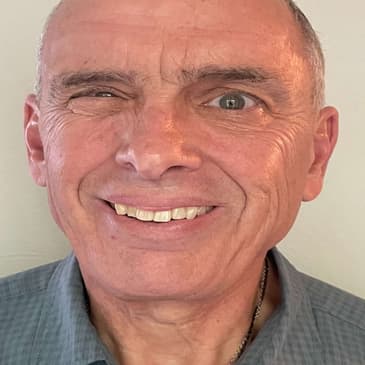
Today’s guest, Mark Wilson, lives in that space—right in the emergency room, where life can change in a single moment. Where nurses are moving fast, families are trying to make sense of the unthinkable, and patients are meeting some of the hardest moments of their lives.
But what makes his story different… is that he’s been on the other side of the bed.
After a severe bicycle accident, Mark suffered a traumatic brain injury and spent months in a rehabilitation hospital, learning how to walk again, relearning his body, his independence—his life. And somewhere in that process, something shifted.
What started as survival… became a calling.
Now, he shows up for patients and families in crisis as an emergency room chaplain, bringing a kind of presence that only comes from someone who truly understands what it feels like to be vulnerable, uncertain, and afraid.
His experience as a former EMT, firefighter and lead pastor, gives him a unique lens on faith, meaning, and what people actually need in moments of crisis—whether they consider themselves spiritual or not.
This conversation is for those on the frontlines of healthcare—the nurses and others who journey through the tough times and often carry unprocessed burdens. It's for anyone seeking insight into what truly matters when life hangs in the balance.
Mark offers a message of comfort and compassion, encouraging us to embrace the uncertain and the deep insights that occur in moments of crisis.
In the five-minute snippet: a shop teacher with a messy garage?
Find Mark Wilson here:
pastormarkwilson@sbcglobal.net
Contact The Conversing Nurse podcast
Instagram: https://www.instagram.com/theconversingnursepodcast/
Website: https://theconversingnursepodcast.com
Your review is so important to this Indie podcaster! You can leave one here! https://theconversingnursepodcast.com/leave-me-a-review
Would you like to be a guest on my podcast? Pitch me! https://theconversingnursepodcast.com/intake-form
Check out my guests' book recommendations! https://bookshop.org/shop/theconversingnursepodcast
I've partnered with RNegade.pro! You can earn CE's just by listening to my podcast episodes! Check out my CE library here: https://rnegade.thinkific.com/collections/conversing-nurse-podcast
Thanks for listening!
[00:00] Michelle: There are people in the hospital who walk into the room when everything is falling apart.
[00:05] Not to fix it or rush through,
[00:07] but simply to be there.
[00:10] Today's guest, Mark Wilson, lives in that space right in the emergency room, where life can change in a single moment,
[00:18] where nurses are moving fast,
[00:20] families are trying to make sense of the unthinkable, and patients are meeting some of the hardest moments of their lives.
[00:26] But what makes his story different is that he's been on the other side of the bed.
[00:31] After a severe bicycle accident, Mark suffered a traumatic brain injury and spent months in a rehabilitation hospital learning how to walk again,
[00:40] relearning his body, his independence, his life.
[00:44] And somewhere in that process,
[00:46] something shifted.
[00:48] What started as survival became a calling.
[00:51] Now he shows up for patients and families in crisis as an emergency room chaplain, bringing a kind of presence that only comes from someone who truly understands what it feels like to be vulnerable,
[01:03] uncertain, and afraid.
[01:05] His experience as a former emt,
[01:07] firefighter and lead pastor gives him a unique lens on faith,
[01:13] meaning, and what people actually need in moments of crisis,
[01:17] whether they consider themselves spiritual or not.
[01:20] This conversation is for those on the front lines of health care,
[01:24] the nurses and others who journey through the tough times and often carry unprocessed burdens.
[01:30] It's for anyone seeking insight into what truly matters when life hangs in the balance.
[01:36] Mark offers a message of comfort and compassion,
[01:40] encouraging us to embrace the uncertainty and the deep insights that occur in moments of crisis.
[01:46] In the five minute snippet,
[01:48] a shop teacher with a messy garage?
[01:52] Here is Mark Wilson.
[02:07] Well, Hi, Mark. Welcome to the podcast.
[02:10] Mark: Well, thank you, Michelle. It's so good to be with you.
[02:13] Michelle: I really appreciate you joining me, Mark.
[02:17] We both serve on the Bioethics committee of our local hospital, and that's kind of where we met. Although when I was practicing, I saw you around the hospital and like many other nurses,
[02:32] I was always questioning, like, what does this person do? So today we're just going to talk about.
[02:40] Yeah. The mystery behind Mark Wilson.
[02:44] Mark: Yeah, well, and hopefully I figured that out enough myself to share. So.
[02:52] Michelle: Okay, well, take me back to the moment that you first felt pulled toward this work. What was happening in your life?
[03:01] Mark: Well, that's actually a very engaged question, Michelle, to answer. And so let me do my best to do that. In a nutshell,
[03:09] many years ago, I worked EMS. I drove an ambulance. I was also a county firefighter and from that background, working in the emergency room over in Tulare District as well,
[03:19] doing that for several years, had a lot of experience working in the emergency environment.
[03:25] I had left that thinking, okay, that was just a season of my life. I was doing that type of work and had left that behind. I was a public school teacher, that was my main career at the time and was doing the EMS work on the side and continued teaching school.
[03:42] But then had a very profound call of God in my life to pastoral ministry. And so I,
[03:47] I basically left my teaching career behind and went back to seminary and completed a master of Divinity degree in preparation for full time ministry. Now in the midst of that I was already pastoring a small church and, and thinking I'd just be there for a couple years maybe at the most.
[04:04] But I finished up my seminary work and, and found that I was still continuing the same church and that's where I was supposed to be the lead chaplain at Kaweah Health or Kaweah Delta Hospital.
[04:17] At the time he contacted me, it was Kent Mishler.
[04:20] Kent contacted me and he had got my name from a colleague that was a mutual friend of ours and had had mentioned he was looking for someone who could come in at nighttime and do per diem on call work really as a,
[04:34] just as a contracted chaplain with the hospital.
[04:37] And so because of my background I felt okay, yeah, I could do that and began working,
[04:43] taking call at nighttime so that he would not have to cover every call back at night. Now eventually the staff grew and he had additional folks such as Rick Miller who were working with him.
[04:54] And I continued on that role of just being that chaplain who was the on-call guy,
[05:01] taking those responsibilities, give them some relief.
[05:04] But in 2007, and actually I started in 2000, in 2007 is when the hospital brought us on as employees of the hospital. Before that we were just what they called non employee employees, which is like double talk.
[05:17] But it was a contracted position and so they brought us those employees. So my official time with Kaweah Health began in 2007,
[05:26] but going back to doing chaplaincy work to 2000 and my clinical background was working in EMS, working emergency room is also in the field on ambulance work.
[05:38] So that, that's kind of how I got into this. But nothing's wasted in God's economy. You have those experiences in life and you think okay, that's a one and done.
[05:47] That was something I did and I'm done with that. But you find that those experiences come back to be a benefit later on in whatever role we find ourselves in.
[05:57] And so that's what happened to me in my chaplaincy role.
[06:01] Michelle: Well, that is a very interesting and rich background.
[06:05] I had no idea. You know, I think when we see someone in the community,
[06:10] whatever their title is,
[06:12] I know for me, I think like they've been that their whole life,
[06:18] and how interesting to have that background in EMS and fire and education.
[06:24] And do you think all of those different experiences enriched,
[06:31] your role as a chaplain?
[06:34] Mark: Very much so, Michelle and I mentioned pastoral ministry as well. I have continued on being the Lead Pastor of Sierra Baptist Church in Visalia for the last 32 years. So that is a role I've continued on.
[06:46] So I work full time as a pastor of a local congregation and full time as a chaplain. Now since the pandemic time, I've been full time at the hospital. Prior to that, I was part time.
[06:57] But I've continued doing this because it dovetails together very richly and makes it possible for me to do both, as pastoral ministry work of serving people, whether it be in the community or serving people in our church congregation as well.
[07:11] But all those experiences have definitely equipped me to be the chaplain that I'm able to be. And having the role and the connection with people here in the hospital, whether it be patients or whether it be with staff or whether it be with families of patients,
[07:27] whoever I'm interacting with, to be able to approach that with the sense that I've been equipped for this through the years, into the experiences.
[07:36] Michelle: I love it so. Great. Okay, well, was there a specific patient or a specific experience that confirmed this is where I'm supposed to be?
[07:48] Mark: Well, I had taught. I had treated my,
[07:52] work at the hospital as kind of a fringe experience for many years.
[07:58] I mentioned in 2007, we were brought as employees of the hospital and my main role, my main career and experience and focus was the pastoral ministry at Sierra Baptist Church.
[08:10] And that has continued to be the case. But in 2014, I had a personal experience that transitioned so much of my approach to chaplaincy. And what happened was I had a very severe accident that left me with a traumatic brain injury as well as some other physical injuries.
[08:27] I mentioned I'm blind.
[08:28] That's a result of that accident. I crashed my bicycle face first to a boulder at 33 miles an hour up in the mountains. I don't ever encourage anyone to try that experience.
[08:38] It just wasn't fun at all. But I was dodging a car around the corner and off road you hit a boulder.
[08:43] From that though, I was airlifted to CRMC, was in a coma. A few days came out of the coma.
[08:49] They were trying to figure out how best to treat my condition. I had subarachnoid bleeding going on in my brain, a basal skull fracture, several fractures, cranial fractures,
[08:59] broken neck, broken ribs. The list goes on and on. But began trying to recover from that and was not able to walk. I was paralyzed on my left side and trying to go through eventually rehabilitation.
[09:13] Starting out at Kaweah Health at the rehab hospital and spending several weeks there and then going to a neuro rehab in Bakersfield, the Center for Neuro Skills. I was there for four months and it was there that I learned to walk again,
[09:26] to function enough to be able to get back on track,
[09:30] to get home, to get back to doing my pastoral ministry work. But it was also an experience that I realized the value of spiritual support.
[09:39] And I noticed that at the rehab hospital here at Kaweah Health, we really didn't have that support there. And it was something I really desired. And then also the same thing at CNS.
[09:50] It just wasn't something that was made available.
[09:53] And so when I got back on my feet literally and was able to get back doing some on call work, I spoke with our senior chaplain at the time and, and said, you know, I'd really like to do some work out at the rehab hospital.
[10:06] I'd like to meet with patients there and encourage them, having had that experience and being there and knowing what that is like to have that. And I was just really volunteering to do that.
[10:17] And he came back with the recommendation I become a part time employee of the hospital and do some part time hours there at the rehab hospital. And so I began building a chaplaincy presence at the rehabilitation hospital that continues to this day.
[10:30] And it was really a blessing for the staff, for the patients and especially for me to have that opportunity to service the spiritual support at the rehabilitation hospital.
[10:41] And then during the pandemic was asked because of my EMS background if I would take some time in the emergency department and actually serve full time for three months in ED because of the crises that were going on and challenges that were being faced by staff, even the loss of staff in the ed.
[11:00] They wanted to have a chaplain presence to try to help navigate that and give some encouragement for staff especially as well as patients. But the focus transitioned a little bit initially there,
[11:11] so it was only supposed to be for three months, and when I was there for three months the decision was made, we'd like to continue this relationship and have you continue serving.
[11:20] So my role now is working primarily in the emergency department,
[11:25] and although I'm the chaplain at large throughout the whole district,
[11:28] I do round back to the ED and make that my home base, and have continued to develop good relationships, good rapport with the staff and also patients and patient families.
[11:39] And I'm there to respond immediately to crises that come up there. And so it's been a good experience based upon that. Again, that past experience that I had many years ago, back in the 1980s, that
[11:51] has come back to be a blessing now. But as far as the experience that I had, that kind of solidified my sense of this is what I'm supposed to be doing.
[12:03] It came out of actually my own injury and brokenness and struggle and emerging out of that, saying, okay, I have found help, that God has helped me through this, and I want to be of help to others.
[12:15] And that gets back to 2 Corinthians, chapter 1, that God comforts us in our afflictions so we can be a comfort to others in their afflictions. And so that's what I found to be a true reality for me.
[12:27] Michelle: Wow,
[12:28] that's an incredible story. And I just love how you took that, and it's like paying it forward. Right? It's like God was there with you through your injury, through your recovery,
[12:41] and then, like this you saw this opportunity, I want to pay this forward.
[12:47] Mark: Yes.
[12:48] Michelle: And that's just incredible. So now I've spoken to so many nurses that have been through personal experiences like yourself and seen a need for something that maybe they could have benefited from or other people.
[13:05] And then they go and they innovate and they create,
[13:09] some piece of medical equipment or something like that to help their fellow mankind. And I just think.
[13:18] I just think that's really wonderful.
[13:21] Mark: And as you described it there, Michelle, I say, yes, I have had the opportunity to carve out a niche. That's what I've done. I've carved out a niche for providing spiritual support for patients, for families, for staff,
[13:35] And it may be a little bit uncharacteristic compared to other hospital settings. I've spoken with other folks from other institutions, and they don't have the same sort of setup that we have, and especially with a dedicated emergency department chaplain.
[13:50] But the circumstances that were presented forced us innovate and to carve out a niche of saying this is what we need to do. And it's been a, I think it's been a blessing for everyone, especially for myself in this.
[14:03] Michelle: Wow. Yes. Such a blessing.
[14:06] Well, most of us. And so I'm speaking for nurses here, Mark. Most of us nurses meet you like in the middle of a shift in a really intense moment.
[14:16] So bring us there, walk us into a typical day.
[14:21] What do you see when you step into the emergency room?
[14:25] Mark: Well, sometimes I see a lot of the same old, same old. We have just the clinical type of work that's going on and meeting people's needs, people who come to the emergency department.
[14:37] But there are those occasions, we have those very urgent emergencies that are happening and you have those code one calls, you have those critical trauma calls, you have those circumstances where, okay, everyone needs to be there and, and engaged in that.
[14:55] And I've found for myself when those happen, although I'm not serving in a clinical role at that point,
[15:01] oftentimes I'll find myself at the bedside of a patient while they're being treated, trying to help to calm that patient, trying to help to,
[15:08] affirm that patient, knowing, okay, yes, we know you're hurting and we're trying to help you. And so just understand that we're here to help you. We're on your side, we're going to take care of you.
[15:18] We're just trying to assure them and calm them. And so I find myself doing a lot of pep talks to patients who are being treated sometimes,
[15:26] right, while I'm talking to them, there's a lot that's happening around the bed. But it's also very interesting because the emergency department staff has become very accustomed to my presence, my being there.
[15:36] And so I'm in that red stripe zone on the floor, which is layout emergency room, that only those who are caring for the patient are in that zone. And so in the appropriate times, I'm there in there talking to the patient and helping to calm the patient if they're,
[15:50] of course, if they're GCS is at a level they can understand and respond and then also supportive of family. When families come, sometimes very quickly, it's amazing how quickly families will get there.
[16:02] About the time a patient arrives on ambulance, here's a family as well. And so working with patient family services and make sure the family is kept aware of what's going on, but also supporting them, praying with them and calming concerns they might have and trying to assist them in that time of crisis because it's often far reaching what's going on.
[16:25] It's not just the patient, but family. And then the staff as they contend with,
[16:29] with the circumstances you're facing right now down in their ED, right this very moment, there is a code white that has happened. And so the staff has been dealing with this pediatric code blue situation.
[16:42] And, and in that I know that I'll be going and doing follow up with staff later today and kind of rounding with them and making sure everyone's okay before they end their shift to go home.
[16:52] And if they need to talk about their feelings, if they need to talk about what they experience, sometimes there's angst about something that took place during the whole clinical aspect of what was happening.
[17:04] Let them express that, but also deal with their feelings, their emotional response and try to help them to make healthy choices and how they contend with that.
[17:13] So when you say, okay,
[17:15] what does a typical day look like in ED?
[17:18] I don't know if there is such a thing.
[17:20] It can be so strange. And when you think, okay, we're all good,
[17:27] someone says the quiet word, they jinx us. And then everything starts breaking loose. It gets a little wild down there. But it's been a blessing to be able to be there and also developing relationship with the EMS folks that come in, the MS.
[17:41] crews,
[17:43] those who are Life Flight crews coming in. And so they, they've come to this awareness. Hey, here's chaplain Mark. He's here. And so we have a sense they can even, they even grab me by the short shirt sleeve and say, hey, would you talk to this patient we just brought in and calm them down?
[17:57] So I have their engagement as well in the role I have there. So again, it is interesting. I still haven't figured it out myself,
[18:07] what's going on here, but it's good. I like it.
[18:10] Michelle: Oh my gosh, it sounds like such a wild ride, but like, in a good way.
[18:15] Mark: Yeah.
[18:16] Michelle: First of all, I love that,
[18:18] I love that you're also thinking about the staff. Right.
[18:23] And that you're present during those really important debriefings. Because I've been a pediatric nurse and a NICU nurse, I've been in a lot of code whites and they're very intense and there's lots of feelings that come up for everybody.
[18:37] And one of the best things that we can do for ourselves as healthcare professionals is to do those debriefs. They're so, so important.
[18:46] And I never had the benefit of having a chaplain there and it would have just been so wonderful. And I love that you're also there for non hospital personnel like EMS and flight.
[19:00] But they support us like immensely. Right. We couldn't do what we do like without them.
[19:07] And with your history of being in EMS and fire,
[19:12] you get them,
[19:13] you get them and that just has to be so valuable. I just love it. I think that's such a wonderful service that I didn't even know existed, Mark.
[19:24] I didn't know that that was your role, that you stay in the ER.
[19:29] That's just awesome.
[19:30] Mark: And I am CISM certified,
[19:35] And several of our chaplains now are CISM certified, so we can lead in those diffusing and debriefing meetings. There's a difference in diffusing and debriefing. But we can help staff to work through those times that they've been up in some real rough situations to be able to express themselves and try to help support them through that.
[19:56] So yes, we have been trained to provide that service for our staff.
[20:02] Michelle: Yeah, that's fantastic.
[20:04] Well, what are you noticing when you're on the unit? What are you noticing that the rest of us might miss because we're just moving so fast?
[20:14] Mark: Oftentimes when I engage with a patient and just have conversation with them,
[20:20] I'll become aware of something that may be important for the provider to know about,
[20:30] not just in their existential thoughts, but as far as something physiologically is going on, maybe something in history that wasn't divulged. And I'm able to provide that,
[20:41] understanding. Sometimes it's very much a nuance of hey, this is kind of what's going on here.
[20:47] And then also to gauge what does the patient desire, what do they want as far as an outcome of their treatment and how can we as a staff help to provide that?
[20:59] And it may be that we're overshooting it, that we're not understanding, okay, what is it the patient is truly wanting? So very much patient centered care is what we're trying to do.
[21:09] And I find myself in several circumstances advocating for a patient, you know, going to the provider, going to the nursing staff and saying, hey, this is where this person's at.
[21:22] You know, maybe we can accommodate whether what they're feeling, what they're desiring here a little bit. So I find myself in that advocate role. In fact,
[21:31] there's a way I think about this, Michelle, that, there's a word in the Greek, Biblical Greek, New Testament, the Koine Greek of the New Testament, and it's the word parakletos.
[21:42] And that word, parakletos,
[21:44] it means one who comes alongside.
[21:47] And that is what I do. So I see myself in this parakletos role of coming alongside patients or families or of staff,
[21:58] and I journey with them in what they're experiencing, and I make it clear that I'm there to support them and help them and to encourage them however I can, but also to just give that a sense that they navigate
[22:13] The circumstances they're facing. So, yeah, I come alongside the patients and able to gain a sense of what they're desiring,
[22:22] what they're needing or maybe things that maybe are being missed. You know, that we're looking at the forest but not seeing the trees. And so I found that times I've been able to offer a perspective that maybe has been helpful for the.
[22:36] plan of care for a patient.
[22:38] So I just try to be very aware and given my background experiences and the years I've been doing this, and I don't, you know, claim to be
[22:48] Someone who's a clinical,
[22:50] you know, licensed person,
[22:52] but from my experience, I'm able to say, you know, have you thought about this maybe being a situation and, no, okay. And that being evaluated and finding that there's validity to that.
[23:03] So I try not to be an armchair physician. That's definitely not my role. But as far as trying to help give some perspective, I've found that I do
[23:13] I do have that at times. At times I do that. If I can spit out my words here, at times I do that. Yes, sure.
[23:21] Michelle: Sure. Yeah. Do you feel like when you're coming alongside the patient, and I love that.
[23:29] That obviously you kind of have to establish rapport pretty quickly. Right. Because there's not a lot of time sometimes that, to do things. And do you find that patients are trusting you because of the role that you're in as a chaplain?
[23:47] Or do you find that you are able to establish a rapport with so quickly with them that they connect with you?
[23:56] How does that work?
[23:57] Mark: Well, it really is on a continuum of their response. There's some patients, I walk into the room and they see my badge and they say, oh, chaplain. And they equate that with the Grim Reaper.
[24:09] That's what they see my as being in fact, when I go into a consultation room in ED and there's family there, I usually put my hand over my badge because the first thing they see is chaplain.
[24:18] It's like, oh no, we got the worst news coming.
[24:20] So then I tell them, hey, I'm Mark, I'm a chaplain. I'm here to support you and encourage you. And so then I'll let them know that. But yes, it's interesting how that the continued response from being, wow, here's the grim reaper coming telling us bad news to those who are like,
[24:34] oh yeah, they're accustomed to receiving pastoral care and they see me as a pastor, a spiritual leader, and so someone that is to be trusted.
[24:45] And just by nature of my,
[24:47] you know, having chaplain on my badge, they automatically go there, okay, I can trust it. So there's that's how to continue.
[24:53] But somewhere in the middle, there's folks who, when I walk in, I try to just calm their anxieties and speak to them in a very easygoing way and, and offer my support.
[25:05] I never come in presuming upon people, hey, the chaplains here, I'm here to save the day. I'm going to, you know, fix all your problems here. I'll usually go in and say, hi, I'm, I'm Mark.
[25:15] I'm with chaplain Services and just want to let you know I'm here. And I've been going around and checking on patients and encouraging folks and if there's any way I could be of support for you, I want you to feel free to let staff know to get a hold of me.
[25:27] And even from that introduction, folks many times will say, oh, well, would you pray for me?
[25:33] Absolutely, I'd love to pray for you, but I never go into saying, hey, I'm here to pray for you. I wait for them to tell me that's something they would desire.
[25:41] And oftentimes we have a dialogue that goes on for a few minutes before we get to that point just of building that rapport and finding out who they are and, and finding that we have maybe some shared experiences and able to find some connecting points to talk from.
[25:57] So it's really about building connection with people and like I said, coming alongside that paracletos role, coming alongside,
[26:04] kind of walking with them a bit,
[26:06] knowing where they're coming from, who they are, and knowing how best to meet their needs.
[26:12] Michelle: I love it. I love that the care that you provide is so patient centered that you wait for the patient to express what they need from you instead of saying I'm here to do this or that.
[26:24] That's truly patient centered care.
[26:26] I want to talk about the hard moments since you mentioned the grim reaper.
[26:30] Mark: Yeah.
[26:31] Michelle: And you know, as nurses, during hard moments, we're in those too, but we don't always stop to process them.
[26:39] So Mark, can you bring us into a moment like maybe a code,
[26:42] a death or a family in crisis where you were there and what is your role right then when everything feels heavy and uncertain?
[26:54] Mark: Yeah.
[26:57] Well, again, there's a continuum on that response depending on how folks perceive me when I come. And so with family,
[27:06] oftentimes I go with a physician into the consultation room to basically do a death notification.
[27:14] And I don't do that notification, a physician does, but I'm present. And then it's almost as if when the physician is done, the provider is done giving that notification and leaving room, that that's when my role kicks in, that I'm there to support the family.
[27:28] And I oftentimes will just talk to them about their loved one who has passed away and tell me about their life and let them share.
[27:36] And then I get a sense of where that individual was at spiritually and what would be appropriate as far as praying with the family, encouraging them.
[27:47] Sometimes it's very practical. I'll go get them some water or a warm blanket or something that helps to comfort them in that mist or order a comfort cart from the food services to bring, be brought over to help give a family something there to just know we care for them.
[28:05] And there's sometimes I'm with a family for hours after a patient has passed away, waiting for law enforcement to come, you know, the coroner's report to be done to help the family know this is what's going to be happening here.
[28:18] This is what you need to know about. And this is also we're going to have to know from you as far as your funeral home choice. So be thinking about these things so we can.
[28:26] When you get that point and you ask that question,
[28:28] when the sheriff's officer asks you that question, you'll have an answer for them. So just helping the folks to again navigate that, but doing it in a very compassionate way.
[28:36] Never in a way of, oh, I've done this hundreds and hundreds and hundreds of times and so I'm the expert here on this. No, it's a matter of very humbling and recognizing it's a privilege to be able to be there with the family in those very tender moments of a loss and to help them and to encourage them and sometimes offering spiritual perspectives,
[28:58] sometimes just giving them encouragement that, hey, we're going to go forward. You know, you're going to make it through this. And, and yes, grief is sometimes it's a real monster that just seems overwhelming and they're going to be changing emotions you're going to face.
[29:13] So be aware of this and don't play the woulda, coulda, shouldas. What if we had done this? What if we done that? Because there's really no basis for that. We're going to go on and honor the loved one that you've lost as you go forward in life here.
[29:26] So that's generally what I do now. Back during the pandemic,
[29:33] it was a little more challenging because we didn't have families at bedside when patients were passing. And so oftentimes I would be on FaceTime with the family using the iPad,
[29:44] which just seems almost barbaric now to think about. But the family goes in, it'll be in the room. And the patient was passing from coronavirus.
[29:52] And so being able to be with the family on the FaceTime. And here I was in full PPE in the room with the patient and just trying to be that go between and helping support as a patient took their last gasp of breath and that was challenging there, but trying to let the people know,
[30:11] hey, we care about you and this hurts to lose a loved one. And so we'll let you know we're supporting you in this. And I think that goes a long way.
[30:21] Just people know that someone cares that they're not just, you know, a cog in the wheel or,
[30:27] you know, yeah, your loved one died, so get over it type of thing. I had experience like that as a young man. I had an aunt who passed away and was taken to the hospital bay and, and went to the hospital with my uncle to find out what,
[30:43] how, how his wife was doing.
[30:46] And a nurse came out and said, well, the patient expired and then walked back in. That was it.
[30:52] And that was the death notification. And so it was so shocking for my uncle and shocking for me. Expired? What do you mean, expired? What are you talking about?
[31:00] And there really wasn't any support there. And I would hate to have that happen with any of our patient families.
[31:08] Many of our patients,
[31:10] we have times when there's like a vehicle accident and there'll be a husband and wife who are involved in the accident. Well, the husband was killed in the accident.
[31:19] He was 1144, dead on arrival at the scene. But the wife didn't know that, she was taken by ambulance.
[31:25] And this happens occasionally where we have this scenario. And although I am not to tell the wife, hey, your husband passed away. Oftentimes the EMS will tell me,
[31:36] oh, yeah, the husband was 1144. He didn't survive. And so I will wait for law enforcement to come to make that death notification, but I will build a connection with the other patient ahead of time so that when that happens, I can be there to support them and encourage and pray with them and give them that sense of someone does care about them and their situation or loss they're facing.
[32:02] I'm sorry, I'm going on and on here, Michelle, but it's just, you know, asking these questions. I have all these different experiences that come to mind, and it's like, okay, how can I.
[32:11] How can I?
[32:12] Michelle: Yeah, that's what we're here for.
[32:15] I want to hear it all. Mark, Don't be sorry for talking.
[32:18] You know, when you were talking about COVID I was thinking, man, it's been six years since the start of COVID right?
[32:24] And the cumulative trauma that so many healthcare providers have suffered is still with many of us today. We still are processing that. I talk to nurses and other healthcare providers that talk about that time and the grief that we feel still for that whole thing.
[32:46] And I think nurses feel grief very, very profoundly.
[32:51] Mark: Yes.
[32:51] Michelle: And a lot of us are always wondering, like, am I doing this the right way? Right.
[32:56] Mark: Yeah.
[32:57] Michelle: So from where you stand, what are nurses carrying that we don't always talk about?
[33:04] Mark: I know that all of us tend to silo experiences, and we go through these very trying,
[33:13] tragic experiences day in, day out and experiencing loss. But we're there caring for a patient, and we've invested a lot of ourselves into a patient trying to help this patient to survive.
[33:27] And the patient doesn't survive, or the
[33:31] patient decompensates and they're moved somewhere else.
[33:34] But we still have made an investment there. And
[33:39] To not discount that, say, yeah, okay,
[33:41] you made an investment,
[33:43] and you feel a loss in that investment because you haven't seen that return that
[33:49] wonderful response to that patient recovering and getting back to live in life and what you're doing, what you do for. But the silos we have that
[33:58] We kind of tuck those experiences away in
[34:02] Sometimes they get full.
[34:04] And we have to get rid of some of it. We have to be able to talk it out. And so to not be that quintessential professional or have that perspective of yourself to where you're not willing to talk to someone, not willing to get together with someone and say,
[34:19] hey, I need to talk about something.
[34:22] That's also been a real advantage of my role in the emergency department, is there with the nursing staff and the tech technicians, everyone who's there,
[34:34] the pharmacy, everybody who's involved there,
[34:37] even physicians and being present there, I've had them say Mark, can I talk to you? And we've just stepped aside in the hallway and they'll share about some experience. They had something that happened that just really
[34:51] affected them in a very poor way. I mean they really were struggling with that and so kind of give them some perspective and to go forward with that.
[34:59] Sometimes it's personal life.
[35:02] They're busy doing their job. They're fulfilling their calling as being a nurse, being a provider. They're doing what they've been trained to do and doing a good job at that.
[35:15] And they have something happened in their personal life. They're going through a,
[35:19] end of a relationship, they're going through a loss of their own, whether it be a parent who's passed whatever might be the case and they're struggling with the challenges of life.
[35:31] And that is impacting how they do their job. That's impacting their ability to fully give themselves, to make those investments in the lives that their patients are caring for.
[35:43] And so I'd have, oftentimes people will pull me by the sleeve, hey Mark, I need to talk to you. And they'll tell me some things. Sometimes it's pretty heavy bombs are dropping on me with what's going on and,
[35:53] and I know sometimes this stuff that's been self inflicted, they've made some poor choices in life and sometimes it's because of really some really bad things that have been done to them as well.
[36:05] And trying to help them to walk through that is,
[36:09] is a, I think a very important aspect of what I do and how I can engage with our staff to help them be stronger and also to be healthier in their emotions,
[36:21] their connections to others in what they're doing to be healthier employees here at the hospital and more productive and also able to go the distance and not find themselves saying I'm done with this, I'm gonna hang up my stethoscope and go on and.
[36:38] And work at the mini market or something. I just can't do this anymore. But to have that sense of,
[36:43] I can continue.
[36:45] And so to have someone who cares, someone who can be that person who can share in those burdens.
[36:53] And yeah, in Galatians, it talks about how we're to bear one of those burdens, but also we're to bear our own burdens. It's kind of interesting because the apostle Paul uses those two phrases right back to back.
[37:04] And so, yeah, there are burdens we can bear for others. And there's some burdens you have to bear yourself, you have to take care of. But to help one another through that is very important to share in that.
[37:14] Michelle: Wow. Yeah, absolutely. I just see you being so valuable to the nursing staff, to the physicians. Everybody in the emergency room.
[37:23] Have you ever been called not for the patient, but for the staff?
[37:28] And what did that look like?
[37:30] Mark: Usually that's when there's like a critical incident, stress management need. One of the managers is looking at staff thinking, okay, we need to do a debriefing here. And sometimes we're busy doing what we do because it's what we do,
[37:47] and it's what's expected of us to do that there's a failure to see, wait a minute. This was abnormal. This was something out of the ordinary. This was something that
[37:56] is very impactful in a negative way if we don't deal with this. And so oftentimes a nurse manager, sometimes a provider will call and say, hey, could you come debrief staff on this?
[38:08] And so I'll go in those situations and get the staff together, everyone who is involved in that particular scenario that took place.
[38:17] And we just were able to talk through it and also provide some resources for getting some further help and in how to not be stuck in that mode of
[38:29] I'm just so burdened by this situation that took place, but able to go on and say, okay, I've dealt with that. I can move forward here. So in those situations with CISM debriefings, I definitely am called for the staff.
[38:41] But sometimes, a lot of times it's really just that interpersonal,
[38:46] you know, hey, someone sees me on a unit, it says, oh, Chaplain Mark, hey, can I talk to you a second? And then able to speak with them just a little on the side and to
[38:56] oftentimes to affirm what they're feeling, what they're dealing with and to normalize that and to help them know they're not losing their mind or not about to implode. This is very normal.
[39:10] But then helping them to address that in a healthy way so we can go forward. And, that's wonderful for building friendships as well, and to have those connections of people throughout the hospital, because they,
[39:23] they see me as someone they can talk to. They see me as someone who is able to hear them, to listen, to offer appropriate perspective. And it may not be spiritual perspective.
[39:35] You know, I'm a Christian pastor. That's what I do. That's how I've been trained. And so I certainly have that paradigm that I operate from,
[39:42] but it might be more existential. Just, hey, let's, let's think about what you're going through here and how can we address us in a healthy way? So, again,
[39:51] that paracletos role comes in many different fashions when I interact with staff.
[39:57] Michelle: Yeah, I imagine that you're just such a great resource for them, and really bring them a lot of comfort.
[40:06] You know, for the nurse who loses a patient and then has to walk into the next room and care for another patient,
[40:15] are there some small things that nurses can do to care for themselves in real time when that is happening?
[40:23] Mark: I think oftentimes a nurse will have to find what works for themselves personally, because we're all wired differently. How am I gonna deal with this? And then it might be doing some breathing exercises, taking a moment to breathe and to just reflect on what they just experienced and then to prepare themselves to go on to the next experience.
[40:45] And it's okay to take that, to stop,
[40:48] take those breaths and really cognitively leave it behind and go to the next patient.
[40:56] It may be through prayer and the time of saying, okay, I'm going to pray about this. I'm gonna allow God's mercy to help me through this and to help me to do what I see as impossible.
[41:08] Now, how can I possibly go to this next patient and provide adequate,
[41:13] let alone exceptional care for this patient when I'm dealing with this experience I just had here, and it may not be a loss situation. They were with a patient that was really obnoxious and mean and cussed him out and was just
[41:29] In a very, just a very ugly way. And I'm not talking about, like, your dementia patient who you say, okay, I understand that patient has this cognitive disorder going on. I know where they're coming from.
[41:39] But when you got someone who really has no excuse and they behave that way,
[41:43] it's hard to believe that. It's hard to deal with that. But to say, okay, I'm going to take a breath,
[41:48] I'm going to center myself and, and, or ground myself here to say, okay, I can, I can go into this next patient and provide not only adequate but also exceptional care to this patient.
[42:01] Michelle: Yeah, I mean,
[42:02] you mentioned the patient that is maybe violent and combative and verbally abusive and healthcare providers are running into those patients more and more. And you know, violence from patients is on the rise and it's traumatic.
[42:18] It's traumatic for whoever is in on the receiving end of that. And I like that you're framing it like, okay, it's the same thing sort of as,
[42:28] grief happening in the moment, losing a patient,
[42:32] and to take a moment and step outside and get some fresh air, do some deep breathing, regroup,
[42:39] say, you know, I promise myself that I'm going to address this later when I have time.
[42:46] Those things are, are so, so important.
[42:49] And I like that you're,
[42:50] addressing those things.
[42:53] I want to talk about kind of some spirituality since you are a spiritual person and you sit with so many different kinds of people and not all of them believe the same things.
[43:04] Mark: Yes.
[43:04] Michelle: So how do you support someone who says, I'm not religious?
[43:08] Mark: Right.
[43:09] Well, in assessing where they're at, I let them know, hey, I'm here to talk with you. I'm here to connect with you. I'm here to support you. I have no agenda.
[43:18] I'm not here to somehow proselytize you or to make you believe the way I believe. I mean, I would love to have that opportunity. I mean, that's again, how I was trained from a very evangelical background.
[43:30] But as far as recognizing that patient centered care, I want to provide support and care for that patient, where that patient might be,
[43:37] and to interact with that patient, support them and let them know, hey, I care about you.
[43:43] I don't care about my agenda of what I want to accomplish here.
[43:48] So to support the patient is how we, I think, how we,
[43:51] come at it from a way that is not so much. Okay, where would you stand? Where do I stand? And is there any, any connecting points here?
[44:00] Now, I'll share with you that,
[44:03] my PhD is in applied theology with an emphasis in ecclesiology that is my advanced studies. And so the ecclesiology has more to do with the Christian tradition and the various expressions throughout the Christian tradition.
[44:20] Understanding where different people come from, who might be of one denomination versus another or one particular heritage versus another heritage, and knowing, knowing where those differences came from and historically what happened that took place.
[44:35] So I've done quite a bit of study on that. So I have the sense of when I go into a room and someone tells me, hey, yeah, I am a Christian.
[44:45] Sometimes I'll say, well,
[44:47] what flavor of Christian are you?
[44:49] Because they'll look at me like, what, what do you mean, what flavor? I said, well, are you, are you Pentecostal? Are you a Baptist? And they'll say, oh, yeah, well, I'm, you know, I have this background and, and they'll, they'll share that with me because that helps me to know how to relate to them.
[45:05] Sometimes when I go into a room and they tell me they're of another religious faith, let's say they're, they're a Sikh. And oftentimes I'll know that ahead of time because of them being Punjabi, for instance.
[45:16] But I'll know to relate to them in that way that is respectful of their tradition. And I know also that for the, like the sick patient, they're oftentimes very willing to have some come pray for them.
[45:29] That is not an issue at all. Whereas other beliefs, they're not so open to having a Baptist preacher come pray for them. So that's not something they're inclined to.
[45:38] But having that understanding of where different folks are and being able to assess that and to know how can I best relate to this person. And even asking that question, what do I need to know about you that would help me to provide the best care I could provide for you?
[45:53] I want to provide, I want to give the best care. So what would you have me to know about you that I can do that? That's an important question to ask.
[46:01] Michelle: Yeah, yeah, absolutely. And again, patient centered care, right?
[46:06] Mark: Yes.
[46:06] Michelle: You're letting them decide how you can serve them. And that's awesome.
[46:13] Well, as I said before at the beginning,
[46:16] we will serve on the Bioethics committee.
[46:19] And so how do you navigate situations where families disagree about care decisions?
[46:29] Mark: Well, of course, the go to on that is very often what would the patient want?
[46:36] And helping the family to have the understanding. Okay.
[46:41] You know, Bob would have liked this.
[46:44] You know, Susan would have liked this or she would not have liked that.
[46:49] And to help them to come to that agreement, understanding on their own, to guide them in those decisions in such a way that they are, they have ownership of that decision.
[47:00] It's not that they're being told, okay, you need to withdraw treatment from your loved one at this point because this is futile, what's happening.
[47:08] That is not something that folks are open to hearing, but to help them to understand all the dynamics of what's happening and then helping to guide them in making those decisions and that way they could be more comfortable with that decision.
[47:22] And that also helps to mitigate the family infighting that takes place for.
[47:28] You have a cousin who wanted to continue the treatment of Grandma and another who said, no, let's, let's go ahead and put the Grandma in comfort care and let her pass.
[47:37] And those fights that can take place, that can be so divisive to families, so to try to avoid that happening so they're not complicating their grief that they're going to have that's a natural part of, hey, we lost Grandma, so it's going to hurt.
[47:51] But how can we help them as they grieve in a way that is healthier?
[47:56] So, yeah, just helping to walk with people that parakletos, helping to walk with them, helping navigate this, helping them to make those decisions and sometimes have to be very forthright.
[48:07] This is really not helping Grandma, and this is hurting her.
[48:11] We've recently been bringing more patients, like in the emergency department,
[48:17] when we have a patient who they're attempting to resuscitate. And this patient is riddled with comorbidities and has all kinds of health issues at various age. And not saying that I'm diminishing the value of that person, but there's just so much going on.
[48:33] It's like, wow,
[48:34] what are we doing? What we're doing here? You know, we're sitting here doing compressions for an hour on this patient and nothing. There's no heart activity, nothing to base a sense of, hey, we're making progress here.
[48:47] And we've gotten to where recently where we're bringing a family and especially a family who has said, no, keep going, keep going, keep going. We've brought them in, they can see what is happening.
[48:56] And it's interesting how many times they say, no, let's stop, let's stop. They just.
[49:00] That visualizing that, seeing what's happening, it causes them to say, no, this is not what Grandpa would've liked this, he wouldn't want this. And so trying to, in a very,
[49:12] I don't wanna sound callous, but a very appropriate manner and briefing them beforehand, okay, this is gonna be hard to see, but you wanna see this. So we're gonna take you in to see what's happening.
[49:21] And whereas in the past, I say two, three years ago, that wouldn't happen, we wouldn't bring family in while we were doing resuscitation efforts, but now we're doing that more and they see that and it will say, okay, no,
[49:33] we decide, let's stop this.
[49:36] Michelle: And I think that along those lines, when you bring the family in to see the resuscitation attempts,
[49:44] from what I've read, research wise, that that really helps them in their grief process.
[49:52] Mark: I would think so, yes. Yes.
[49:54] Michelle: Because they can see what's being done and they're not just a bystander. Like, we're explaining everything to them, you know, as we go. Okay,
[50:02] we're doing compressions right now. We're going to give epinephrine that we're hoping that we'll start his heart again.
[50:08] We're breathing for him,
[50:10] you know, so we're explaining every step that we're doing along the way.
[50:16] And then I think if the patient ends up passing that it's helpful to the family to see that,
[50:25] they were doing everything they can and it helps in the grief process.
[50:29] Mark: Yes, absolutely.
[50:31] Michelle: And I think so often the Bioethics committee is seen as, you know, the death committee.
[50:36] Like we decide if patients live or die. And that could not be further from the truth. No, it's multidisciplinary. We have nurses, physicians,
[50:47] chaplains.
[50:47] Mark: We have social workers.
[50:49] Michelle: Yes, social workers. So many professionals that are helping guide the patient's family or the patient to make their own decision.
[51:03] So, yeah, and I had the pleasure of interviewing Sandra Shadley,
[51:11] our committee chair and lead social worker and Dr.
[51:16] Ryan
[51:18] Mark: Howard, yeah.
[51:20] Michelle: Dr. Howard.
[51:21] Mark: Yeah.
[51:21] Michelle: Yeah, I just had like this brain freeze. Yeah, Ryan Howard on last year. And they were really,
[51:29] really good in describing how an ethics committee works. So that was great.
[51:36] Mark: Yes.
[51:36] Michelle: I want to talk about the personal impact of what you do, Mark,
[51:41] because I'm curious, like, what all of this has done to you personally.
[51:48] How has this work changed you as a person or has it?
[51:53] Mark: I believe that I have grown more empathetic in caring for others because I've seen such pain and suffering and not only my own suffering, but walking with people through that and providing support and trying to offer encouragement and give them a measure of peace and what they're dealing with.
[52:18] It has really expanded my ability to be empathetic, compassionate to people and very generally speaking,
[52:27] and more understanding.
[52:29] Whereas before, I think, especially my younger years, I was a little more black and white, cut and dry and, and right and wrong. And I'm not going to, you know,
[52:37] bend on these things. And I do have my convictions that I'm very strong on, but as far as being compassionate and caring and understanding of people, I've grown in that regard very much.
[52:49] I've learned to do self care,
[52:52] which before I, years ago, I wasn't very good at. And so I would internalize a lot of things when I was a firefighter. Had a very bad accident one time that had multiple fatalities and that really impacted me initially.
[53:05] And I was very young and inexperienced, very unseasoned at that point in what I was doing. And I remember debriefing with other,
[53:13] those on, in the other, in the company who were also impacted by that and trying to work through that and realizing, okay, if I'm going to continue this, I have to find a way of dealing with these things.
[53:23] And so doing self care, whether it be talking to other people formally or informally,
[53:28] I find exercise to be a major part of my debriefing.
[53:33] I spent a lot of time swimming. I do a lot of laps in the pool. This morning
[53:38] I swam 4,500 yards at, the Lifestyle Center. I swim laps and so, and I've been a lifelong swimmer. I played water polo and swam when I was younger.
[53:47] And so that was my,
[53:49] background there competitively. And so I've done triathlons as well. And so with that, I like to go swim laps or I like to go around,
[53:56] ride my bicycle. I'll go ride on my bike for four or five hours and ride up in the hills and have a great time. I try not to crash into any more boulders, but I do it.
[54:05] and I do okay most of the time, but yeah, but I like to get out and ride or go for a jog. I just enjoy the exercise. And I find it's also those experiences, especially when I'm swimming, to be wonderful times of prayer that I,
[54:19] I'm communing with God in prayer and able to express things and think about things and have things come to my understanding that I had not considered before because I have that timeout.
[54:30] And it's almost like in a situation where those bells and whistles and everything around me, I'm not hearing that I'm. I'm able to focus. So having self care and whatever it might be, I'm not advocating everyone has to be a crazy workout person, but whatever you do find something,
[54:48] it might be a hobby, it might be a
[54:52] Just something you just really enjoy doing with other people. You know, you just like hanging out with somebody or listening to music, whatever it might be, find those outlets and use that as self care to work on this because otherwise it's going to catch up with you and it's going to
[55:09] Cause, you're not going to be able to go the distance. And we want everyone to finish well. We want you to go through this career and finish well.
[55:16] And so don't find yourself being so hamstrung by whatever you're going through. Find a way of dealing with this and getting out of this.
[55:27] Michelle: So that's a great message. I mean, this is the age I feel of burnout for so many healthcare professionals. You know, sadly,
[55:37] and now after almost four years of podcasting,
[55:41] the professionals that I've spoke with have started to realize the importance of self care.
[55:47] Mark: Yeah.
[55:47] Michelle: Where, you know, I talk about back in the day when I was a nurse, you know, starting out in the 1980s, like that wasn't a thing at all. Or self care was considered like going out with your friends after work and having drinks.
[56:00] Mark: Yeah.
[56:00] Michelle: And it wasn't, you know, working out. And I see you at the Lifestyle Center, Mark. I see you there.
[56:07] I haven't seen you swimming yet, but I see you walking the track and doing other things and you always look like you're in the zone. In the zone.
[56:17] And I love that. I've always envied people who work out for their mental health. My daughter is one of them. And I'm just like, I didn't get that gene.
[56:27] I totally didn't get that.
[56:30] But I like to do other things. Like I do walk and, and I do crafts and yeah, I paint, I do watercolor and like you said, you gotta find the things.
[56:39] Mark: Podcasts as well, so.
[56:44] Michelle: Oh yeah, and I do talk about that too. I don't know if that's self care. Sometimes it can be kind of stressful.
[56:47] Mark: I don't know, I think it's something that is very life giving for you, Michelle. So I think it's wonderful. Yeah.
[56:54] Michelle: Yeah. Well, as we close, Mark, if a nurse is listening right now and they are exhausted, emotionally, spiritually, all of that, what would you want them to hear?
[57:09] Mark: Give me a call or call your chaplain. Find out who your chaplain is, wherever you might be working, serving,
[57:18] and at least give it a try. You know, talk to a chaplain and it may not be a good fit. It may not be the person who you're hoping to speak with, but find a colleague, someone who you know you can connect with.
[57:29] You could usually have your antenna up to see,
[57:32] to hear what's going on with people and to know I can talk to this person and so take those risks. It's okay to be vulnerable. It's okay to say I'm struggling and I need to talk and people will respect you for it.
[57:45] They're not going to castigate you or to say, oh, you're a professional, why would you be doing that? It's okay to say I need some help.
[57:54] And when you do that and get the help, then like I said earlier,
[57:58] when we are comforted in our afflictions, we can comfort others in their affliction. You'll find that you're the one who's able to help others as well.
[58:05] And you're by nature of being the profession you're in, you're a helper. That's what you do. You help people. And so that would give you opportunity to expand your ability to help others by getting help yourself and then sharing with others.
[58:22] Michelle: What a great message. Yep. I second the motion. Well, Mark, if people have questions, where can they find you?
[58:29] Mark: Well, I can be reached at Kaweah Health and my email address here at Kaweah Health is M.Wilson@kaweahhealth.org Very simple.
[58:40] I can also be reached at Sierra Baptist Church of Visalia. And so we're on the web so you can find us and reach me there as well. So if I could be of any help, I certainly avail myself.
[58:50] Of course I know how far reaching your podcast is, Michelle. I might be getting myself in trouble, but, but that's okay. It's fine.
[58:56] Michelle: International.
[58:59] Mark: Well, really, if I could be of help, you could send me an email through to our church website or to the hospital and I'll get back to you and,
[59:07] try to assist or find somebody who can provide assistance. There might be someone I'm aware of through networking that would be able to be a little more geographically able to do that, even internationally.
[59:21] I'm the church pastor of a Southern Baptist church. And so we have a lot of connections all over, not just in the south, but all over the world.
[59:31] And so be more than happy to find some assistance appropriately for you. Again, I don't want it to be sound like I'm proselytizing. Just want to provide help. So if we can do that, we'll find a way of doing that.
[59:42] Michelle: Well, that's great. I think that is one of your strong points as a chaplain is you are aware of all these resources and so that's wonderful. It's a wonderful benefit.
[59:52] Mark: Yes. Thank you, Michelle.
[59:54] Michelle: I have enjoyed our conversation so much, Mark.
[59:58] I learned so much. You know, you think you know a person and then you sit and talk to them for an hour and you just know so much more. So thank you so much.
[01:00:08] Mark: Likewise. Thank you, Michelle. It's been a real blessing. Thank you.
[01:00:12] Michelle: Yeah, it won't be a mystery anymore for when we see you on the unit,
[01:00:17] we know what you're about now. So thank you for shedding light on that.
[01:00:22] Mark: Thank you, Michelle.
[01:00:23] Michelle: Well, we're at the end, Mark. We're at the last five minutes. So if you've heard any of my podcast episodes, you'll know that at the last five minutes we play the five minute snippet.
[01:00:33] It's just five minutes of fun where we can see your off duty side when you're not a chaplain and you're not a PhD and you're just Mark Wilson. So are you ready to play?
[01:00:46] Mark: Sure, sure. We'll try it. Okay.
[01:00:49] Michelle: You'll be fine. They're fun.
[01:01:30] Okay.
[01:01:31] What famous person's memoir would you love to read?
[01:01:37] Mark: Famous person's memoir. Famous people going through my head. So I would think one that comes out to mind, keeps coming to mind is McShane. McShane was a famous preacher back.
[01:01:53] He was a Scottish preacher and he died at a very young age. I think it was 27 when he died. But he accomplished so much in his young life and he is very well known for his pastoral ministry and his preaching.
[01:02:06] And so I think about McShane being someone. if he had lived longer and had been able to write a memoir of himself.
[01:02:14] But in his short life, what he accomplished and provided. I just think of him. He's one I use his Bible reading plan each morning when I'm studying scripture, I use McShane Reading Plan.
[01:02:28] He's a very profound individual and not a lot really known about him because he was so young when he passed, but a dynamic man.
[01:02:38] Michelle: Sounds like it would be a great read.
[01:02:39] Mark: Yeah. Yes.
[01:02:41] Michelle: Okay. What do you think is not fair in today's society?
[01:02:46] Mark: Fair. Not fair.
[01:02:49] I don't really think that way, Michelle. I mean, honestly, I just.
[01:02:53] I don't think in terms of, hey, that's not fair or,
[01:02:57] you know, that's not deserved. I just. That's not my perspective on things. But yeah.
[01:03:00] Michelle: It's so funny that you say that, Mark.
[01:03:06] When I saw this question,
[01:03:08] I was ambivalent about asking it because I said to myself,
[01:03:13] he probably doesn't think that way.
[01:03:17] And isn't that interesting that you just confirmed that. I love it.
[01:03:21] Is there a book that you think should be mandatory for everyone on the planet to read?
[01:03:26] Mark: Everyone on the planet to read.
[01:03:30] Everyone. Mandatory for everyone on the planet to read.
[01:03:33] You know, a book I recently read that I just found to be a blessing is
[01:03:38] It's a book called Gentle and Lowly.
[01:03:41] And the author's name is Dane Orland.
[01:03:45] And Gentle and Lowly is a study of the character of God and compassion and care for people.
[01:03:55] And that also gives us a lesson how we're to be compassionate and caring for others. But it is based upon Jesus' statement in Matthew 11 where he says, come unto me, all you who are weary and heavy laden.
[01:04:08] I'll give you rest,
[01:04:10] take my yoke upon you, and learn from me. For I'm gentle and humble at heart, gentle and lowly at heart.
[01:04:15] And so that focus of, okay, what's it mean to be gentle and lowly? And that. That was a good read. And it's a short book. It's not like a super long tome to have to go work through,
[01:04:27] but it's a, it's a, It's a good book. And, and one very Worthwhile. So I, I do commend Gentle and Lowly by Dane Orland. That's a good one. The one I'm reading right now is, is, is Jesus the Life and Times of Jesus the Messiah by Ettersheim, written back in the 1800s.
[01:04:43] But this is not light reading, so no,
[01:04:47] obviously I haven't gotten very far in it. So I've got a ways to go. I'm holding it up.
[01:04:50] Michelle: It's about 6 inches thick.
[01:04:57] That's crazy.
[01:04:58] Well, that book sounds like I bet I could get that as an audiobook. So I'm going to put that on my list to read. Yeah, very cool. Name something on your to do list that never gets done.
[01:05:13] Mark: Cleaning my garage. My garage is a disaster zone.
[01:05:17] And I didn't mention. When I was a schoolteacher, what I taught was industrial arts technology. So I was a shop teacher.
[01:05:24] So I had a very organized shop. It was always just, everything had to be in right place and all the tools had pegboard that had outlined the tool.
[01:05:33] Little kids had to put the tools back in the right place. But, but that's what I taught was junior high shop class and I made it through with all my fingers.
[01:05:39] See, I'm holding them up for you, Michelle. I still got my own fingers, but that was, that was my role. That's my job when I taught school.
[01:05:47] And so my garage is disgusting to me because I, for years I've just kind of piled things up, piled things up so I never get it cleaned. And so when I retire, which is I'm thinking about four or five years from now, but when I retire,
[01:06:00] that for sure is going to be on the retirement list. Clean your garage. Get things put away and stowed away and cleaned up and thrown away. I think I inherited a hoarder gene that I tend to have.
[01:06:15] My folks were dust bowl folks and so they tend to hold onto everything and, and so when they were, when they were gone, I had all this stuff I had to deal with and a lot of it just had to go in the trash bin because it just had no value to anyone but to them.
[01:06:31] But I found I have that same tendency. I have a lot of hoarder tendency and so I've got to just throw some things away. But yeah, I need to get my garage cleaned out.
[01:06:39] It never, even when I say, hey, today I'm going to just clean my workbench off,
[01:06:45] always find something else to do.
[01:06:47] Michelle: Exactly. Well, that'll be first on your to do list.
[01:06:50] Okay, last question
[01:06:52] There's a billboard on the side of a major highway and it has your picture on it. Mark,
[01:06:58] what is the message?
[01:07:02] Mark: The message, wow. Broken people can be transformed.
[01:07:11] Michelle: So you have lived that.
[01:07:13] Mark: I'm a person who's been broken, and I've been transformed into something valuable, something worthwhile.
[01:07:21] Michelle: Amen, man. And I needed to hear that so much today. I thank you for sharing that.
[01:07:27] You know, we all go through our stuff, and to hear a message like that from somebody who has lived, that is very, very powerful. So I thank you for sharing that.
[01:07:38] Mark: By God's grace. Thank you, Michelle. Thank you.
[01:07:41] Michelle: This has been so much fun. Mark, thank you so much for coming on.
[01:07:45] Mark: Well, thank you for the invitation and opportunity and my prayers. It'll be helpful for folks who do tune in and listen and maybe even food for thought and will help them to experience the goodness I know that God has for them.
[01:07:59] Michelle: You have brought a lot of value and inspiration to our listeners today, so I thank you for that.
[01:08:05] Mark: Thank you, Michelle.
[01:08:07] Michelle: Carry on. Have a great rest of your day.
[01:08:09] Mark: You as well. Thank you.