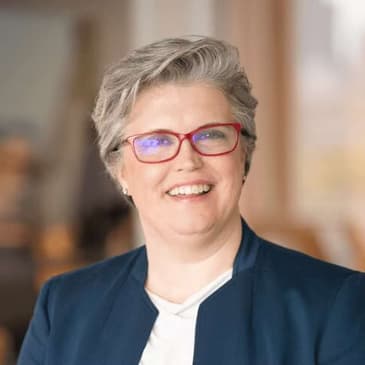
Today’s guest has one of those careers that doesn’t follow a straight line—and that’s exactly what makes it powerful.
Julie Smith’s professional path looks a bit like a zig-zag, but every turn adds depth. She began in communications, pivoted into emergency nursing, focused on safety net populations and disaster relief, moved into education, and now serves as a clinical product leader at InterSystems. There, she helps guide development of HealthShare, one of the world’s most advanced interoperability platforms, supporting massive health systems and government-sponsored organizations around the globe.
Julie is a nurse at heart, a health IT leader by trade, and a fierce advocate for health equity and clinician-centered technology. What I loved most about our conversations is when Julie explained why nurses must have a seat at the interoperability table—and how trust, not just technology, is the real end goal.
In the five-minute snippet: You didn’t just say the Q word, did you? For Julie's bio, visit my website (link below).
Hear Julie on the Hit Like a Girl podcast!
Contact The Conversing Nurse podcast
Instagram: https://www.instagram.com/theconversingnursepodcast/
Website: https://theconversingnursepodcast.com
Your review is so important to this Indie podcaster! You can leave one here! https://theconversingnursepodcast.com/leave-me-a-review
Would you like to be a guest on my podcast? Pitch me! https://theconversingnursepodcast.com/intake-form
Check out my guests' book recommendations! https://bookshop.org/shop/theconversingnursepodcast
I've partnered with RNegade.pro! You can earn CE's just by listening to my podcast episodes! Check out my CE library here: https://rnegade.thinkific.com/collections/conversing-nurse-podcast
Thanks for listening!
Today's guest has one of those careers that doesn't follow a straight line.
[00:04] And that's exactly what makes it powerful.
[00:07] Julie Smith's professional path looks a bit like a zigzag,
[00:11] but every turn adds depth.
[00:13] She began in communications,
[00:15] pivoted into emergency nursing, focusing on safety net populations and disaster relief,
[00:21] moved into education,
[00:23] and now serves as a clinical product leader at Intersystems.
[00:28] There she helps guide development of HealthShare,
[00:30] one of the world's most advanced interoperability platforms, supporting massive health systems and government-sponsored organizations around the globe.
[00:41] Julie is a nurse at heart,
[00:43] a health IT leader by trade, and a fierce advocate for health equity and clinician centered technology.
[00:50] What I loved most about our conversation is when Julie explained why nurses must have a seat at the interoperability table and how trust,
[01:00] not just technology,
[01:01] is the real end goal.
[01:04] In the five-minute snippet,
[01:06] you didn't just say the Q word, did you?
[01:10] Here is Julie Smith.
[01:25] Michelle: Well, good morning, Julie. Welcome to the podcast.
[01:28] Julie: Thanks for having me.
[01:30] Michelle: It's my pleasure. Thank you for reaching out to be a guest on the Conversing Nurse podcast. And I just want to remind everybody that they too can do that.
[01:40] Everyone has a story and I love hearing interesting stories and talking to interesting people.
[01:47] And so you just go to my website, the conversingnursepodcast.com,
[01:51] click on Be My Guest and fill out the form and then you too could be a guest on the show. So thank you again, Julie. When you reached out, I said,
[02:01] wow,
[02:02] she's done a lot and she's very interesting.
[02:07] So we're just gonna jump right in.
[02:09] One of the things that you said in your bio was that your career didn't follow a straight line,
[02:14] but it was more of a zigzag.
[02:17] And you started in communications,
[02:19] transitioned to emergency nursing, moved into education,
[02:24] and now you are in healthcare technology leadership. That's quite a road,
[02:30] Julie. When you reflect on your journey, how do these seemingly different chapters connect for you?
[02:36] Julie: Well, I think there's a constant that carries me through right throughout my journey. No matter what my role might be,
[02:45] it's really been with a focus on helping people's lives be better.
[02:50] And that can take you in so many different directions. And I think nursing in particular provides opportunity to diversify and still make impact.
[03:03] And I think that that's really a key piece of my story.
[03:07] You know, the reality is, is my mom was a nurse,
[03:10] so I got to see nursing in action.
[03:13] And I actually grew up in Thailand. And so my mom volunteered at refugee camps as a nurse while I was running around as a small child and she was giving vaccines.
[03:22] And so I got to see nursing doesn't always look the same.
[03:26] What it looks like in a refugee camp and what it looks like in a hospital and what it looks like as an educator, all of those things are different.
[03:34] But the mission is a constant throughout.
[03:38] And the ability to impact people's lives, sometimes meet them in their darkest moments and make a difference,
[03:45] I think, is that piece, that thread that pulls through it all.
[03:49] Michelle: Absolutely. What an interesting story. And we need all those different types of nurses, right?
[03:55] Yeah.
[03:56] It takes a village to.
[03:59] To have a profession.
[04:02] So you have experience,
[04:03] as you said, as an emergency room nurse, and you were working with safety net populations and also providing disaster relief.
[04:13] How have those frontline experiences influenced your perspective on healthcare systems today?
[04:19] Julie: Well, I think I have to consider,
[04:23] you know, I know I'm old enough to have documented on paper and not just, you know,
[04:29] every now and then, but for years. Right.
[04:31] And I lived through that transition to moving to electronic health records.
[04:38] And in the middle of all of that is when I was doing some of that safety net nursing,
[04:44] doing some of that disaster relief. I lived in Texas at the time, and, you know, there was a lot of hurricanes.
[04:49] And, you know, whether it was Katrina or Rita or, you know, some of the other disasters that occurred, the reality is, is no matter what record system you have,
[05:01] if it doesn't provide access and availability in those dark moments,
[05:08] then it doesn't bring value.
[05:10] And so, you know, one of the reasons I ultimately moved into technology was understanding when somebody stood in front of me at a hurricane evacuation shelter with a paper towel full of pills that they were about to run out of,
[05:27] saying, I don't know what to do cause I won't have my next dose.
[05:31] What do you do?
[05:33] Right?
[05:33] How do you figure out a way to say, I can understand what these medications are, I understand what you need, I understand what's important,
[05:41] I understand what you can maybe go without for a few days,
[05:45] and then how do we actually get you the care that's required?
[05:50] And that's really where some of that spurring of technology can make a difference. It's not really whether I'm documenting in paper in the hospital, or documenting on electronic health record in a hospital.
[06:06] There's this opportunity to say if I can actually provide it in the place that needs it.
[06:12] That's really where I impact lives.
[06:14] And, and so, you know, that's part of what brought me over to the technology space to make that more accessible.
[06:22] Michelle: Well, and then I imagine too having that person standing in front of you with,
[06:28] their medications and so forth. It would be really helpful to have like a record to see,
[06:35] you know, their history, a longitudinal record which we'll talk about in a second,
[06:40] to actually see, like, why are they taking those medications and so forth.
[06:45] So a lot of people in nursing and a lot of people out of nursing view nursing and health it as kind of separate fields.
[06:56] So what helped you transition from going to bedside care to informatics and now product leadership.
[07:05] Julie: So I think part of that journey is related to the fact that when electronic health records first came out,
[07:12] nobody was sure what to do with them or how to make them meaningful during go-lives. And I just happened to be one of those people who knew how to turn on a computer, right?
[07:21] And I knew how to translate some of the at-the-elbow support at the time, which, you know, I was at an early adopter site. So a lot of it was technology heavy worrying.
[07:34] And I, I can distinctly remember I was on a med surg orthopedic floor.
[07:40] We were the first floor in my hospital to go live.
[07:43] And we had a phenomenal support system to help us get there.
[07:48] And yet one of my colleagues called me over because they were, they were asking the at-the-elbow support,
[07:54] where do I put in vital signs?
[07:57] And the response was, well, what's a vital sign?
[08:00] Right? Because we have this brilliant genius of a developer standing beside us,
[08:05] but they didn't speak clinical language and we needed this translation to say,
[08:09] what do you call it?
[08:11] How do I get there?
[08:13] Where does it, what does it look like on the screen?
[08:16] Because that's not the language they spoke.
[08:18] And so I began this journey to say,
[08:23] when they say vital signs, this is the type of thing we're looking for. Where in your world with the words that you describe it, what,
[08:30] how do we get there and then do that translation?
[08:33] Well, that,
[08:34] you know,
[08:35] evolution meant that when I moved to the emergency department,
[08:39] I was one of the few staff members that had already used the record,
[08:42] right? We'd already gone live upstairs.
[08:44] And so then I became a superuser and helped design the system in that way. Well then when one of our sister hospitals was going live, I was an educator in their emergency department.
[08:55] Well, guess what? I'd already used the system in both, you know, critical care and acute care.
[09:00] And so they said, hey, can you help us with this, with this hospital implementation. And so there's this gradual road that expanded my scope because I'd had early exposure and because I could, could navigate the translations between clinical practice and technology.
[09:18] And how do you actually pull those together and mean the same thing? And I think part of that,
[09:24] going back to your earlier question of sort of my, my career path,
[09:29] is the fact that, you know, as I mentioned, I grew up in Thailand. A different language, different everything. And I just happened to speak Thai. I also happen to speak Russian.
[09:36] And so I could just look at this to say, this is really just different language translation,
[09:42] and this is just clinical language to technology language.
[09:46] When I lived in Russia, I spoke Russian. I helped many of my friends and acquaintances when emergency, medical emergencies happened. But that was before I was a nurse.
[10:01] And what I quickly discovered was I might know some Russian words, I might know English words. What I don't know is clinical words. And so when I actually needed to do that translation,
[10:11] I couldn't meaningfully explain what was happening to someone.
[10:17] And, and it's those types of experience that said, you know, I need to learn more. And that's actually when I decided to go back to nursing school because there was a whole nother world that I wanted to understand to make sure I could do that translation and,
[10:32] and make meaning out of what was being said.
[10:36] Michelle: So much of what you just said resonated with me, Julie,
[10:40] you know, about how the different languages we speak. Right. And being a nurse, you know, my whole career and not being an IT specialist,
[10:49] we would often get very frustrated talking to it and trying to tell them what we need, and they would feel the same because they didn't speak our language. Right.
[10:59] And I just remember at our institution, I think it was around, I want to say, 2010,
[11:04] where nurses started going into IT because they were building the programs that we were using,
[11:12] and we were so excited to, to have representation from our own people who could speak the language, who knew what we needed, who knew where we needed to chart it,
[11:24] what we needed to chart.
[11:26] It was so exciting and in a field that I was like, wow, I never knew this could exist.
[11:34] But there absolutely. When you're building an electronic health record, you absolutely need a nurse there to do that.
[11:44] So you mentioned incorporating the frontline nurse perspective into technology design.
[11:50] What does that look like in practice when guiding the development of something as complex as a longitudinal health record?
[12:00] And just talk for a moment about what is a longitudinal health record.
[12:04] Julie: Well, you know, as part of my journey,
[12:07] I think about a couple of things and I think what you said about having nursing being part of it is so important.
[12:13] Once I'd gone live at this 500 bed hospital and helped with that implementation and learned so much about hospital operations, I was also responsible for,
[12:24] from an operational perspective, all of the applications in use post go live.
[12:30] And I was a little bit flabbergasted when I found out that that was 149 applications because I thought of it as the EHR and not thinking about,
[12:42] you know, the blood gas machine that the RT holds and the EKG and the interface that goes between the EKG machine and the EHR and. Right. And you can just extrapolate that out.
[12:53] To what ultimately was. Almost 150 applications.
[12:57] And one of my jobs there was,
[12:59] I was on call in case anything went down and I helped triage how important it was,
[13:06] how meaningful that impact would be.
[13:08] And I remember one day I got a call and they said something is down,
[13:13] we're sending out alerts and it's a really big deal, cuz it's, you know, 75% of this. And I said, yeah, but you know what, that's actually the air conditioning system, I don't care,
[13:25] And then I got a page later because I got notified every time something went down and they said, hey, there's this one thing down,
[13:32] it's just one thing, we're not going to tell anybody but you know, we have to page it out.
[13:35] And I looked at it and it was blood bank,
[13:38] it was the machine for blood bank. And I said, you have to page this, this matters.
[13:44] And that's what having a clinician who understands what happens, how you deliver care,
[13:50] that's the impact we can have.
[13:52] If we don't have a blood bank, we have a problem.
[13:55] And if the thermostats aren't working in most of the rooms, we can live with that.
[14:01] Being able to evaluate what's important, what's not, what has impact, what doesn't. I think was a really critical piece of getting clinicians in technology that hospitals and healthcare workers use.
[14:14] And I think that that was, you know, part of my initial journey.
[14:17] But eventually I wanted to know when we send up requests to the vendor into the black hole,
[14:27] how are they prioritizing? Because I feel like they should prioritize it maybe a little bit differently than they are.
[14:34] and so I, I had the opportunity to join a vendor that was planning on building out an, a new inpatient health record and I thought, this is it,
[14:46] Now I get to find out how it's done behind the curtain and from, from day one,
[14:52] have clinical influence over how it's built out.
[14:56] And that's where I started my vendor based technology journey. And I had the opportunity to spend time there at another large EHR vendor before I ever actually got exposed to anything beyond EHRs.
[15:09] because that's sort of the center of your universe when you're in a hospital and when you're delivering care.
[15:15] And there is no question as a clinician,
[15:18] having input and influence into how something is developed will impact everybody who uses it.
[15:23] You got to get it right, put it on the right screen, put it with the right options,
[15:27] call it the right names, all of those things.
[15:30] But what I realized is that's still like at a single place. You can go to your PCP's office, you can go to a hospital, you can go whatever, and none of that's shared across the system.
[15:41] And what I'm involved with today is impacting even broader than that because what a longitudinal health record does is actually pull together an entire record.
[15:53] It doesn't matter where you at the care,
[15:55] it doesn't matter which system you are on,
[15:57] as long as it's connected into the hub.
[16:00] Then you can have all of your record in one place.
[16:04] So you don't have to worry that something's missing.
[16:08] And being able to influence it at that level means it's more accurate,
[16:13] it's put together and organized in the right way and then it actually surfaces up the right things that somebody will be looking for when they go in and log in?
[16:24] Michelle: Yeah, absolutely necessary. Do you think that,
[16:28] man, this is a big question. Do you think that we will ever have a longitudinal health record that talks to other,
[16:37] all the other health records where we could just have a patient present and pull up a record and see where they've been, what they've been seen for, what medications they're on,
[16:49] all of their images? Like, is there something right now?
[16:53] Julie: There is.
[16:54] Michelle: Okay, wow.
[16:56] Julie: Story happening so in some places, right. And with swim organizations, which I think is so incredibly exciting.
[17:05] You know,
[17:06] within our systems, where I am today,
[17:08] we have over a billion records in our system that's, that's a huge portion of the world population.
[17:15] We are the data platform for EPIC,
[17:17] so everything there actually flows through.
[17:21] But what we also are,
[17:23] is the connector.
[17:25] And so many state organizations have something called a health information exchange, which pulls all of the data for their state,
[17:33] all of their population, and pulls it into one place so that you can access that.
[17:38] We have that in New York City, for example, who uses a huge number of systems. You can only imagine the number of providers there.
[17:45] And they can pull all of those records together. And in fact, there's. We have a customer that's a huge health system in New York City. But the first screen a user logs into is actually the patient's longitudinal record, not their EHR.
[18:01] So It is possible,
[18:04] but there's so much more to make it accessible for everyone in the places that it's needed. So we're on that journey.
[18:13] My daughter, as I mentioned, my mom's a nurse. My daughter's actually a nurse too. And she practiced in New York City for a while, and it was the first time she called me and said, mom, I think.
[18:23] I think I'm logged into your system.
[18:26] As she worked at an urgent care. And I said, well, tell me what's on the screen.
[18:30] And she said, yeah, it's everything about this patient.
[18:33] And at an urgent care, you can imagine.
[18:36] You don't know much.
[18:38] These are people who are stopping by because you're convenient, you're on the next block. All of those things,
[18:44] you may be traveling, you may be a tourist in New York, whatever those things are.
[18:47] And to say I know so much more about the person sitting in front of me because I had access to this first,
[18:55] now I still need to go document in my EHR. I mean, that's still true,
[18:59] but over time, we see these integrated more and more.
[19:04] And so there is a vision of the future that says,
[19:09] since I'm a patient,
[19:10] all of my data should be accessible to me,
[19:13] and it should be available no matter where I get care.
[19:18] Michelle: Absolutely love it. Yes. And I'm so thrilled to find out that it's actually happening in real time right now.
[19:25] That's awesome. And, you know, you mentioned EPIC, Julie and I want to say that when we transition, when we transitioned from paper to our first electronic medical record we got,
[19:40] we had centricity perinatal because we were in maternal child health.
[19:45] Do you remember that?
[19:46] Julie: Oh, yeah, I know Centricity.
[19:50] Michelle: We as nurses, we absolutely loved that program because we were really tight with our IT department,
[19:58] and we could call them at a moment's notice and say,
[20:02] hey, can you change this in the record? Because it's not reflecting how we really chart.
[20:08] And I was instrumental because I became the developmental specialist for the NICU, and so I had to build these programs into Centricity.
[20:18] And so myself and IT worked closely together and it was really fun.
[20:23] And then after we went to,
[20:26] they found some problems out, you know, after a while with centricity in terms of it was easily hackable.
[20:32] And so we went to Cerner.
[20:36] Now all the nurses wanted EPIC because we had heard about EPIC from other nurses, that EPIC was like the gold standard and it was the cream of the crop, you know,
[20:48] the top of the heap.
[20:50] And we didn't get EPIC, we got Cerner.
[20:53] And that was a whole nother set of problems, I might say.
[20:57] But so interesting about EMRs. And again,
[21:01] really happy to hear that that longitudinal record is something that's actually happening right now.
[21:07] I want to talk about interoperability.
[21:10] That is a big word, Julie,
[21:13] and it's kind of a buzzword that can feel abstract to clinicians.
[21:20] So what is it in terms of healthcare, and can you give us an example of it?
[21:25] Julie: Well, I think Centricity is actually a great example. What interoperability is at its most basic level is connecting systems together,
[21:32] You know, the reality is there's a lot of maternal child units use Centricity, and then they use a different system for their primary EMR and the rest of their hospital.
[21:43] And what interoperability is that ability to integrate them to connect them to each other and actually share data meaningfully.
[21:52] Now, you can do that inside your walls with all of your applications and all of the different things that you use.
[21:57] And we saw a lot of people do that inside your walls, which is usually called an integration engine to connect things. That same blood gas, you know, respiratory therapy,
[22:07] handheld blood gas analyzer, right, Connects into the EMR, well, that's an integration.
[22:12] But when you go outside your walls and so you send it somewhere else, that's typically what we call interoperability.
[22:18] But again,
[22:20] it's really just connecting things.
[22:22] And when you connect things, there's like two layers to it because you have to connect things. But just because you call blood pressure,
[22:32] you know, a blood pressure, somebody else may call it something else. Or your reference ranges, it may be different.
[22:37] You really see this in lab results, right? If a different lab has different reference ranges or, you know, what, if you order a panel,
[22:44] well, are you ordering a CMP? Are you ordering a BMP? Well, what if you just order a one-off potassium? How do you pull all those together and how do you make sure they line up so you're not dropping things on the floor?
[22:56] And you actually like, are, are making like for like that's part of interoperability. If you do it well, to say, not just like, I threw stuff over a fence,
[23:06] but I threw it over the fence. We looked at it together,
[23:09] we cleaned it up, and now we can understand it.
[23:13] That's interoperability. And so, you know, back to the longitudinal record.
[23:17] You can't get to a longitudinal record unless you connect things.
[23:21] You get information in, you clean it up, and then you're able to actually use it.
[23:26] Michelle: That's a great definition, and I think one that we could really easily understand because even, you know, when, when I was researching your, your episode,
[23:35] you know, I came upon that word now, interoperability. Interoperability.
[23:40] You know, it sounds like I know what it means, but let me take a look and see if I really know what it means.
[23:46] So thank you for that definition and for that example.
[23:50] We touched on this earlier that nurses need a seat at the interoperability table.
[23:57] Why is that so critical? And what happens when nurses aren't included in those conversations?
[24:04] Julie: I joined InterSystems about eight years ago,
[24:07] and my first responsibility was as product owner for the viewer that surfaced the longitudinal record. So when a nurse or a physician logs in,
[24:21] what information do we show them? Well, as you can imagine,
[24:25] patient records are getting bigger and bigger and bigger.
[24:27] They're huge these days.
[24:30] And so you have to be really thoughtful about what you want to show them first, second, and third. And nobody wants to click around forever. If you don't get it on the first couple screens,
[24:39] they're not going to go hunting because time is important.
[24:44] So one of my very first projects was to review everything that we displayed and reupdate and refine and revise it with a clinician group because we had this phenomenal, phenomenal technology.
[25:01] But we hadn't done the legwork of clinician review yet to make sure what, what we changed, what we ultimately changed were thousands of things.
[25:12] Now, some of these are tiny little, you know, pieces, but some of them are pretty big.
[25:16] Michelle: Right.
[25:17] Julie: Do you put medications by allergies? That would be logical in my world.
[25:23] Michelle: Yeah.
[25:23] Julie: But they may have been listed alphabetically by the so
[25:27] You can have, you can have basic things to say. Well, we're going to list our problems, our diagnoses, our allergies, our medications, or whatever those things are in alphabetical order. Because that makes sense.
[25:36] That doesn't make sense clinically.
[25:38] But if you're just thinking about how to sequence things generically in the world,
[25:42] that's a place to start.
[25:45 Which sequence you display your results in.
[25:49] Think about labs. Do you do it based off order date? Do you do it off collection date?
[25:54] Well, those can be really dramatically different and that can actually impact care,
[25:59] because if you put it in by order date and they're actually drawn six months apart, your trend lines, your product perspective of what you're looking at, your point of reference, your accuracy dramatically affected.
[26:10] And so you have to think through what is the appropriate clinical choice Here of the 22 field options, the lab name,
[26:19] the order date,
[26:20] the result number, the reference range, whether it was in a panel or not. And so that's where nurses voices really, really matter,
[26:30] because we come with an expertise of practice and use and we do that through a lens of impact to the patient.
[26:41] And that's not the same thing as a logical mathematical coding sequence.
[26:46] And so it's really important to have that nursing voice at that table. When you think about developing technology in healthcare.
[26:54] Michelle: Yeah. And I think if it's not nurse driven or nurses aren't participating in that,
[27:00] it can really wreak havoc.
[27:03] And, you know, when things don't work correctly,
[27:07] obviously mistakes are made. But the other thing that nurses love to do is create workarounds.
[27:14] we're brilliant at workarounds and I think workarounds have to do with a faulty product.
[27:24] When it comes right down to it
[27:27] whether it's an IV pump, whether it's an
[27:31] electronic medical record, whatever it is, if it's not designed properly,
[27:37] we're going to find a way to work around it.
[27:40] And it's not good. It's not the best situation.
[27:44] Julie: Yeah. I mean, I have to say, nurses are some of the most creative people, I would say, in all of clinical practice.
[27:50] And so I think really, it's really important to have somebody who can think that way at that table.
[27:56] Michelle: Yeah, absolutely. So health equity, health equity is a major focus of your work. How does interoperability or the lack of it directly affect equity in care delivery?
[28:10] Julie: I would say that, you know, one of the privileges I've had is working at that safety net hospital, which, you know, if you think about that as a county, you know, a big county hospital is a trauma one center and so really busy, active emergency departments.
[28:25] I also worked at the flagship hospital that was, you know, pristine and,
[28:30] and well funded and, and refined.
[28:34] And you can't ignore the fact that the resourcing was different.
[28:40] And if you look statistically across our country,
[28:43] you can see disparities in life expectancy, outcomes, all kinds of data points, right? And so when I think about that from a technology perspective,
[28:55] I have to consider what choices are we making to make this data available,
[29:02] accessible, and relevant in the care settings in which it's going to be exposed, and how do we actually expand that to make sure it's exposed in the right places? So going back to disaster,
[29:15] one of the things that,
[29:17] you know, has been really meaningful is the fact that, you know,
[29:22] most patients in America log into MyChart through EPIC from at least one of their care providers, right.
[29:30] And they, you know, may have many other portals.
[29:34] So even if you don't know the name of your medication,
[29:38] you have a way to show me and the way to, you know, and then I can use that information to actually inform how to best deliver care.
[29:49] When you may be in,
[29:52] for example,
[29:53] a medical evacuation convention center in rural Texas during Hurricane Rita,
[29:58] You would no longer be left with just that paper towel with pills that you would be able to say,
[30:04] I don't know exactly what I take, but can you look here?
[30:07] Why? Because now that record is available to you and interoperability says if it's not just available to you from one place you got care, but that place that you got care could actually access your records from everywhere else you got care and pull it in.
[30:26] Now I really have a better picture of the care that you need.
[30:30] And so when you think about that from a bias perspective and an access perspective, you have to say, does everybody get access to this app?
[30:38] And if not, how do we facilitate that and do that so that everybody has the same information available to you? When I talked about that customer in New York,
[30:47] that's as long as you've gotten care in New York, it will show up there. It doesn't matter who you are.
[30:53] And I think that that's really important.
[30:56] Michelle: So,
[30:57] you know, when we talk about interoperability and the longitudinal health record and health equity, those things, I know that they're not happening in my area.
[31:09] I live in central California,
[31:12] and we have several large hospitals in this area, lots of rural health clinics.
[31:19] They don't, their records don't talk to each other.
[31:23] It's extremely frustrating.
[31:26] when I was working, we were discharging very fragile NICU babies out into the world,
[31:34] and they were seeing a specialist here,
[31:37] and the specialist here didn't talk to the specialist there. And they would go get lab here, but then they would go see another specialist, and that person couldn't bring up the lab because they couldn't talk to each other.
[31:51] So it sounds like such a, like it is happening,
[31:55] but kind of in silos or in very select areas maybe.
[32:01] How do we get that on a grand scale?
[32:05] You know, where it's not just if you live in this state, you're lucky you have it, but if you live in this state,
[32:12] you know, you're screwed.
[32:14] Julie: One of my responsibilities now is to monitor, inform,
[32:21] weigh in on proposed regulations and regulations around this.
[32:26] and so part of what I follow is sort of federal health IT rulings and proposed rules and all of that. And something that's been rolling out over the last many years is, is that national framework under legislation that.
[32:44] That's the acronym is tefca. But effectively what it's done is,
[32:48] is stood up these hubs of information to say, no matter what health system that you're in,
[32:55] we want you to feed in your data on your patients to this hub and then the hubs talk to each other so that all this is shared in a way that then could be accessed when you need it for treatment.
[33:11] That is actively being rolled out now. So to your point, in California, there may be less adoption than maybe in other places, but that is every seminar I see,
[33:25] it's a greater number. It's thousands of organizations that are now sharing data and,
[33:32] and over time,
[33:34] right, that will build where your longitudinal record will then be available.
[33:38] Now, it's a little bit of a data dump, right, because this is a work in progress.
[33:43] So you can, you can imagine that if that data is, is load is shared up to that central hub and then shared between the hubs,
[33:52] Over time, you're going to. And more and more entities join it, then you're going to have some of that shared, shared experience.
[34:01] Now, there's risk here.
[34:02] We have a lot of conversations around data privacy, data consent.
[34:07] Do you really want everything about you in all of your health records shared?
[34:14] Very often that's not the case.
[34:15] We know there's a lot of regulations and laws at the state and federal level for certain things like substance abuse,
[34:23] things like that, where it's protected, right. You have some around STD and HIV and all of these things.
[34:29] Um, but then there are some things that maybe aren't on that protected list,
[34:34] but may be really important to you.
[34:36] You know, the Patriots are about to go to the super bowl and everybody around here is excited, but if Tom Brady was still playing for them and he injured his knee,
[34:45] guess what? That should be protected information.
[34:49] Now, we don't think of knee injuries as always, like I'm not too sensitive about that. It's fine. You know, but in his case,
[34:55] he would not want anybody to know.
[34:57] And why would he not want anybody to know? Because, like, there'd be this whole sequela of things that would follow.
[35:03] And so he might say, hey, my record can be shared, but keep this piece out.
[35:08] Well, there's not a good way to do that today.
[35:12] What you end up getting back to your question around access and bias and all of that,
[35:19] is that we leave some of the population out because basically today your options are all or none.
[35:27] And so that's a great example of an area, when you think about interoperability in the place I sit,
[35:35] where we need to do better.
[35:37] Because to make it truly meaningful for everyone, we're going to have to figure out a way to allow for _______ to say, this is important to me. I just don't want anybody to know.
[35:50] Michelle: Yeah, that is,
[35:51] it's encouraging on the one hand that,
[35:54] that it is being applied in a more general way and very, very challenging to have to put all those restrictions on it as well. And, you know, one of the things in healthcare we always lament about is how long it takes everything to change.
[36:18] We think we're going to adopt a certain whatever and it's just going to go seamlessly and everyone's going to love it and no, back to the drawing board. And then,
[36:30] you know, 10 years later, finally it's there.
[36:34] But, yeah, it takes a long time.
[36:36] I'm sure you've heard this before, Julie.
[36:39] Some clinicians believe that technology increases their burden rather than alleviating it.
[36:46] What design choices differentiate technology that assists from that which hinders.
[36:54] Julie: It's a great question,
[36:55] and I think there's no question that it does both.
[36:58] I mean, there's some great academic studies out there that say,
[37:02] right, you know all the headlines about provider burnout and all of those things to say,
[37:06] wow, we spend a lot of time in front of that computer.
[37:09] We just do.
[37:10] And we've made it harder maybe than it needed to be.
[37:15] When I was, you know, when I was an emergency room triage nurse and I was in triage for my assignment for my shift,
[37:21] the expectation in the safety net hospital I was in that you could triage was you could triage a patient in four minutes or less.
[37:28] And,
[37:30] you know, we had it down to a science.
[37:32] Right. I knew,
[37:33] you know, as they walked in to sit at my little chair, I was asking them this whole series of questions. Right then I was going to put in really, really quickly and then keep going.
[37:42] As I hooked up their blood pressure monitor and I hooked up all these things,
[37:45] and four minutes later they were done.
[37:47] And I think back of some of those questions, right? I asked every single patient,
[37:52] you know, when's the last time you had a TB shot? Have you had one in the last five years?
[37:55] They're therefore sore throat,
[37:57] right?
[37:59] You know, I asked them whether they felt safe at home. I asked them if they had any surgical history for their sore throat,
[38:06] right? And why did I do that?
[38:09] Because there was some reason in this giant machine of health care that that information needed to be captured and somebody decided the triage nurse was the place to do it.
[38:22] And, you know, I look back at that and I say, well, of course it's a burden.
[38:27] And then when I moved up in, you know, healthcare operations, I learned that actually every entry point into the hospital,
[38:33] those questions were asked.
[38:35] Now, the ER triage was just one of those places,
[38:38] right? L and D would have been one of those places. Outpatient registration was one of those places, right? There's a lot of entry points into the hospital.
[38:44] But to make sure that that information was captured, all of those places had to ask these questions so it didn't get missed on some report down the road.
[38:54] And so there's no question that there's some burden. Then the question is,
[38:59] is there also improvement in people's lives?
[39:02] You can also find great academic research and great, great data that says, yes,
[39:08] that, that you can actually reduce.
[39:11] You can increase the reporting of suspected domestic violence by asking the question of,
[39:17] do you feel safe at home?
[39:18] Smoking cessation,
[39:20] sharing of education and information, and actually getting people into programs is impacted by the fact that we ask every single person if they smoke.
[39:27] So it can actually make a difference in lives. So you have to figure out that balance.
[39:31] And we have spent, I would say, industry wide the last 15 years focused on adoption.
[39:38] And we are now turning that corner to say,
[39:43] now let's actually get the value out of it and reduce that overhead,
[39:48] because it's heavy and it's harder than it should be.
[39:52] And I think one of the ways it can get better is with AI,
[39:56] and we certainly see that starting to roll out.
[39:59] Because if the AI tool is already listening as I ask those questions, I don't have to turn to the screen and then start typing it in because it's already loaded for me, because it heard me say it,
[40:10] It can cross check to say, hey, this was already actually asked by the person right before you. You don't need to re-ask it.
[40:16] There's just all kinds of ways you can. You can make things better,
[40:20] but we have to do it carefully and understand the purpose of what we're doing.
[40:26] Michelle: How funny that, you know, you were talking about all the questions that we ask and all the different points of entry.
[40:32] And I've heard patients say before,
[40:35] man, they always ask me the same questions,
[40:38] like, over and over again.
[40:40] Julie: That's right.
[40:40] Michelle: Don't they write them down anywhere?
[40:44] Julie: Why do they keep. Yeah, I mean, we've all entered the system and we're like, oh, my goodness, this is terrible. Yeah.
[40:52] Michelle: Yeah, we've all been there, right?
[40:55] Julie: Yeah.
[40:56] Michelle: Okay, a couple more questions for you, Julie. This is, I'm learning so much.
[41:01] So you talk about building something deeper than just systems such as trust alignment and shared accountability.
[41:10] What does that look like in a healthcare system?
[41:13] And how close do you think we are to achieving it?
[41:17] Julie: Hmm.
[41:18] I would say this is, again, another journey we're on.
[41:22] I would say there's a couple things that stand out.
[41:26] One is we have all the information,
[41:29] even if we don't pull it together in the right ways now, there's a lot of information out there,
[41:34] so we need to build that trust and respect by saying, there's a reason I had to repeat myself 12 times. And next time, maybe it'll only be eight times.
[41:44] And the time after that, maybe you can get it down to four, and eventually it'll just be once. Or in fact, you'll just surface this and say, hey, is this still true for you?
[41:54] And so we can do better. And starting to earn that trust and respect and value is part of making it obvious that it's better.
[42:04] The other piece of that is that not just that it's better because I didn't have to answer the same question five times,
[42:11] but also, you're doing something with this information that's going to make my life better.
[42:17] We ask patients a ton of stuff.
[42:20] We don't tell them why they don't really ever see results from it in some, in many cases.
[42:26] And so if we can start telling those stories of, you know, you told me this, and this is what I'm doing with it. And this is actually how it's making either your life better or this community's life better.
[42:35] And what that looks like, I think is really important.
[42:38] The part of the sort of the interoperability challenge.
[42:42] And even if you pull this, you know, beautiful, gorgeous longitudinal record together with these centralized hubs in the, in the country you just have mounds and mounds and mounds of information that you're never going to sift through and find
[42:58] The meaningful nuggets.
[43:00] And so I think that's again, a place where we can say, how do we pull out the important parts and say, hey,
[43:08] I actually could scan this quickly, which again, you need technology tools for,
[43:14] and say, this is relevant. Did you know you just had a spike in your potassium and your BUN? Maybe we should take a look at your kidneys.
[43:23] And we can't do that if we're just sifting through thousands of pages of paper.
[43:28] So we have to have a way to do that.
[43:30] Michelle: Well, that's phenomenal.
[43:34] Okay. For nurses who are listening and who are curious about informatics, Julie, what advice would you give to them if they're thinking maybe there's a different path?
[43:46] Julie: For me,
[43:47] I think one of the,
[43:49] ways to think about informatics is similar to, I was at a conference this week and I told this to a group of salespeople. When I explained what I did as a nurse,
[44:01] I said, when I was a bedside nurse,
[44:04] I took care of this table. And I pointed to a banquet table in the conference room. There was eight people sitting around it.
[44:09] And I said,
[44:12] you eight people are the most important thing to me for the next 12 hours.
[44:17] I'm interested in your bowel movements, I'm interested in your blood pressure, I'm interested in your pain. I'm interested in all of these things. And you are what matters most to me for the next 12 hours in my shift.
[44:29] Now, once I became charge nurse, I'm interested in this whole group of tables, right? And then I pointed to a section and I said, and I may not be interested now in your bowel movements or your blood pressure unless it goes, you know, off the rails in some way.
[44:41] Because I'm watching all this group right now. Once I become the department manager,
[44:49] I'm not actually looking at the people on the shift as much as saying, do I have enough nurses for this shift? Right? Do I, you know, am I short staffed tomorrow?
[44:57] What are we going to do? Because we're, you know, nitros on back order,
[45:01] right? Those kind of things. So what I'm thinking about is different. But it all comes down to,
[45:06] are these patients going to be okay?
[45:08] Are my staff going to be okay? Are my patients going to be okay?
[45:11] Once I moved to the hospital,
[45:13] it was just like sitting in that conference room and saying, now I'm actually thinking about the whole building.
[45:19] Do we have enough hotel rooms for this conference? Do we have like, whatever? And I think about it differently.
[45:24] Well, in the world of informatics,
[45:27] you have the ability as a nurse to potentially touch something that will impact tens, dozens,
[45:36] hundreds,
[45:37] thousands, hundreds of thousands, even millions of lives.
[45:41] And it opens up this whole new world to say nurses today, clinicians today, use technology day in, day out, all day.
[45:51] So if you can make it better for them, they can deliver better care.
[45:54] If you give them the right information, they can actually make better choices for their patients. If you make their tools easy enough to use,
[46:01] then they don't have to worry about the tools and they can focus on the person.
[46:05] And that's how I think about informatics.
[46:07] If you make it meaningful to the people who actually use it,
[46:11] where that is not the headline,
[46:14] but the person in front of them is, you've done your job well.
[46:18] Michelle: I think that's such an inspiring message. And,
[46:21] you know, you and your career are just a perfect example of what nurses can do and in so many different ways, in so many different fields and so many different capacities and just how essential nurses are to information technology and product leadership,
[46:44] health management, all of that.
[46:46] And wow. I really want to thank you, Julie, for being my guest today.
[46:51] And I know people are going to have questions, so please tell us where can we find you?
[46:56] Julie: Absolutely. I would love to get connected so you can find me on LinkedIn. Julie Smith.
[47:01] There's a lot of me suggested from, with a name like mine, so make sure you find the one that's Julie Smith at InterSystems that I'd be thrilled to connect.
[47:08] And then actually at Intersystems, our email addresses are just our first name, last name with the period in between. And so you're welcome to just reach out to me directly also because I think it's really important for nurses always to have a seat at the table and the more I can do to promote that voice,
[47:25] to have that broad impact,
[47:27] the better it can be.
[47:29] Michelle: Well, thank you, thank you again and thank you for all of your contacts and I will put those in the show notes so everyone can find you.
[47:37] And this has just been such,
[47:39] wow, a really exhilarating conversation.
[47:43] I've talked to several nurses in informatics in, in my podcasting career and it just always fascinates me. And, and I thank you for bringing your expertise here today, Julie.
[47:56] Julie: Well, thanks so much for having me.
[47:58] Michelle: Well, we're at the end, so the last five minutes is the most fun that we're going to have and it's because of the five minute snippet. It's just a chance for the audience to see Julie Smith's off duty side when she's not creating,
[48:15] you know, medical records and all of the other things that you do. So are you ready to play Julie?
[48:22] Julie: I'm ready.
[48:24] Michelle: Okay. It's really fun.
[49:06] If you could ban one piece of healthcare jargon forever, what phrase are we never allowed to say again?
[49:16] Julie: The unit's awfully quiet today.
[49:18] Michelle: I'm sure you know that from being an ER nurse too, right?
[49:21] Julie: Exactly. You can shoot daggers at people with that. Yeah, yeah.
[49:26] Michelle: That needs to be off limits. Okay. This is a this or that. Day shift or night shift?
[49:32] Julie: Night shift. I loved it.
[49:36] I worked both.
[49:39] But I have to tell you,
[49:41] you never get the full trauma ER safety net experience until you've worked weekend nights on a regular basis.
[49:53] And if you can imagine it, you've seen it and it is such a bonding place for the staff.
[50:01] There is such camaraderie and support because, you know, you can't do it by yourself and you know, you need your colleagues to save lives and so you just hunker down and get it done.
[50:15] And it's, I look back at that time with such reverence and appreciation for the people that I got to do that with.
[50:24] Michelle: Well, I will say that I worked nights early in my career, only two years, thank God. Because I never felt like a human person.
[50:32] Julie: That's right.
[50:34] Michelle: Yeah. But I will say that, you know, those of us that on days, we would always be kind of jealous of you guys because your teams were so cohesive and so strong.
[50:46] And I think it had to do with,
[50:49] at night shift. There's nobody else there.
[50:52] Resources. Right. And so you just learn to depend on each other and creates really, really strong teams.
[51:01] Okay. You're designing the electronic health record for a zombie apocalypse.
[51:07] What's the one feature it absolutely must have.
[51:12] Julie: I'm going to go with ambient listening, which is, you know, I know it is new in electronic health records. You may have heard about it a lot, because physicians use it a lot now.
[51:21] Michelle: Right.
[51:21] Julie: So they don't have to draft their own notes. Right. It interests stuff for them because it just listens to what's happening.
[51:27] But if I'm in the zombie apocalypse, I guarantee you I'm not stopping at a keyboard and putting something in.
[51:33] It either heard it and got it or it's out of luck. So.
[51:40] Michelle: Love it. Love it. Okay. Another this or that. Whiteboard or sticky notes?
[51:49] Julie: Ooh, I would say whiteboard. The problem is I'm a very impatient documenter no matter where it is,
[51:55] and I tend to write on whiteboards and then take a picture of them because I'm sure I'm gonna, you know, write it down in my other notes later. And sticky notes tend to fall off, and it gets me frustrated.
[52:04] Michelle: You've thought this through, Julie.
[52:08] Okay. What's more stressful? A chaotic ER shift or a product meeting where everyone says just one small change?
[52:17] Julie: So I would say,
[52:19] you know,
[52:21] probably the latter,
[52:23] because in an ER chaotic shift,
[52:27] you only talk about what's important.
[52:32] You get down to what matters and nothing else matters.
[52:35] I was a TNCC instructor, you know, for trauma for a while, and I mean, you go through the ABCs to say what is most important until that's taken care of, don't move on.
[52:45] And so you.
[52:46] You learn as a nurse to prioritize so well,
[52:50] and if you just sit in a boardroom or a meeting room, on a conference room and debate things,
[52:56] you very often lose sight of what matters.
[53:00] And so those conversations, and you have to be so much more delicate with it. Right.
[53:05] Whereas in an ER, it can be a little more rough and tumble at times.
[53:09] And so those are, you know, those are things that you have to learn to navigate to get to the best outcomes.
[53:20] I'd pick the ER.
[53:23] Michelle: That is hilarious. It reminds me, I was talking to another nurse in IT, Patrick Pickharts from Chicago,
[53:30] and I asked him that question,
[53:32] and he also was an ER nurse.
[53:34] And, you know, he definitely said the meeting was made more stressful because,
[53:39] first of all, he was coming in and he didn't have a lot of experience,
[53:42] and he said he couldn't believe how long they were talking about something like the color of something and it needed to be different. And he's like my mind would just go offline and pretty soon I would have to come back 15 minutes later and go, what were we talking about again?
[53:59] Julie: Exactly. Exactly.
[54:00] Michelle: Yeah. Yep. Killer. All right, last question. Julie, if nurses ran all health IT decisions for one year, what would change by day 30?
[54:17] Julie: Oh, what a good question. I would say I'm gonna lean back to the previous question to say getting to what matters most first.
[54:28] Michelle: Perfect,
[54:29] perfect, perfect way to end a perfect discussion.
[54:33] Thank you again, Julie.
[54:34] I just really appreciate your knowledge and your expertise and just I have gratitude for you coming on and sharing it with our audience today.
[54:45] So thanks so much again. Have a wonderful rest of your day.
[54:49] Julie: You too. It's great to be here.