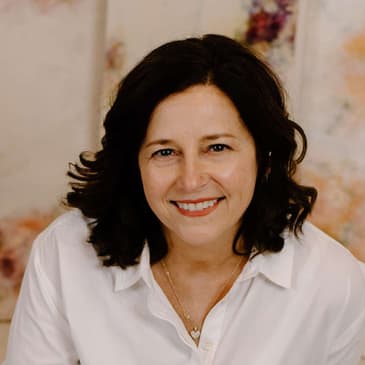

Today’s episode is Nicole Cromwell 2.0—and trust me, a lot has happened in the last three years.
What started as a creative outlet has grown into something much bigger. In fact, Nicole’s life as an artist might just be giving her full-time nursing career a run for its money.
Since we last talked in episode 46, she hasn’t just been creating beautiful art—she’s been building pathways for others to reconnect with their own creativity. Her Brave Beginner Art course has expanded, and she’s added Creative Thinking in Nursing, both offering continuing education units. I’ve taken her Brave Beginner course myself, and I can tell you—it’s not just about art. It’s about rediscovering a part of yourself you may have forgotten was there.
And Nicole hasn’t lost sight of the bedside. As a former ICU nurse, she’s created two powerful resources—The ICU Diary and The Hospital Wellness Journal—designed to support patients and families as they navigate some of the most vulnerable moments of their lives.
You’ve heard me say it before—I deeply admire nurses who lift up other nurses. Nicole has experienced firsthand the impact of creativity: less stress, less anxiety, more joy, and a deeper connection to emotion. And now, she’s on a mission to make sure other healthcare professionals can experience that too.
If that’s not altruism, I don’t know what is.
Enjoy Nicole Cromwell 2.0. For Nicole's bio, visit my website (link below).
Be sure to get 25% of Nicole's courses by using coupon code: CONVERSING NURSE
Contact The Conversing Nurse podcast
Instagram: https://www.instagram.com/theconversingnursepodcast/
Website: https://theconversingnursepodcast.com
Your review is so important to this Indie podcaster! You can leave one here! https://theconversingnursepodcast.com/leave-me-a-review
Would you like to be a guest on my podcast? Pitch me! https://theconversingnursepodcast.com/intake-form
Check out my guests' book recommendations! https://bookshop.org/shop/theconversingnursepodcast
I've partnered with RNegade.pro! You can earn CE's just by listening to my podcast episodes! Check out my CE library here: https://rnegade.thinkific.com/collections/conversing-nurse-podcast
Thanks for listening!
[00:00] Michelle: Today's episode is Nicole Cromwell 2.0.
[00:04] And trust me, a lot has happened in the last three years.
[00:09] What started as a creative outlet has grown into something much bigger.
[00:14] In fact, Nicole's life as an artist might just be giving her former full-time nursing career a run for its money.
[00:23] Since we last talked in episode 46,
[00:26] she hasn't just been creating beautiful art,
[00:29] she's been building pathways for others to reconnect with their own creativity.
[00:35] Her Brave Beginner art course has expanded and she's added Creative Thinking in Nursing,
[00:41] both offering continuing education units.
[00:45] I've taken her Brave Beginner course myself, and I can tell you it's not just about art.
[00:51] It's about rediscovering a part of yourself you may have forgotten was there.
[00:56] And Nicole hasn't lost sight of the bedside.
[01:00] As a former ICU nurse, she's created two powerful resources: the ICU Diary and the Hospital Wellness Journal,
[01:10] designed to support patients and families as they navigate some of the most vulnerable moments of their lives.
[01:17] You've heard me say it before.
[01:19] I deeply admire nurses who lift up other nurses.
[01:23] Nicole has experienced firsthand the impact of creativity.
[01:28] Less stress, less anxiety,
[01:31] more joy,
[01:32] and a deeper connection to emotion.
[01:35] And now she's on a mission to make sure other healthcare professionals can experience that too.
[01:43] If that's not altruism,
[01:45] I don't know what is.
[01:47] Enjoy. Nicole Cromwell 2.0.
[02:04] Well, good morning, Nicole. Welcome back to the podcast.
[02:08] Nicole: Good morning, Michelle. Thank you for having me back.
[02:11] Michelle: Yeah. So this is Nicole Cromwell 2.0. And we last heard from you almost three years ago, Nicole. June of 2023.
[02:22] Nicole: Wow, it's been that long?
[02:23] Michelle: Yeah. When I was looking back, I was like, wow, it seems like just yesterday.
[02:28] So you were episode 46, Nicole, and that was almost three years ago. Your episode aired in June of 2023.
[02:37] Shocking that time goes that fast, right?
[02:40] Nicole: It is.
[02:41] Michelle: But for those of you who haven't heard Nicole's episode, please go back and listen.
[02:46] It's full of so much sage advice and such an interesting story.
[02:53] And so for those who are listening today that haven't heard your story, Nicole, give us just a, like a recap how you got to where you are today.
[03:04] Nicole: So I worked as a critical care nurse for 25 years.
[03:07] I started in the emergency department after a brief stint in oncology.
[03:12] And then I went up to Stanford, big teaching hospital and got a job in the intensive care unit. But my big goal was to become a flight nurse, and I achieved that after a couple years,
[03:25] and it was my dream job. I absolutely loved it. But. But night shift was just too much for me, and I.
[03:32] I'm so grateful to night shift nurses.
[03:35] I can't do the work, so I totally appreciate what they do.
[03:40] So then I went back to the intensive care unit for a while, and I loved it there.
[03:44] And then I got a job with the critical care response team and did that for about five years,
[03:52] responding to all the codes, all the emergencies in the hospital,
[03:56] and then was assaulted by a patient.
[04:00] So decided it was time for a break and went and worked in radiology for about a year and a half, and that was right when Covid hit.
[04:10] And so I was sort of hiding out in the basement during COVID which I think kind of saved me.
[04:18] I'm a total empath,
[04:21] And I'm not sure I could have dealt with everything that went on.
[04:25] That just would have been too hard for me. But after about a year and a half down in radiology, I decided I wanted to go back to the ICU, and the position that was available was in the COVID ICU.
[04:39] So I took that on, and by that time, we kind of had things figured out a bit. So, yeah, I went back there and worked there for about a year and a half.
[04:48] And in the meantime,
[04:50] about 12 years ago from today,
[04:53] I was working in the intensive care unit, and I met a patient who I was caring for, and she was intubated the whole time. So I got to know her by way of her family.
[05:03] When I found out she was an artist, I encouraged her family to just bring in all of her artwork because it was her room.
[05:11] And in case she woke up, I wanted her to be in a familiar place. And her family the next day brought in all of her artwork and plastered the walls.
[05:20] And it was just beautiful. And it really changed the way we kind of changed the way we cared for her because she was more of a person and not just a patient.
[05:30] And everybody wanted to come in and see her artwork. And we all really got close to her, all the nursing staff and the physicians, but especially the nursing staff. So when she unfortunately lost her battle with her disease, I organized a group of 14 nurses and even our manager.
[05:46] We all went and did a creative night,
[05:49] and we made jewelry, and we painted and crafted and all these fun little creative projects,
[05:56] and I was like, this painting is really fun.
[06:00] So I was hooked. And it kind of changed everything for me. I started doing paint and sip nights and started taking classes, anything I could find and,
[06:11] and workshops and then retreats and went from painting in my living room to eventually getting my own art studio.
[06:20] And then now fast forward to today.
[06:23] I retired from nursing about two and a half years ago,
[06:26] and I opened my own art gallery in Carmel by the Sea.
[06:31] And it's doing great. I'm in a little courtyard and it's thriving and I absolutely love it.
[06:38] Michelle: I've been to your art gallery and it's beautiful. It's so quaint. And you are so fortunate to live and work in really one of the most magical places on earth.
[06:50] I would definitely encourage anybody to visit your little town, Carmel by the Sea.
[06:56] That's just the word for. It is magical to me.
[07:00] Nicole: Yeah, it really is. I feel so fortunate to be here and get to live this, this life. And, you know, it's not easy. I'm working harder now than I ever did as a nurse, like seven days a week.
[07:13] But I love the work and I enjoy it, and not all of it is work. When I get to, when I get to paint, that's fun for me in my studio.
[07:23] Michelle: Yeah. And I love your story, Nicole, of
[07:27] how you took that really deep sorrow of caring for a patient who was an artist. And first of all, I love that you individualized her care.
[07:38] And it sounds when you say, you know, we saw her as a person and not just a patient,
[07:46] I think that's the ideal for all of us in healthcare. Right.
[07:50] But we lose it so quickly through just all of the things that we do, how things are so automated. And for you to really personalize her care, individualize her care,
[08:05] it's really profound. And I can just imagine how people loved going into her room and caring for her,
[08:13] knowing the person that she was. That's just really great.
[08:19] So before this, before you became an artist, you didn't have any formal training or anything, is that right?
[08:27] Nicole: No, none.
[08:28] Michelle: That's amazing.
[08:29] Nicole: I was the one that say it said, like, I can't even draw stick figures.
[08:33] That was me.
[08:36] But I think, you know,
[08:39] part of that is self protective. Not the reason that we don't do all that personalized care for patients all the time, because, you know, that stuff's hard to take home.
[08:50] And that's part of what became my healing through this whole journey with the art, is that I would go to my art studio and just start.
[08:59] I'd start writing all over the canvas. If I had a hard day in the ICU, I'd write everything that I was feeling on the canvas and then go in and cover that up with paint and create something beautiful out of it or just create anything out of it.
[09:14] And it just started to become healing for me just to be able to have a place to put those feelings down and process them.
[09:21] Because I'm not really a journaling kind of person.
[09:23] Yeah, that kind of helped me process,
[09:25] and that led me into,
[09:28] you know, gosh, if this is working for me, I would love to share this with my colleagues.
[09:34] And so then, like, I started doing the research,
[09:37] and there's so much research out there about how creativity is so good for you. And.
[09:44] And so I was like, I want to give this back to my
[09:47] Nurses are my people.
[09:49] And so I wanted to share. I want to share that with my colleagues.
[09:54] So I created an online course.
[09:56] Michelle: Yes, you did.
[09:58] Nicole: Creativity and Wellness.
[10:01] Michelle: So let's talk about your first course, the Brave Beginner course.
[10:04] You co-created that with Jennifer Carlquist, and she's an amazing cardiology PA who was also a guest on this program.
[10:13] But I took your course, and it's fantastic. Again, I highly recommend it to anybody.
[10:20] It's not what you think.
[10:22] You know, when I took the course, I thought it was gonna be kind of all,
[10:26] you know, woo.
[10:27] And it went into such depth.
[10:32] One of the things I loved was the painting prompts, because for me, I do a lot of watercolors, and sometimes I sit down to paint and I go,
[10:42] what am I going to paint?
[10:44] My mind kind of goes blank.
[10:47] And so having those prompts was really, really helpful.
[10:50] And color theory, too. You went into color theory.
[10:54] And again, you know,
[10:56] I didn't really learn about color theory until I took your course.
[11:02] And I just would put colors on the.
[11:05] On the page, and sometimes they would work and sometimes they didn't work, and I didn't know how to fix it.
[11:14] So that was really cool.
[11:16] But then you go, you know, touch on those things, you talk about the health benefits of painting,
[11:23] which I don't think are widely known,
[11:26] and I think maybe the health benefits we could say of painting or any other kind of artistic process.
[11:33] And then the critical inner dialogue of the artist,
[11:38] that, for me was so, so important because I am that person that I start creating and that negative voice starts coming through saying this is crap.
[11:50] You know, what are you trying to do? This is so amateur. Or, you know,
[11:56] that voice that we hear. And so you had
[12:00] a lot of strategies that we could use to address that.
[12:04] And then you touched on, you provided a lot of mental health resources for healthcare providers. Because we are in a crisis.
[12:13] You know, three years ago we were talking about this. We're still talking about this. And I bet three years from now we will still be talking about what a mental health crisis there is in healthcare.
[12:25] So that course was so comprehensive and,
[12:28] and I got three CEUs and it was fun and I learned a ton.
[12:35] So again, I highly recommend that. But tell me about your new course.
[12:39] Nicole: Yeah,
[12:40] well, I've actually completely redone the course and now it's worth, well, you can get 6 CEUs for it now because there's one free.
[12:52] That, there's one free course that, that one is all about creativity and nursing innovation,
[13:00] Permission to begin, barriers to creativity,
[13:03] Divergent thinking, which everybody loves that one. And then building a creative practice. And that, that one is all just one hour. You can listen to it online.
[13:11] And then the,
[13:14] the 5 CE course,
[13:16] I redid that and it still has all of the things that you mentioned. But then I did add in burnout. Addressing burnout and compassion fatigue through creativity,
[13:28] creative play, innovation and nervous system support overall wellness.
[13:34] How creativity supports physical, mental and social health.
[13:37] And then the, Keeping the creative flame alive is the fun, well, it's all fun.
[13:43] Each module has different creative projects, but module four has got a couple of painting projects in it.
[13:49] And then there's like a walking meditation, there's viewing art meditation, there's neurographic art.
[13:57] There's just all kinds of fun, different projects to do.
[14:03] There's just so much information that I want to share. I had to kind of reel myself in because I just get so excited about it because there is just.
[14:11] I mean, I could update this course probably every month because there's so much research coming out about it right now,
[14:18] especially right now.
[14:19] And so every time I see new research, I'm like, oh, I need to add that in. But I don't want to, I don't want to fire hose anybody, you know, because I'm just so excited about it.
[14:28] But the most exciting thing that I love about it is that it's not just painting.
[14:37] And that's what I'm trying to share. It's creativity is everything. I mean, it's cooking, it's gardening, it's dance, music,
[14:47] writing,
[14:48] sculpture,
[14:50] anything that you do that's creative. All of these things have wellness benefits,
[14:56] and that's what I hope to share, because it, you know, it doesn't have to be painting for everybody. That's my passion. But I want nurses to see they are inherently creative.
[15:07] I mean,
[15:08] nurses just don't take credit for being creative.
[15:10] They're creative every single day they go to work. And it's how you do staffing. It's how you manage your day.
[15:19] It's how you do your med passes, it's how you talk to patients. All of that is creative. But nurses just don't take credit for that.
[15:27] And I want to show nurses you are creative.
[15:30] And just because you can't draw a portrait, well, I can't either.
[15:36] But you can do something that's creative,
[15:38] and so I just love that.
[15:40] So excited about it and want to share that.
[15:42] Michelle: I really love that. You talked about some of the things that they do at work every day.
[15:50] Nicole: Right.
[15:51] Michelle: But we don't see that as creative. You know, we see the arts as creative. Nurses do a million workarounds,
[16:00] you know, because our system is not perfect. Right. So we have to do all these workarounds,
[16:06] and we come up some with some pretty amazing things. Right?
[16:10] Nicole: Exactly. Exactly. That's why we're natural innovators. Yeah, yeah.
[16:16] Michelle: And I've said for a long time that podcasting is a creative process.
[16:22] You know,
[16:23] vetting your guests, there's doing the research on your guests,
[16:29] there's the interview process, then there's the editing, then there's the publishing,
[16:34] then there's the whole social media aspect, which is very creative.
[16:38] So I've always considered myself a creative person,
[16:43] but when I got into podcasting,
[16:46] it took me a few years before I go,
[16:48] wow, maybe I like this so much because it is such a creative process, and I get to go through all of these steps and then have something in the end that I really love and that my guests really love and that the audience really loves.
[17:03] Nicole: Absolutely. Yeah. Learning all of that. Absolutely. That's working your creativity. Take credit for that.
[17:11] Michelle: Yes, absolutely.
[17:13] Well, for some skeptics out there, Nicole, that are like, you know, I don't know if this course is for me.
[17:19] Talk about some of the research, the benefits, the health benefits of.
[17:23] Of practicing art.
[17:26] Nicole: Gosh, there's so many.
[17:29] There's the neuro,
[17:30] the neuroscience behind it. It's all the healing aspect of it. It's Neuroplasticity. If you've got trauma, this is, this is a way to.
[17:41] A lot of people have a hard time expressing their trauma or their feelings into words. And this is a way to use your creativity.
[17:50] It's a way to put those feelings and those expressions into something else that you can't necessarily put into words.
[18:00] When you're being creative, you engaging different systems and instead of just the analytical, problem solving side that we use every day in healthcare, mostly, but you use more of your sensory and your motor parts.
[18:15] It increases your serotonin, your dopamine, your endorphins,
[18:20] it decreases your cortisol.
[18:22] I mean, all of those things. And when you're social, when you're with other people doing creative things, that helps you socially.
[18:29] Yeah. Trauma recovery, like I was saying, you're activating new combinations of brain regions and then you strengthen those connections between those regions over time.
[18:39] And that tends to you, you interrupt those patterns, especially like stress and rumination loops.
[18:45] Yeah, it's neuroplasticity.
[18:48] Gosh, there's so many.
[18:49] Michelle: I imagine too, Nicole, that, you know, just speaking in terms of like physiology, like when you go into your studio,
[18:58] like, I can imagine that you just instantly feel relaxed,
[19:04] just a different, a whole different feeling. Maybe your blood pressure comes down a little bit, you.
[19:09] You take deeper breaths.
[19:12] All of those things that you, you feel when you are in that state of flow, right?
[19:19] Nicole: Absolutely. And I don't even realize it or acknowledge it. It just happens. And sometimes I just sit there and mix paint and I just zone out
[19:30] Michelle: That seems so satisfying.
[19:32] Nicole: It really is. And it's so relaxing.
[19:35] Yeah. And one of the things I teach and one of the things I taught during,
[19:39] I did a project for 300 nurses.
[19:44] There's like 75 at a time. But we did this neurographic art project and it was, it's just a way to relieve stress and you just don't even have to think about it.
[19:54] It's a coloring project and it's really easy. And yeah, it has all of those benefits and it just, it allows you to just kind of zone out. And this neurographic art, it's not that exact neurographic art is not scientifically studied, but all of the mechanisms behind it are.
[20:14] And what they say is you think about an issue or a problem you're having that you want to solve, and you write that on the back of a piece of paper and Then you do the neurographic art project,
[20:24] and a lot of times, by the end of that project, you have some clarity on it.
[20:29] So. Yeah, I do that a lot when I'm, when I'm struggling with something.
[20:33] Are like, you take your walks.
[20:35] Michelle: Yes.
[20:36] Nicole: Yeah. Those nature walks, that's all activating those regions of your brain.
[20:41] Michelle: Yeah. Having something,
[20:43] whether it's walking, whether it's creating that takes your brain offline is just so, so important because we are bombarded every day with millions and millions of pieces of stimuli. Right.
[20:58] And some good.
[21:00] A lot of them not so good.
[21:02] Especially these days. I'm trying not to watch the news.
[21:06] I know it's depressing, but I, I kind of am a news addict. And so I have to really, like,
[21:13] now I've gotten it to where I'm just going to watch the first 10 minutes and then turn it off. You know, it's really bad.
[21:22] But, but yeah, those things that take your brain offline are so, so important.
[21:27] Nicole: Yeah. And I, you know, I, even when I take my nature, you know, my morning walks,
[21:32] I try not to listen to my fun podcast that I want to listen to necessarily. I just, you know, nothing. Just silence. Because,
[21:40] just doing that and why you're not focusing, that's your default mode network in your brain. Just going crazy with new ideas and just new thoughts flooding your mind. And that's,
[21:52] that's such an exciting time for me. I love that time.
[21:56] Michelle: It is. It really is. And like you, I have stopped listening. I've stopped listening to podcasts or music. When I walk,
[22:04] I just want to hear the birds.
[22:07] You get the benefit of hearing the ocean.
[22:11] That would be amazing to live near the ocean and hear that on your walks. But I think, you know,
[22:18] podcasts are great, obviously, music is wonderful,
[22:21] but sometimes you just need less stimuli.
[22:27] Those creative areas of your brain.
[22:30] Nicole: Absolutely.
[22:31] Michelle: Nicole,
[22:33] to a nurse that is engaged in the creative process, and maybe they're really into, like, comparing their work with somebody else's work,
[22:44] and they start hearing all those negative voices. What would you say to that person?
[22:49] Nicole: They're not alone. I still do that. I'm in a community of artists, and I do that.
[22:57] Michelle: How do you tamp down that voice?
[23:03] Nicole: No one can do exactly what you're doing and love it.
[23:07] Michelle: Yeah.
[23:08] Nicole: Yeah. And just to be kind to yourself and. Yeah, it's, it's a vulnerable thing to do this kind of work.
[23:19] And so, you know, and it's a brave thing. That's why I called the course Brave Beginner.
[23:24] It's brave to show your work out there and open up your soul like that. But, yeah,
[23:30] I still struggle with it.
[23:32] Michelle: Yeah, for sure. I think we just have to replace that voice with, like you said, being kind to yourself.
[23:39] Nicole: Yeah. And knowing that everybody else is probably going through the exact same thing. Yeah.
[23:43] Michelle: That's really helpful, too.
[23:45] When somebody sees an artist like yourself and they admire your work and then they hear you say that, you know, I have those critical voices, too. They're like, oh, wow.
[23:56] You know, that's amazing because, like, she's an amazing artist, and I can't believe that she would have negative thoughts about her work or whatever.
[24:04] But I think it's. It's kind of natural. And just knowing that even the best artists still have to silence that inner critic.
[24:14] Nicole: Absolutely.
[24:15] Michelle: Yeah.
[24:16] Nicole: Well. And knowing that, like, you know, that my art isn't for everybody. There's, you know, 10 people will walk by my gallery, peek in and turn around and walk back away, and it's fine.
[24:27] It's like wine. I mean, I'm in a wine town. Wine little village, too.
[24:31] And I don't like every kind of wine, and I don't like every kind of art either. And so there's a space for everybody's different tastes. And,
[24:40] you know, my art's not everybody's jam, and theirs isn't mine, so it's okay.
[24:46] Michelle: Well, for those of our listeners that haven't seen your art, can you describe the type of artist that you are and maybe describe one of your favorite pieces of art?
[24:57] Nicole: Sure.
[24:58] My art is all about just calming,
[25:02] peaceful,
[25:03] abstract seascapes,
[25:06] landscapes.
[25:08] I find no greater joy than when someone walks into my gallery and says that they feel calm.
[25:16] Just a sense of calm when they walk in.
[25:18] So they're all, mostly, I use the color blue. I try not to use blue sometimes just to challenge myself. And it always makes its way back in because I just.
[25:25] I love the color blue so much.
[25:27] And that's probably the ocean influence around me, but,
[25:32] yeah, in my art, it's all acrylic painting. It's all layer upon layer upon layer of paints. I'm not the kind of artist that can sit down and paint one.
[25:42] Paint something in one session. A lot of times, something will hang on the wall in the gallery for a few months, and I'll pull it off the wall, sand it with my sander, and start over again.
[25:53] And it always turns out better.
[25:55] You know, sometimes I'll know it's done, but sometimes it'll go through a few different.
[26:01] Few different layers.
[26:03] And then the other thing that I do are florals, and those just kind of make me happy, especially,
[26:09] you know, with the spring flowers coming out. I just.
[26:13] I go and buy a fresh bouquet from the farmer's market and just get so excited about using different colors in those.
[26:21] And again, those are layers and layers of paint. A lot of times, I'll take a whole landscape painting that's finished, sand it down, and create a floral out of it.
[26:29] And I admire watercolor painters like you because you commit to it, and it's finished. There's no layering there, so.
[26:37] Michelle: Oh, it's so challenging. Thank you. I love your art, Nicole. I would encourage everyone to go to your website, nicolecromwell.com. is that correct?
[26:49] Nicole: Uh, nicolecomwellart.com
[26:51] Michelle: Okay. Nicolecromwellart.com. You have one on your website right now that I looked the other day, and it's just so gorgeous. It's an ocean scene, but it's pink.
[27:02] Nicole: Oh, yeah, the peony. Well, so the funny thing, it's called peony. Okay. Because it was a floral.
[27:08] Michelle: Wow.
[27:09] It just struck me. I was like, that is gorgeous. I love florals, and I love the ocean. And I'm really not, like, a
[27:18] A lover of the color pink,
[27:21] but that really just struck me. I was like, wow. And your florals are so gorgeous because you use pinks and peaches and yellows and just.
[27:33] They're just striking. They're just gorgeous.
[27:36] Nicole: Thank you. Thank you.
[27:38] Michelle: And some of your oceans are very, very deep.
[27:42] When you add, like, the black in there,
[27:45] they're just so dramatic.
[27:47] Because the ocean changes constantly, Right. It's like, sometimes we look at it, and it's green, sometimes it's blue.
[27:55] Sometimes it's a really dark gray.
[27:58] So you capture that so well in your art.
[28:02] Nicole: Well, thank you. Thank you. Yeah. When you ask about a favorite, they're kind of all my favorites. They're all my babies.
[28:10] Michelle: I know. It's like asking someone with five kids who's your favorite?
[28:14] Nicole: Yeah, I know.
[28:17] Michelle: They're just gorgeous. What has been some of the feedback of your customers of purchasing your art?
[28:27] Nicole: They just say that it just brings such a space of peace to their. Their room.
[28:33] And so they love that. Or the florals. It just brings joy.
[28:37] And the one thing that's been an unexpected bonus of these new people, the people that I sell my art to is they become friends.
[28:46] And so that's so meaningful to me as well.
[28:50] But, yeah, they just looking for a peaceful space in their home,
[28:55] in all the chaos of the world.
[28:57] Michelle: I love, too, that you.
[28:59] You, on your website, you kind of stage your art like, you show what it would look like in a living room or in an entry.
[29:08] And I think that really helps people see it in their own space.
[29:14] Nicole: Yeah.
[29:15] And that actually helps me sometimes know if the piece is finished,
[29:19] it's an app that I use, and if it looks good in two or three of those different spaces, then I know. Okay, this one is good.
[29:28] Michelle: Yeah, I love that. I think it really helps the.
[29:32] person choose the right size art and the colors and everything.
[29:38] Something that just speaks to them.
[29:40] Nicole: Exactly. Yeah.
[29:42] Michelle: So you have been out of nursing now, for, you said, has it been like two and a half, three years?
[29:48] Nicole: Two and a half years, yeah. Almost three.
[29:51] Michelle: Yeah.
[29:52] Michelle: How has that transition been?
[29:55] Nicole: Ah,
[29:56] I miss my colleagues.
[29:59] That's been really hard.
[30:00] I live about an hour and a half away from where I was working. I commuted the last 10 years.
[30:06] And I really miss those connections with my colleagues because we were bonded,
[30:13] I have great friendships now that I've developed, but they're just not the same because.
[30:21] It's hard because I can't talk to my new friends about my
[30:26] my nursing job. They don't understand. And I don't really.
[30:31] I don't really want them to understand.
[30:33] I just tell them to watch The Pitt if they want to get kind of an idea. Cause I just don't want to. I don't want to. I don't want to rehash it with them.
[30:41] Michelle: Yeah. Yeah.
[30:43] Nicole: So I miss that. And I do miss the connections that I had with patients.
[30:48] I really. I did enjoy connecting with my patients.
[30:52] So that's been kind of hard.
[30:54] I'm still working through a lot of it.
[30:57] Still working through a lot of the.
[30:59] different stuff that I went through,
[31:03] that we all went through. It's not normal.
[31:05] Michelle: No,
[31:06] no, no, it certainly isn't. And I think that one misconception about nursing that the public definitely needs to hear, and I think we are getting the word out little by little.
[31:18] But there's so much danger going to work every day as a nurse, that's something new for me, certainly in the last, you know,
[31:30] 10 years. I didn't used to say that,
[31:33] but now I hear from so many nurses and other healthcare professionals that it's really dangerous out there. And that's really sad because everybody loses when you're in an environment like that,
[31:48] for sure. The patient loses and the healthcare providers lose. You know, everybody loses.
[31:55] Nicole: Yeah.
[31:55] Michelle: And it takes quite a while to heal from that trauma. What's been some of the feedback from your people that have taken the course?
[32:04] Nicole: Oh, they love it. They said it's just such a refreshing alternative to a lot of the CE courses that are out there.
[32:14] And they just, they love the different perspective that I provide.
[32:19] So that's been, that's been mostly most of the feedback.
[32:23] Michelle: Yeah, it's definitely not cookie cutter like so many of the CE offerings out there. It's totally different, I would agree.
[32:33] and I just, again, I encourage everyone to go back and listen to Nicole's episode, episode 46,
[32:41] and to go to her website,
[32:44] nicolecromwellart.com, and then how do they access your CE courses?
[32:50] Nicole: So the, the CE courses are on my website under the More tab or also bravebeginnerart.com.
[33:00] Michelle: Well, is there anything else you want to share with us today?
[33:03] Nicole: Yes.
[33:04] So I,
[33:05] in my spare time,
[33:08] it's kind of hard when you're a creative because you go through these walks because all these ideas pop up into your head. But I,
[33:15] I've always kind of felt like, you know, leaving the bedside, I still have all of this knowledge to share. You know, after doing this for 25 years,
[33:23] sitting in my gallery making price tags, I'm still like, oh,
[33:28] I want to still be involved in healthcare.
[33:30] So I created a couple of wellness journals. I only have one with me right now.
[33:35] Michelle: Awesome. Okay.
[33:36] Nicole: Yeah. So the first one I did was the ICU diary for families.
[33:41] There's so much research out there about ICU diaries, mostly in Europe.
[33:48] And basically,
[33:50] I mean, it's for post intensive care syndrome after a patient leaves the intensive care unit.
[33:56] And the research has shown that by the family keeping a diary,
[34:01] it helps put the pieces back together for the patient.
[34:04] And I had always kind of, researched that a little bit while I was working in the intensive care unit,
[34:09] but then I thought, well, gosh.
[34:11] And then I had a friend whose father was in the ICU and I kept giving him, you know, not medical advice, but ways to navigate the hospital. And I thought,
[34:20] there's nothing on the market like this.
[34:23] And so I was like, well, I'll put this together and so I created the ICU diary for families. And it's just,
[34:30] it's got places to write down questions, write down answers, follow up questions,
[34:36] suggestions for what questions to ask,
[34:39] just ways to stay organized in the hospital,
[34:41] different organizations that people can use, like CaringBridge to communicate with their other family members and friends.
[34:49] A place for your DPOA,
[34:52] a place just for journaling,
[34:54] A place for friends and family to write notes to the patient so that later they can read all of that.
[35:00] So I developed that, self published that,
[35:04] and then I presented that to our local hospital and they said, well, that's great, we love that, Nicole, but can you make one for the rest of the hospital, for the rest of the patients, not just ICU.
[35:13] So, and wow,
[35:16] no problem.
[35:17] So then I created the Hospital Wellness Journal. And that is for anybody in the hospital.
[35:22] And it was set up so that it can be used by either the patient or the care partner.
[35:28] And it's a place, it's got the suggested questions again and then,
[35:34] you know, place to write your questions, write your answers, and then also a daily symptom tracker.
[35:41] So, and that's set up so that, you know, you're tracking your sleep, your pain,
[35:46] what's working, what's not working, all of these little flags that you should bring up with your healthcare provider that a lot of times get missed. I would just see patients, the physicians would come in and they would just sit there and kind of listen and not necessarily ask questions.
[36:01] And so these are all triggers for the patients to bring up with their healthcare provider.
[36:07] So it's got places to journal and it also has my artwork in it and just calming, calming paintings.
[36:16] And then it's got again, the hospital resources, resources outside the hospital.
[36:23] And then there's even a place for discharge planning,
[36:26] a way to take notes for that and then the follow up appointments as well.
[36:31] So yeah, it's got all that and then there's a little QR code in the back for, for feedback because I always want to learn and get better.
[36:38] Yeah. And then there's even a little, a little a page that people can tear out to write a thank you note to their, their nurses or the staff at the hospital.
[36:46] Michelle: Oh my gosh, that is so cool.
[36:48] Nicole: Yeah. Both of them were built with, with nurses in mind. And it's, you know, explicitly states this is not a medical document.
[36:58] Michelle: So beneficial for really everyone, the care team, definitely the patient and their family because it's so crucial right now,
[37:08] especially that healthcare is so convoluted to have somebody help them navigate through that whole system.
[37:16] You know, I love that you said there's spots in there for journaling,
[37:21] for writing notes to the patient,
[37:23] because when they get out of ICU, they've been on sedation and probably whole pieces of their memory are gone. And so that in and of itself has to be so traumatic.
[37:35] Nicole: Oh, yeah.
[37:36] Michelle: So for them to be able to access that later would just be very healing.
[37:41] And of course, your artwork is in there because they need to see beautiful things and calming things.
[37:50] That's amazing, Nicole. How exciting.
[37:52] Nicole: Thank you.
[37:53] Michelle: How can people access that?
[37:55] Nicole: So it's on Amazon, well, you can look up my name, and then you can see both of them.
[38:03] Michelle: Send me those links and I'll put them in the show notes. Yeah.
[38:06] Nicole: Thank you. And that's also on my website under the More tab as well.
[38:10] Michelle: Okay.
[38:11] Well, I can absolutely see why you're busier now than when you were working full time as a nurse because you got so many irons in the fire.
[38:21] Gosh, how fun is that? Life is good, right?
[38:25] Nicole: It is good. Yeah. Last year was all about getting all of these things finished, and this year is about just sharing them with the world. The local hospital here just purchased 250 of the wellness journals for their patients.
[38:40] Michelle: It just makes me so happy. In the nicu, we've had NICU journals for a while now.
[38:46] And so, so important for the parents to journal that whole stay because some babies are there for four or five months.
[38:54] Nicole: Right.
[38:55] Michelle: And it has a place for rounds because we would have rounds every day,
[38:59] things that were talked about in rounds. It has, you know, the baby's weight.
[39:04] It's just incredible.
[39:06] So those kind of things are so, so necessary to get patients and to get us through the whole system.
[39:14] Nicole: Right, Absolutely. Yeah.
[39:17] Michelle: Awesome. Well, thank you so much for coming back on Nicole Cromwell 2.0.
[39:22] Nicole: Oh, and I wanted to mention, I did want to offer a coupon code for your listeners.
[39:29] Michelle: Okay, awesome.
[39:30] Nicole: Yeah. So it'll be 25% off my online course, so that'll. The coupon code will be Conversing Nurse.
[39:37] Michelle: Oh, wow, that's awesome. Okay. I'll put that in the show notes, too.
[39:41] Nicole: Okay.
[39:41] Michelle: Thank you so much, Nicole. I can see by your beautiful smile that things are just going your way and life is good, and I'm so happy about that.
[39:50] Nicole: Thank you. And I'm glad to see that you're doing you're doing better.
[39:54] Michelle: Yes, yes, I have been. My listeners have heard about my whole health journey and yes, I'm doing much better. I'm very blessed. So thank you for that.
[40:06] Nicole: Yeah,
[40:07] I listened to that too. Yeah. I'm really glad you're,
[40:10] Thank you for sharing your journey. That was a very vulnerable thing to do. And I'm sure you're helping others by quite an experience.
[40:17] Michelle: Yeah. Thank you. Okay, well, gosh, what's life like in Carmel today? What are you going to do today?
[40:26] Nicole: I'm going to, there was a little,
[40:28] Oh, you should do this. I got an email from Johnson and Johnson.
[40:33] There's just a newsletter and there's a challenge where you submit a 15 second video where you say, I'll send it to you. I'm an innovator, an advocate, whatever. And then if they choose you, they'll share your video.
[40:47] Michelle: Oh, cool. Yeah, please send it. Awesome.
[40:50] Nicole: And you didn't ask about which book I'm reading?
[40:53] Michelle: Oh, I'm so sorry. Well, tell me.
[40:57] Nicole: Well, I haven't completely started it because it's a lot. It's called the Nurse who Sees Too Much.
[41:02] Michelle: Okay.
[41:04] Nicole: What nursing does to your mind and how it changes the way you see everything else.
[41:08] Michelle: Oh, can you send me the link for that and I'll put it in the show notes too?
[41:12] Nicole: Yeah.
[41:13] Michelle: Because that's all about trauma and I, I haven't met a nurse yet that hasn't had some kind of trauma either from, from nursing or from their past.
[41:23] Nicole: I love this author, the Pivot Year, by Brianna West.
[41:28] Michelle: Okay.
[41:29] Nicole: And it's just, it's like one page to read every morning and it's just.
[41:35] Michelle: I love them.
[41:35] Nicole: Yeah. It's a great way to start the day.
[41:37] Michelle: Daily Intention.
[41:39] Nicole: Yeah.
[41:39] Michelle: Gets you off on the right start.
[41:42] Awesome, send me those links and I'll put them in the show notes. And again, Nicole, thank you so much for joining me.